
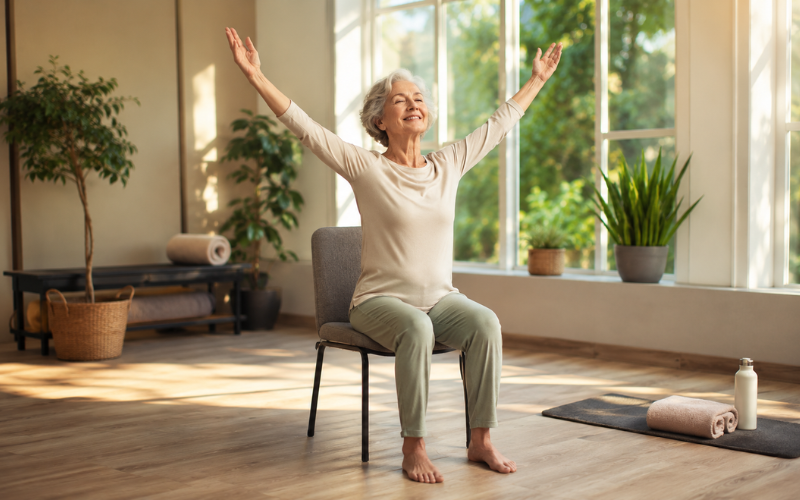
Getting older can feel a bit like caring for a classic car. You still have style, but sometimes it takes a little longer to get moving, and there are some new creaks and groans. Maybe your knees crackle when you stand up, or your energy isn’t what it used to be. If you want to feel better without complicated stretches, you’re in the right place. Yoga breathing exercises for seniors are among the easiest ways to boost your vitality, simply by breathing.
The great thing about these techniques is that you don’t need a gym membership, special clothes, or flexibility. You can do them all while sitting in a sturdy chair. Whether you want to calm your mind, get more energy for a walk, or improve your lung capacity, focusing on your breath is a simple tool that has helped people for thousands of years.
Why Your Lungs Deserve a High Five
We breathe all day without thinking about it. If we didn’t, we’d have bigger problems than stiff joints! Still, most of us take shallow breaths—just small sips of air that only fill the top of our chests. This can actually make us feel more stressed and tired.
Practicing intentional yoga breathing, or Pranayama, is like giving your body a gentle massage from the inside. For seniors, this is especially helpful. It can lower blood pressure, improve sleep, and support digestion. It’s also a great way to pass the time during TV commercials. Best of all, it’s a simple tool for better health that you can use anywhere.
Setting the Stage: Your Chair is Your Temple
Before we dive into the yoga breathwork for seniors, let’s talk about your “yoga studio.” For these exercises, your studio is any sturdy chair. A dining room chair or a kitchen chair works perfectly. Try to avoid the super soft, squishy recliner that swallows you whole, as it makes it hard to sit up straight.
Sit near the front edge of your chair so your feet rest flat on the floor. If your legs don’t reach, place a few sturdy books or a yoga block under your feet to feel steady. Picture a small, invisible string lifting the top of your head toward the ceiling. You don’t need to sit stiffly—just find a tall, comfortable posture where you can breathe easily. Rest your hands on your lap, relax your shoulders, and get ready to begin.
The Foundation: Belly Breathing (Diaphragmatic Breathing)
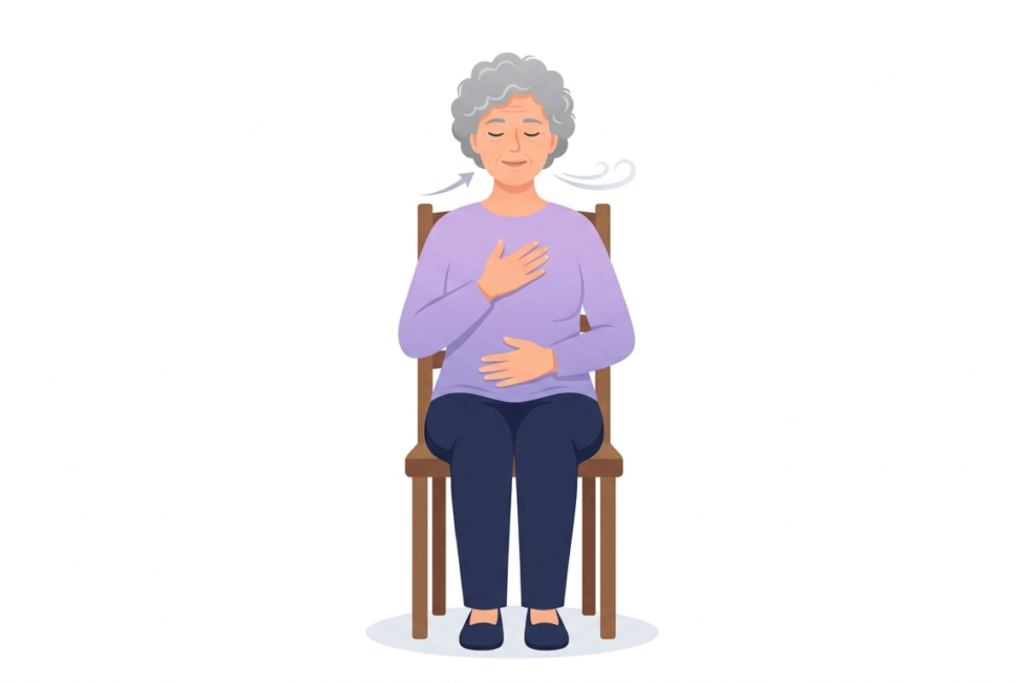
This is the classic breathing exercise. It’s the most natural way to breathe, but many of us have forgotten how. If you’ve ever watched a puppy or a baby sleep, you’ll notice their bellies rise and fall with each breath. That’s what we want to achieve here.
How to do it:
- Place one hand on your chest and the other hand on your belly, right over your belly button.
- Close your eyes if that feels comfortable, or just soften your gaze.
- Inhale slowly through your nose. As you breathe in, try to make the hand on your belly move outward while the hand on your chest stays relatively still.
- Imagine you are inflating a small balloon inside your stomach.
- Exhale slowly through your nose or pursed lips (as if you were blowing out a candle). Feel your belly sink back in toward your spine.
- Repeat this for five to ten breaths.
Why it’s great: It helps turn off stress. If you feel anxious or overwhelmed, three minutes of belly breathing can help you feel relaxed, almost like you just left a spa.
The Equalizer: Equal Breathing (Sama Vritti)
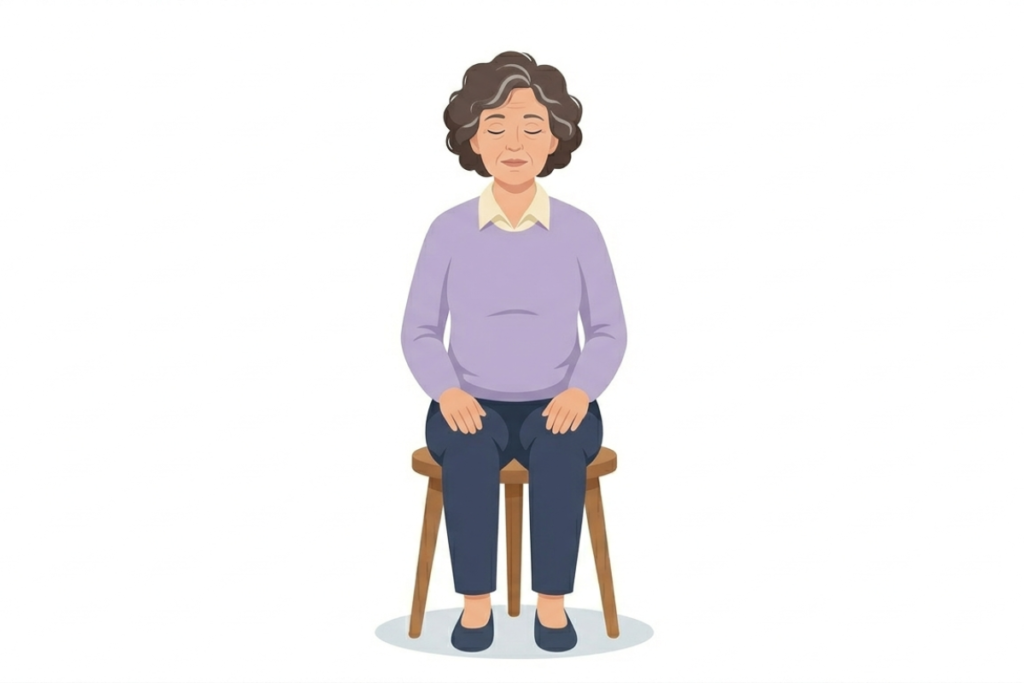
Life can feel unbalanced at times, but your breath doesn’t have to. Equal breathing is about finding balance. It works like a steady rhythm for your body and mind. It’s simple, effective, and helps keep your thoughts focused.
How to do it:
- Sit tall and relax your jaw. (Seriously, un-clench those teeth!)
- Inhale through your nose for a slow count of four. One, two, three, four.
- Exhale through your nose for the exact same count of four. One, two, three, four.
- If a count of four feels too long, start with two or three. If you feel like a pro, try five or six.
- The goal is to make the “in” and the “out” exactly the same length.
Why it’s great: This technique is great for focus. It gives your mind something simple to do, which helps quiet those busy thoughts about tomorrow’s tasks.
The Ocean Breath (Ujjayi)

You don’t need a swimsuit for this one. Ocean breath gets its name from the soft, whispering sound it makes, similar to waves on the shore or, for movie fans, a calm Darth Vader.
How to do it:
- Inhale deeply through your nose.
- Open your mouth and exhale, as if you’re trying to fog up a pair of eyeglasses or a mirror. You should hear a “hhhhhaaaaa” sound.
- Now, try to make the same “fogging” sound, but keep your mouth closed and breathe out through your nose instead.
- You will feel a very slight narrowing in the back of your throat. It shouldn’t be tight or uncomfortable; it should feel like a gentle whisper.
- Inhale and exhale this way, listening to the sound of your own private ocean.
Why it’s great: The sound is very calming. It also helps slow your breathing, which improves the amount of oxygen you take in. Plus, making the sound can be fun.
The Humming Bee Breath (Bhramari)
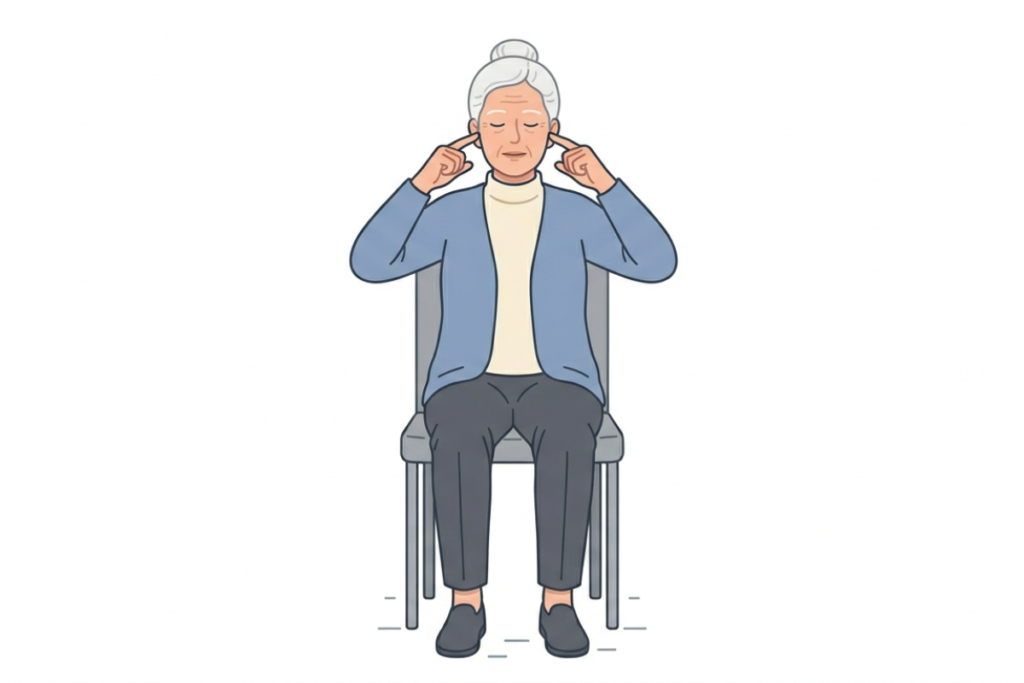
If you have grandchildren or pets, they might find this exercise funny, but it really works. The sound vibrations help calm your brain and nervous system.
How to do it:
- Sit comfortably and close your eyes.
- Place your index fingers gently on the cartilage of your ears (the little bump just outside the ear canal). You don’t need to poke your brain; just a light touch will do.
- Inhale deeply through your nose.
- As you exhale, keep your lips closed and make a steady humming sound. “Mmmmmm.”
- Feel the vibration in your head, your chest, and even your fingertips.
- Repeat this three to five times.
Why it’s great: This is a great way to calm down when you feel frustrated or angry. If you’re stuck in traffic or waiting for a slow computer, a few deep breaths can help you stay calm. It also helps improve memory and concentration.
A Boost of Energy: The Modified Breath of Joy
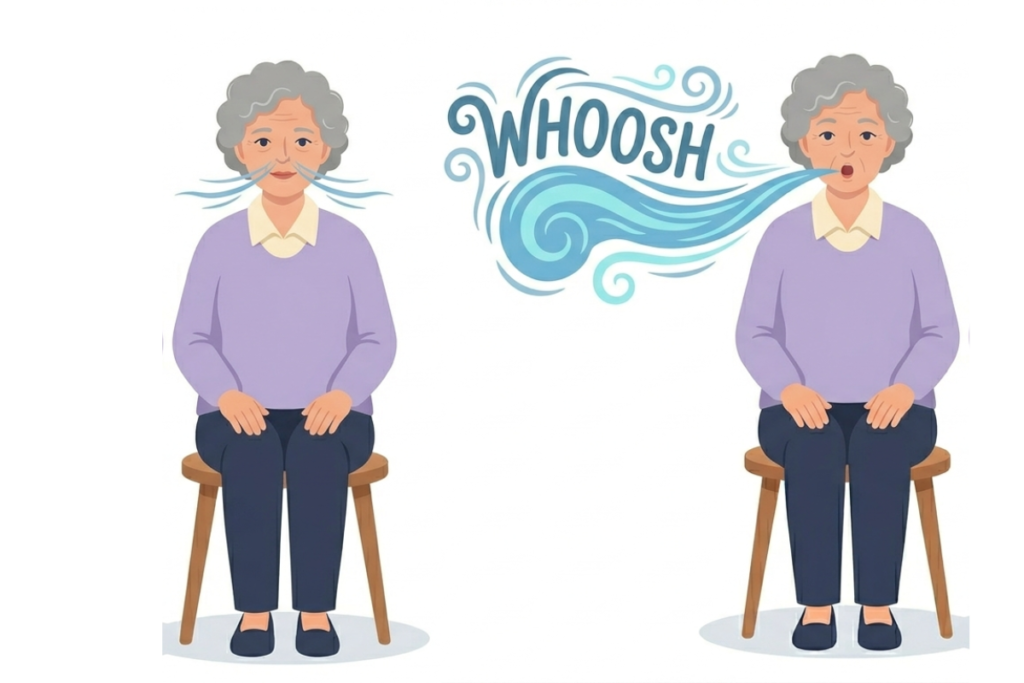
Sometimes you don’t need to relax—you need more energy! If you feel sluggish after lunch, the Breath of Joy is like a natural pick-me-up, but without the jitters. We’ve adapted it for the chair to keep it safe and simple.
How to do it:
- Sit toward the front of your chair with your feet wide for stability.
- This breath is divided into three quick sniffs in, followed by one long “whoosh” out.
- Sniff 1: Inhale a little bit through your nose and swing your arms out in front of you.
- Sniff 2: Inhale a bit more and swing your arms out to the sides like a bird.
- Sniff 3: Inhale a final bit (filling the lungs completely) and swing your arms up toward the ceiling.
- The Big Out: Exhale forcefully through your mouth with a “HA!” sound as you gently lean forward and let your arms drop down toward your knees.
- Repeat this three times, then sit quietly and feel the tingle of energy.
Why it’s great: It gets your blood moving and helps you feel more alert. Just be careful not to bump into anyone nearby!
Consistency Over Perfection
Here’s a secret most fitness experts won’t tell you: you don’t have to be perfect. If you try the Bee Breath and end up laughing because it feels silly, that’s a good thing! Laughter is another great way to breathe deeply.
The goal isn’t to do these senior-friendly yoga breathing exercises for an hour every day. The goal is to do them for five minutes. Maybe you do a little belly breathing while the coffee is brewing. Maybe you can try the Equal Breath while you are waiting for a phone call.
If you miss a day, don’t worry. Your lungs won’t hold it against you. Just start again when you remember. The more you practice, the more your body will naturally breathe deeply. It’s about making small, steady changes that help you feel better over time.
Safety First (The “Don’t Overdo It” Talk)
As a reminder, always listen to your body. If you ever feel dizzy, lightheaded, or short of breath during these exercises, stop right away and return to your normal breathing.
Yoga breathing should never feel difficult. You shouldn’t feel like you’re underwater or out of breath. If counting to four is too much, try two. If your shoulders hurt when you lift your arms, keep your hands on your lap. Listen to your body and let your breath support you.
Final Thoughts
You’ve just learned a few simple tools that can help you feel better in minutes. You don’t have to wait for Monday or until you feel ready. Since you’re already breathing, you can start right now!
Pick just one of these exercises, perhaps the Belly Breath or the Equal Breathing, and try it right now. Take three deep, intentional breaths. Notice how your shoulders drop away from your ears. Notice the tiny bit of space you’ve created in your mind.
You deserve to feel calm, energized, and healthy. These yoga breathing exercises are a daily gift you can give yourself. Sit up tall, take a deep breath, and remember you’re doing great. Even if your body has a few miles on it, with the right breath, you can still enjoy the journey. Happy breathing!
