
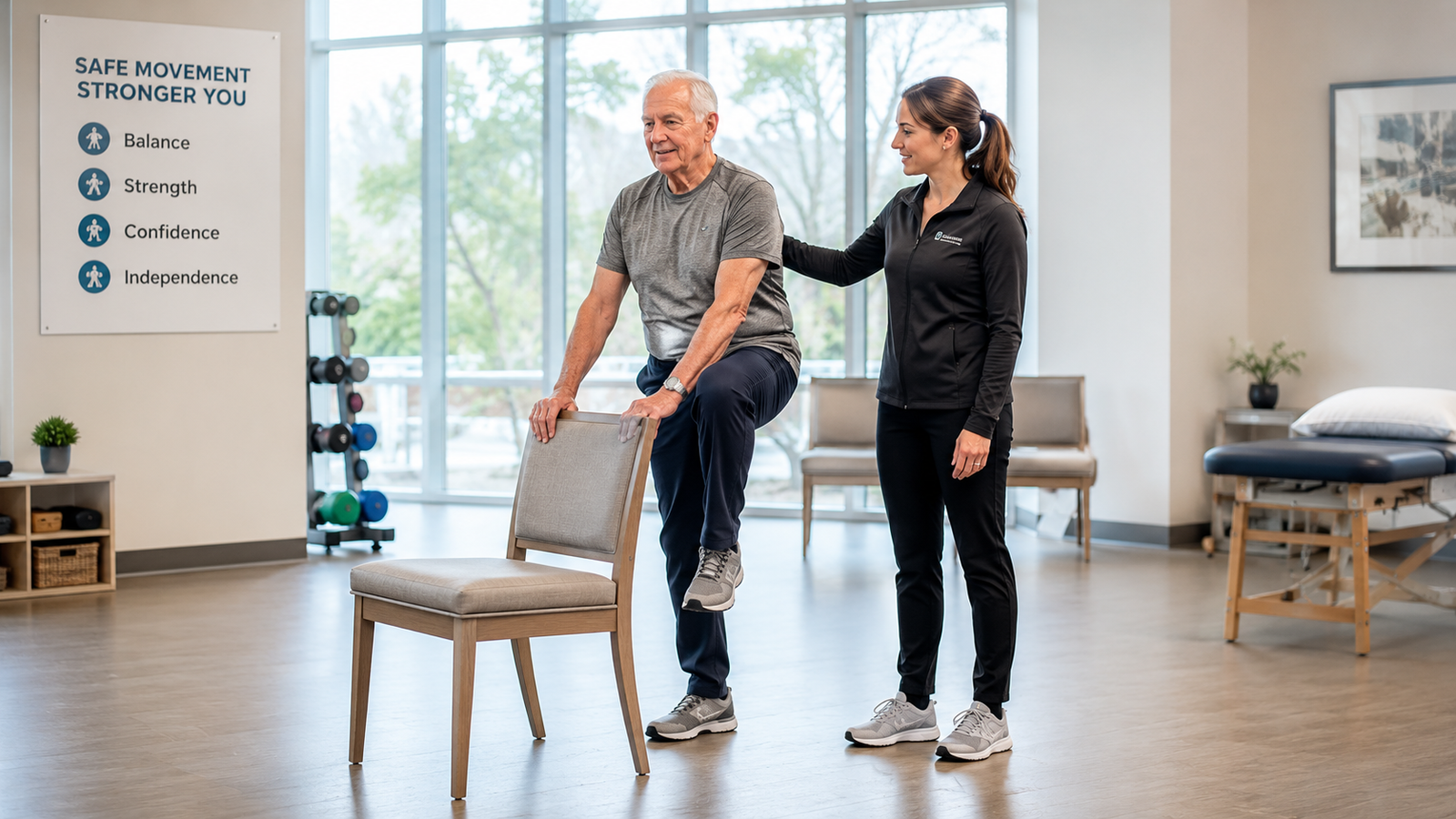
Fear of falling is real, common, and completely understandable. You might know someone who fell and needed weeks to recover, or maybe you’ve had a close call yourself. Suddenly, exercise can seem more risky than helpful.
But here’s the truth: staying still is actually one of the riskier choices you can make. Muscles weaken, balance declines, and confidence shrinks the longer we avoid movement. If you’re afraid of falling and unsure how to start, our guide to restarting exercise after 60 will help you move safely and build confidence step by step. This article is your gentle, zero-pressure starting point.
You don’t need to jump or wear special gym clothes. We promise.
Why Fear of Falling Stops So Many Seniors From Exercising
Fear can be tricky. It makes you think staying still is safest. But the less you move, the more your body forgets how to move well. This cycle affects many older adults, but it’s not talked about enough.
Here’s what often happens:
- A near-fall or actual fall (or even just hearing about someone else’s) triggers anxiety.
- That anxiety leads to reduced activity.
- Reduced activity leads to weaker muscles and poorer coordination.
- Weaker muscles and coordination actually increase fall risk.
- This only increases fear, and the cycle continues.
The good news is that you can break this cycle. You don’t need to start with a spin class or a hike. You can begin in a chair, right in your living room, even in your pajamas if you like. There’s no judgment.
The Case for Starting Small (Seriously, Tiny Is Fine)
A common mistake when restarting exercise after 60 is doing too much too quickly. Sometimes, you feel motivated, take a long walk, and then need days to recover, which can feel discouraging. Does that sound familiar?
Small, steady movements are better than big, occasional efforts. Here’s why starting small is so effective:
- Your body adapts gradually. Muscles, joints, and the nervous system all need time to adjust. Small steps give them that time.
- Your confidence grows. Each small success tells your brain, “Hey, I did that, and nothing bad happened.” That’s powerful.
- It’s sustainable. You’re more likely to keep doing something that doesn’t wipe you out or terrify you.
- It can even be enjoyable. Imagine exercise that doesn’t feel like a chore.
Chair yoga, gentle seated stretches, and slow, supported movements are great ways to start. They help you build strength, flexibility, and body awareness without overtaxing your balance.
How to Create a Safe Exercise Environment at Home
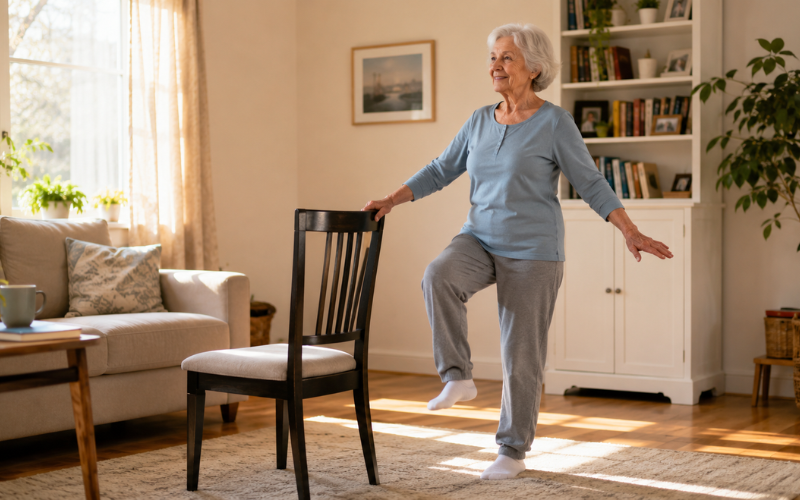
Before you start moving, set up your space to reduce any worries. This means removing anything that might make you feel uneasy.
Clear the Path
Walk through your exercise area and check for anything that could trip you, like loose rugs, cords, pet toys, or old magazines. Move these out of the way. A clear floor helps you feel calm and safe.
Have Support Nearby
When you’re starting out, keeping a sturdy chair, wall, or countertop nearby is smart. This way, you can focus on your movements rather than worry about losing your balance.
Wear the Right Shoes (or No Shoes)
Wearing socks on a slippery floor can be dangerous. Wear supportive, non-slip shoes, or go barefoot on a non-slip surface, such as a yoga mat or carpet. Take care of your feet during this process.
Choose the Right Time of Day
Notice when you feel most awake and energetic. Some people prefer mornings after they’ve fully woken up, while others like afternoons. Avoid exercising when you’re tired or in a hurry, as this can increase your risk of losing balance.
The Emotional Side of Restarting Exercise After 60
There’s something people don’t talk about enough: the emotional barrier to exercise is often bigger than the physical one. Many older adults feel embarrassed about starting over, compare themselves to their younger selves, or feel they’ve failed because they need to take things slowly.
Let’s gently set all of that aside.
Your body at 60, 70, or 80 and beyond has done a lot for you over the years. Treating it with patience and care isn’t giving up—it’s showing respect.
Give Yourself Permission to Be a Beginner
Being a beginner can actually feel freeing. You don’t have to be perfect, and every bit of progress matters. Now, you also have the wisdom to listen to your body instead of pushing through pain just to prove something.
Celebrate the Little Things
Stood up from your chair three times in a row without holding on? That’s worth noting. Felt less stiff after your morning stretch? Write it down. Positive reinforcement is not just for dogs and toddlers. It works remarkably well for adults, too.
Don’t Compare Your Chapter One to Someone Else’s Chapter Ten
Social media and fitness culture can make it seem like everyone over 60 is either running marathons or doing nothing. Most people are somewhere quietly in the middle, just trying to feel a little better each week. That’s exactly where you belong.
Talking to Your Doctor Before You Begin
This part is not meant to scare you. It’s about making sure you have the right information to feel confident.
If you have any of the following, check in with your healthcare provider before starting a new exercise program:
- A history of falls or balance-related issues
- Heart conditions or blood pressure concerns
- Recent surgery or injury
- Osteoporosis or bone density concerns
- Dizziness or vertigo
Most doctors will be genuinely thrilled that you want to get moving. They can also give you specific guidance about what to avoid and what to prioritize based on your unique health picture.
Building Confidence Is the Real Goal
Here’s a perspective shift that might help: the goal right now is not to get fit. The goal is to feel safe moving your body again.
Fitness will come. Strength will come. But first, your nervous system needs to trust the process. That happens through repetition, through positive experiences, and through very gradually expanding what you’re willing to try.
Think of it as building a relationship with movement again after a long time apart. You wouldn’t rush back into anything intense after a long break from a friendship. You’d start with coffee and a comfortable chat.
Start with coffee and a comfortable chair. Everything else can follow.
Your First Step Starts Right Now
You’ve already done something brave today: you read this article. That means some part of you is ready to try. That matters more than you know. Consider this your invitation to begin a 7-Day Restart Guide toward safer, more confident movement.
You don’t need a perfect plan, a new wardrobe, or a gym membership. You just need one small, safe movement today. And then one more tomorrow.
The fear of falling is real, but it doesn’t have to run the show. With the right setup, mindset, and pace, restarting exercise after 60 can actually feel good. Manageable. Even a little fun.
Your chair is waiting. You’ve got this.
