
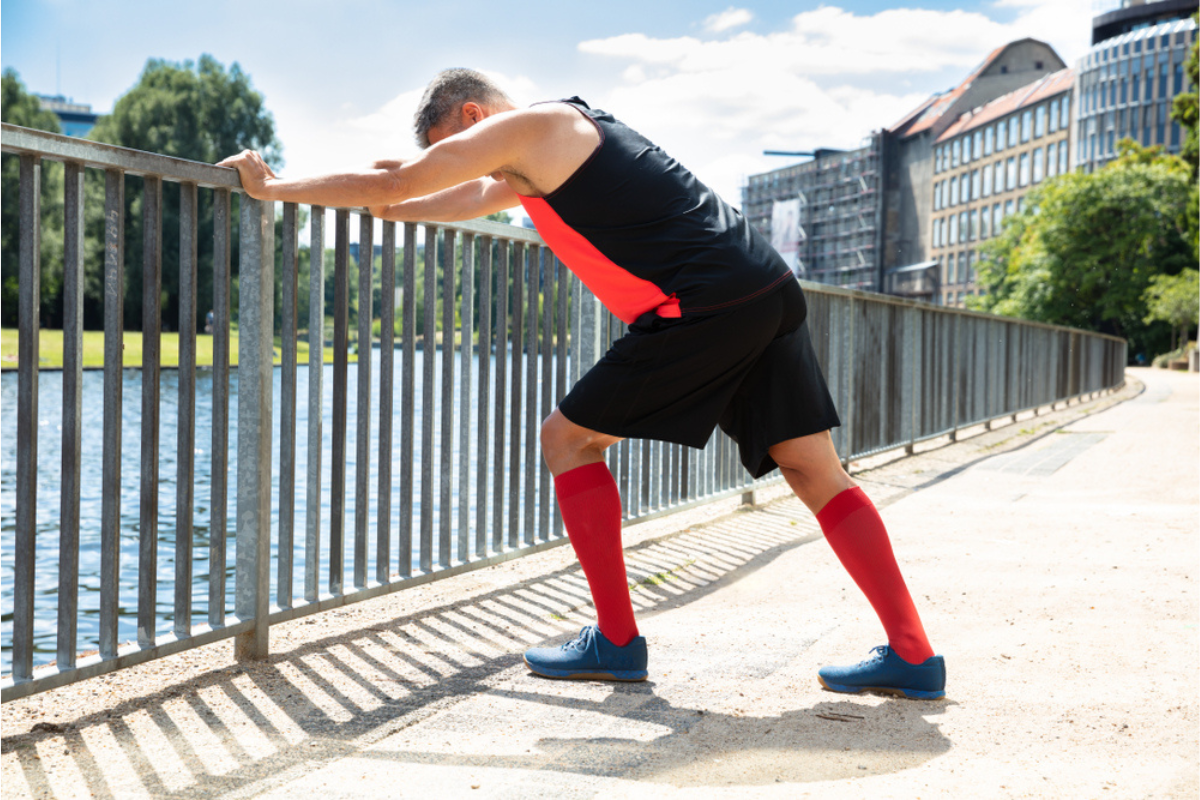
You laced up your sneakers, went for a walk or a jog, felt great about yourself, and then the next morning, your shins staged a full protest. Welcome to the shin splints club. Nobody wants to be a member, but here we are. The good news? You don’t need fancy gym equipment, a physical therapist on speed dial, or a degree in anatomy to feel better. A simple, consistent routine of stretching exercises for shin splints can make a world of difference, especially if you’re just getting started with exercise or getting back into it after a long break.
This guide is for you: the beginner, the comeback kid, the person who just wants to walk without wincing. Let’s get into it.
What Are Shin Splints?
Shin splints, officially known as “medial tibial stress syndrome” (which sounds pretty dramatic), are irritation along the shinbone. They happen when the muscles, tendons, and bones around your tibia get overworked.
Common culprits include:
- Starting a new exercise routine too fast
- Walking or running on hard surfaces
- Worn-out shoes (RIP, those sneakers from 2015)
- Tight calves and ankles that aren’t getting enough love
The fix isn’t just rest. It also means stretching and strengthening the muscles around your shins so they can handle the stress. Think of it as giving your legs some TLC before they start complaining loudly.
Why Stretching the Calves and Ankles Matters
Your calves and ankles are closely connected to your shins. When your calf muscles are tight, they pull more on your shins with every step. Stiff ankles make your body adjust in ways that add extra stress to your lower legs.
Stretching these areas regularly helps:
- Reduce tension along the shin.
- Improve circulation to help healing.
- Increase flexibility to make your stride feel smoother.
- Prevent shin splints from coming back (yes, please)
The best part is that most of these stretches take just a few minutes and can be done in your living room, bedroom, or anywhere you have a wall and a bit of floor space.
Your Easy At-Home Shin Splints Stretch Routine
Do these stretches gently. You don’t need to push into pain. A mild pulling feeling is good, but sharp pain means you should stop.
Calf Stretches for Shin Splints Relief
1. Standing Wall Calf Stretch
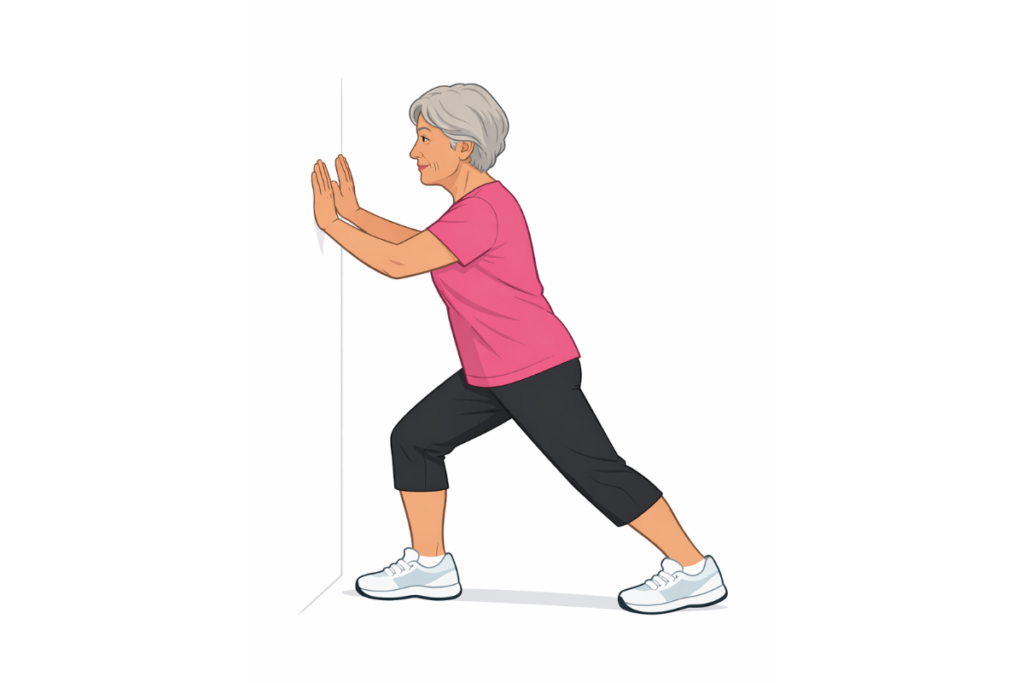
This classic stretch is a total calf game-changer and great for beginners.
How to do it:
- Stand facing a wall, about arm’s length away.
- Place both hands on the wall for support.
- Step one foot back so your back leg is straight, heel flat on the floor.
- Lean forward gently toward the wall until you feel a stretch in your back calf.
- Hold for 20 to 30 seconds. Switch legs and repeat.
- Do 2 to 3 rounds per side.
Tip: Keep your back heel on the ground the whole time. If it keeps lifting, move your foot a bit closer to the wall.
2. Bent-Knee Calf Stretch (For the Lower Calf)
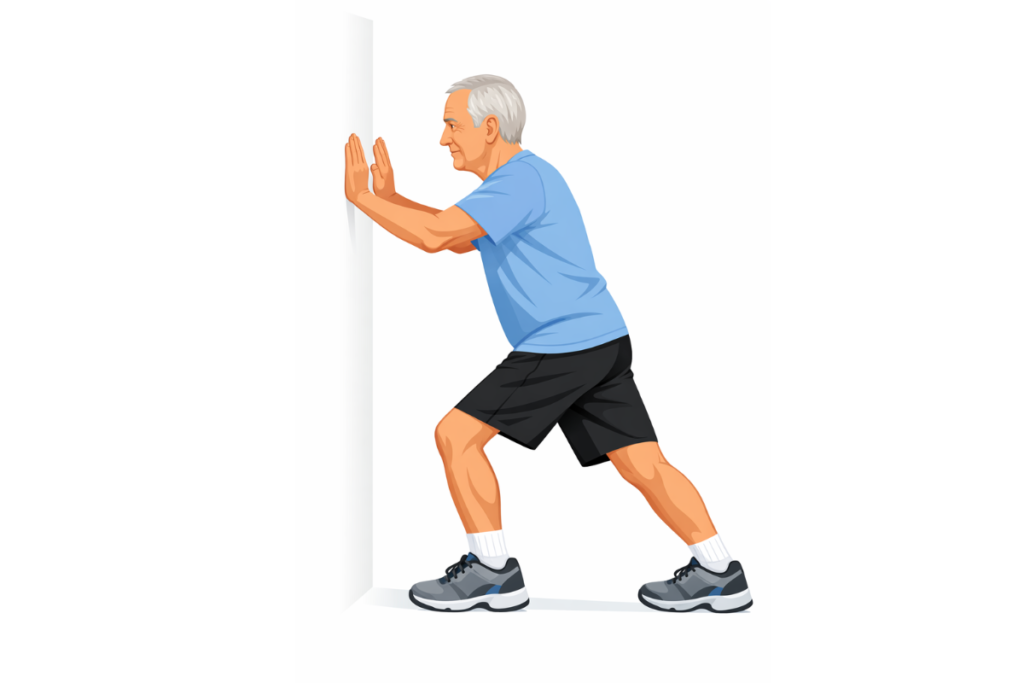
Your calf has two muscles: the gastrocnemius (the big one) and the soleus (the smaller one, lower down). This stretch focuses on the soleus, which often gets overlooked.
How to do it:
- Start in the same wall position as above.
- This time, slightly bend the back knee while keeping the heel on the floor.
- Lean into the wall gently until you feel the stretch lower in your calf, just above the ankle.
- Hold for 20 to 30 seconds per side.
- Repeat 2 to 3 times on each side.
3. Seated Towel Calf Stretch
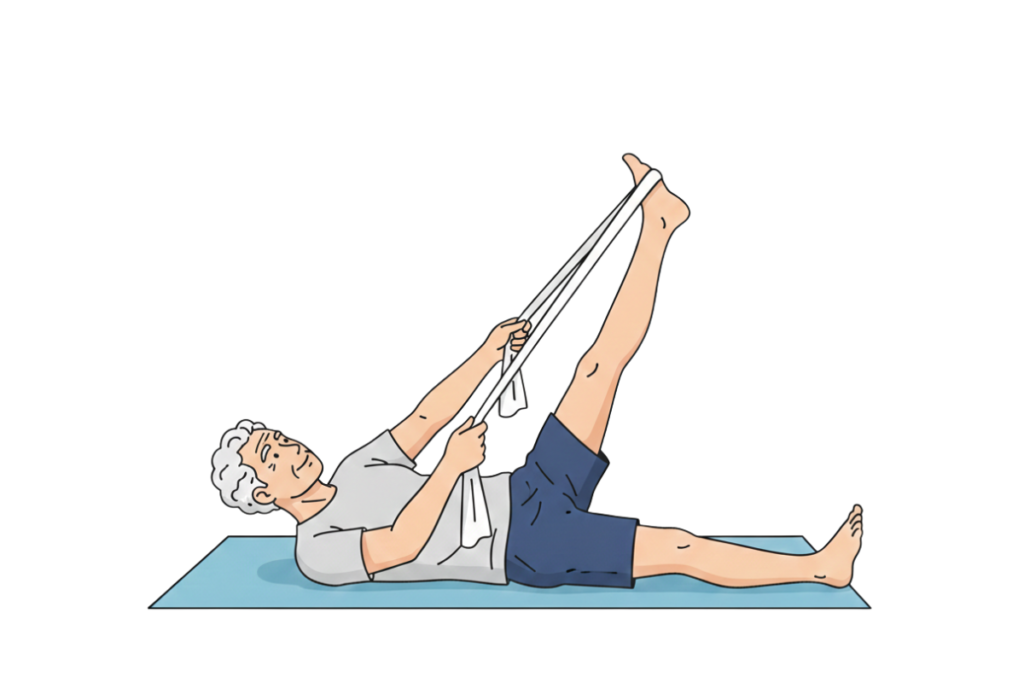
Perfect for mornings when you’d rather not stand up just yet.
How to do it:
- Sit on your bed, or the floor, with your legs stretched out in front of you.
- Loop a towel, resistance band, or even a belt around the ball of one foot.
- Gently pull the towel toward you, flexing your foot so your toes come toward your nose.
- Hold for 20 to 30 seconds. Switch feet.
- Repeat 2 to 3 times per side.
This stretch is also great if you have limited mobility or balance issues.
Ankle Stretches to Support Shin Healing
4. Ankle Circles
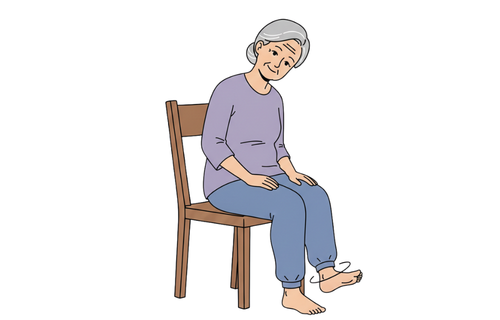
Think of this as a warm-up that also stretches your ankle. It’s simple, satisfying, and surprisingly fun.
How to do it:
- Sit in a chair or on the floor.
- Lift one foot slightly off the ground.
- Slowly rotate your ankle in a big circle — 10 rotations clockwise, then 10 counterclockwise.
- Switch feet and repeat.
Go slow and make the circles as big as feels comfortable. This helps improve mobility and increases blood flow to your ankle joint.
5. Dorsiflexion Stretch (Pulling Foot Up)
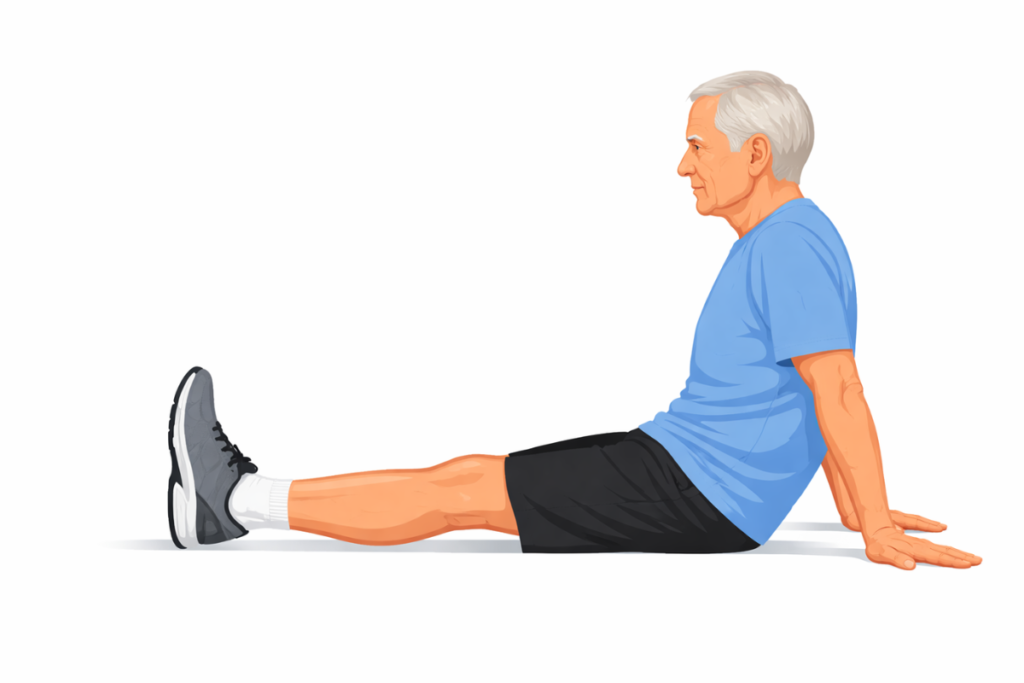
Dorsiflexion just means pulling your toes up toward your shin, which is exactly the motion your ankle needs to move freely when you walk or run.
How to do it:
- Sit on the floor with your legs straight out.
- Flex one foot so your toes point toward the ceiling.
- Hold for 15 to 20 seconds, then relax.
- Repeat 3 to 5 times per foot.
If this feels tight, that’s completely normal. Stiff ankles are common, especially if you spend a lot of time on your feet or have been inactive for a while.
6. Kneeling Shin Stretch
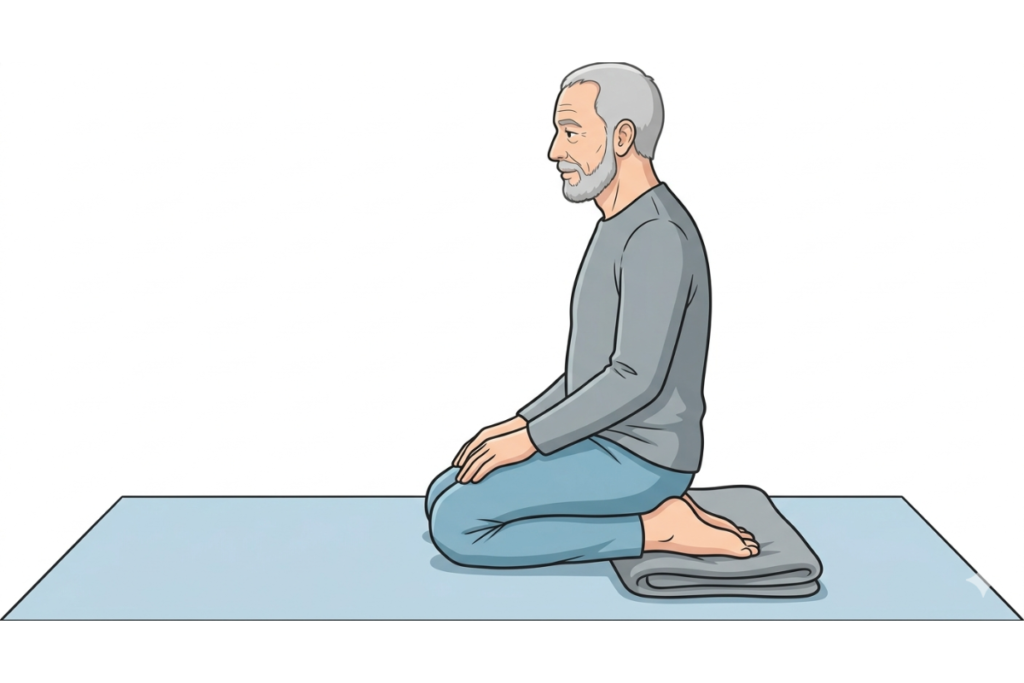
This one directly stretches the front of the lower leg. It’s the exact area that hurts with shin splints. Go gently on this one.
How to do it:
- Kneel on a soft surface (use a folded blanket under your knees if needed).
- Sit back on your heels so the tops of your feet are flat on the floor.
- Feel a stretch along the front of your shins and ankles.
- Hold for 15 to 20 seconds. If it feels too intense, lean back gently instead of sitting all the way down.
Not comfortable kneeling? You can skip this one. The other stretches to relieve shin splints will still help.
How Often Should You Do These Stretches?
Consistency is key. You don’t need a 45-minute stretching session every day—nobody has time for that. Even 5 to 10 minutes a day can really help.
A simple approach that works:
- Daily: Ankle circles and the seated towel stretch (barely any effort required)
- Before exercise: Standing calf stretches to warm up the muscles.
- After exercise: Full routine while your muscles are warm and pliable
- During flare-ups: Take a break from high-impact activity and focus on gentle stretching and rest.
The goal is to make this a habit, not a chore. Even stretching while watching TV counts. No judgment here.
A Few Extra Tips for Shin Splint Recovery
Stretching is powerful, but it works even better when combined with a few other smart habits:
- Ice it: Apply ice wrapped in a cloth for 15 to 20 minutes after activity to reduce inflammation.
- Check your shoes: Worn-out or unsupportive footwear is a sneaky cause of shin splints. It might be time for an upgrade.
- Start slow: Increase your activity level gradually — no more than 10% per week is a good rule of thumb.
- Strengthen, too: As you heal, adding gentle lower-leg strengthening (like toe raises) helps prevent future flare-ups.
If your pain is severe, doesn’t get better with rest and stretching, or you notice swelling or bruising, it’s a good idea to see a healthcare provider. Better safe than sorry.
Final Thoughts
Shin splints can be frustrating, but they’re very manageable. The truth is your body responds well to consistent, gentle care. You don’t have to be perfect—just show up for yourself a little each day.
Start with one stretch today. Just one. The standing wall calf stretch is a great place to begin. Do it once, feel that nice pull in your calf, and give yourself a little pat on the back for taking care of your body.
Your shins have put up with a lot. It’s time to return the favor.0
