


If you’ve ever felt a sharp, burning, or shooting pain running from your lower back down your leg, you’ve likely met your sciatic nerve. It’s not a friendly guest. Sciatica affects millions, especially older adults. The good news is you don’t have to just endure it. Stretching exercises for sciatic nerve pain are a simple, affordable way to ease the pain without needing a gym.
No special equipment or tight workout clothes needed. Just some floor space and a bit of patience to help calm your unhappy sciatic nerve.
What Is the Sciatic Nerve?
Your sciatic nerve is the longest nerve in your body. It starts in your lower back, passes through your hips and buttocks, and runs down each leg.
When the nerve is irritated by a herniated disc, a tight piriformis muscle, or spinal stenosis, it sends strong signals. This causes the typical sciatica pain: a radiating ache, numbness, or tingling that can make sitting, standing, or walking uncomfortable.
The sciatic nerve is easily irritated. Even long periods of sitting or a mild herniated disc can cause a flare-up. The good news is that gentle, regular stretching can help calm the nerves.
Why Stretching Actually Helps
Here’s the simple truth: when the muscles around your sciatic nerve are tight, they compress and irritate it. Stretching loosens those muscles, reduces pressure on the nerve, and improves blood flow to the area.
It’s like loosening a kinked garden hose. Once the tension is gone, everything flows smoothly again.
Regular stretching also helps with:
- Improving posture and spinal alignment
- Reducing muscle inflammation
- Preventing future flare-ups
- Building flexibility and core stability over time
You don’t need to be a yoga expert. Just 10 minutes of gentle stretching each day can really help.
Stretches That Actually Help: The Senior-Friendly List
Before you start, remember a few rules. Never stretch if you feel sharp pain. A gentle pull is okay, but real pain is your body’s warning. Move slowly and breathe deeply during each stretch.
1. Knee-to-Chest Stretch
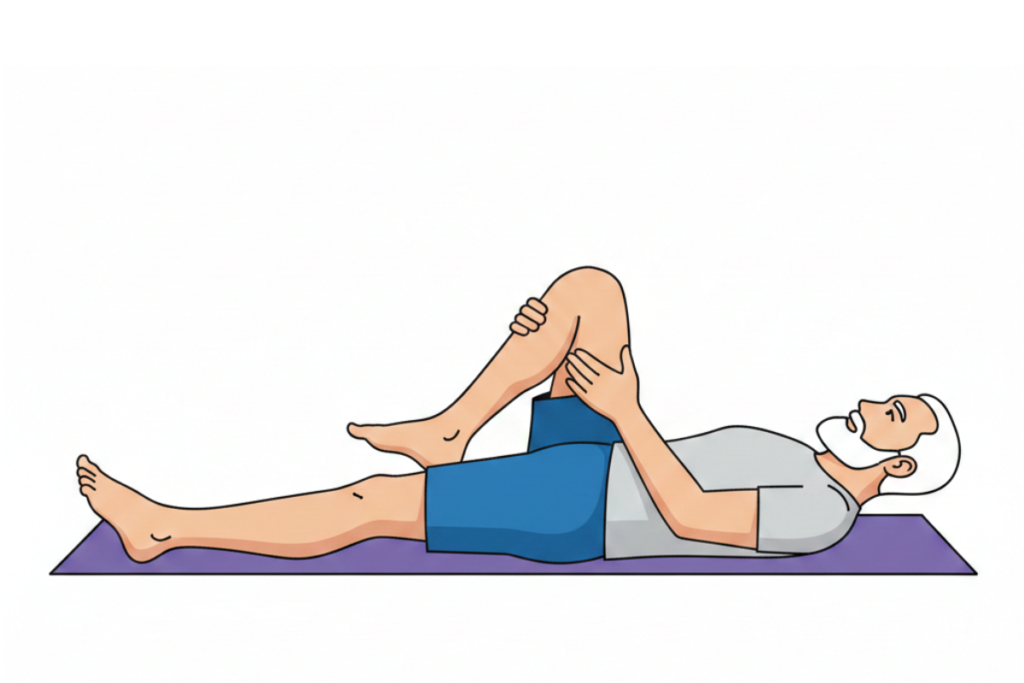
This one is simple, safe, and feels absolutely wonderful on a cranky lower back.
How to do it:
- Lie flat on your back on a firm surface or mat.
- Slowly bend one knee, then gently pull it toward your chest with both hands.
- Hold for 20 to 30 seconds while breathing deeply.
- Slowly lower and switch legs.
- Repeat 2 to 3 times on each side.
This stretch gently eases pressure on your lower spine and nerve root. It’s a perfect place to start if you’re new to stretching.
2. Seated Piriformis Stretch
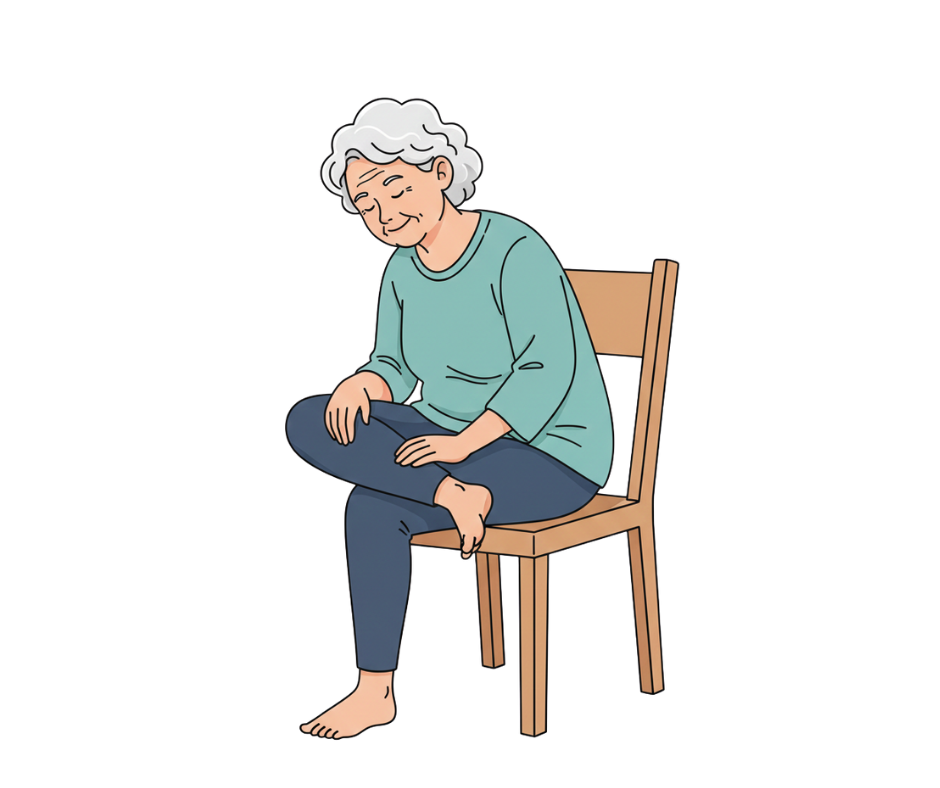
The piriformis muscle, located deep in your buttocks, is one of sciatica’s biggest troublemakers. This chair-based stretch is perfect for seniors and anyone who’d rather not be on the floor.
How to do it:
- Sit up straight in a sturdy chair with both feet flat on the floor.
- Cross your right ankle over your left knee (like a figure-four position).
- Gently lean forward from your hips, keeping your back straight, until you feel a stretch in your right buttock.
- Hold for 20 to 30 seconds.
- Switch sides and repeat 2 to 3 times.
If your hip feels tight, you don’t have to lean much. A small forward bend is enough.
3. Supine Figure-4 Stretch (Floor Version)
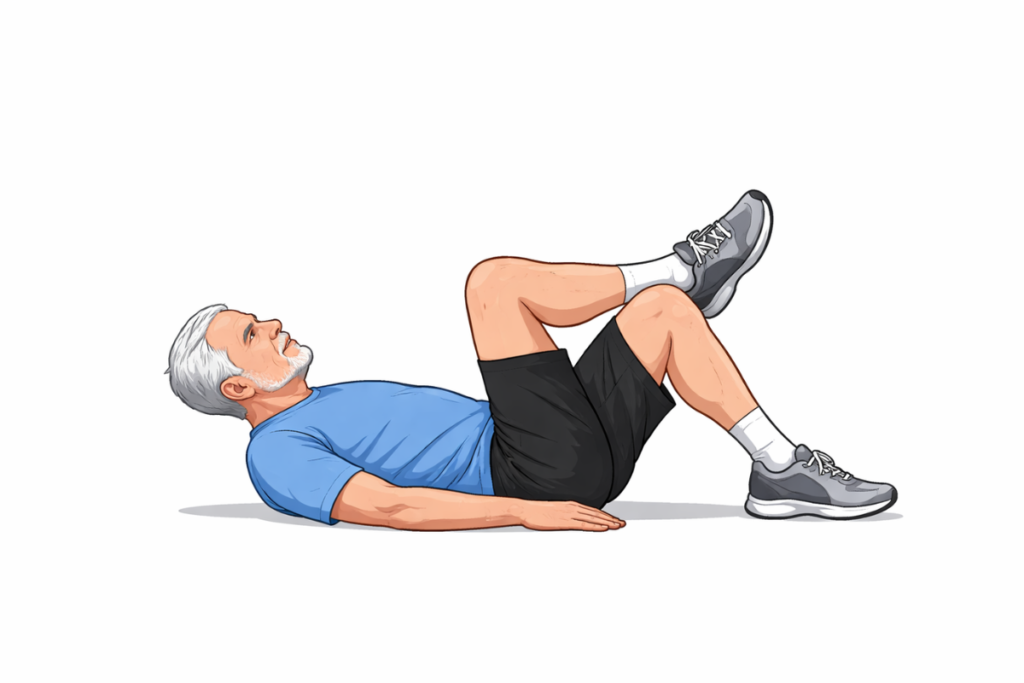
Same idea as the seated version above, but lying down. Many people find this version gives a deeper, more satisfying release.
How to do it:
- Lie on your back with both knees bent and feet flat on the floor.
- Cross your right ankle over your left thigh, just above the knee.
- Gently flex your right foot to protect your knee.
- Either stay here or slowly lift your left foot off the floor, drawing both legs toward your chest.
- Hold for 20 to 30 seconds, then switch sides.
If lifting your foot feels hard, keep it on the floor to start. Take your time and go at your own pace. No need to hurry.
4. Child’s Pose (Modified)
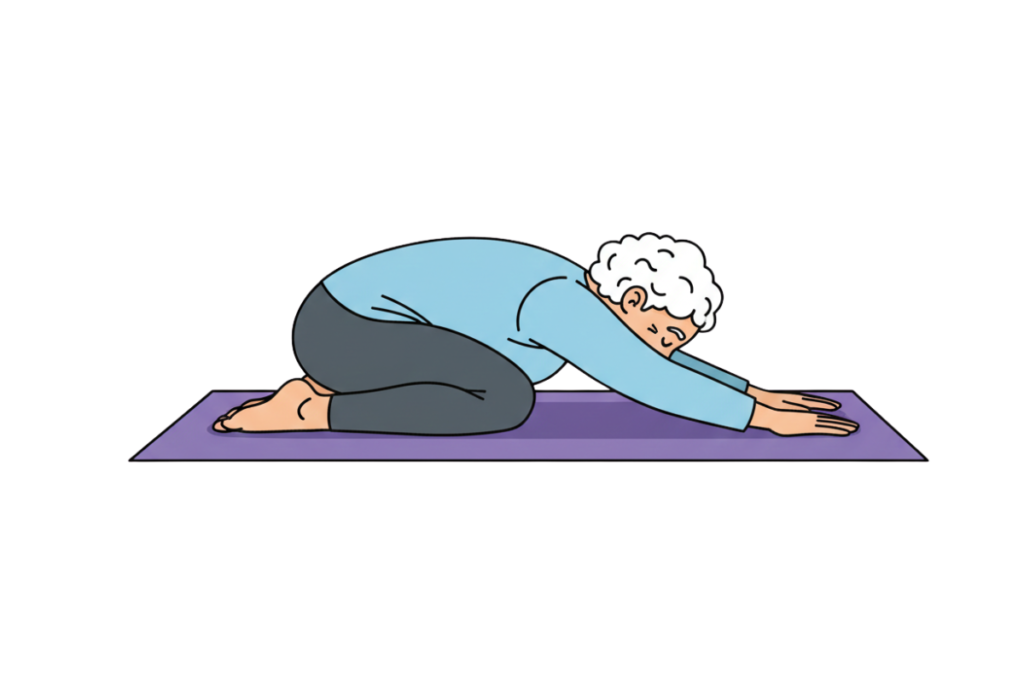
Many people who do yoga love this stretch. Child’s Pose gently loosens your lower back, hips, and glutes at the same time.
How to do it:
- Start on all fours on a mat.
- Slowly push your hips back toward your heels as far as comfortable.
- Extend your arms forward on the mat or rest them by your sides, whichever feels better.
- Let your forehead relax toward the floor (or a folded blanket if the floor feels far away).
- Hold for 30 to 60 seconds and breathe deeply.
If getting down to the floor is tricky, this stretch can also be done seated at the edge of a bed by gently folding forward.
5. Cat-Cow Stretch
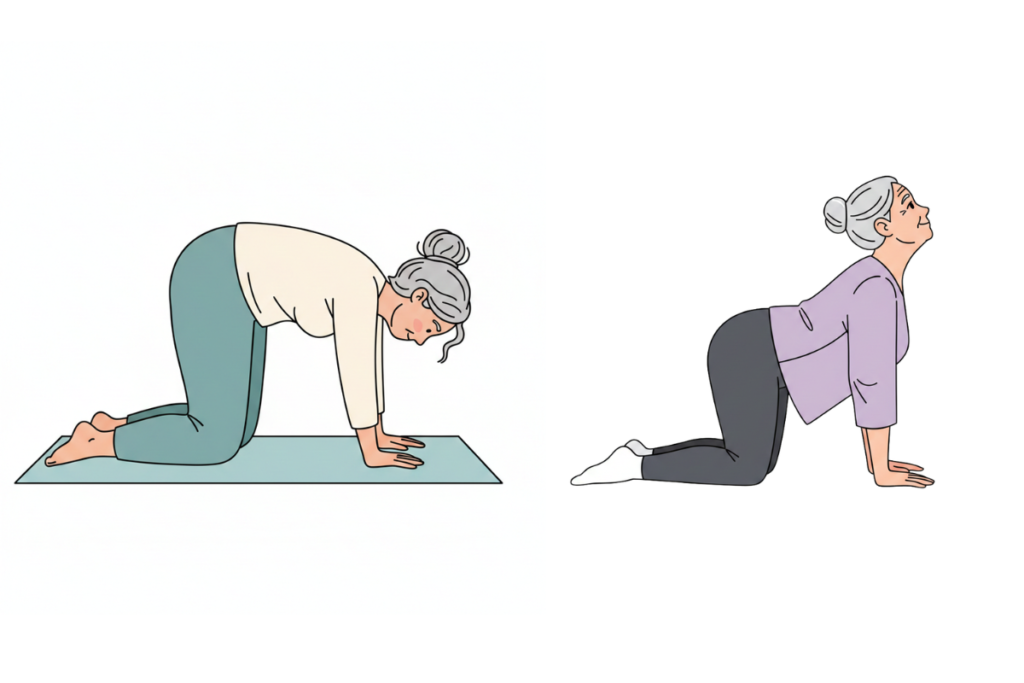
This gentle spine movement boosts flexibility and eases nerve pressure. It’s also kind of fun to do. You might feel a bit silly, and that’s okay.
How to do it:
- Start on all fours with your wrists under your shoulders and knees under your hips.
- Inhale and drop your belly toward the floor, lifting your head and tailbone upward (Cow pose).
- Exhale and round your spine toward the ceiling, tucking your chin and tailbone (Cat pose).
- Flow gently between the two for 8 to 10 breaths.
Move slowly and follow your breath. This isn’t a race. Taking it slow is the best way to ease sciatica.
What to Avoid When You Have Sciatica
Not all stretches help when your sciatic nerve is irritated. Some can actually make the pain worse.
Avoid these:
- Straight-leg toe touches: Bending forward with straight legs can put enormous tension on the sciatic nerve and aggravate symptoms.
- High-impact activities during a flare-up: Running, jumping, or any other jarring activity should be paused when pain is acute.
- Deep twists: Aggressive spinal twisting can further compress the nerve. Save these for when you’re fully recovered.
- Sitting too long: This might surprise you, but sitting for a long time tightens the piriformis muscle and can worsen sciatica. Try to stand up and move gently every 30 minutes.
- Pushing through sharp pain: Dull stretching sensations are normal. Sharp, shooting, or worsening pain is a signal to stop immediately.
Consistency Beats Perfection Every Time
Here’s something people don’t say enough: you don’t need to do these stretches perfectly. You just need to do them often.
One thing that’s often emphasised in a chair yoga book for seniors is that consistency matters far more than perfection. When practising the best stretches for sciatic pain relief, you don’t need flawless form. You simply need to show up regularly and move gently, allowing your body to adapt over time.
A shaky figure-4 stretch every morning is much better than a perfect one done once a month. Your body responds to regular practice. Even five minutes a day makes a big difference.
Begin with one or two stretches from this list. Do them each morning before getting out of bed or each evening before sleep. Focus on building the habit first; flexibility will come later.
Final Thoughts
Sciatica can be tough, especially when every move sends a jolt down your leg. But relief is possible, and you don’t have to change your whole life to get it. Pick just one stretch from this list. Do it today. That’s it. One stretch, done gently and with a little patience, is the start of real progress.
Your sciatic nerve has been causing trouble long enough. It’s time to give it some care and yourself some much-needed relief. You’ve got this.