
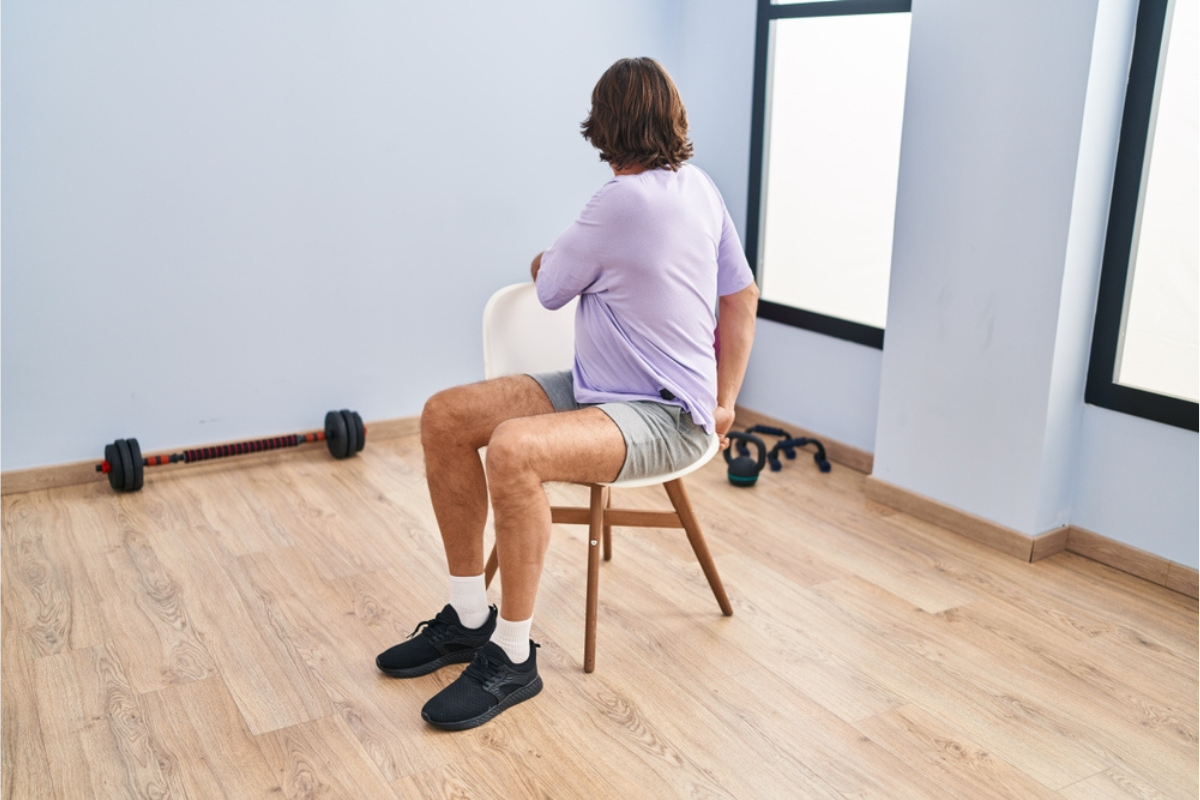
Your shoulders work incredibly hard. They help you reach the top shelf, carry groceries, wave at your neighbor, and type approximately one million emails. And what do they get in return? Stiffness. Tension. The occasional alarming creak makes you wonder if you installed it wrong. If your shoulders feel tight, sore, or uncomfortable, you are not alone. Many older adults, people new to exercise, and anyone who sits at a desk often experience shoulder discomfort.
The good news is you do not need a gym membership, fancy equipment, or a huge foam roller. Just a sturdy chair and about seven minutes are enough. Stretching exercises for rotator cuff muscles can really improve how your shoulders feel and move each day. You can even do them while sitting.
What Is the Rotator Cuff?
Before we start the stretches, here is a quick look at shoulder anatomy. It will be brief and simple.
Your rotator cuff is made up of four muscles and their tendons that surround your shoulder joint. They help keep your shoulder stable and moving well. When these muscles are tight or weak, you might feel aches, have less movement, or struggle to reach certain spots on your back.
The most common culprits behind rotator cuff trouble include:
- Sitting for long periods with rounded shoulders
- Repetitive overhead movements
- Sleeping on the same side every night
- Simply getting older (no judgment here)
Gentle, regular stretching can help loosen your shoulders, ease discomfort, and improve movement. Just seven minutes a day can make a real difference over time.
Before You Begin: A Few Simple Ground Rules
Safety comes first. Here are some tips to help you get started:
- Use a firm, stable chair without wheels if possible. A dining chair works perfectly.
- Sit toward the front edge of the seat so you have room to move your arms freely.
- Do not push into sharp pain. A gentle stretch is fine, but if you feel pain, stop and ease off.
- Move slowly and remember to breathe. Breathing helps you get the most out of each stretch.
- Check with your doctor if you have had a recent shoulder injury or surgery before starting any new routine.
Let’s get started and help your shoulders feel better.
Your 7-Minute Chair Yoga Routine for Rotator Cuff Relief
Stretch 1: Shoulder Rolls (1 Minute)
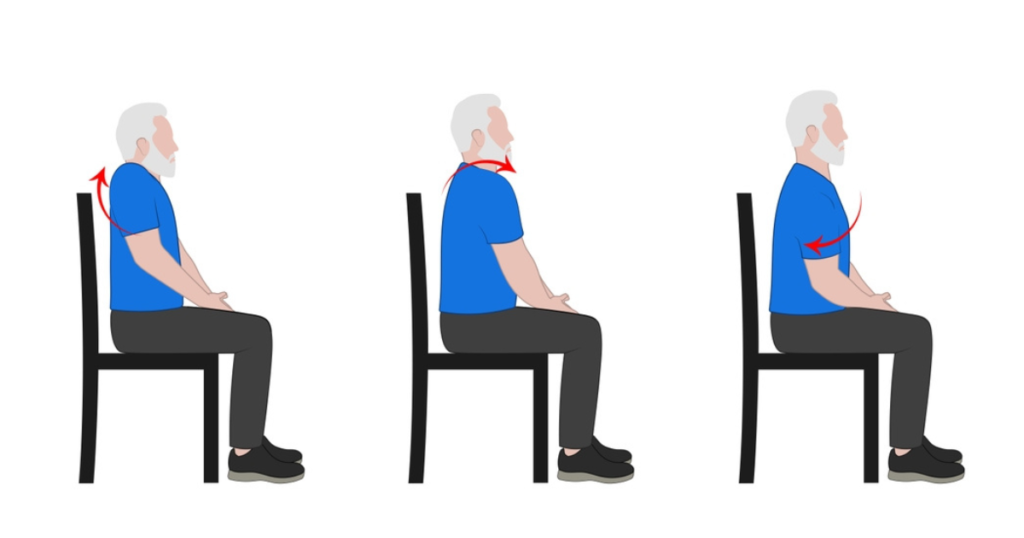
This stretch is your warm-up. It is simple, gentle, and feels good.
How to do it:
- Sit tall with your feet flat on the floor and your hands resting on your thighs.
- Slowly roll both shoulders forward in a big circle. Up toward your ears, back, down, and forward again.
- Do 5 slow rolls forward, then 5 slow rolls backward.
- Try to make the circles as large and smooth as you can.
Why it helps: Rolling your shoulders warms up the joint, increases blood flow, and gets your muscles ready for deeper stretches.
Stretch 2: Cross-Body Shoulder Stretch (1 Minute)
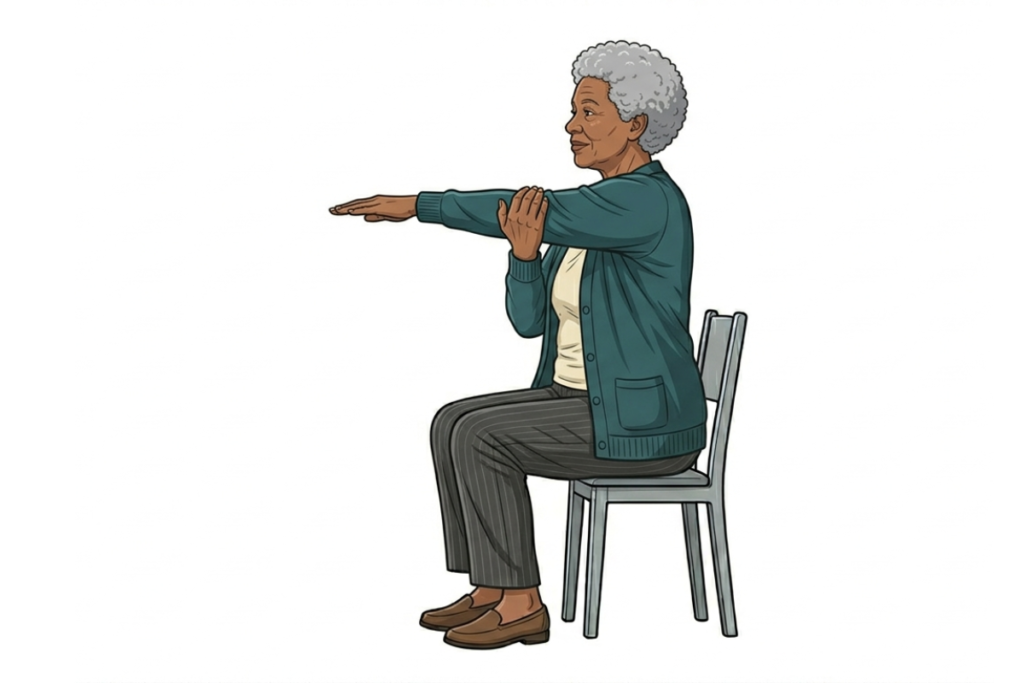
This stretch focuses on the back of your shoulder, an area that often holds tension.
How to do it:
- Sit tall. Take your right arm and bring it straight across your chest.
- Use your left hand to gently press your right arm closer to your chest until you feel a mild stretch in the back of your right shoulder.
- Hold for 20 to 30 seconds. Breathe slowly.
- Release and switch to the other side.
Beginner tip: You do not need to pull your arm hard. A gentle hold is enough. If your shoulder lifts toward your ear, relax and let it drop down before continuing.
Stretch 3: Chest Opener Stretch (1 Minute)
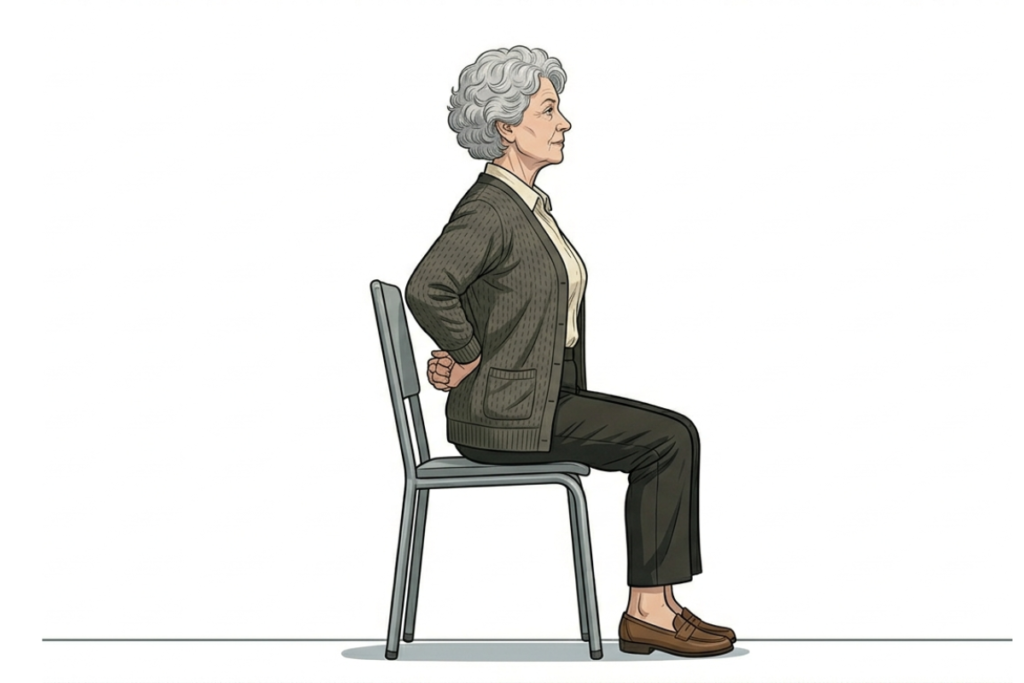
Many people spend a lot of time hunched over phones and screens. This stretch helps counteract that posture.
How to do it:
- Sit near the front of your chair with your feet flat on the floor.
- Clasp your hands together behind your back, or simply rest them on the back edge of the seat.
- Gently squeeze your shoulder blades together and lift your chest toward the ceiling.
- Hold for 20 to 30 seconds. Take three slow, deep breaths.
- Release and repeat once more.
Why it helps: Opening your chest relieves pressure on the front of your shoulder and helps your rotator cuff muscles work more evenly.
Stretch 4: Doorway Stretch (Seated Version) (1 Minute)
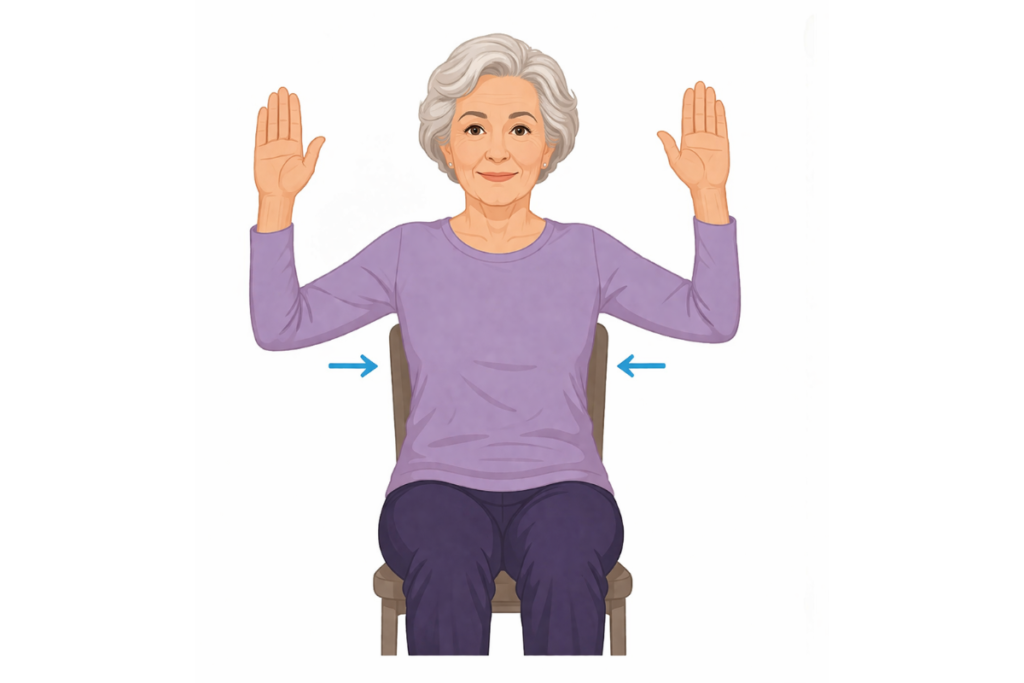
You do not need a doorway for this stretch. A chair works just fine.
How to do it:
- Sit tall and bend both elbows to 90 degrees, like a cactus shape.
- Slowly draw your elbows back, squeezing your shoulder blades together.
- Hold for 5 seconds, then release. Repeat 8 to 10 times.
- Keep your chin level and your lower back relaxed.
Beginner tip: This stretch should feel like a gentle activation in your upper back and shoulders. If your neck feels tense, slow down and use less effort.
Stretch 5: Pendulum Arm Swing (1 Minute)
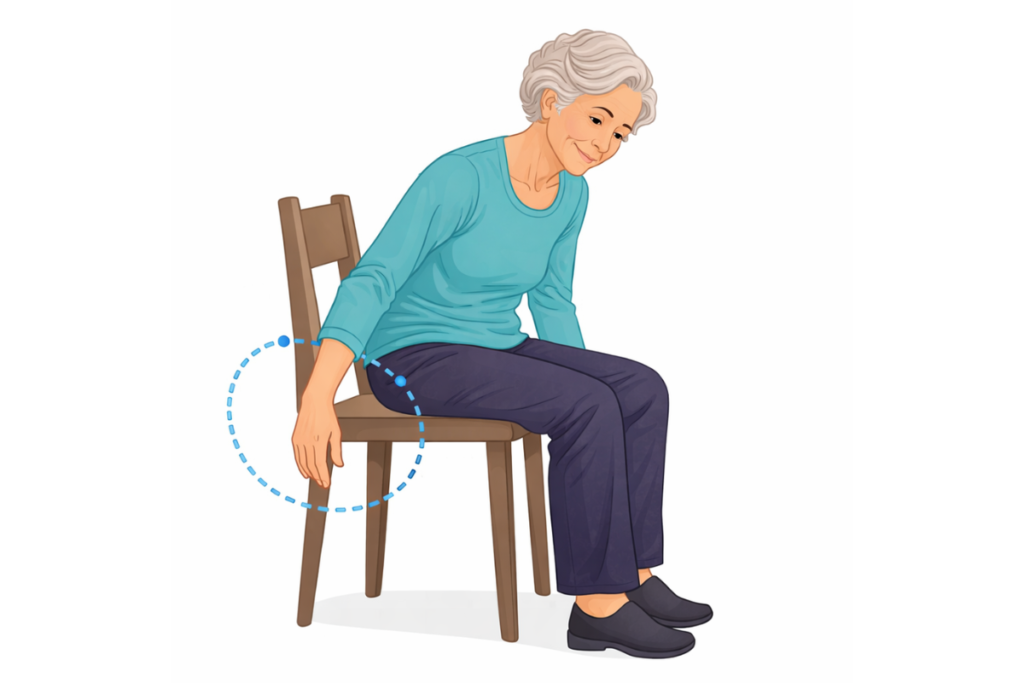
This is a very beginner-friendly rotator cuff exercise because gravity helps you with the movement.
How to do it:
- Sit sideways on your chair so one side is open.
- Lean slightly forward and let your outside arm hang down freely at your side.
- Gently swing your arm in small circles, about the size of a dinner plate.
- Do 10 circles in one direction, then 10 in the other.
- Switch sides and repeat.
Why it helps: Letting your arm hang gently helps take pressure off the shoulder joint and reduces tightness in the rotator cuff.
Stretch 6: Overhead Reach and Side Bend (1 Minute)
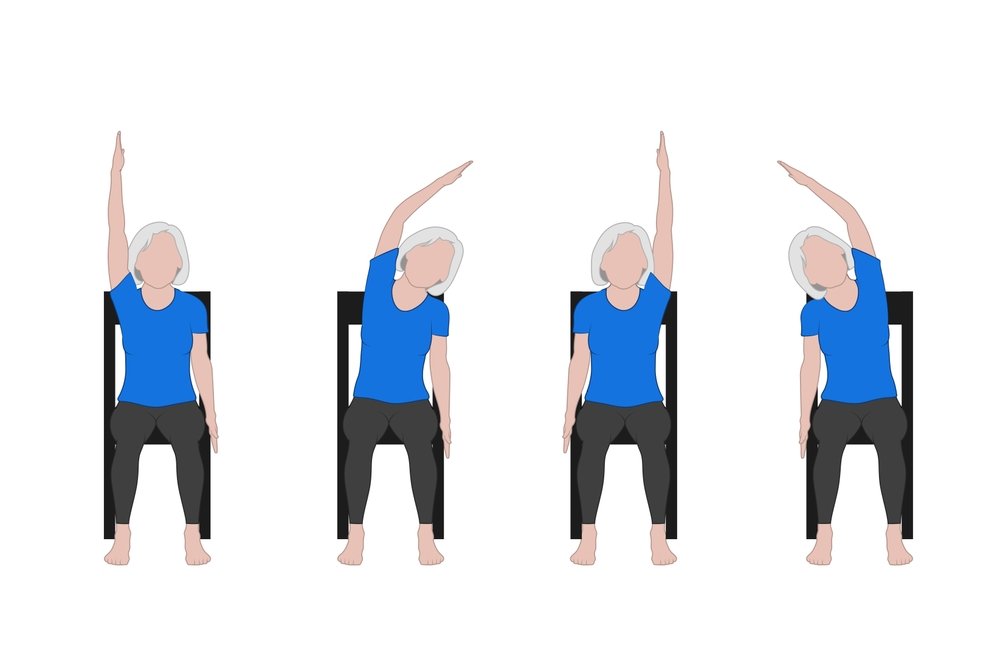
This stretch improves your shoulder mobility and also gives your whole body a gentle stretch.
How to do it:
- Sit tall and raise your right arm straight up overhead.
- Gently lean to the left, letting your raised arm follow.
- Hold for 15 to 20 seconds, feeling a stretch along the right side of your body and into your shoulder.
- Come back to the center slowly and switch sides.
Beginner tip: Do not let your body slump as you lean. Try to reach your fingertips toward the wall to keep the stretch active.
Stretch 7: Seated Neck and Shoulder Release (1 Minute)

Your neck and shoulder muscles are closely connected, so tension in one often affects the other. This last stretch helps both areas.
How to do it:
- Sit tall and drop your right ear toward your right shoulder.
- Let the weight of your head do the work. No forcing.
- For a deeper stretch, gently place your right hand on the left side of your head.
- Hold for 20 to 30 seconds.
- Slowly come back to the center and switch sides.
- Finish by gently rolling your chin down toward your chest and holding for 10 seconds.
Why it helps: Relaxing your neck muscles can relieve pressure on your shoulders and the upper rotator cuff.
Tips for Making This a Habit
Doing this routine once feels good, but doing it regularly brings real results. Here are some tips to help you keep it up:
- Tie it to something you already do. Try it after your morning coffee or before your afternoon TV show.
- Set a reminder on your phone. It is a simple tip, but it really helps.
- Start with just three or four stretches if seven feels like a lot. You can build up over time.
- Notice how your shoulders feel after a few weeks. Many people are happy with the improvement.
Final Thoughts
Improving shoulder mobility does not require big changes. A little consistency and showing up, even for just seven minutes with a sturdy chair, can make a difference.
You do not need to be flexible or young. You just need to be willing to try. Start with these exercises to stretch the rotator cuff today. Your shoulders will thank you.
Your shoulders deserve some care.

Leave a Reply