
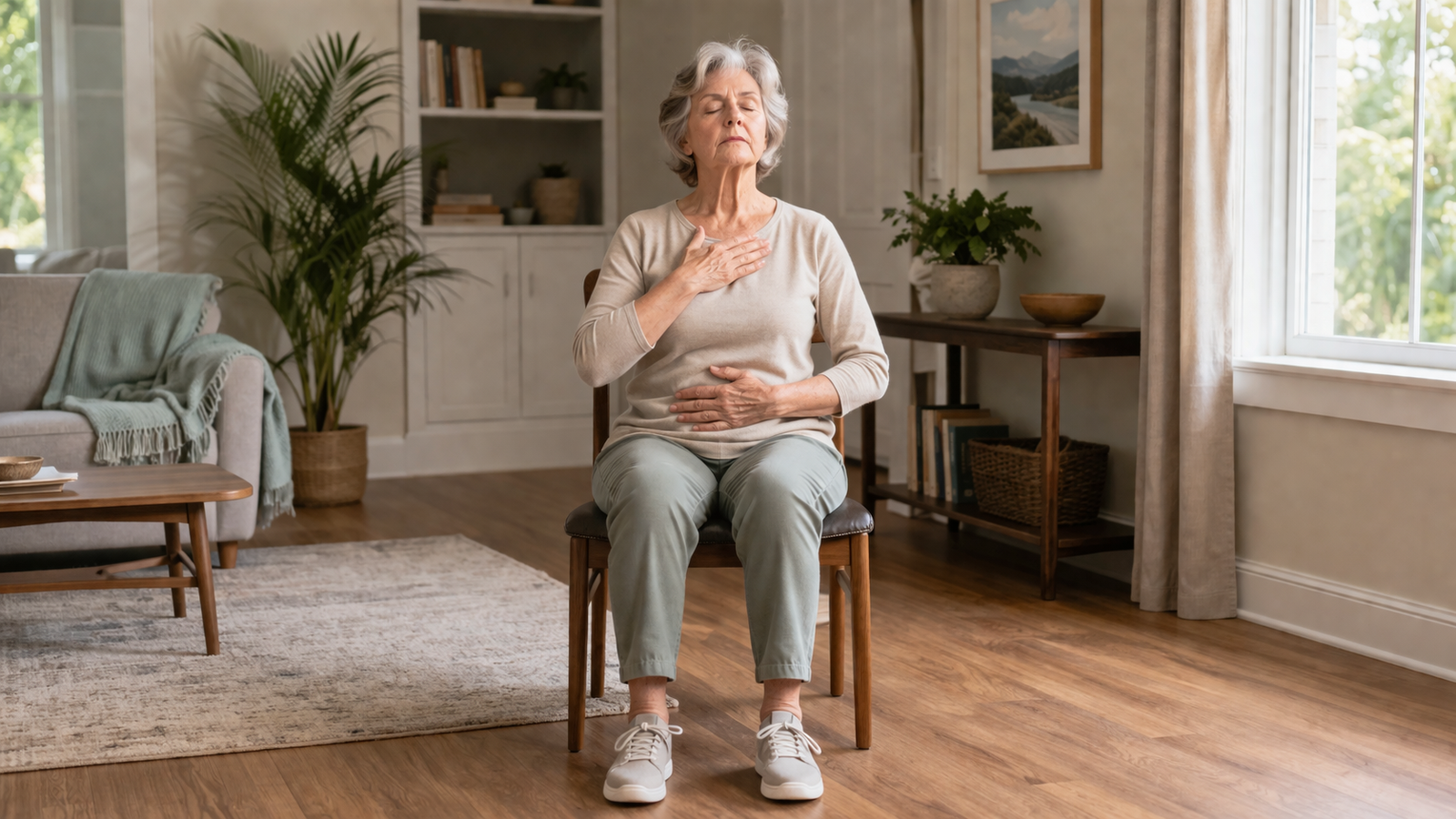
Life can feel overwhelming, even if you’re not running marathons or climbing mountains. Sometimes, just figuring out a new TV remote or opening a stubborn jar of pickles can make your heart race. If you’ve been feeling a bit frazzled, you’re not alone. The good news is you don’t need to be super flexible to find some peace. With simple breathing exercises for stress and anxiety, you can feel calmer without leaving your favorite chair.
You might think yoga is only for people who can touch their toes or do tricky poses. But chair yoga shows that anyone can join in. It’s a gentler version of traditional yoga, and its main focus is something you already do: breathing. We’ll just learn to breathe with more purpose. Think of this as a guide to help you reset and relax.
This guide will show you some easy, senior-friendly breathing techniques. They can help lower stress, calm your mind, and even improve your sleep. No special clothes needed.
Why Breathing is a Big Deal for Seniors
You may think, “I’ve been breathing for decades, so I know how it works!” That’s true, but most of us breathe into our chests. When we’re stressed, our breathing gets shallow and quick, which signals our brain to feel anxious and on edge.
For older adults, focusing on deep, mindful breathing has some great benefits:
- Nervous System Soothing: It helps your body shift from feeling stressed to feeling calm and relaxed.
- Improved Focus: It can clear away the mental fog that sometimes comes with a busy day.
- Better Circulation: Deep breaths help move oxygen throughout your body where it’s needed.
- Zero Impact: Because you’re sitting, there’s no risk of losing your balance or hurting your knees.
The best part is your lungs don’t care what you’re wearing or how long it’s been since you exercised. They’re ready to help you right now.
Setting the Stage for Your Chair Yoga Session
Before we start any stress and anxiety breathing exercises, let’s get your space ready. You don’t need anything fancy—just a comfortable spot where you feel at ease.
- Find a Sturdy Chair: Pick a chair without wheels. A dining or kitchen chair works well. Avoid very soft recliners, since you want to sit up straight.
- Check Your Feet: Make sure your feet rest flat on the floor. If the chair is too tall, place a book or cushion under your feet.
- Sit Tall: Picture a string gently lifting the top of your head toward the ceiling. Sit comfortably upright, not stiff.
- Quiet the Noise: If possible, turn off the TV or put your phone away. If there’s outside noise, try to tune it out as best you can.
5 Simple Breathing Exercises to Try Today
Here are five easy techniques. Try them all or choose the one you like best. There’s no right or wrong—if it feels good, you’re doing it right.
1. The Deep Belly Balloon Breath
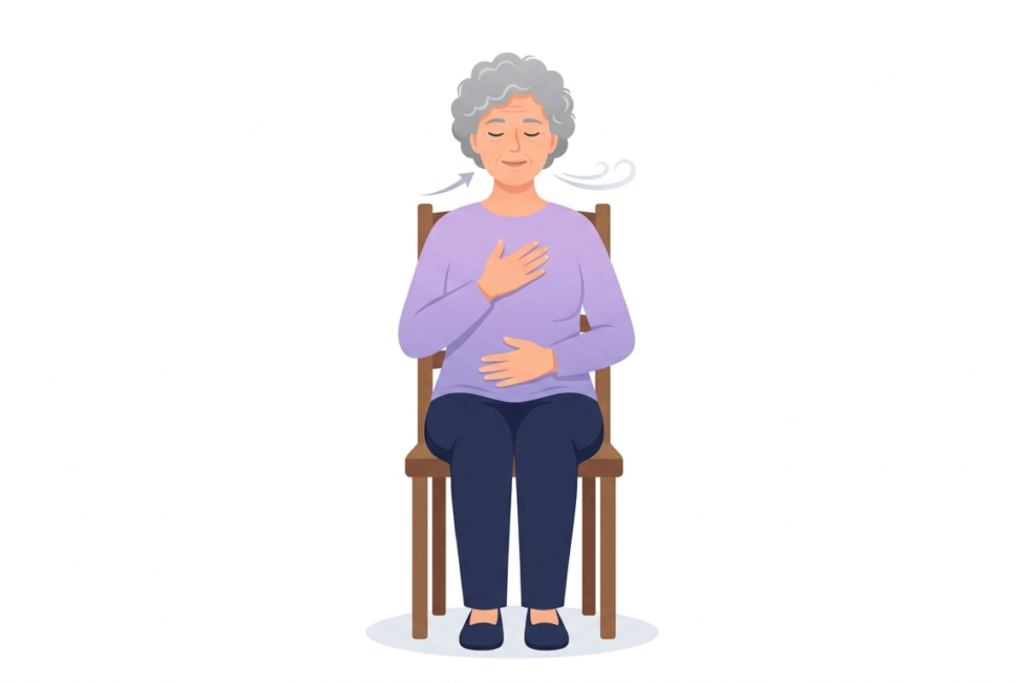
This is the basic relaxation exercise. Most of us breathe into our upper chest, but this helps us send air deeper into our lungs.
- Step 1: Place one hand on your chest and the other hand on your belly, right over your belly button.
- Step 2: Breathe in slowly through your nose. Try to make your belly hand move outward while your chest hand stays still. Picture your belly filling up like a balloon.
- Step 3: Exhale slowly through your mouth, feeling your belly sink back in.
- Step 4: Repeat this for five breaths.
Why it works: This stimulates the vagus nerve, which helps turn off anxiety. If you feel a bit silly at first, that’s normal. It means you’re doing it right.
2. The Equal Breath (The Balanced Scale)
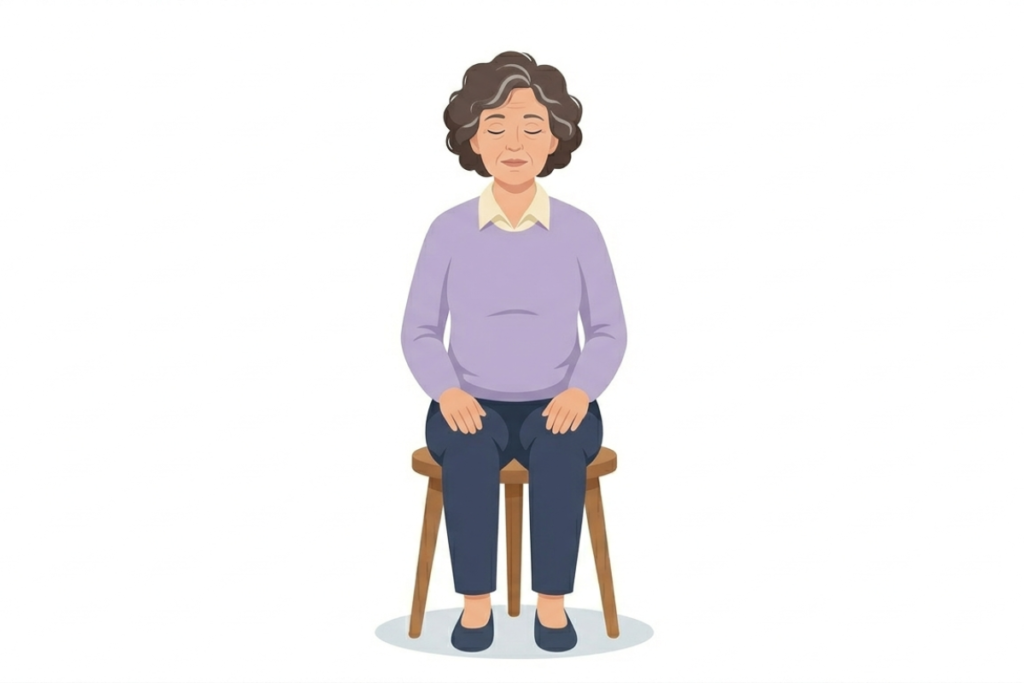
This technique is great when your mind is busy with worries or to-do lists. It gives your brain a simple rhythm to follow.
- Step 1: Close your eyes or look softly at a spot on the floor.
- Step 2: Inhale through your nose for a count of four. (1, 2, 3, 4)
- Step 3: Exhale through your nose for the same count of four. (1, 2, 3, 4)
- Step 4: Continue this for a minute or two.
If four seconds feels too long, try three. If it’s too short, try five. The goal is to make your inhale and exhale the same length. This helps your body relax.
3. The Pursed Lip “Cooling” Breath
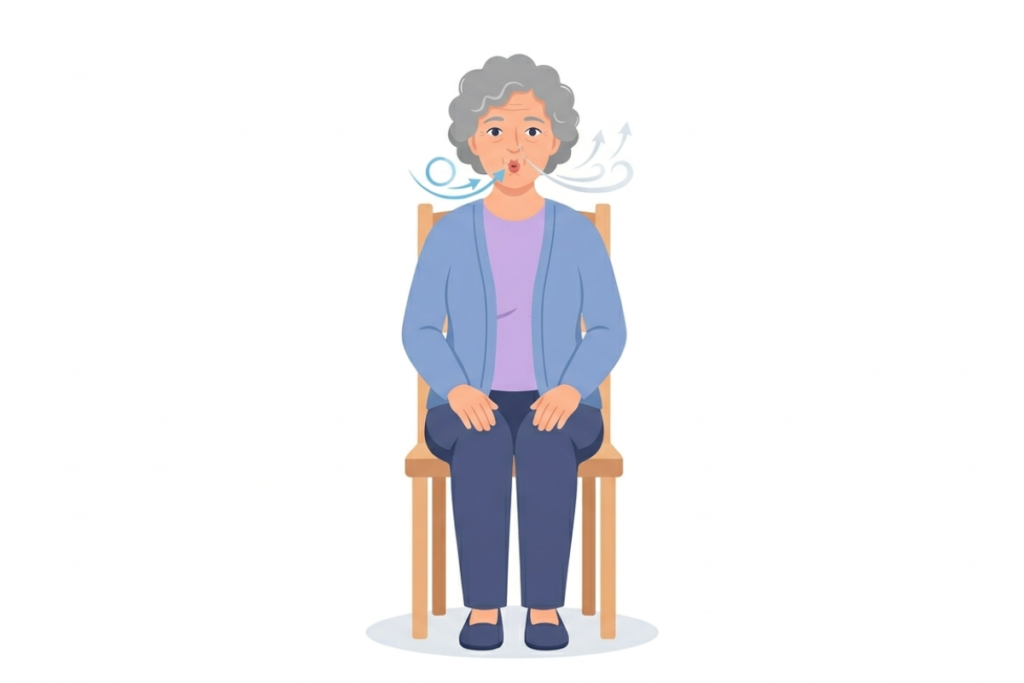
This exercise is helpful if you feel overheated or flustered. It’s often used to improve lung function and is also a good way to relieve stress.
- Step 1: Inhale normally through your nose for two counts.
- Step 2: Pucker your lips as if you were about to whistle or blow out a birthday candle.
- Step 3: Exhale very slowly through those pursed lips for a count of four or more.
- Step 4: Imagine you are blowing through a straw to create tiny bubbles in a glass of water.
The long, slow exhale is the key. It helps your body slow down and relax from head to toe.
4. The Humming Bee Breath (Bhramari)
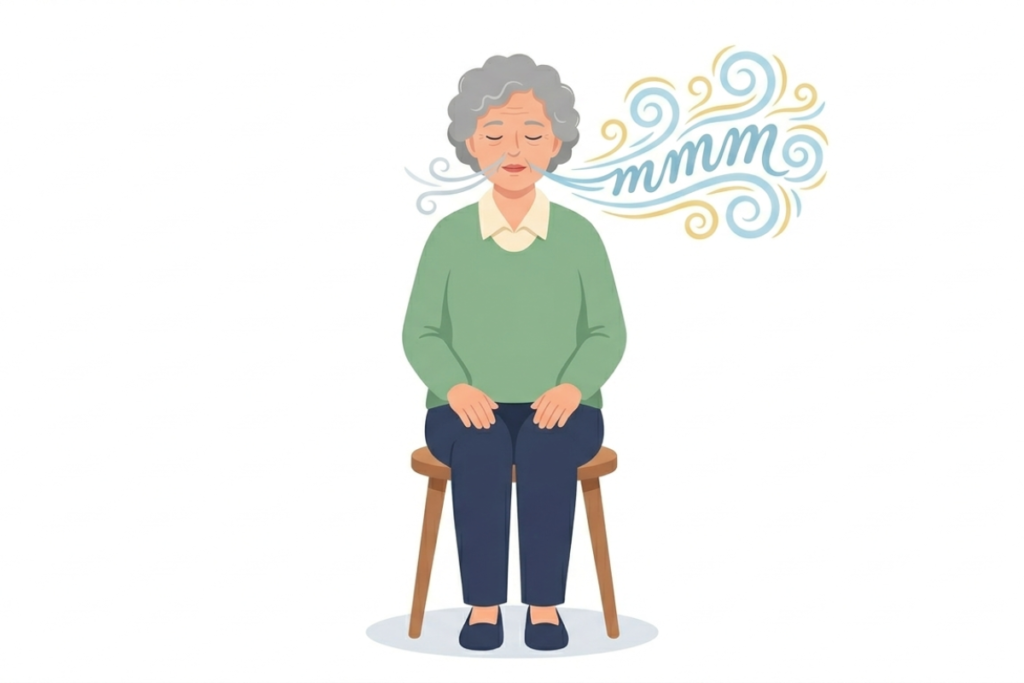
Many people enjoy this one because it feels a bit silly but is very effective. The humming vibration is very soothing for the brain.
- Step 1: Sit comfortably and close your eyes.
- Step 2: Take a deep breath in through your nose.
- Step 3: As you exhale, keep your lips closed and make a steady, low-pitched humming sound. “Mmm.”
- Step 4: Continue the hum until you run out of breath, then inhale and start again.
You’ll feel a gentle vibration in your head and chest. If someone looks at you curiously, invite them to try it with you.
5. The “I Am” Breath
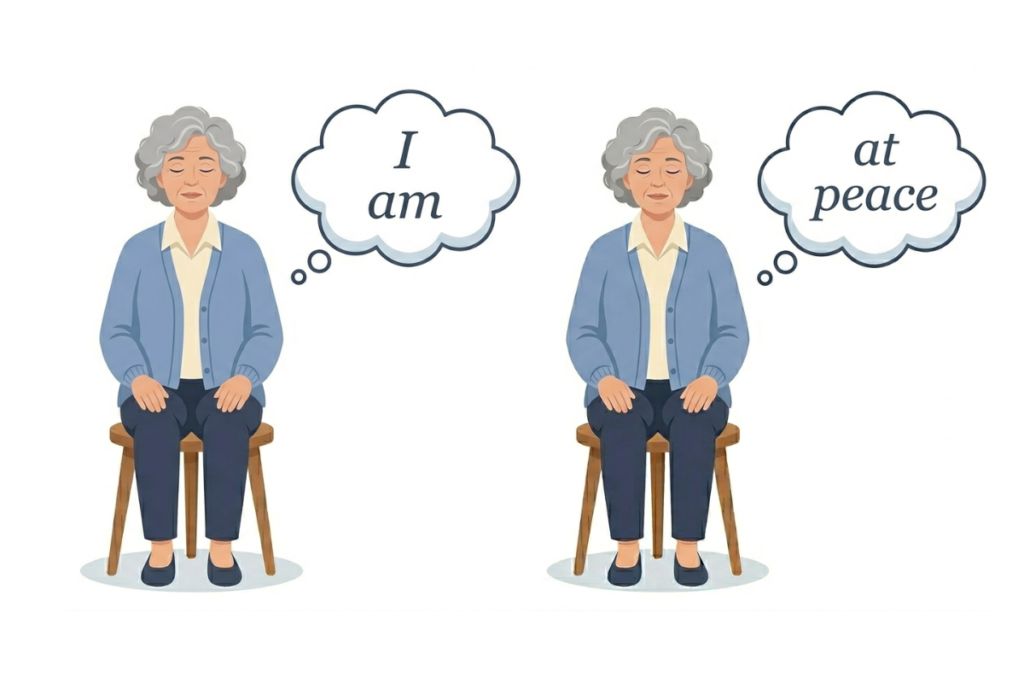
This exercise combines breathing with positive thinking. It helps replace anxious thoughts with calm and steady ones.
- Step 1: As you inhale, think the word: “Inhale.”
- Step 2: As you exhale, think the word: “Calm.”
- Step 3: Or try, “I am” on the inhale, and “at peace” on the exhale.
- Step 4: Keep the rhythm slow and easy.
Consistency Over Perfection
A common mistake is thinking you need to do chair yoga or breathing exercises for an hour every day to see results. That’s not true.
Breathing methods to manage stress and anxiety work best when you do them regularly, even for a few minutes at a time.
How to Fit it Into Your Day
| Time of Day | Simple Strategy |
| Morning | Do three “Balloon Breaths” before you even get out of bed to set a calm tone for the day. |
| Waiting | Use the “Equal Breath” while you are waiting for the kettle to boil or for a commercial break to end. |
| Stressful Moments | If you get a frustrating phone call, take two “Pursed Lip Breaths” before you respond. |
| Bedtime | Use the “Humming Bee” to quiet your mind if you are tossing and turning. |
If you forget for a day or two, don’t worry. Just start again when you remember. Your chair and your breath will always be there.
A Note on Feeling Lightheaded
When you start taking deeper breaths, you might feel a little lightheaded. This is normal and just means your body is getting more oxygen than usual. If this happens, stop and breathe normally for a minute. Always listen to your body.
Final Thoughts
Taking a few minutes for yourself is important, not selfish. By practicing these breathing exercises, you’re giving yourself a valuable gift and showing you can care for your well-being, one breath at a time.
You don’t need to master every technique today. Why not try one now? Sit back, relax your shoulders, and take a deep breath. See? You’re already doing great.
Keep things simple, stay relaxed, and remember to keep breathing. You’re doing a great job.
