

As we get older, mornings can be tough. You wake up, try to get out of bed, and suddenly your back lets you know what it feels like. If this sounds familiar, you’re not alone. The good news is, there’s an easy way to help. Seated stretching exercises for seniors are among the easiest, safest, and most effective ways to ease morning stiffness, improve flexibility, and feel more like yourself again. No gym membership required. No yoga pants necessary (though we won’t judge). Just you, a sturdy chair, and about ten minutes.
Whether you’re brand new to stretching or just getting back into the habit, this guide is for you.
Why Stretching Matters as We Age
As we get older, our muscles naturally lose some of their stretchiness. It’s a bit like a rubber band that has been sitting unused for a while. It still works, but it needs a gentle stretch before it moves easily.
Regular gentle stretching helps by:
- Reducing everyday stiffness in your joints and muscles
- Improving your range of motion so that daily tasks feel easier.
- Supporting better posture and balance
- Boosting circulation, which your whole body loves
- Lifting your mood (yes, really!)
The best part is you don’t need to leave home or do anything complicated. A regular chair works perfectly for these stretches.
Before You Begin: A Few Quick Tips
Safety always comes first. Before you try these gentle seated stretches, keep these tips in mind:
- Use a stable, armless chair placed on a flat surface. No wheels, no wobble.
- Never stretch until it hurts. A gentle pull is good, but sharp pain means your body needs you to stop.
- Breathe through every stretch. Holding your breath is surprisingly common and not helpful.
- Go at your own pace. There’s no need to compete or to stretch beyond what feels comfortable.
- Check with your doctor if you have any health conditions or recent surgeries before starting a new routine.
Your Simple Daily Chair Yoga Routine
These beginner-friendly moves are designed to flow easily from one to the next. Try to do this routine once a day, ideally in the morning when stiffness tends to peak.
1. Seated Deep Breathing (The Warm-Up)
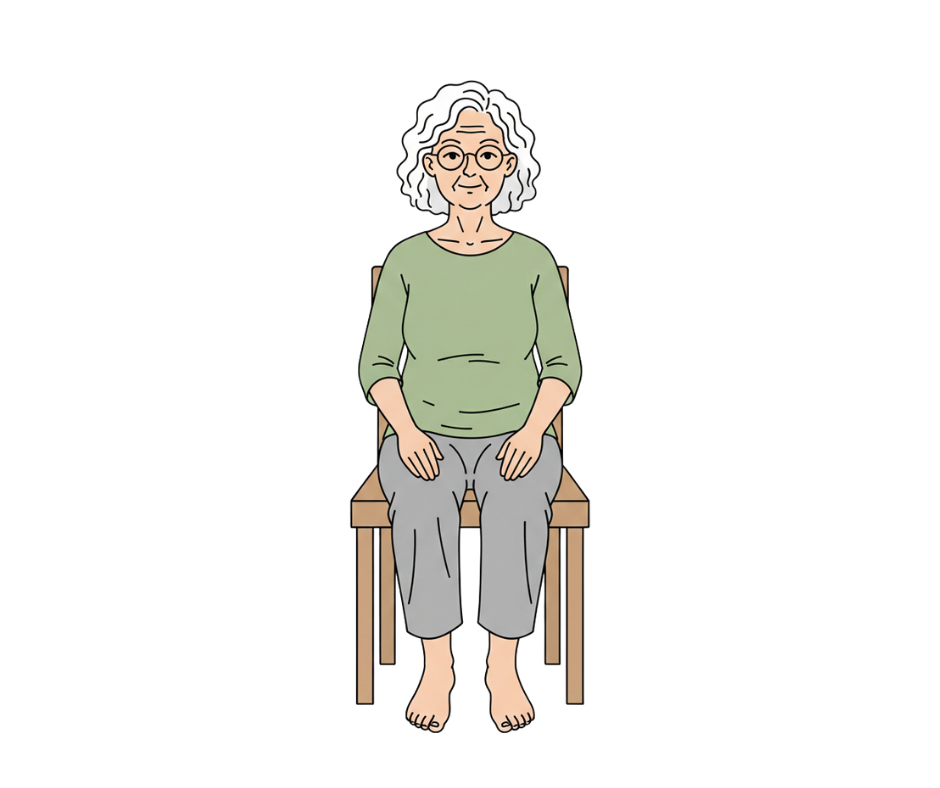
Why it helps: Wakes up your body and calms your nervous system before you begin.
How to do it:
- Sit up tall in your chair with both feet flat on the floor.
- Place your hands gently on your thighs.
- Inhale slowly through your nose for a count of four.
- Exhale through your mouth for a count of six.
- Repeat five to six times.
It may seem very simple, but that’s the idea. When your body is relaxed, stretching is easier.
2. Neck Side Stretch

Why it helps: Many people hold tension in their necks and shoulders without realizing it. This stretch can make a big difference.
How to do it:
- Sit tall with your shoulders relaxed and down.
- Slowly tilt your right ear toward your right shoulder. Don’t force it.
- Hold for 15 to 20 seconds. Feel that gentle pull along the left side of your neck.
- Slowly return to the center.
- Repeat on the left side.
- Do two rounds on each side.
Tip: Keep your shoulders relaxed throughout. If they creep up toward your ears, just notice and let them drop.
3. Seated Cat-Cow Stretch
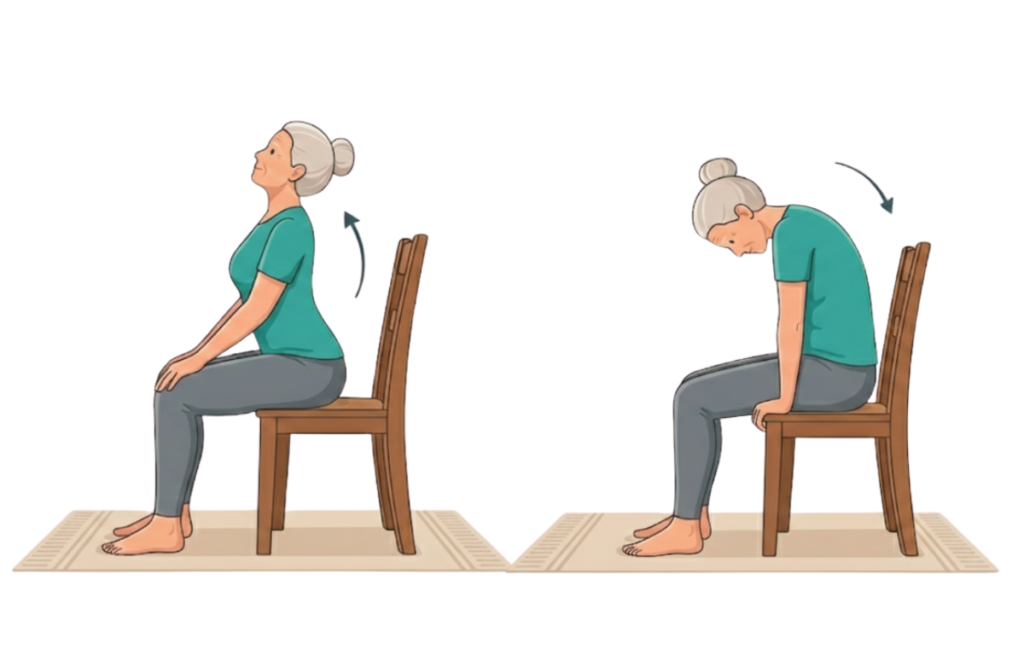
Why it helps: This classic yoga stretch gently loosens the whole spine, which often feels stiff in the morning.
How to do it:
- Sit at the edge of your chair with both feet flat on the floor.
- Place your hands on your knees.
- Inhale: Arch your back gently, roll your shoulders back, and look slightly upward. This is “Cow.”
- Exhale: Round your spine, tuck your chin to your chest, and draw your belly in. This is “Cat.”
- Move slowly between the two for 6 to 8 breaths, following your breath.
You can think of this as a gentle way to wake up your spine in the morning.
4. Seated Forward Bend
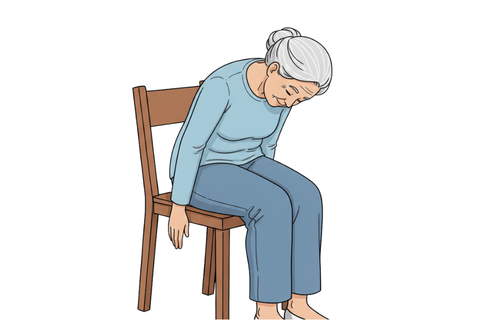
Why it helps: This stretch targets the lower back and hamstrings, which are common areas for stiffness.
How to do it:
- Sit near the edge of your chair with feet flat on the floor, hip-width apart.
- Place your hands on your thighs.
- Slowly hinge forward from your hips (not your waist) and let your hands slide toward your ankles.
- Let your head hang gently. Don’t strain.
- Hold for 20 to 30 seconds, breathing deeply.
- Slowly roll back up, one vertebra at a time.
Beginner tip: You don’t have to reach your ankles or shins. Going halfway is still very helpful.
5. Seated Spinal Twist
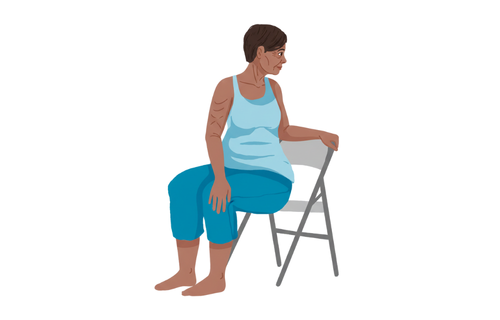
Why it helps: This stretch improves spinal rotation and gently massages your digestive organs.
How to do it:
- Sit tall with feet flat on the floor.
- Place your right hand on the outside of your left knee.
- Place your left hand on the back of the chair (or just behind you on the seat).
- On an exhale, gently rotate your torso to the left.
- Hold for 20 to 30 seconds, breathing steadily.
- Return to the center and repeat on the other side.
Tip: Make sure the twist comes from your mid-back, not your neck. Keep your chin level with your chest.
6. Seated Figure-Four Hip Stretch
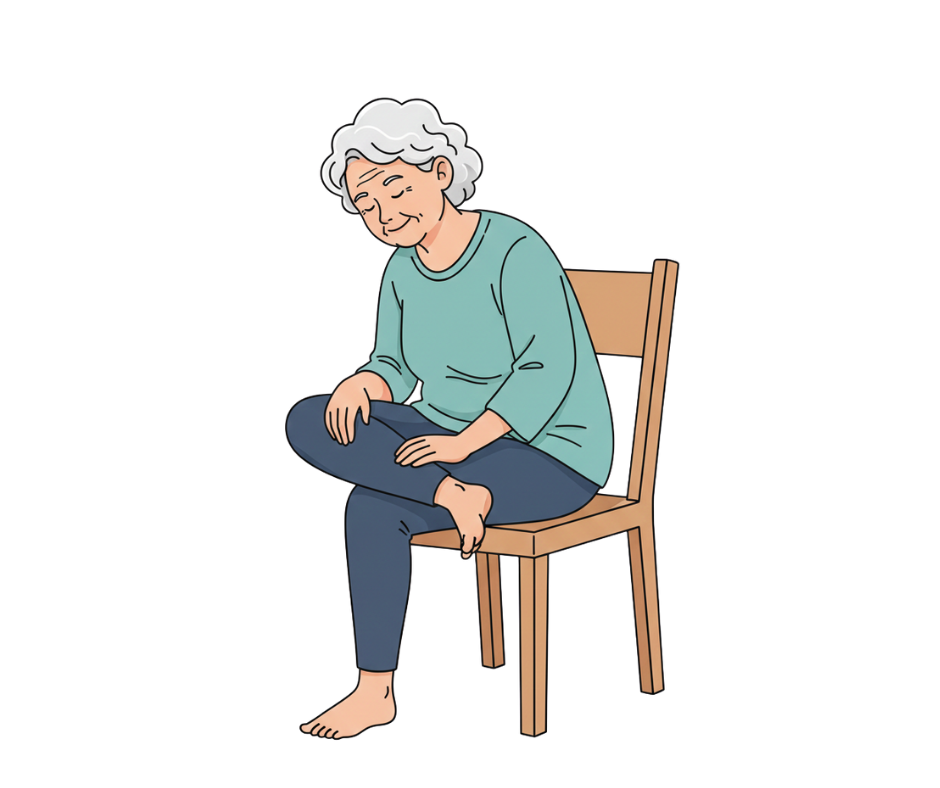
Why it helps: This stretch releases tension in the hips and glutes. Many people hold stress in their hips.
How to do it:
- Sit up tall in your chair.
- Cross your right ankle over your left knee, forming the number “4” with your legs.
- Gently press down on your right knee with your right hand.
- Lean forward slightly from the hips until you feel a stretch in your right hip.
- Hold for 20 to 30 seconds.
- Switch sides.
Beginner tip: If your knee is high or you feel any discomfort, skip this stretch for now and return to it as your flexibility improves.
7. Seated Overhead Side Stretch (Cool-Down)
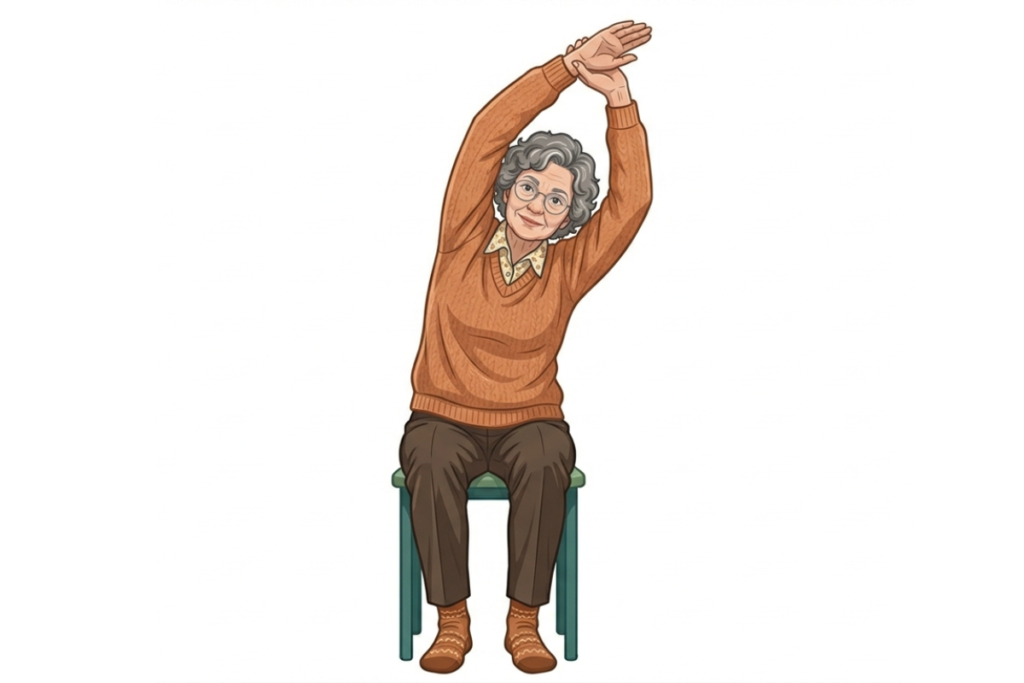
Why it helps: This stretch opens the sides of your body and stretches your ribcage. It can feel very refreshing.
How to do it:
- Sit tall and reach both arms overhead.
- Hold your right wrist with your left hand.
- Lean gently to the left, creating a long arc along the right side of your body.
- Hold for 15 to 20 seconds.
- Return to the center and switch sides.
This is a good way to end your routine and let your body know you’re finished.
Consistency Beats Perfection Every Single Time
A five-minute routine done every day is much more helpful than a perfect hour-long session done only once a month. Your body benefits from regular practice.
You don’t need to do every exercise perfectly or hold each stretch for an exact amount of time. What matters is showing up for yourself each day, even when you feel stiff.
Try adding this routine to something you already do, like your morning coffee, watching the news, or after brushing your teeth. Connecting it to a habit makes it easier to continue.
Final Thoughts
You don’t need to be a yogi, an athlete, or very flexible to benefit from a senior-friendly seated stretching routine. You just need to start. Even taking three deep breaths and doing one gentle neck stretch is progress.
Every small movement helps your joints, your muscles, and your future self. The best part is that your future self will thank you, maybe when you bend over to pick something up without discomfort.
So, find a sturdy chair, take a deep breath, and get started. By reading this, you’ve already taken the first step.
