
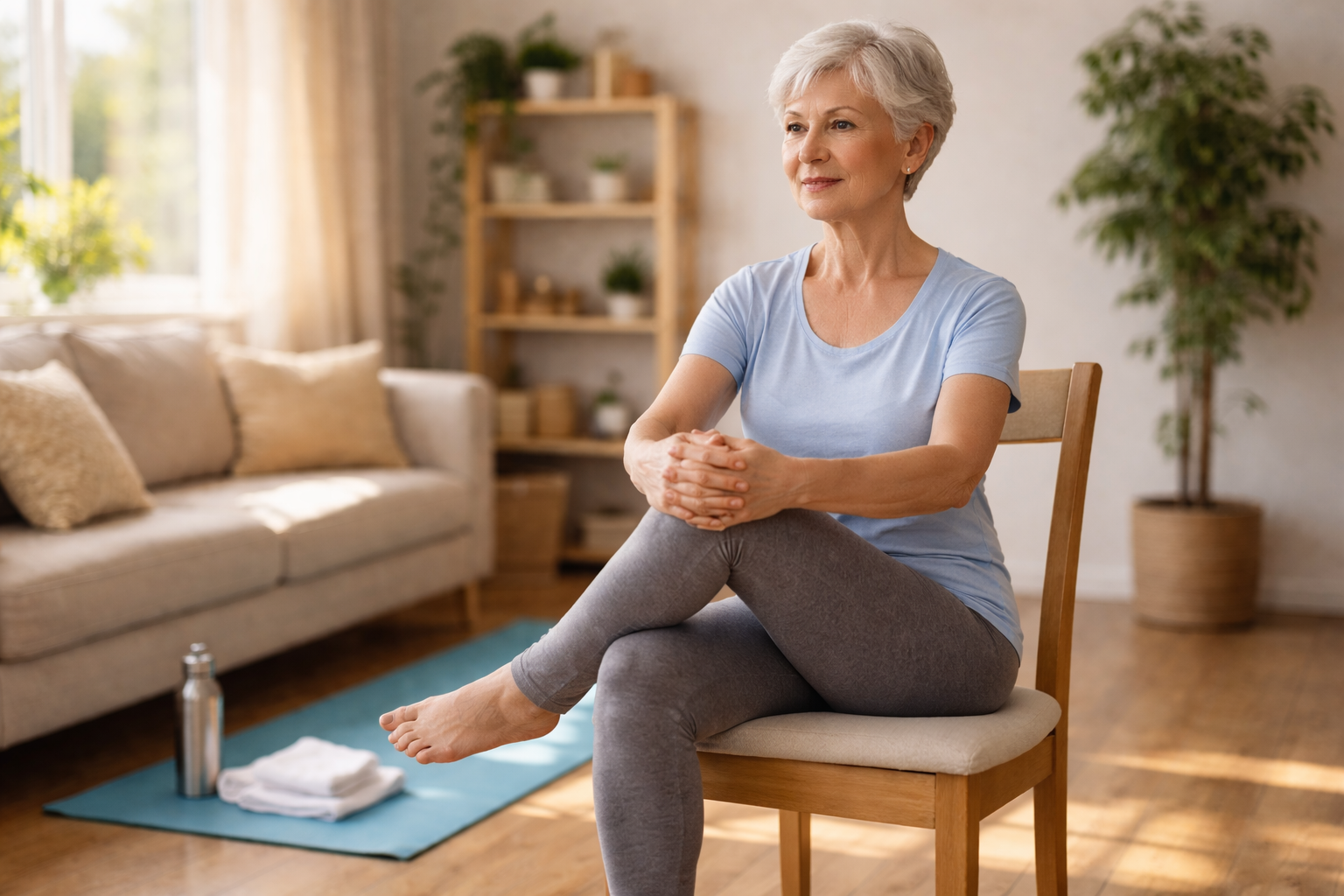
Sometimes, getting out of your favorite chair can feel anything but graceful. We’ve all experienced it! If you notice your backside feels tight after sitting for a while, you’re not alone. Tight glutes often cause lower back aches and stiff hips, but the good news is you don’t have to get on the floor to help them. Adding seated glute stretches to your daily routine is an easy way to keep your body moving smoothly, without struggling to get up from a yoga mat.
Your glutes are like the engine room of your body. They help you stand, walk, and keep your balance. When they get tight, they can pull on other muscles, making your joints feel stiff. This guide will show you how to care for those muscles in a gentle, safe, and relaxing way. You don’t need special clothes or to be super flexible—just a sturdy chair and a few minutes.
Why Stretching from a Chair is a Total Game Changer
If you’ve ever tried a regular yoga class and thought, “There’s no way my knees can do that,” chair yoga is a great option. It removes the worry about balance, letting you focus on stretching. For seniors or anyone new to exercise, the chair gives you extra support. You can stretch enough to feel the benefits without worrying about falling.
Regular stretching does more than just feel good. It helps your blood flow and keeps your joints moving smoothly, almost like adding a little oil to your body. You can do these stretches while your coffee brews or during TV commercials. The key is to be consistent. You don’t have to be perfect or touch your toes right away—just keep showing up for yourself.
Getting Ready for Your Seated Yoga Session
Before we start the exercises, let’s get ready. You don’t need a home gym, but you do need the right chair for stretching.
- Pick the Right Chair: Use a sturdy dining chair or a folding chair without wheels. Rolling chairs can make stretching unsafe for your hips.
- Check Your Posture: Sit near the front edge of the chair so your feet are flat on the floor. Try to sit up straight, as if something were gently lifting your head.
- Listen to Your Body: Some tension is okay, but if you feel sharp pain, stop right away. The goal is to feel comfortable, not to hurt yourself.
Simple Seated Glute Stretches for Beginners
Now let’s start the exercises. These moves are gentle but effective. Remember to breathe deeply through your nose as you stretch. Holding your breath can make your muscles tense up, which we want to avoid.
1. The Seated Knee-to-Chest Squeeze
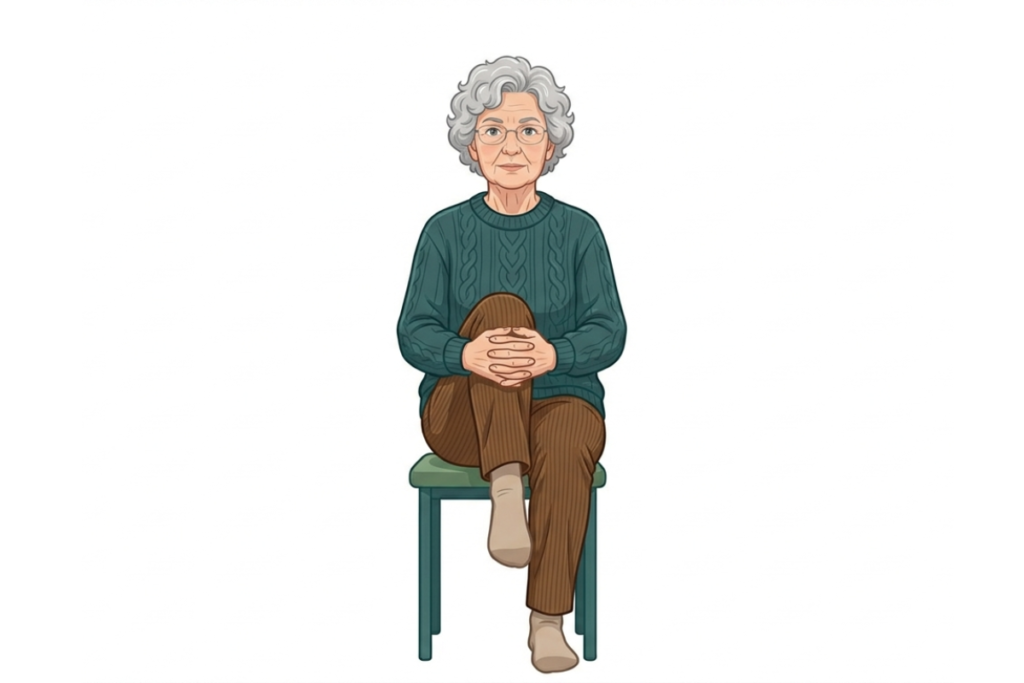
This is a great starting move for your hips and glutes. It’s very simple and also helps release tension in your lower back.
- Sit tall with your feet flat on the floor.
- Slowly lift your right knee toward your chest.
- Interlace your fingers around your shin or behind your thigh if that feels better on your knee joints.
- Gently pull the knee closer to your body while keeping your back straight. No slouching allowed!
- Hold this for about 20 to 30 seconds while taking slow breaths.
- Lower the leg gently and repeat on the left side.
Tip: If you can’t reach your knee easily, use a small towel or strap around your leg to help pull it closer.
2. The Seated Figure-Four Stretch
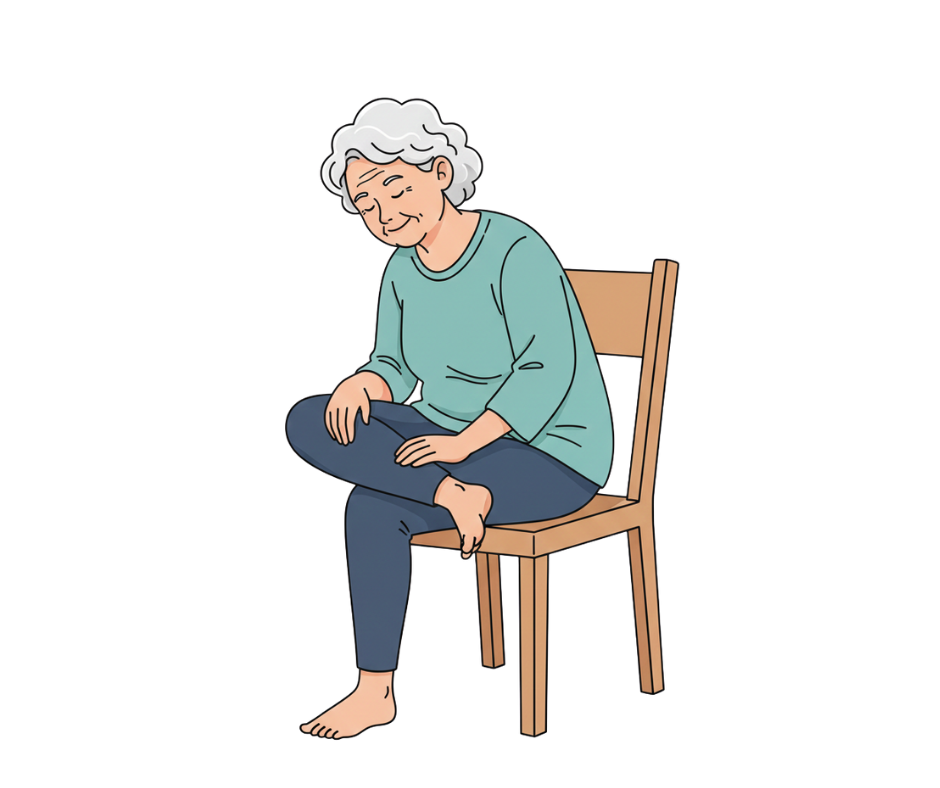
This is one of the best seated stretches for glutes. It targets the piriformis, a small muscle that can cause problems if it becomes tight.
- Start with both feet flat on the floor.
- Lift your right leg and rest your right ankle on top of your left thigh, just above the knee. Your legs should look like the number 4.
- Flex your right foot (pull your toes toward your shin) to protect your knee.
- If this feels like enough of a stretch, stay in this position. You’re doing well.
- If you want a little more, gently lean your chest forward while keeping your spine long.
- Hold for 30 seconds, then switch sides.
If your ankle doesn’t reach your thigh, just cross your right ankle over your left ankle and let your right knee fall to the side. This will still help open your hip.
3. The Seated Torso Twist
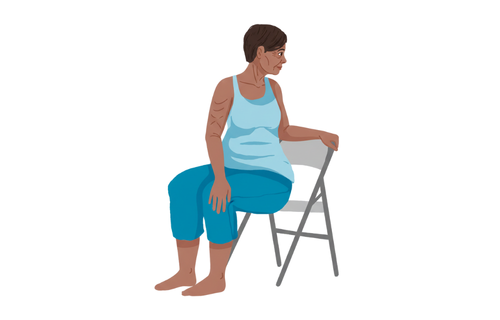
This stretch may feel like it’s for your back, but it also helps move the muscles around your hips and glutes, improving your overall mobility.
- Sit with your feet hip-width apart.
- Place your left hand on your right knee.
- Reach your right hand back to grab the side or back of your chair.
- Gently twist your upper body to the right, looking over your shoulder if your neck feels okay with that.
- Keep your sit-bones firmly planted on the chair.
- Take three deep breaths, feeling your ribs expand, then return to the center and switch sides.
4. The Seated Windshield Wipers
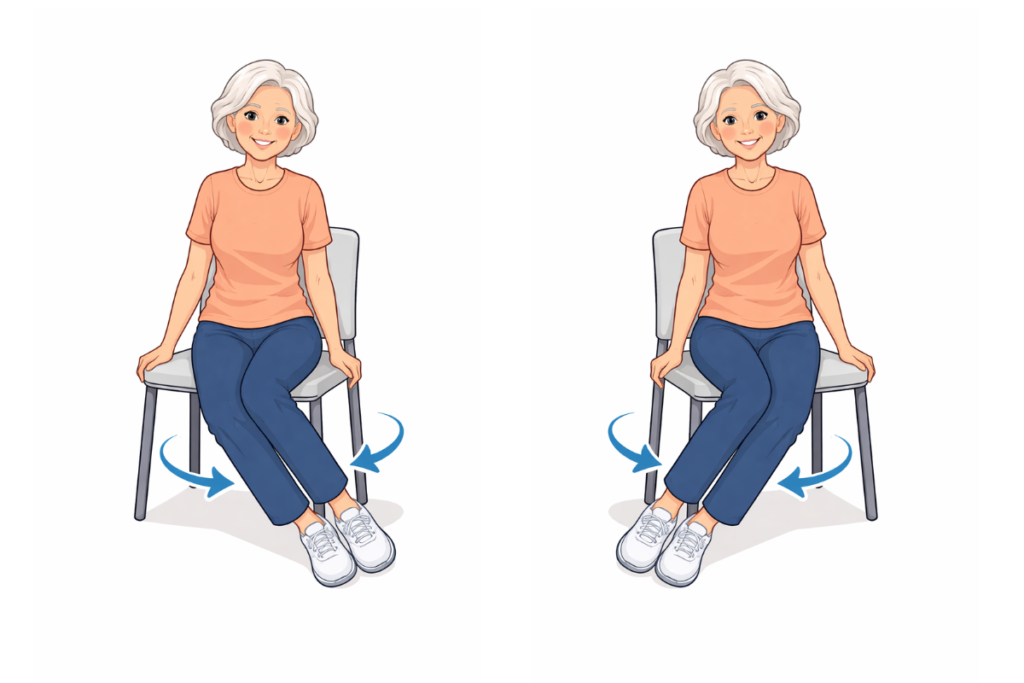
This move is good for active stretching. It helps your hip joints move smoothly and increases blood flow to your glute muscles.
- Sit toward the front of your chair with your feet wider than your hips.
- Gently drop both knees toward the right, then back to the center, and then toward the left.
- The movement is similar to that of a car’s windshield wipers moving back and forth.
- Keep the movement slow and controlled. Do this about 10 times on each side.
Tips for Staying Consistent (Without Losing Your Mind)
Many of us start new habits but stop after a few days. Here are some tips to help you make these stretches part of your routine.
Make it a “Habit Stack.”
The easiest way to remember to stretch is to connect it to something you already do. Try knee squeezes while waiting for the microwave or do the figure-four stretch during the evening news. When you link stretching to a daily habit, it becomes automatic.
Don’t Chase Perfection
Some days you’ll feel flexible, and other days you might feel stiff. Both are normal. The goal isn’t to become super flexible, but just to feel a little better than you did before you started.
Breathe Like You Mean It
It might seem odd since we breathe all day, but yoga breathing is different. Try inhaling for a count of four and exhaling for a count of four. This helps your body relax and lets your muscles release tension.
When to Talk to a Pro
Chair yoga is gentle, but it’s a good idea to talk to your doctor or a physical therapist if you’ve had a recent hip replacement, have ongoing back problems, or experience sharp pain down your legs. They can help you adjust these moves to your needs. Staying safe means you can keep moving comfortably.
Final Thoughts
You don’t need to change your whole lifestyle to improve your mobility. There’s no need to join a gym or buy special equipment. All you need is the chair you have and a willingness to try something new.
Spending just five minutes a day on these chair glute stretches shows your body you care about staying comfortable and active. After a week, you might notice that stairs feel easier, or that getting out of the car is less of a challenge.
So, why not start right this second? Lift one knee up, give it a little squeeze, and take a deep breath. You have already begun. Your hips will definitely thank you later!
