
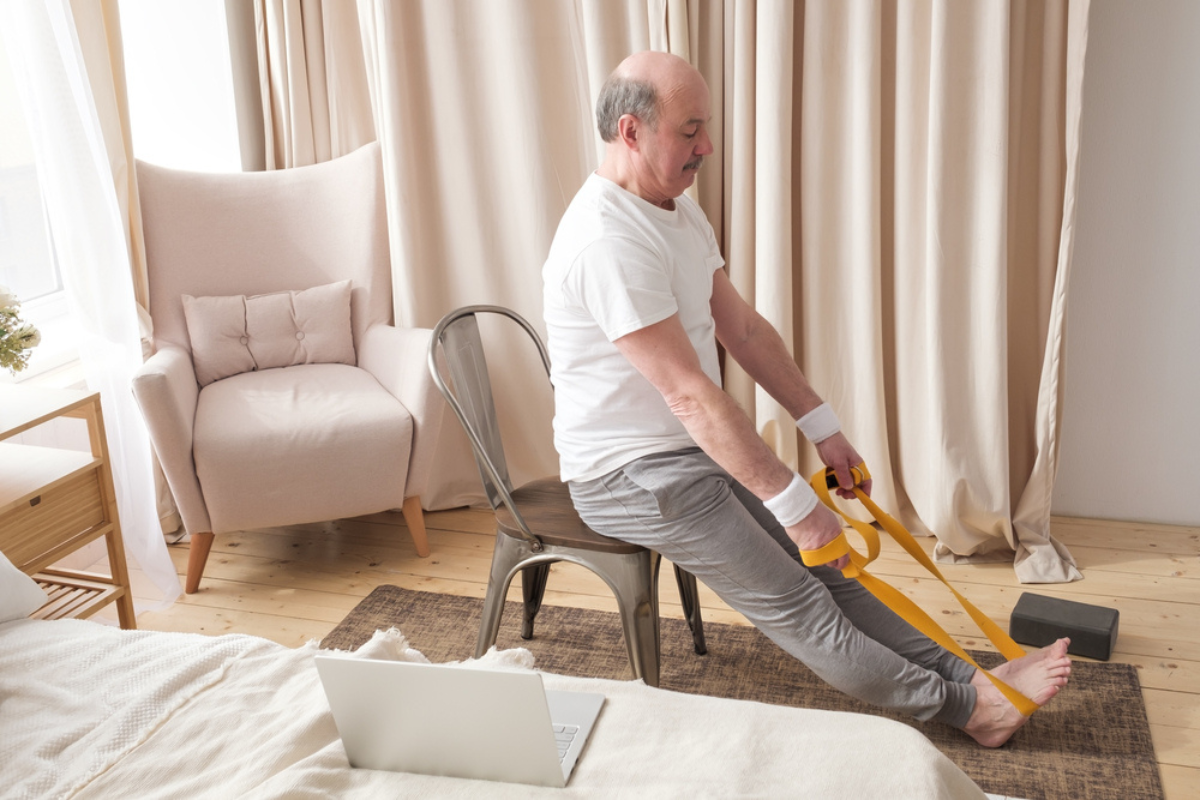
If you have ever felt a sharp, zapping pain travel from your lower back down to your toes, you have officially met your sciatic nerve. It is the longest nerve in your body, and when it gets grumpy, it lets you know. Dealing with this discomfort can feel like you are carrying around a literal pain in the rear, but you do not have to just sit there and take it. In fact, sitting is often part of the problem. That is why we are diving into sciatica exercises for seniors with pictures to help you find relief without turning yourself into a human pretzel.
Sciatica is not a disease, but a sign that something is pressing on your nerve. For people over sixty, it is often just a reminder that our bodies have been through a lot. The good news is you do not need a gym membership or special workout clothes to feel better. All you need is a sturdy chair and some patience.
Why Chair Yoga is a Game Changer for Sciatica
When your back hurts, moving around is probably the last thing you feel like doing. You might want to stay on the couch, but your nerves actually benefit from gentle movement. Chair yoga offers a safe way to stretch tight muscles that may be pressing on your sciatic nerve, while giving you the support you need.
Imagine your sciatic nerve as a garden hose. When something presses on it, the flow is blocked. Tight muscles can press on the nerve in the same way. These exercises are meant to gently relieve that pressure so you can feel better. Doing them in a chair also means you do not have to worry about getting up from the floor, which can be difficult sometimes.
Getting Ready for Your Practice
Before starting the exercises, make sure you have a flat, sturdy chair. Folding chairs or dining room chairs work well. Avoid chairs with wheels or deep, soft cushions that make it hard to sit upright.
- Wear comfortable clothes: Anything that lets you move.
- Sit tall: Imagine a string pulling the top of your head toward the ceiling.
- Listen to your body: If a movement causes sharp pain, stop right away. You should only feel a gentle stretch.
- Keep breathing: Many people forget to breathe when focusing on exercises for sciatica relief in seniors, but steady breathing helps your body relax.
5 Beginner Chair Yoga Poses for Sciatica Relief
1. The Seated Cat-Cow Stretch
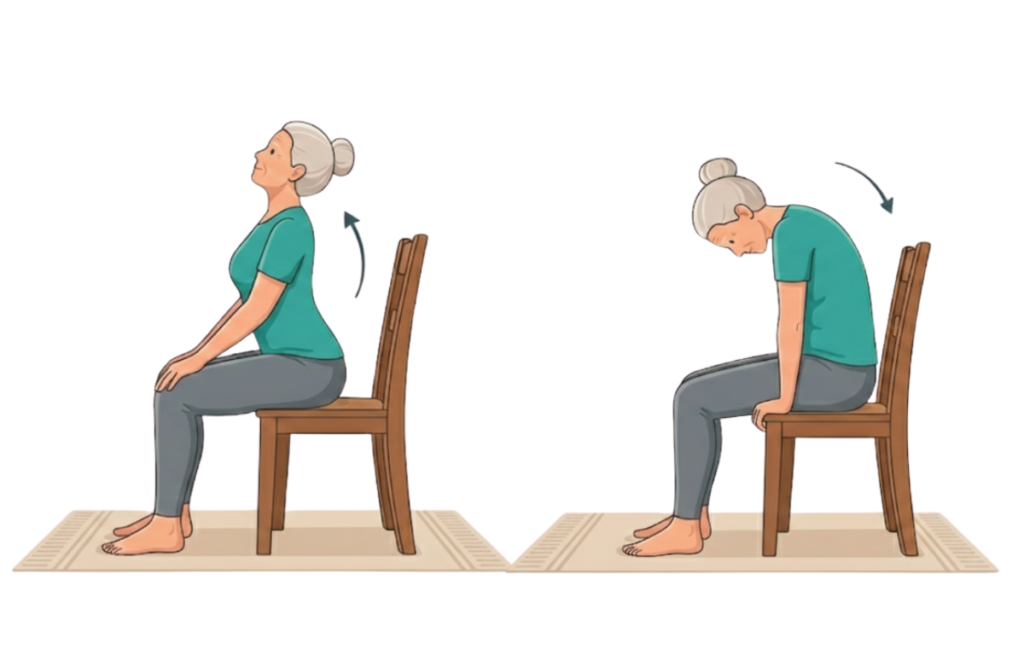
This is a great warm-up. It helps loosen your spine and creates space between your vertebrae.
How to do it:
- Sit toward the front edge of your chair with your feet flat on the floor.
- Place your hands on your knees.
- As you inhale, lift your chest and look slightly upward, arching your back gently (the Cow).
- As you exhale, round your spine like a grumpy Halloween cat, tucking your chin toward your chest (the Cat).
- Repeat this flow 5 to 10 times.
Why it works: It loosens the lower back muscles that often contribute to sciatic pressure.
2. Seated Figure-Four Stretch
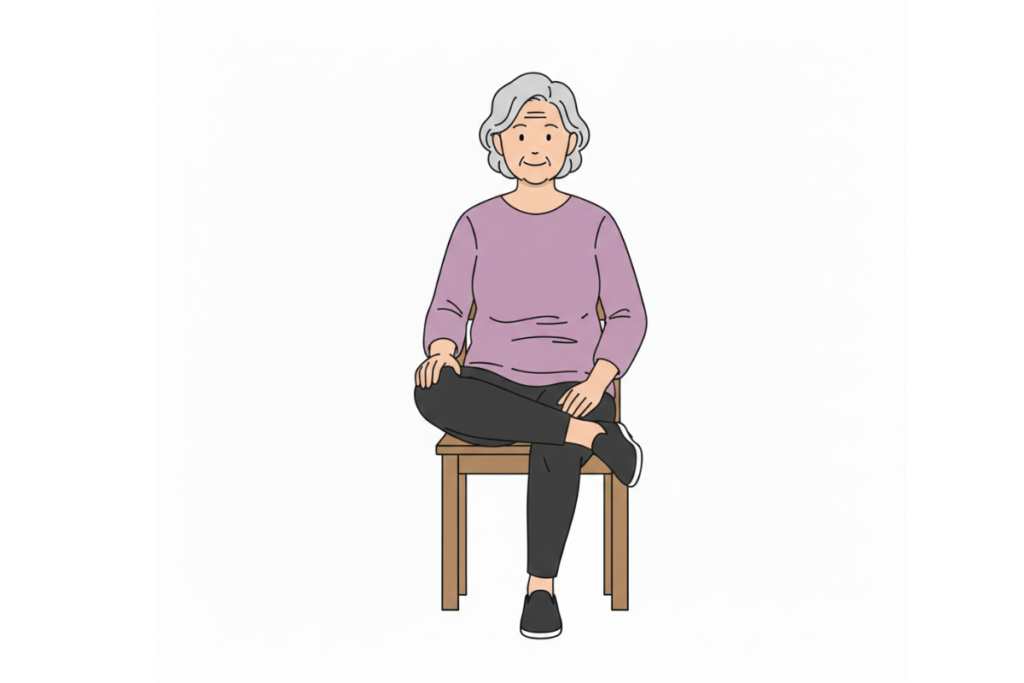
This is one of the most effective sciatica stretches. It targets the piriformis muscle, which is often the source of nerve pain.
How to do it:
- Sit tall with both feet on the floor.
- Lift your right leg and rest your right ankle on your left knee. Your legs should look like the number 4.
- If you feel a good stretch at this point, stay in this position.
- If you need more, keep your back very straight and lean forward just an inch or two.
- Hold for 30 seconds and switch sides.
Tip: If your ankle does not reach your knee, cross your ankles and let your top knee fall to the side. This still provides a good stretch.
3. Seated Spinal Twist
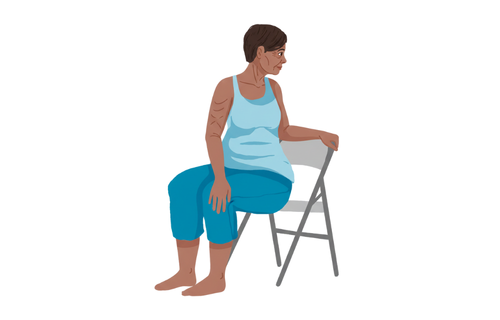
Twisting helps relax the spine, but it is important to keep the movement gentle. There is no need to twist too far.
How to do it:
- Sit tall with feet hip-width apart.
- Place your right hand on your left knee.
- Place your left hand on the chair behind you for support.
- Inhale to grow tall, then gently exhale as you turn your torso to the left.
- Keep your hips facing forward.
- Hold the stretch for five breaths, then repeat on the other side.
Why it works: It helps rotate the lower back and releases tension in the mid-back.
4. Knee-to-Chest Release
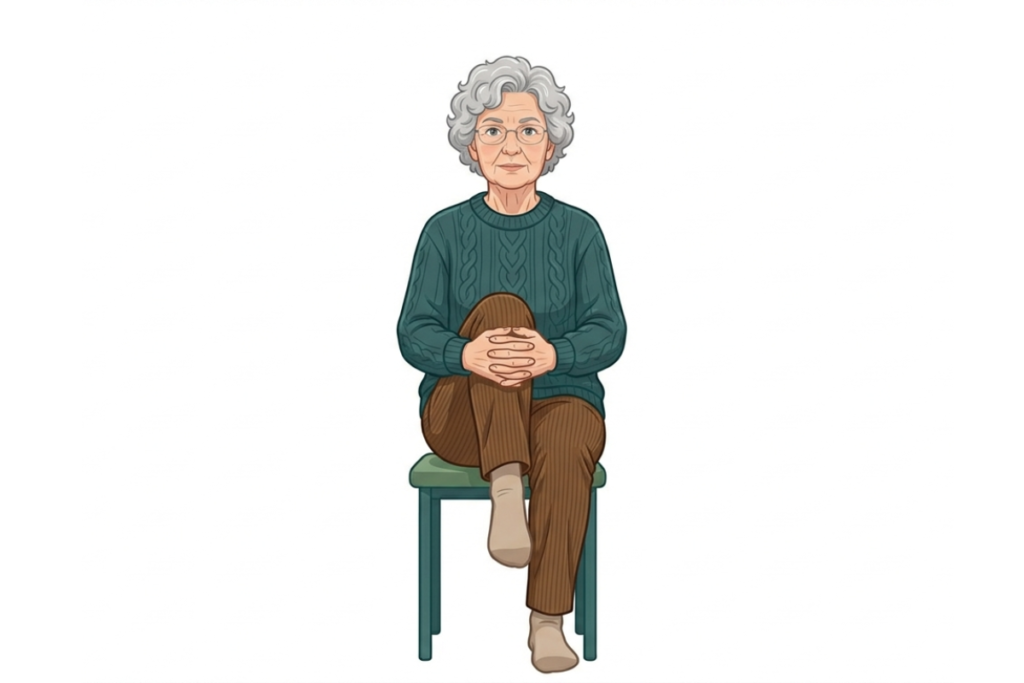
This stretch is gentle and helps loosen the glutes and lower back.
How to do it:
- Sit back slightly in your chair so your back is supported.
- Interlace your fingers around your right shin or behind your right thigh.
- Gently pull your knee up toward your chest.
- Keep your shoulders relaxed and lowered.
- Hold for 20 seconds, then swap to the left leg.
Tip: If pulling your knee up feels tight on your hip, move your knee slightly outward toward your armpit instead of straight up.
5. Seated Hamstring Stretch
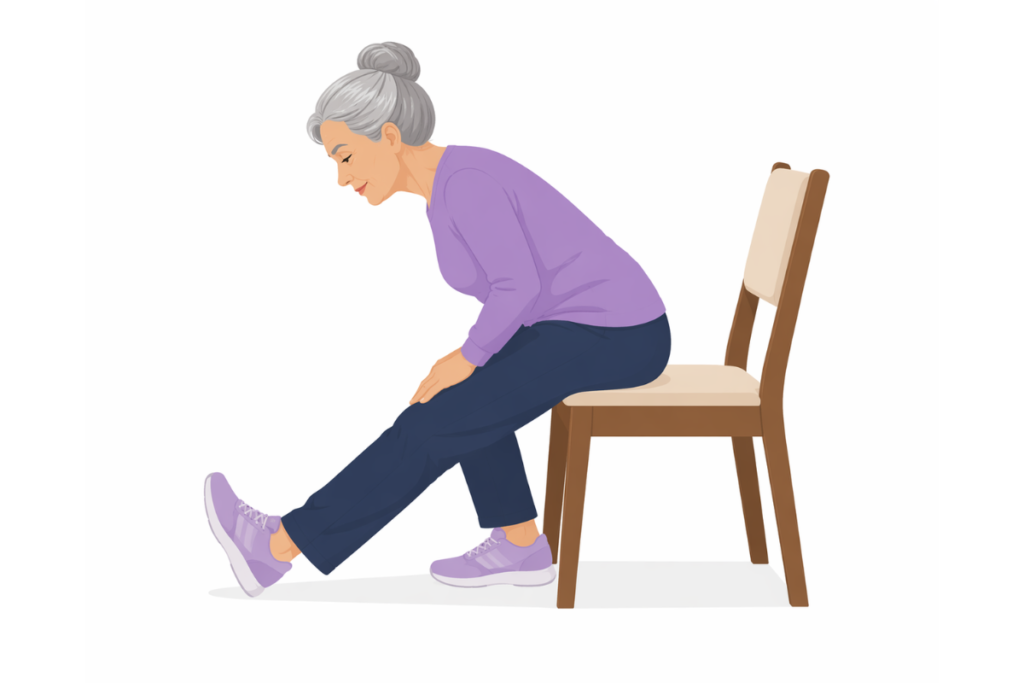
Tight hamstrings can pull on your lower back. Stretching them can help reduce pressure on your sciatic nerve.
How to do it:
- Sit at the very edge of your chair.
- Extend your right leg straight out in front of you with your heel on the floor and toes pointing up.
- Keep your left foot flat for balance.
- With a very straight back, hinge forward at the hips just until you feel a stretch down the back of your leg.
- Hold for 30 seconds and switch legs.
Why it works: Flexible hamstrings reduce strain on your pelvis and lower back.
Tips for Success and Safety
When starting a new routine at sixty or older, the goal is to feel better over time, not to push yourself too hard. Here are a few tips to help you stay safe.
Consistency is Your Best Friend
You will get much better results from five minutes of stretching every day than from an hour once a week. Your nerves like predictable, gentle movement. Try doing these while the coffee is brewing or during a commercial break of your favorite show.
Never Bounce
Years ago, people often bounced during stretches, but we now know that can lead to minor muscle injuries. Instead, move slowly and hold each position. Take your time and stay relaxed.
Stay Hydrated
Your spinal discs are mostly water. If you are dehydrated, the discs can lose their shape and put more pressure on your nerves. Drink a glass of water before or after your chair yoga session to help keep your back healthy.
Check With the Pros
If your pain is so severe that your leg feels weak or numb, or if it’s getting worse despite these stretches, please give your doctor a call. It is always better to be safe and get a professional opinion.
Final Thoughts
Caring for your back does not have to be difficult or painful. Adding these gentle chair yoga exercises to your daily routine shows your body that you are taking control. Relief takes time, and you may not feel completely better after one session, but each stretch is a step toward better mobility and comfort.
Be kind to yourself and recognize that taking action is important. Whether you did one stretch or all five, you are making progress. Choose one pose from this list and try it now. Your sciatic nerve and your future self will appreciate your effort.
