

Have you ever thought about your breathing? Most of the time, we do it without noticing, while our minds are on everyday things like finding our glasses or planning dinner. But when we look at pursed lip breathing vs diaphragmatic breathing, we discover there is a more advanced way to breathe. For older adults, learning these techniques is a real upgrade. It may take a little practice, but the benefits for your energy, stress, and lung health are well worth it.
If you have ever felt out of breath after climbing stairs or noticed your chest feels tight when you are stressed, this guide is for you. We will explain these two important breathing techniques and show you how to practice them while sitting comfortably in a sturdy chair. No special gear or difficult poses needed.
The Basics of Better Breathing
Before we talk about how to do these techniques, let’s look at why they matter. As we age, our lungs and breathing muscles can become less flexible. This is a normal part of getting older, much like a car needing more maintenance after many miles.
Practicing these breathing techniques gently helps your lungs work better. They move out old air and bring in fresh, oxygen-rich air. This can give you more energy, help you feel calmer, and improve your stamina for activities like gardening or playing with your grandkids.
What is Pursed-Lip Breathing?
Pursed-lip breathing works like an emergency brake for your breath. This simple method helps you slow down your breathing and makes each breath more effective.
The name might sound complicated, but you have likely done this before. It is the same as blowing out a candle or whistling. When you pucker your lips and breathe out slowly, you create gentle resistance. This helps keep your airways open longer and makes it easier for your lungs to get rid of trapped air.
This technique is especially helpful if you feel short of breath or anxious. It signals to your body that everything is okay and helps you slow down.
What is Diaphragmatic Breathing?
Now let’s talk about belly breathing, which is called diaphragmatic breathing. Most people breathe with their chest. If you see your shoulders move up and down when you breathe, you are probably using the small muscles in your neck and chest.
Diaphragmatic breathing uses the large muscle at the bottom of your ribcage, called the diaphragm. When you breathe this way, your belly moves outward instead of your chest rising. Babies naturally breathe like this, and it is the most efficient way to get oxygen into your body.
Pursed-Lip vs Diaphragmatic Breathing: Which One Wins?
These two techniques are not in competition. Instead, think of them as different tools you can use for your health.
- Use pursed-lip breathing when you are active, such as lifting something, walking uphill, or if you feel out of breath. This technique focuses on your exhale.
- Diaphragmatic breathing is best for relaxation and breathing efficiently. Use it when you are sitting quietly, preparing for bed, or beginning chair yoga. It focuses on breathing in and using your diaphragm.
Using both techniques together helps keep your lungs healthy and your stress levels low.
Beginner Chair Yoga Poses for Better Breathing
Now let’s combine these breathing techniques with simple chair yoga moves. Use a sturdy chair without wheels and sit near the front edge with your feet flat on the floor. Keep your back straight and imagine your head reaching up toward the ceiling.
1. The Seated Balloon Breath (Diaphragmatic Focus)
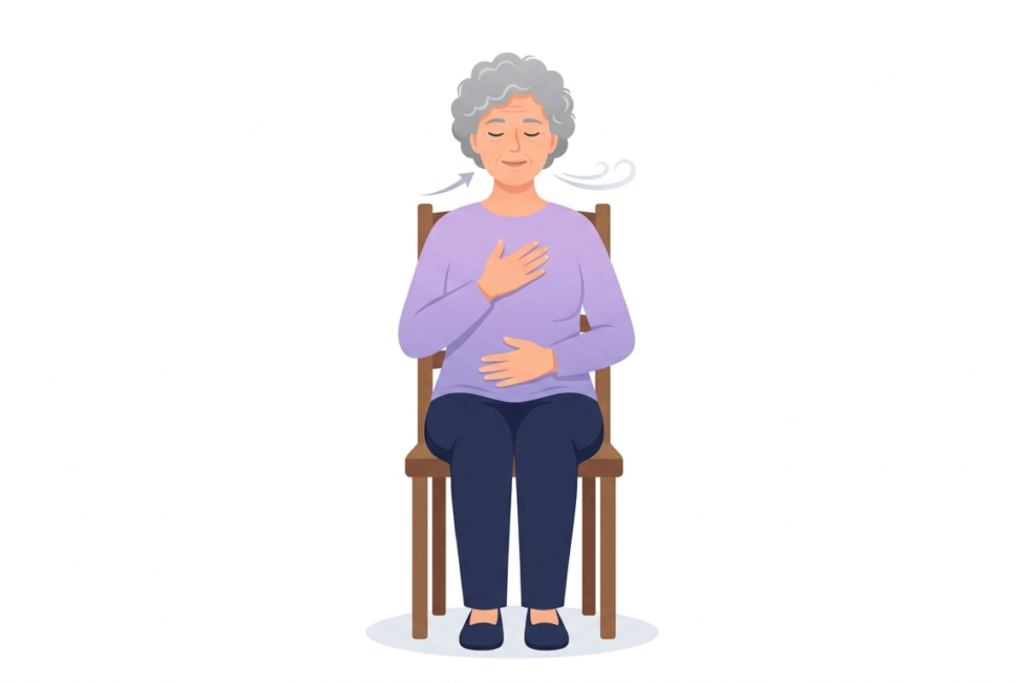
This is the perfect way to wake up your diaphragm.
- Place one hand on your chest and the other hand on your belly, just below your ribs.
- Inhale slowly through your nose. Try to make the hand on your belly move outward while the hand on your chest stays mostly still.
- Picture your belly gently expanding as you breathe in, like a balloon filling with air.
- Exhale slowly through your nose or mouth, feeling your belly sink back in.
- Try this exercise for 2 to 3 minutes. It is okay if your chest moves a little. Focus on making progress, not being perfect.
2. The “Cool the Casserole” Breath (Pursed-Lip Focus)
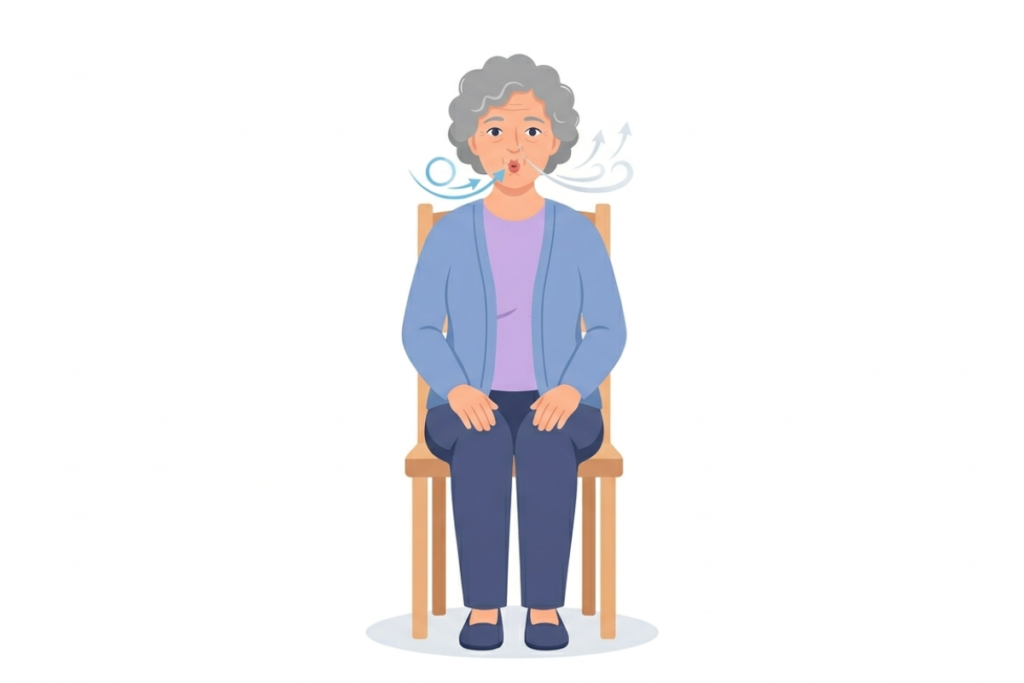
This one is great for slowing things down and feeling a sense of calm.
- Relax your neck and shoulders.
- Inhale slowly through your nose for a count of two (keep that mouth closed!).
- Pucker your lips as if you are blowing through a straw or cooling off hot food.
- Exhale slowly through your puckered lips for a count of four.
- Try to make your exhale twice as long as your inhale. For example, breathe in for two counts and out for four.
3. Seated Sun Salutations
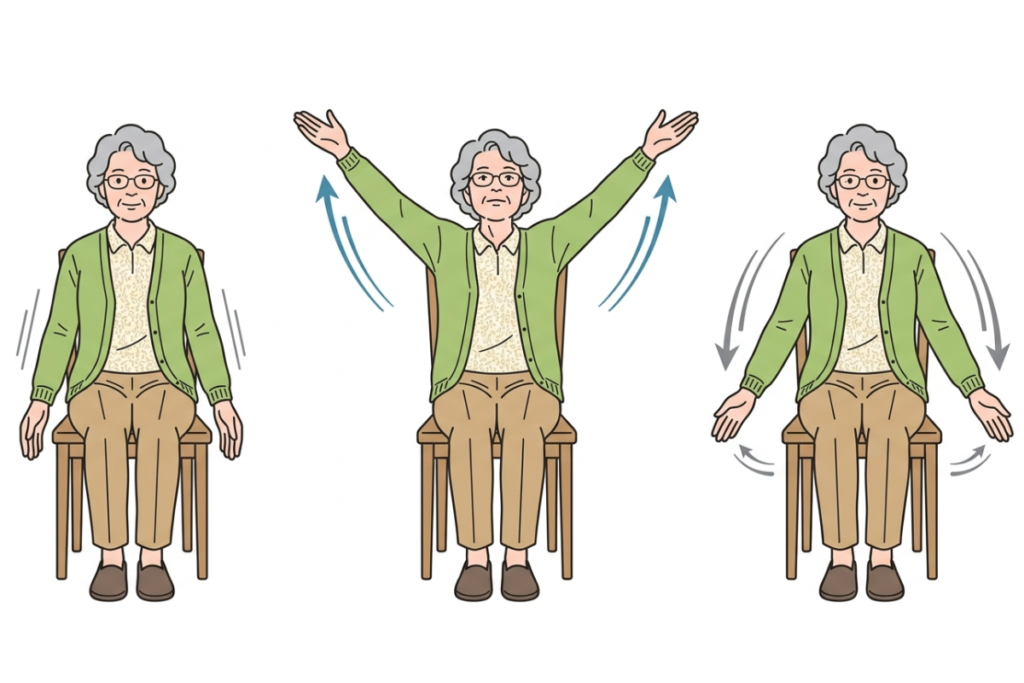
This movement helps open your ribcage, giving your lungs more space to breathe.
- Start with your arms hanging at your sides.
- As you inhale through your nose (try that belly breath!), slowly sweep your arms out to the sides and up toward the ceiling. Only go as high as your shoulders feel comfortable.
- As you exhale through pursed lips, slowly lower your arms back down to your sides.
- Repeat this five times, matching your movements with your breath. Move slowly and smoothly.
4. The Seated Cat-Cow
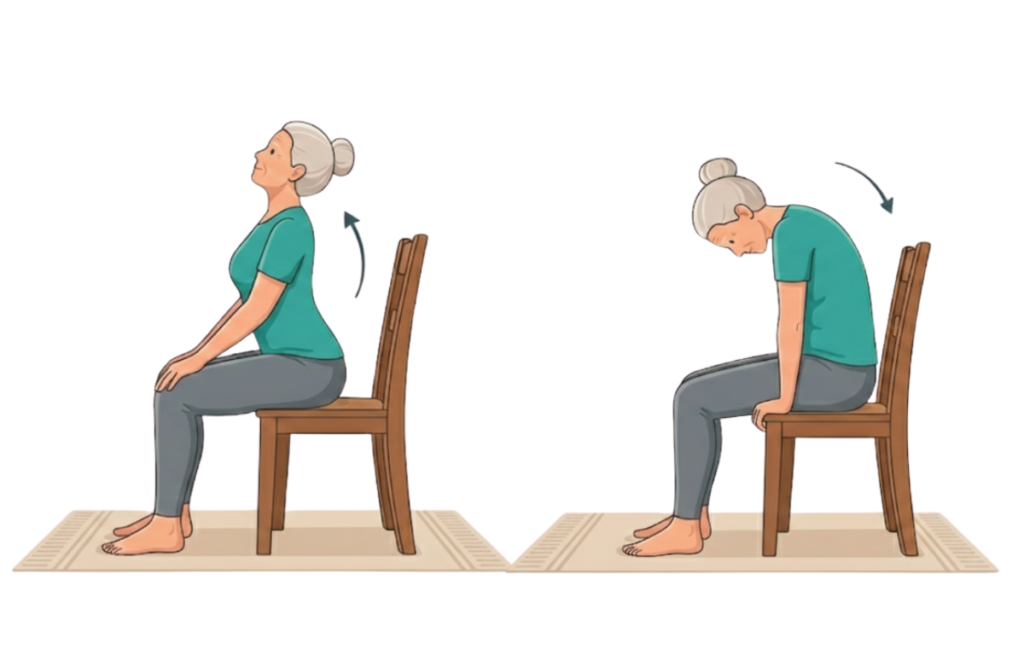
This is a classic yoga move that is great for spine flexibility and lung capacity.
- Place your hands on your knees.
- The Cow: As you inhale, gently lift your chest and look slightly upward, letting your back arch a little. Focus on opening your chest.
- The Cat: As you exhale through pursed lips, round your spine and gently tuck your chin toward your chest. Move slowly and gently.
- Move slowly between these two positions for five to ten breaths.
Tips for Making it a Habit
You do not need to spend a long time each day to see results. Being consistent is more important than doing a lot at once. Here are some easy ways to add these breathing exercises to your routine:
- The Commercial Break Challenge: Every time a commercial comes on TV, practice 10 rounds of pursed-lip breathing.
- The Morning Ritual: Before you even get out of bed, try 5 deep diaphragmatic breaths to wake up your body.
- The Waiting Game: Practice quiet belly breathing while waiting at the doctor’s office or in line at the store. It is a simple way to fit in some yoga without anyone noticing.
- Do not worry about getting the technique perfect. If you feel confused or unsure, simply pause and take a normal breath. You can always try again when you are ready.
Final Thoughts
Taking care of your health does not always mean intense exercise or strict diets. Sometimes, the best thing you can do is improve your breathing. By learning the difference between pursed lip and diaphragmatic breathing, you give yourself the gift of relaxation and energy.
Try it now: Sit up straight, take a deep breath into your belly, and exhale slowly through pursed lips. You have just practiced yoga breathing. It is simple and effective.
Take things one breath at a time, be patient with yourself, and remember that every small effort helps you feel healthier and happier. Enjoy your breathing practice.
