
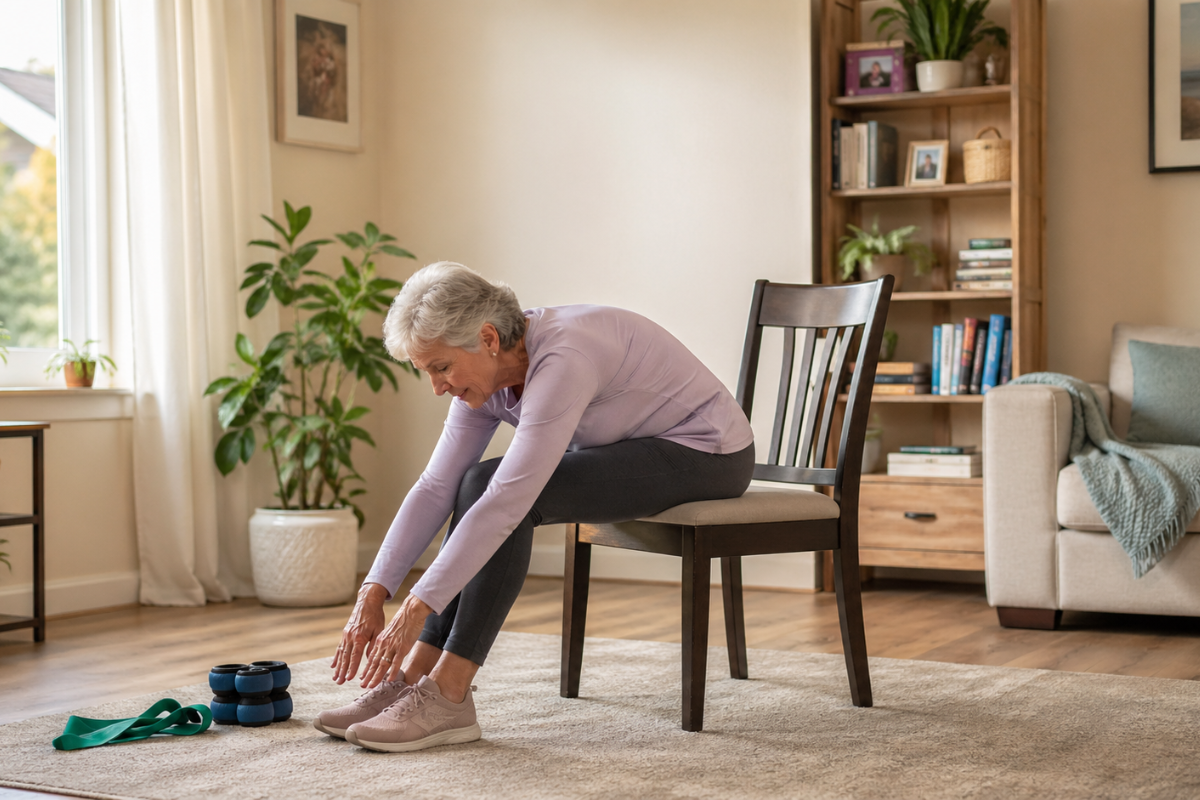
Imagine improving your strength, balance, and mood without even leaving your favorite chair. It might sound unlikely, but it’s true. Performing low impact exercises for seniors at home is one of the easiest, safest, and most effective ways to stay active, increase flexibility, and keep your joints comfortable. You don’t need a gym membership or special workout clothes—just a sturdy chair and a little motivation to get moving.
If you’re recovering from an injury, dealing with arthritis, or just want a gentle way to get moving again, this guide is here to help you. Let’s get started.
Why Chair Yoga and Low-Impact Movement Matter for Older Adults
Movement really is like medicine. Studies show that regular, gentle exercise helps seniors stay independent, lowers the risk of falls, improves circulation, and boosts mood. Exercise doesn’t have to mean running long distances or lifting heavy weights.
Chair-based and low-impact exercises are especially helpful because they:
- Put minimal stress on joints.
- You can do them entirely at home.
- They work for almost every fitness level.
- They help you build real strength and flexibility over time.
The best part is that even 10 to 15 minutes a day can make a real difference. Being consistent is more important than working out hard.
Before You Begin: A Few Safety Tips
Safety comes first. Before you start any exercise:
- Use a sturdy chair with no wheels. A dining chair or armchair with a firm seat works perfectly.
- Wear supportive footwear or go barefoot on a non-slip surface.
- Move slowly and breathe. If something hurts (beyond normal muscle effort), stop.
- Check with your doctor if you have any recent injuries, surgeries, or chronic conditions.
If you’re ready, let’s begin.
The 15 Low-Impact Exercises (Step-by-Step)
Warm-Up Moves (Start Here Every Time)
These exercises are like warming up your engine before a trip. Don’t skip them.
1. Seated Deep Breathing
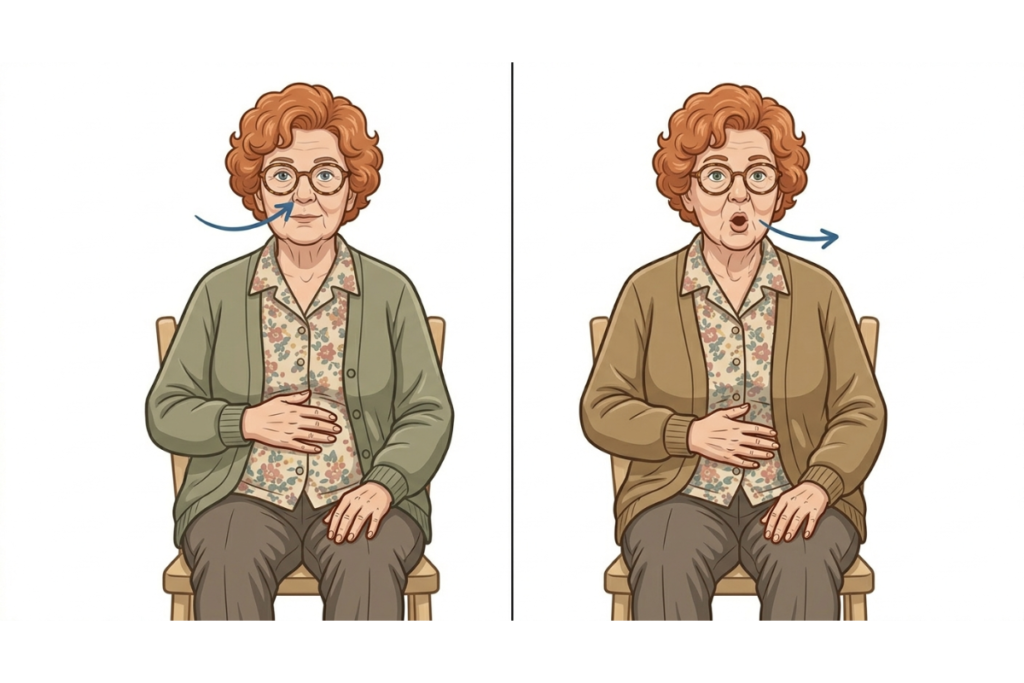
Why it helps: Calms the nervous system, improves oxygen flow, and prepares your body to move.
How to do it:
- Sit tall in your chair with feet flat on the floor.
- Place one hand on your belly.
- Inhale slowly through your nose for 4 counts.
- Exhale through your mouth for 6 counts.
- Repeat 5 times.
Safe modification: If sitting upright is uncomfortable, lean slightly back with support.
2. Neck Rolls
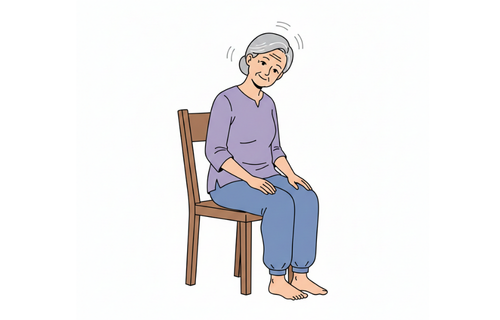
Why it helps: Relieves tension in the neck and shoulders, which is common for many people today.
How to do it:
- Sit tall, shoulders relaxed.
- Slowly drop your right ear toward your right shoulder.
- Gently roll your chin down to your chest, then up to the left.
- Pause wherever you feel tightness.
- Repeat 3 times each direction.
Safe modification: Skip the full roll and just do gentle side-to-side tilts instead.
3. Shoulder Rolls
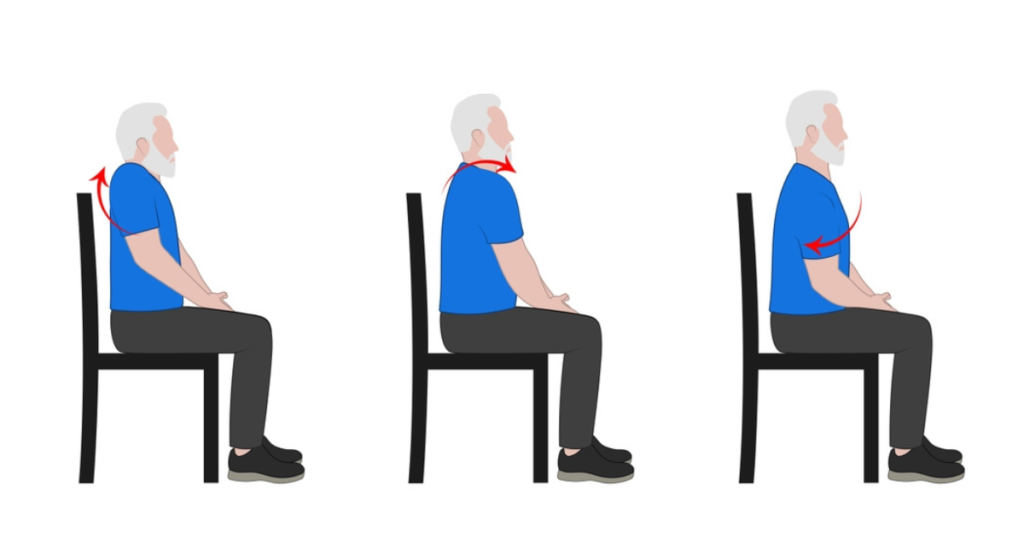
How to do it:
- Sit tall with arms resting at your sides.
- Roll both shoulders forward in a big circle 5 times.
- Then roll them backward 5 times.
This exercise feels great, and it’s okay if you want to do it more often.
Core and Upper Body Exercises
Having a strong core is about more than just your abs. It helps improve your posture, reduces back pain, and supports better balance.
4. Seated Cat-Cow Stretch
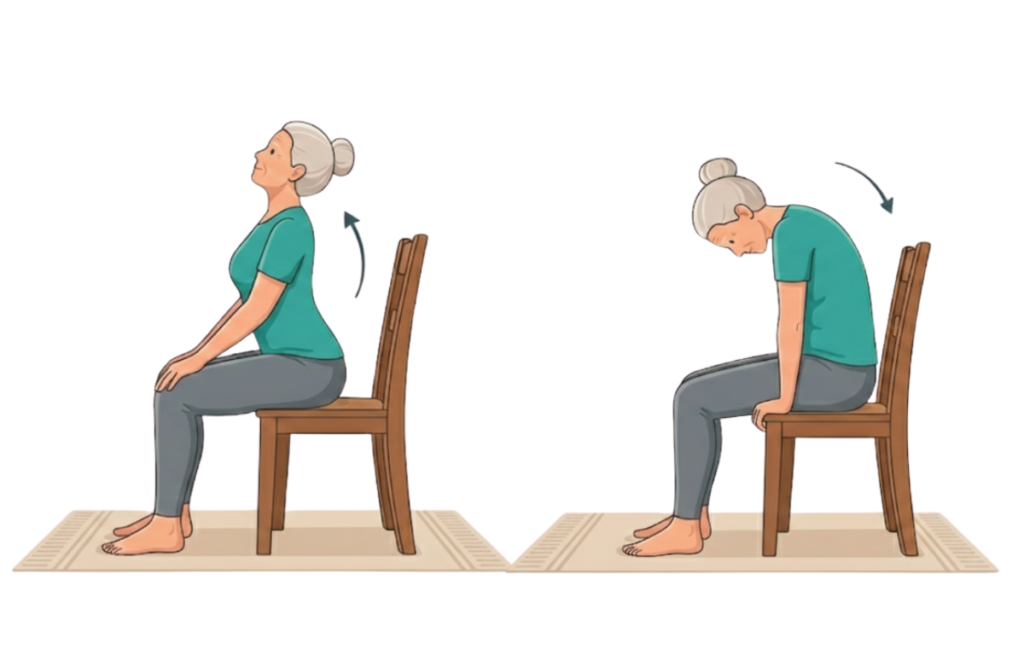
Why it helps: Loosens the spine and relieves lower back stiffness.
How to do it:
- Sit at the edge of your chair, feet flat on the floor.
- Place your hands on your knees.
- Inhale and arch your back, lifting your chest and chin slightly (Cow).
- Exhale and round your spine, tucking your chin to your chest (Cat).
- Flow slowly between the two for 8-10 rounds.
Safe modification: Make the movements smaller if your back feels stiff. Even tiny movement helps.
5. Seated Torso Twist
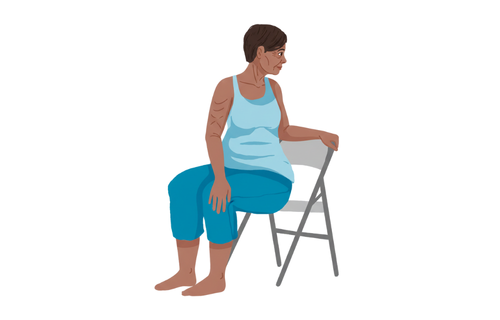
Why it helps: Improves spinal rotation and digestion (yes, really).
How to do it:
- Sit tall with feet flat on the floor.
- Place your right hand on the outside of your left knee.
- Gently twist your torso to the left, looking over your left shoulder.
- Hold for 3 breaths, then switch sides.
- Repeat twice on each side.
6. Seated Overhead Arm Reach
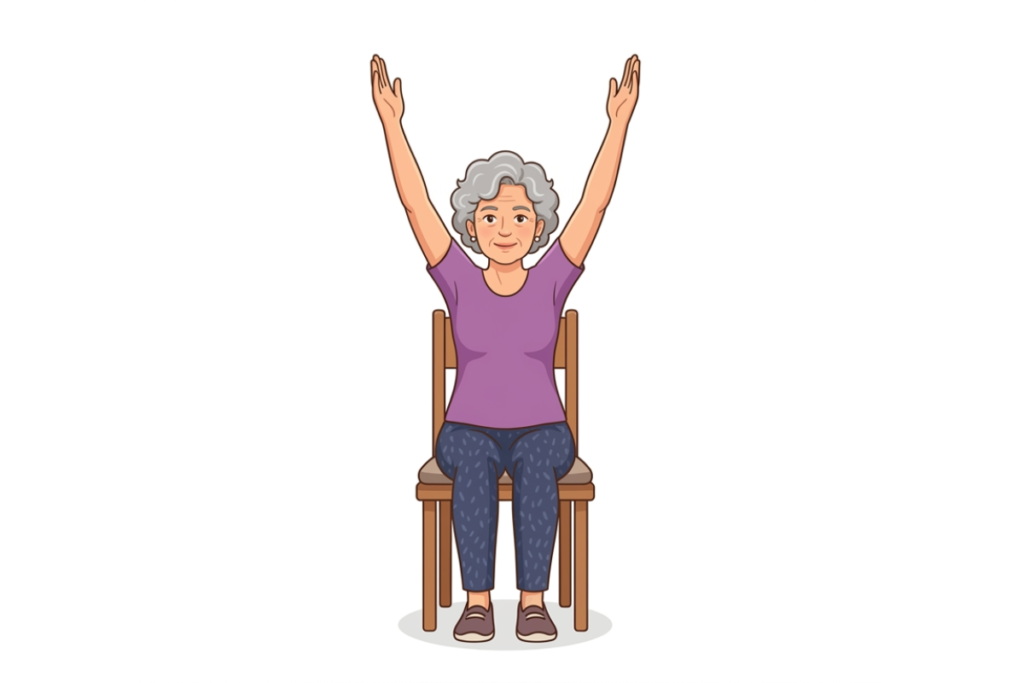
How to do it:
- Sit tall and inhale as you raise both arms overhead.
- Reach your right hand a little higher, feeling a side stretch.
- Hold for 2 breaths, then switch sides.
- Do 5 reps per side.
Safe modification: Only raise your arms as high as is comfortable.
7. Seated Chest Opener
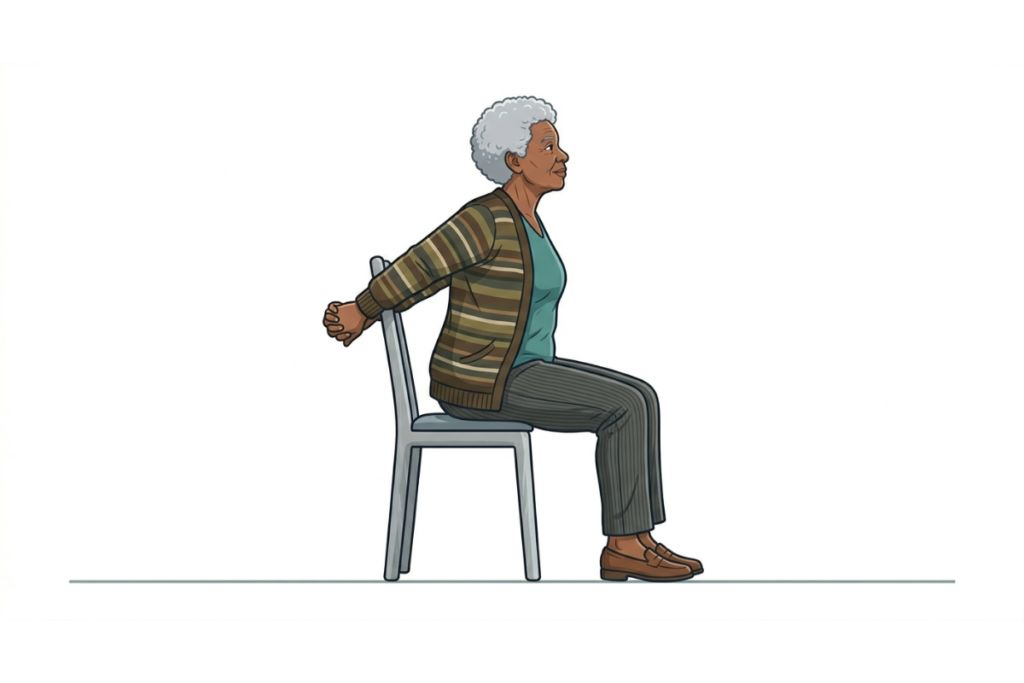
Why it helps: Helps correct the forward hunch that can happen from sitting for long periods.
How to do it:
- Clasp your hands behind your back (or hold the back of the chair).
- Gently squeeze your shoulder blades together and lift your chest.
- Hold for 5 breaths.
- Repeat 3 times.
Lower Body and Balance Exercises
These gentle exercises for seniors at home strengthen your legs and hips, which are important for keeping your balance.
8. Seated Marching
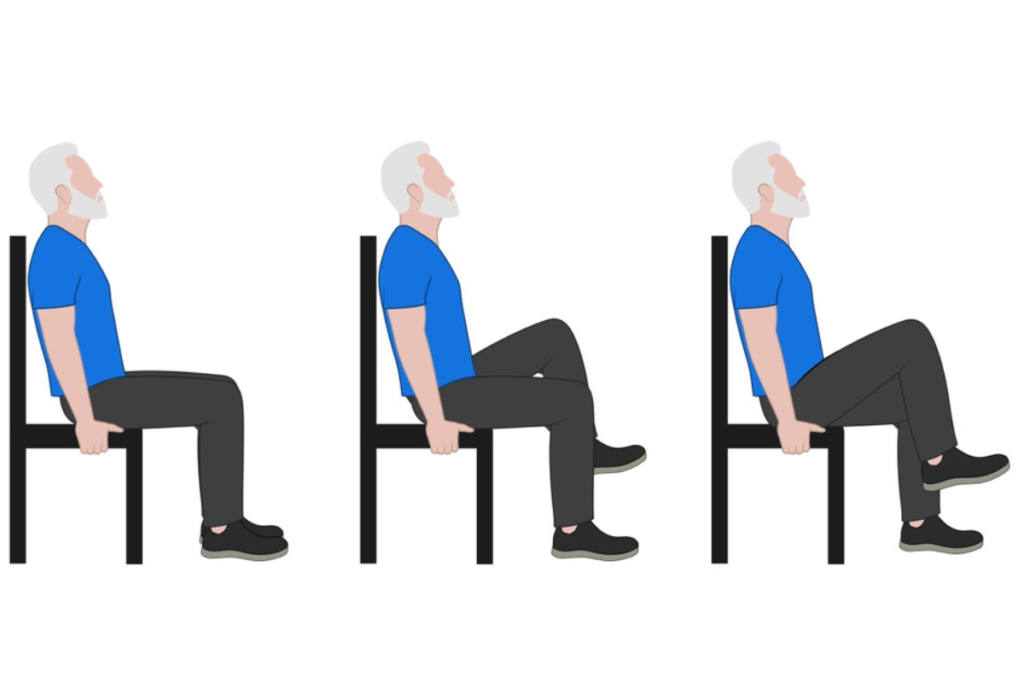
Why it helps: Gets the blood pumping and warms up the hip flexors.
How to do it:
- Sit tall and lift your right knee up toward your chest.
- Lower it, then lift your left knee.
- Alternate in a marching rhythm for 30 seconds.
- Work up to 1 to 2 minutes over time.
9. Ankle Circles
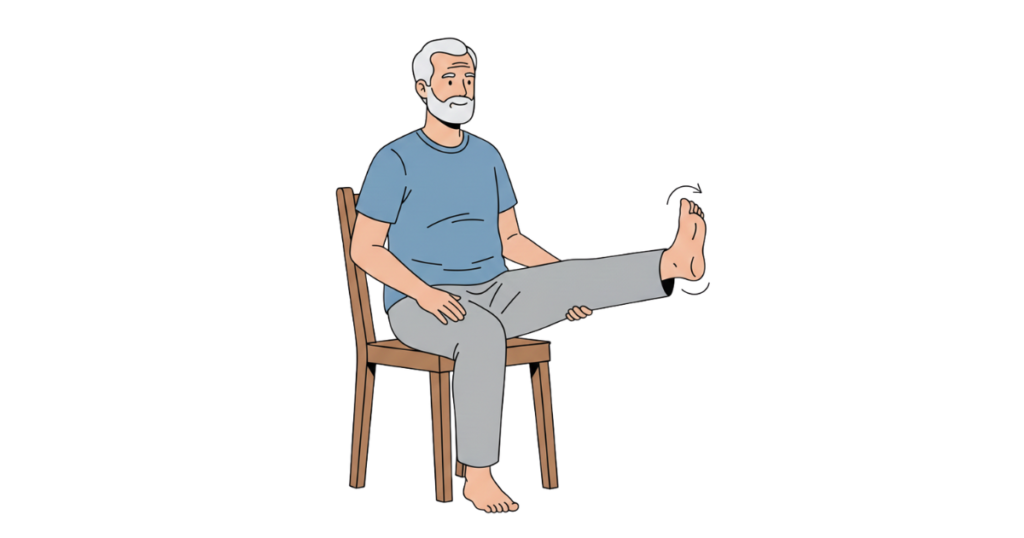
How to do it:
- Lift your right foot slightly off the floor.
- Rotate your ankle in a large circle 5 times clockwise, then 5 times counterclockwise.
- Switch feet and repeat.
They are great for improving circulation and reducing ankle stiffness.
10. Seated Leg Extensions
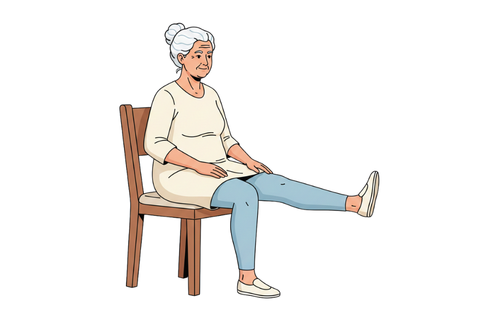
Why it helps: Strengthens the quadriceps and supports knee health.
How to do it:
- Sit tall and straighten your right leg, holding it parallel to the floor.
- Flex your foot (toes pointing up).
- Hold for 3 seconds, then lower slowly.
- Do 10 reps, then switch legs.
Safe modification: Only lift as high as feels comfortable.
11. Seated Heel Raises
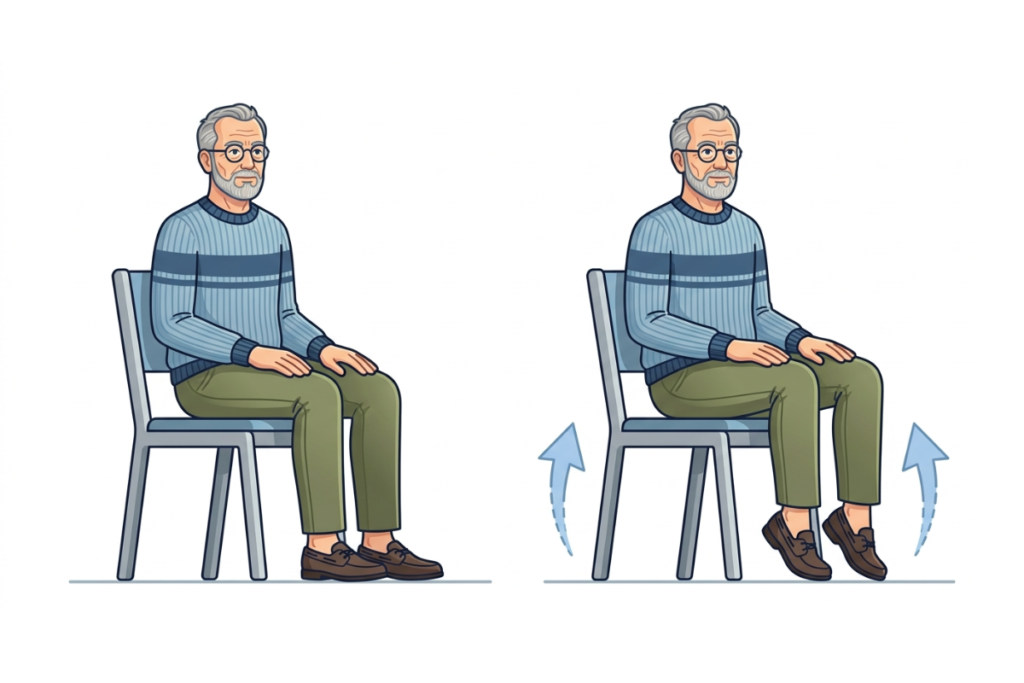
How to do it:
- Feet flat on the floor.
- Raise both heels as high as you can, pressing through the balls of your feet.
- Hold for 2 seconds, then lower.
- Repeat 15 times.
This exercise can be more challenging than it looks, and you’ll feel it in your calves.
12. Sit-to-Stand (Chair Squat)
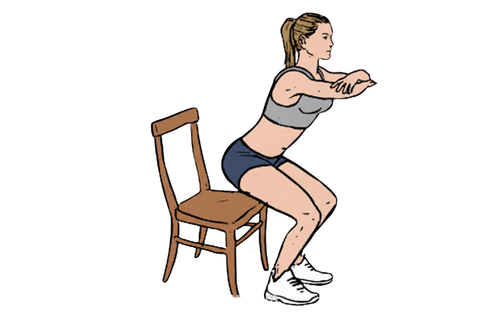
Why it helps: This is one of the most useful low-impact home workouts for seniors because it helps you practice standing up from a chair safely.
How to do it:
- Sit at the edge of your chair, feet hip-width apart.
- Lean slightly forward, then press through your heels to stand up.
- Pause at the top, then slowly lower back down.
- Do 5 to 10 reps.
Safe modification: Use the armrests for support until you build strength.
Flexibility and Cool-Down Stretches
Always end your routine with these stretches. You’ll be glad you did.
13. Seated Forward Fold
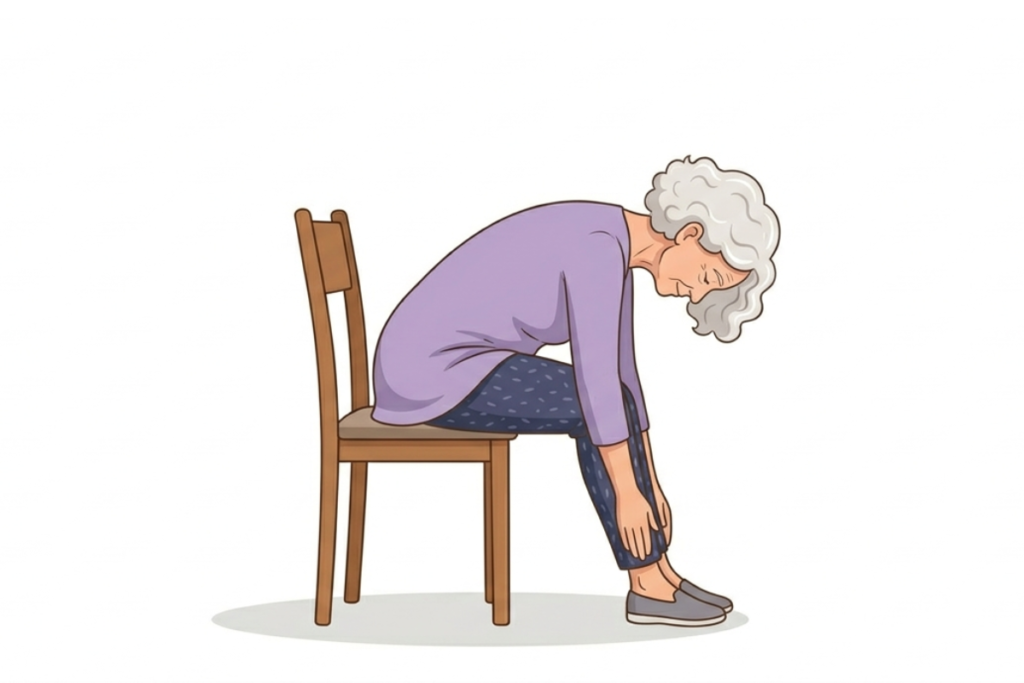
How to do it:
- Sit at the edge of your chair, feet flat on the floor.
- Hinge at your hips and slowly walk your hands down toward the floor.
- Let your head hang heavy and breathe deeply.
- Hold for 5 to 8 breaths, then slowly sit back up.
Safe modification: Rest your hands on your thighs instead of reaching to the floor.
14. Figure-Four Hip Stretch
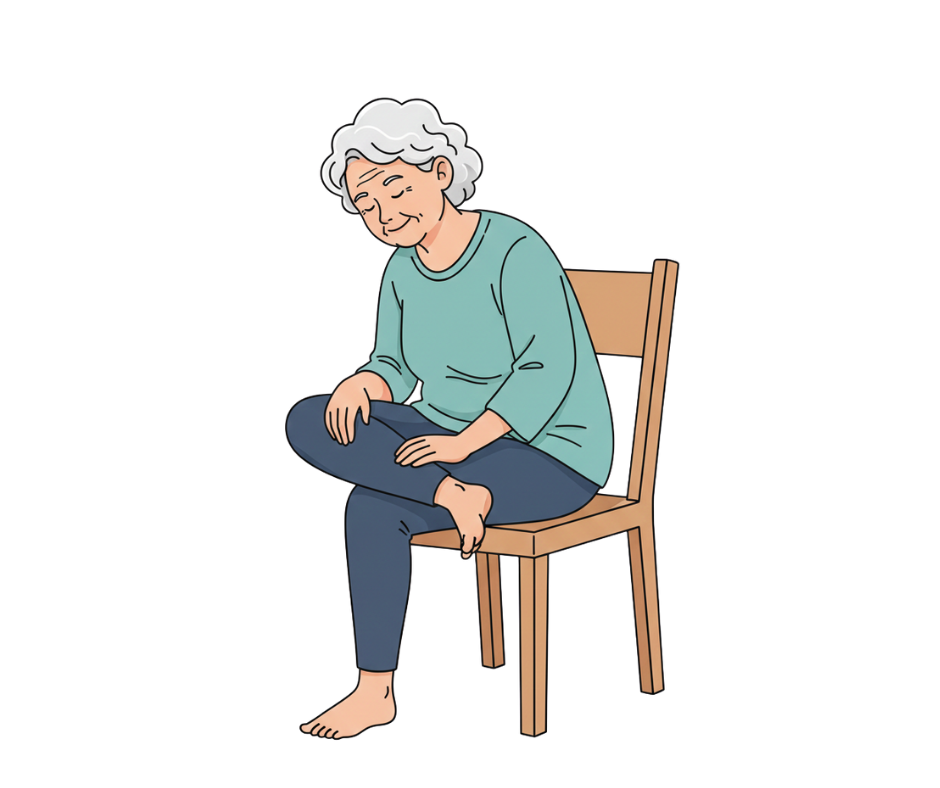
Why it helps: Opens the hips and helps with lower back tightness.
How to do it:
- Cross your right ankle over your left knee to form a figure-four.
- Sit tall and gently press your right knee toward the floor.
- Lean forward slightly for a deeper stretch.
- Hold for 5 breaths, then switch sides.
15. Seated Spinal Lengthening (Final Cool-Down)
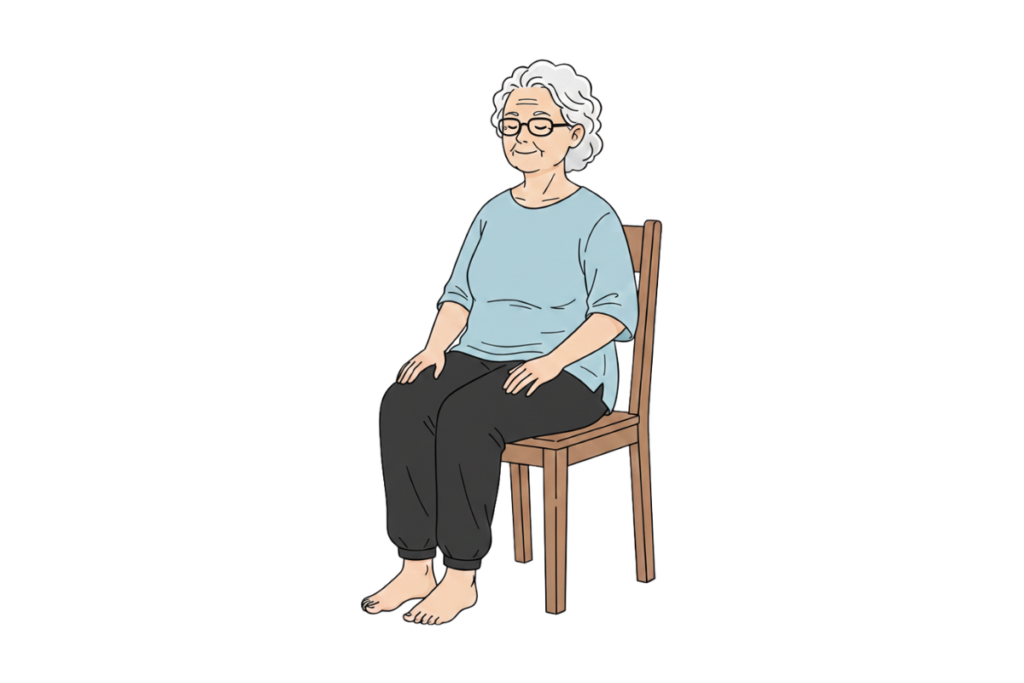
How to do it:
- Sit tall, close your eyes.
- Imagine a string pulling the top of your head toward the ceiling.
- Take 5 deep breaths, feeling your spine grow long with each inhale.
- Let your shoulders drop with each exhale.
Finish every session with this exercise. It helps you reset and relax.
Tips for Staying Consistent (Without Hating It)
The best exercise routine is the one you can stick with. Here are a few tips to help you stay consistent:
- Tie it to a habit you already have. Do your exercises right after morning coffee or before your favorite TV show.
- Start small. Even 5 minutes a day builds momentum.
- Track your progress. A simple checkmark on a calendar is surprisingly motivating.
- Be kind to yourself. If you miss a day, don’t worry. Just try again the next day.
Final Thoughts
You don’t have to change everything to feel better in your body. Just start small. Choose two or three exercises from this list and try them today. That’s really all it takes.
Movement isn’t about being perfect, fast, or super flexible. It’s about taking care of yourself, one gentle step at a time. Even reading this is a great first step. Now, find a sturdy chair and get started when you’re ready.
