

Getting older can feel a bit like being a classic car. You have style, history, and plenty of character, but sometimes it takes a little longer to get moving, and things might feel a bit creaky. If your back is starting to curve or you get winded walking to the mailbox, you’re not alone. The good news is you don’t need to do anything extreme to feel better. Adding simple posture and breathing exercises to your daily routine can help you feel more energetic and comfortable.
Chair yoga is a simple, low-stress way to get your body moving again. It’s just yoga done while sitting in a sturdy chair. You don’t have to get on the floor or try to balance in tricky positions. The goal is to make daily life easier. Whether you want to reach a high shelf without pain or sit comfortably through your grandchild’s recital, these exercises can help.
Why Your Posture and Breath Are Best Friends
Imagine your body as a house. Your posture is the frame, and your breath is the ventilation. If the frame sags, the windows and doors don’t work well, and air doesn’t flow easily. When we slouch, our lungs get compressed, making it harder to breathe deeply. This can make us feel tired, unfocused, or even a little irritable.
Improving your posture helps open up your chest. When you add focused breathing, you gently support your organs and send more oxygen to your brain. It’s a natural way to boost your energy, without any side effects.
The Golden Rule: Comfort Over Contortion
Before we start the breathing and posture exercises, let’s get ready. You don’t need special clothes or an expensive yoga mat. Just use a sturdy chair without wheels and bring a positive attitude.
Consistency matters more than doing every move perfectly. If a stretch feels good, keep going. If it feels uncomfortable or painful, stop. Listen to your body and go at your own pace.
Part 1: Breathing Exercises to Refuel Your Tank
Before we start moving, let’s focus on breathing. Many people breathe only with the upper chest. We’ll learn how to use the whole lungs for deeper breaths.
1. The Belly Balloon (Diaphragmatic Breathing)
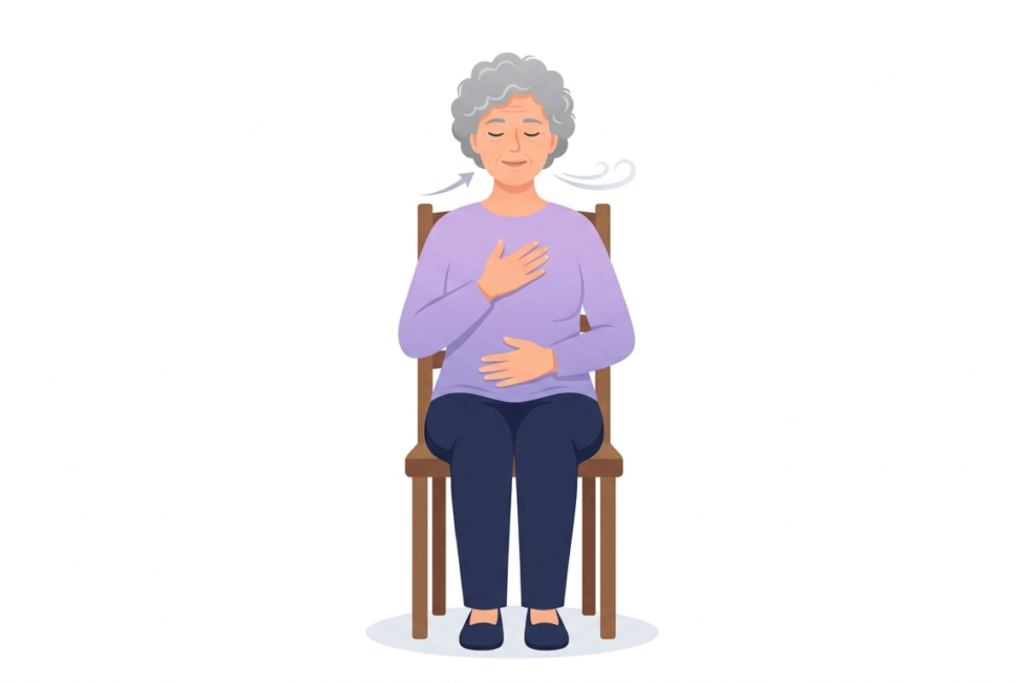
This exercise is the foundation for all the others. It signals your nervous system that you can relax.
- Step 1: Sit tall in your chair with your feet flat on the floor. Imagine a string pulling the top of your head toward the ceiling.
- Step 2: Place one hand on your belly and the other on your chest.
- Step 3: Breathe in slowly through your nose. Try to make the hand on your belly move outward, like you’re inflating a balloon in your stomach. The hand on your chest should stay relatively still.
- Step 4: Exhale slowly through your mouth, feeling the “balloon” deflate.
- Step 5: Repeat this five times. If you feel a little lightheaded, just take a break and breathe normally.
2. The Cooling Hiss (Straw Breath)
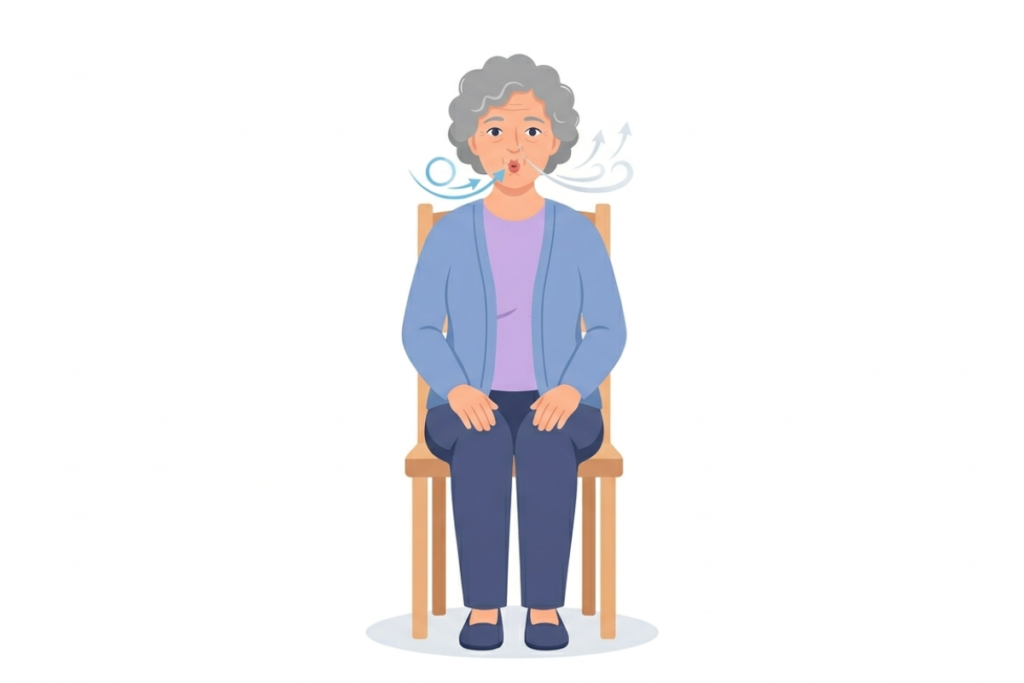
This exercise is helpful when you feel stressed or after physical activity, like walking up stairs.
- Step 1: Inhale deeply through your nose.
- Step 2: Purse your lips as if you are holding an invisible drinking straw.
- Step 3: Exhale as slowly as possible through that tiny “straw.”
- Step 4: Notice how your shoulders drop away from your ears as you finish the breath.
Part 2: Beginner Poses for a Stronger Spine
Now that we’ve focused on breathing, let’s work on posture. These poses help your spine, shoulders, and hips.
3. Seated Mountain Pose (Tadasana)
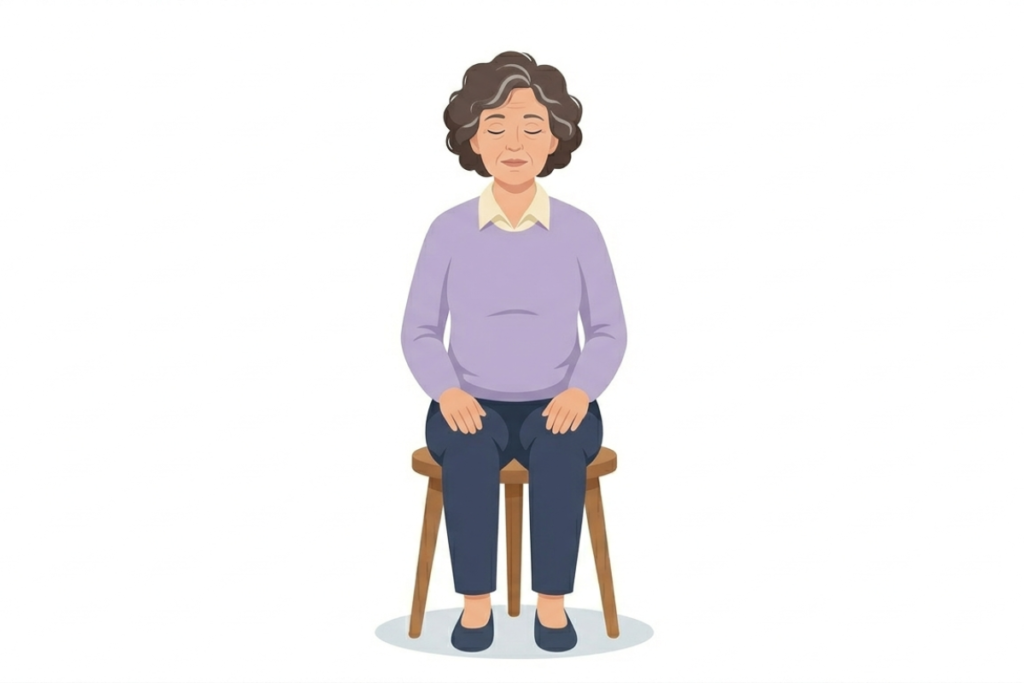
This may look like simply sitting, but it is an active way to improve your posture.
The Goal: To align your ears over your shoulders and your shoulders over your hips.
How to do it:
- Sit toward the front edge of your chair.
- Plant your feet hip-width apart.
- Rest your hands on your thighs, palms facing up to open the shoulders.
- Imagine you are trying to make your spine as long as possible.
- Tuck your chin slightly so your head stays in line with your spine.
- Hold for 30 seconds while taking those big “Belly Balloon” breaths.
4. Seated Cat-Cow (The Spine Awakener)
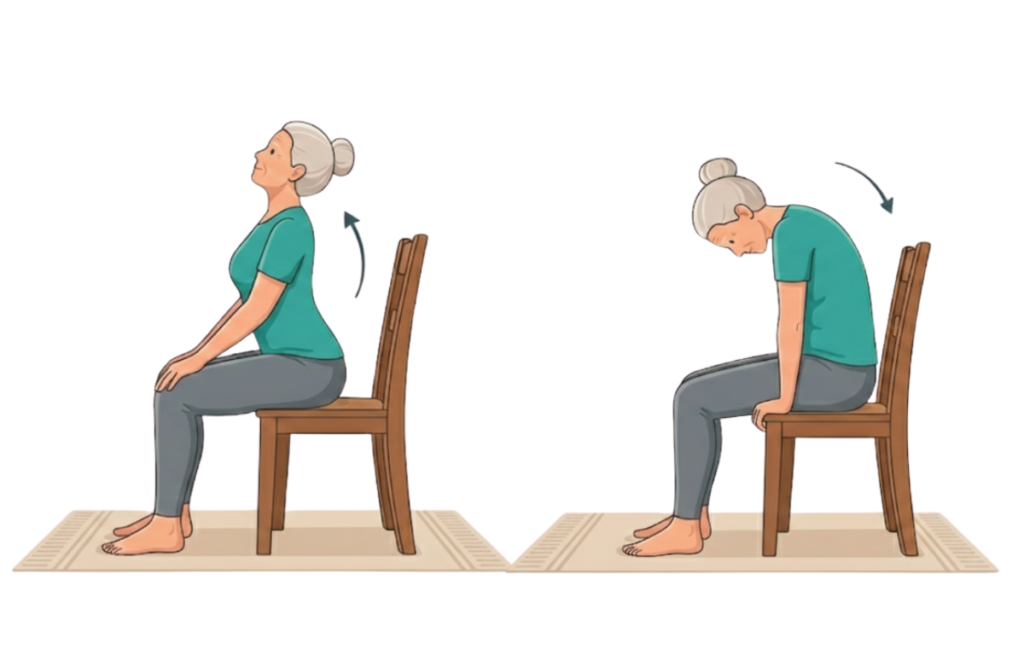
If your back feels stiff in the morning, this exercise can help. It gently loosens the spine.
The Goal: To move the spine in two different directions.
How to do it:
- Place your hands on your knees.
- The Cow: As you inhale, lift your chest and look slightly up toward where the wall meets the ceiling. Let your back arch gently.
- The Cat: As you exhale, round your back like a spooky Halloween cat. Tuck your chin toward your chest and look toward your belly button.
- Flow between these two moves five times, following the rhythm of your breath.
5. The Seated Side Stretch (The Rib Opener)
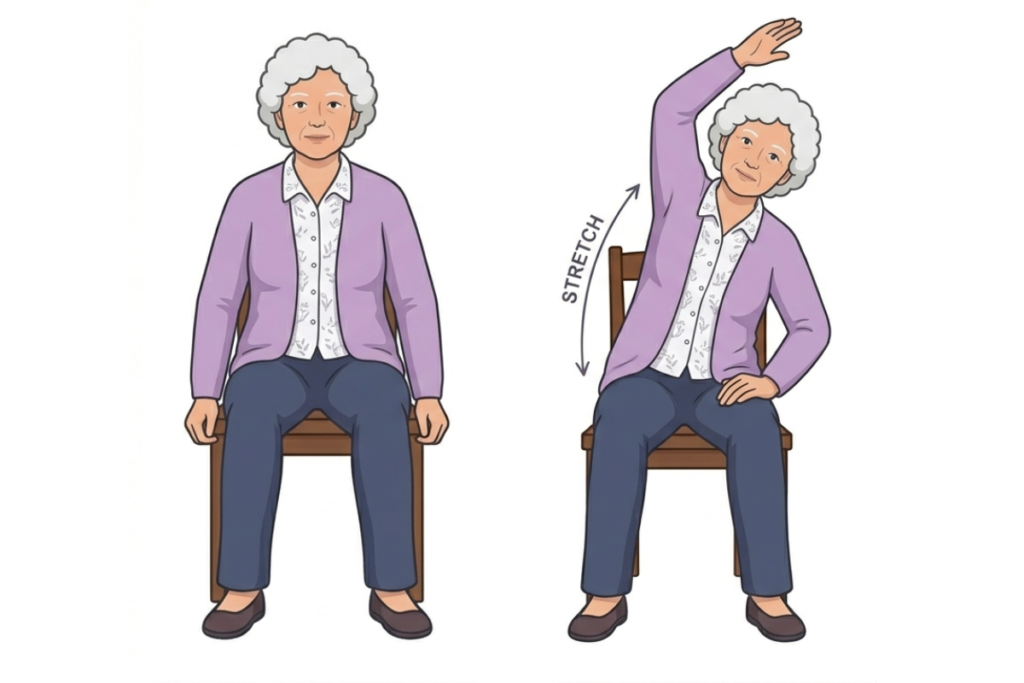
The muscles between your ribs also need to stretch. This exercise helps you breathe more deeply.
The Goal: To stretch the sides of the torso.
How to do it:
- Sit tall in your “Mountain Pose.”
- Hold onto the chair’s side with your left hand for stability.
- Reach your right arm up toward the ceiling. If your shoulder feels uncomfortable, you can rest your hand on your shoulder or hip instead.
- Lean gently to the left, feeling a stretch all along your right side.
- Take two deep breaths into those right-side ribs.
- Switch sides and repeat.
6. The “Look Behind You” Twist
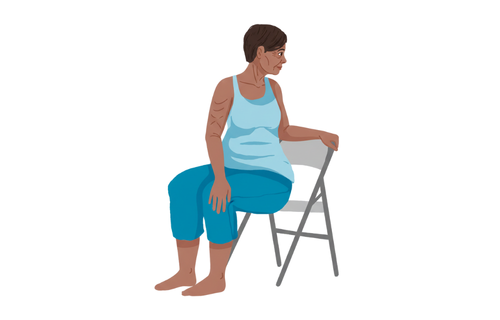
This exercise helps keep your spine flexible, which is useful for everyday activities like turning while driving.
The Goal: A gentle rotation of the middle and upper back.
How to do it:
- Sit tall and inhale to grow an inch taller.
- As you exhale, slowly turn your body to the right.
- Place your left hand on your right knee and your right hand on the arm or back of the chair.
- Do not force the movement. Turn only until you feel a gentle stretch.
- Look over your right shoulder if it feels okay for your neck.
- Hold for three breaths, then slowly unwind and do the other side.
Part 3: Standing Tall with Confidence
Good posture is important when standing as well as sitting. You can use your chair for support to help with balance.
7. Supported Tree Pose
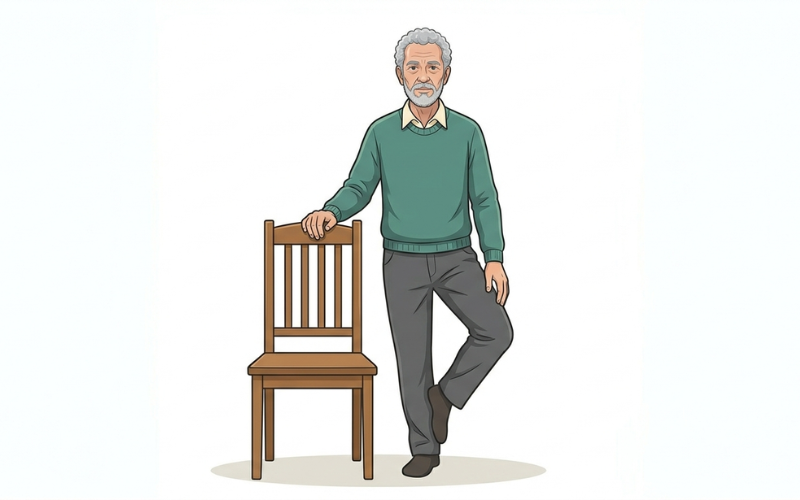
This exercise helps build leg strength and balance, which can help prevent falls.
The Goal: To improve balance and hip flexibility.
How to do it:
- Stand next to your chair and hold onto its back with one hand for support.
- Stand tall on your left leg.
- Turn your right knee out to the side and rest your right heel against your left ankle. Keep your toes on the floor for stability.
- If you feel steady, try lifting your hand off the chair for a few seconds.
- Stand as tall and steady as you can.
- Switch sides.
Why Consistency Trumps Everything
You may wonder if you need an hour each day for these exercises. The truth is, just five or ten minutes a day is much more effective than doing a long class once a month.
You can practice the “Belly Balloon” while watching TV, the “Seated Twist” while making coffee, or the “Seated Mountain” during a phone call. The goal is to make your body feel more comfortable each day.
It’s similar to brushing your teeth. You do it for a few minutes every day, not all at once. Your spine and lungs benefit from the same regular care.
Final Thoughts
If you feel stiff or low on energy, try not to get discouraged. Your body can respond well to even small movements. You do not have to do every exercise at once. Just choose one, like the “Belly Balloon” or the “Seated Cat-Cow.”
Try one exercise now as you sit. Take a deep breath and sit up a little taller. This is the first step toward feeling more mobile and energetic.
Stand or sit tall, take a deep breath, and acknowledge your effort. You are making progress, and your body will benefit from it. Consider having a glass of water and trying the “Side Stretch” again if you like.
