
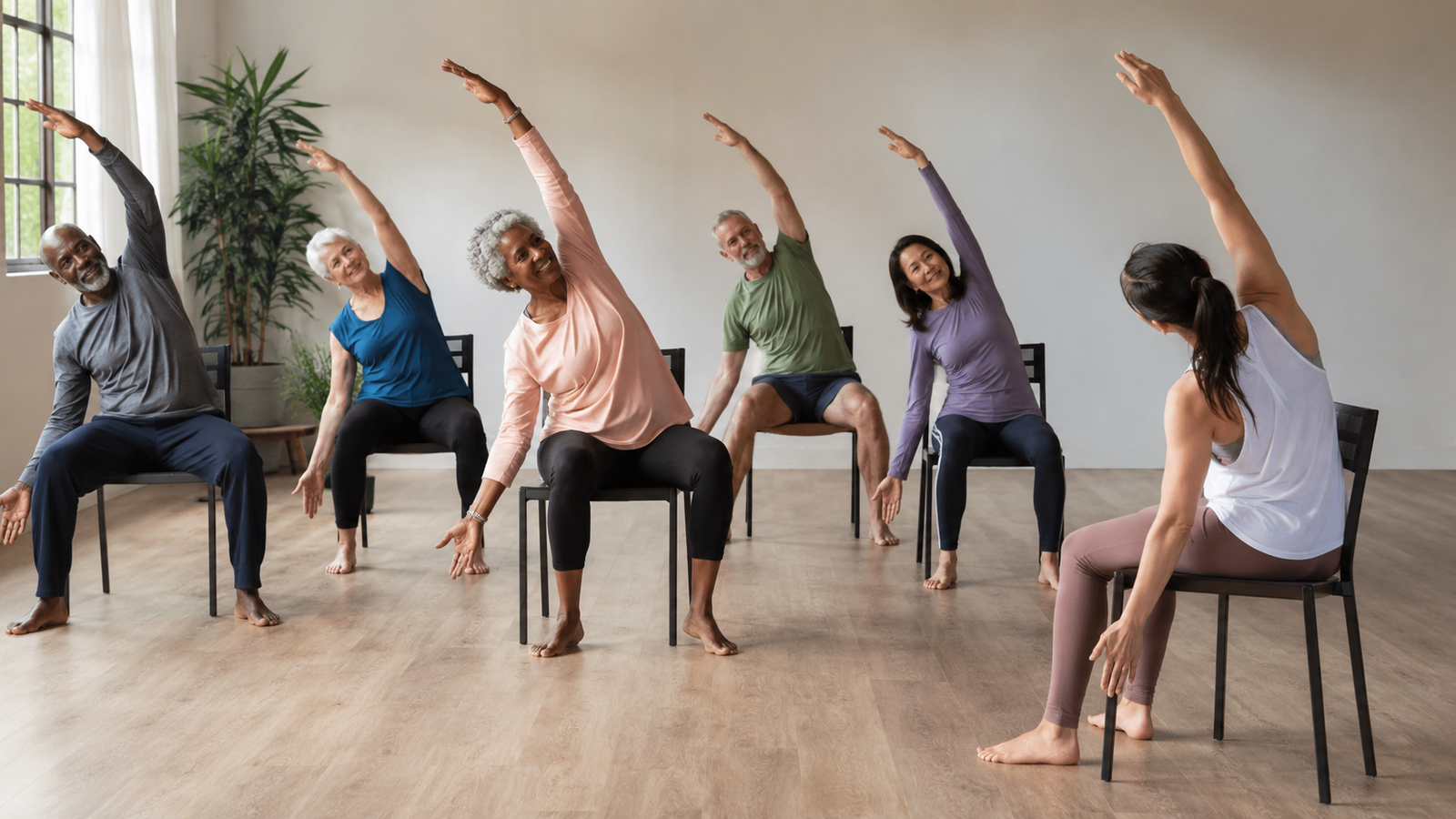
You have decided to get moving again. Maybe your sneakers have been sitting in the closet for years, or maybe you just took a long break. No matter why you stopped, welcome back to moving your body! If you’re restarting exercise after 60 and wondering what progress should realistically feel like, start with our Restarting Exercise After 60guide to understand how to begin safely and what to expect in the early weeks.
It is completely normal to feel a mix of excitement and a tiny bit of “what was I thinking?” when you first sit down for a chair yoga session or head out for a walk. The big question on everyone’s mind is usually: “When will I actually feel strong instead of just tired?”
The Magic of the First Two Weeks: It Is All in Your Head
Here is something fitness influencers do not often say: the first strength you gain is not muscle, but neurological. In the first week or two, your brain and muscles are learning to work together again.
It is like a phone line with static at first. When you begin chair yoga or simple strength moves, your brain is relearning how to make your muscles work. By the end of the second week, things feel smoother. You start to feel stronger because your muscles are using energy more efficiently. Maybe standing up feels steadier or your balance is better during a seated pose. This is a big achievement, even if your muscles do not look bigger yet.
Week Three to Six: The Structural Shift
After about a month, you will start to notice real changes. This is when your body begins to catch up with your mind. If you have been exercising two or three times a week, you will probably notice your stamina improving.
At this stage, your body is working behind the scenes. It is making more mitochondria, the powerhouses of your cells, and improving blood flow. You will notice you are less out of breath when walking to the mailbox. These changes are real signs you are getting stronger.
Why Your “Internal Strength” Matters More Than the Mirror
Many people look for progress in the mirror, but with chair yoga and long-term health, the changes you cannot see are most important. Around week four or five, you might notice these signs of strength:
- Better posture: You sit taller without having to constantly remind yourself.
- Easier chores: Carrying groceries or reaching for a high shelf feels less difficult.
- Reduced morning stiffness: Getting out of bed is easier and less noisy.
- Improved mood: You feel more energized and better able to handle daily stress.
The Reality of Consistency Over Intensity
A common mistake when restarting is trying to make up for lost time. Some people think doing hours of exercise in one day will bring quick results, but this often just leads to soreness and discomfort.
Strength develops during the recovery time between workouts. For beginners or those returning after a break, ten minutes of gentle chair yoga every other day is much more effective than two hours once a month. Your body responds best to regular, gentle movement. This routine helps your muscles grow and adapt safely.
Factors That Speed Up (or Slow Down) Your Progress

Everyone’s timeline is a little different. A few things can influence how quickly those “stronger” feelings kick in:
Your Starting Point
If you were active when you were younger, your body has muscle memory, which helps you get back into shape faster. If you are starting fresh, your body is building strength from the ground up. Both approaches are good, but the progress will happen at different speeds.
Nutrition and Hydration
Muscles need protein and water to grow. If you are not eating enough protein or drinking enough water, your body will have a harder time building new muscle. Be sure to eat well and stay hydrated to help your muscles recover.
Sleep: The Secret Recovery Weapon
Most of your real strengthening happens while you sleep. If you do not get enough rest, your progress will slow down. Try to get a good night’s sleep so your body can recover and get stronger.
Managing the “Soreness” Factor
It is hard to feel strong when your legs are very sore. Delayed Onset Muscle Soreness (DOMS) is the stiffness that shows up a day or two after exercise. Many people think this means they are injured or too old to exercise.
Mild soreness means you have worked your muscles enough to make them change. As you get stronger, you will feel sore less often. If you feel stiff, gentle chair yoga can help improve circulation and stretch your muscles.
Staying Motivated When the Scale Does Not Move
If you want to feel stronger, do not focus on the scale. Muscle weighs more than fat, so your weight might not change even as you get stronger and firmer. Instead, focus on your progress in daily activities.
If you can hold a seated plank longer than last week or do more repetitions of a leg lift, that is real progress. Celebrate these achievements. Reward yourself with something small, like new socks or a cup of tea, after a week of steady movement. Changing your habits is hard work, and you should be proud.
A Realistic Timeline Summary
To help set realistic expectations, here is a general timeline for building strength:
- Days 1 to 7: You may feel tired but also proud. Your brain is starting to reconnect with your muscles.
- Weeks 2 to 4: Movement feels smoother. You feel more coordinated and less stiff.
- Weeks 6 to 8: Others may notice you have more energy. You start to feel more confident in your daily life.
- 3 Months and Beyond: By now, exercise has become a habit. You exercise regularly, and your overall strength has improved significantly.
Take the Small Step Today
Restarting exercise is not about competing. It is about staying active and enjoying life. You do not need to work out for an hour to make progress. Just showing up for yourself is enough. If you need a little structure, consider following a 7-Day Restart Guide to help you stay motivated and on track.
Even a few minutes of deep breathing, some gentle stretches, or a short walk around your home makes a difference. Every time you move, you are helping yourself become stronger and healthier. Take a deep breath, sit up straight, and get started. Your future self will thank you.
