

Life can feel overwhelming at times. Maybe you’re struggling with a tricky new phone, waiting in a long grocery line, or just feeling like the world is too noisy. Stress doesn’t care about age or experience. Sometimes your heart races, your shoulders tense up, and you just need a break. That’s when breathing exercises to calm down can help. They’re free, you can do them anywhere, and no one even has to notice.
The best part is you don’t need to twist or stretch to find calm. If you can sit in a chair and breathe, you’re ready for this. Chair yoga and mindful breathing aren’t just for people in workout clothes—they’re for anyone who wants to feel steadier and more peaceful. So grab a sturdy chair, get comfortable, and let’s learn how to use your breath to feel better.
Why Breathing Matters (Beyond the Whole Staying Alive Part)
We all know breathing is essential. But there’s a big difference between the shallow breaths we take when we’re stressed and the deep, calming breaths that help our minds relax.
When you feel stressed or anxious, your body goes into “fight or flight” mode. This was useful long ago, but not so much when you’re just looking for your glasses (try checking your head). Deep breathing helps turn off that stress response. It tells your body you’re safe and it’s time to relax.
For seniors and beginners, focusing on your breath is a safe way to begin a wellness routine. There’s no risk of falling, no sore muscles, and no special equipment needed. It’s just you, your chair, and your breath.
Setting the Stage: Your Chair Yoga Headquarters
Before we start the quick breathing exercises to relax, let’s get your space ready. You don’t need a special room—a living room, kitchen, or sturdy porch chair will do just fine.
Pick the Right Chair
Pick a chair that is stable and firm. A dining chair or a sturdy office chair without wheels works best. Avoid very soft recliners for these exercises. You should be able to sit up straight with your feet flat on the floor.
Get Grounded
Sit near the front of the chair so your back doesn’t touch the backrest. This gently engages your core. If your feet don’t reach the floor, use thick books or a sturdy pillow to support them. Keeping your feet flat helps you stay steady.
Relax Your “Stress Points”
Notice how your body feels. Are your teeth clenched? Is your tongue pressed to the roof of your mouth? Are your shoulders tense? Let everything relax. Shake out your hands and wiggle your toes. Now you’re ready.
Exercise 1: The Belly Breath (The Gold Standard)
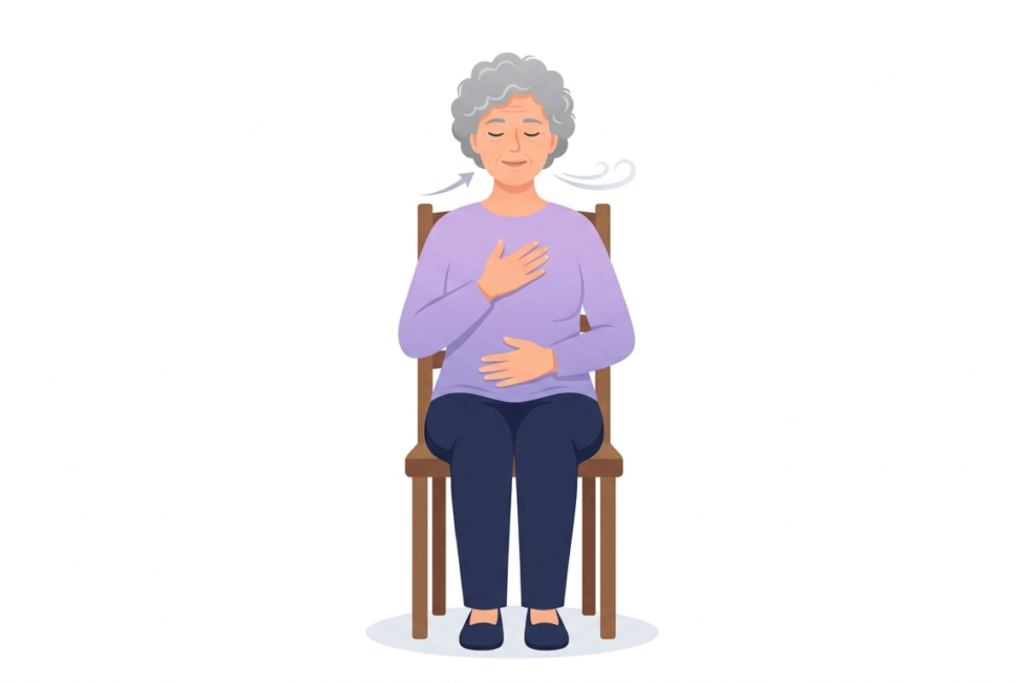
If you remember just one thing today, make it this: Most people breathe with their chest, taking short, shallow breaths. Belly breathing, or diaphragmatic breathing, is much more effective.
How to do it:
- Place one hand on your chest and the other hand on your belly, right over your navel.
- Close your eyes if you feel comfortable, or just soften your gaze at the floor.
- Breathe in slowly through your nose. Try to send that air all the way down so that your belly pushes your hand out. The hand on your chest should stay relatively still.
- Imagine you are inflating a small balloon in your stomach.
- Breathe out slowly through your mouth, as if you are blowing through a straw. Feel your belly sink back in.
- Repeat this for five rounds.
Why it works: This exercise helps your body leave stress mode. It’s like a gentle massage for your organs. If you feel silly or think your belly is too big for this, remember—a moving belly means you’re breathing well. Be proud of it!
Exercise 2: The 4-4-4 Box Breath (The Professional Stress-Buster)
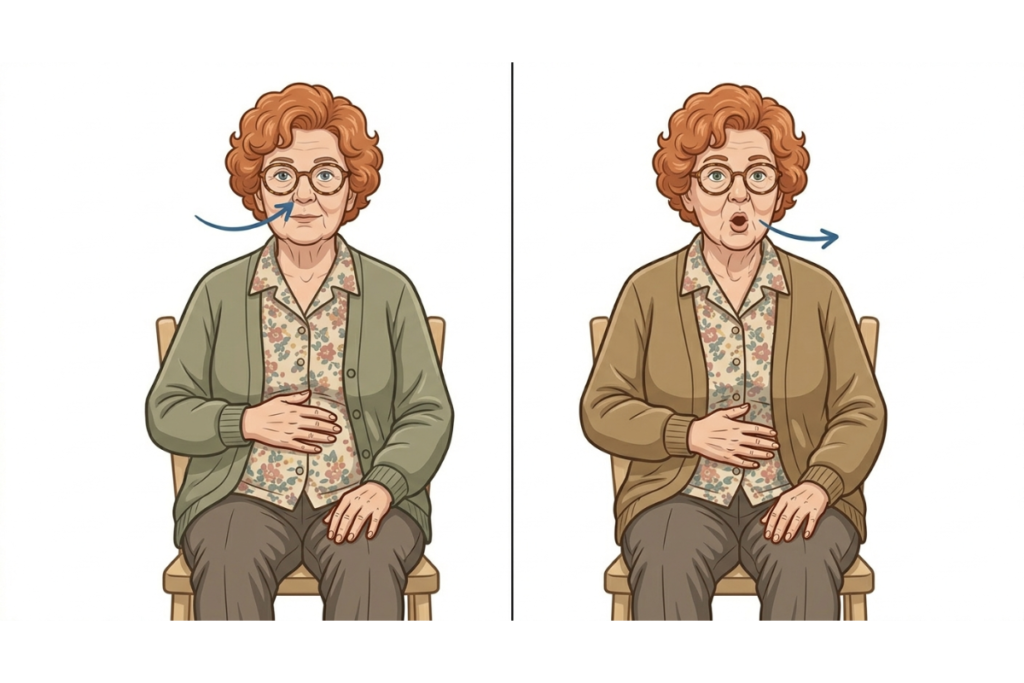
Professional athletes and performers use this technique to stay calm under pressure. It’s simple, rhythmic, and very effective for clearing your mind.
How to do it:
- Sit up tall and exhale all the air from your lungs.
- Inhale through your nose slowly while counting to four in your head. 1… 2… 3… 4.
- Hold your breath gently for a count of four. 1… 2… 3… 4. No need to tense up—just pause softly.
- Exhale through your mouth for a count of four. 1… 2… 3… 4.
- Pause with your lungs empty for a count of four. 1… 2… 3… 4.
- Start the cycle over.
Pro Tip: If four seconds feels too long or makes you anxious, try counting to two or three instead. There are no grades in chair yoga—just do what feels right for you today.
Exercise 3: The Humming Bee Breath (The One That Makes You Giggle)
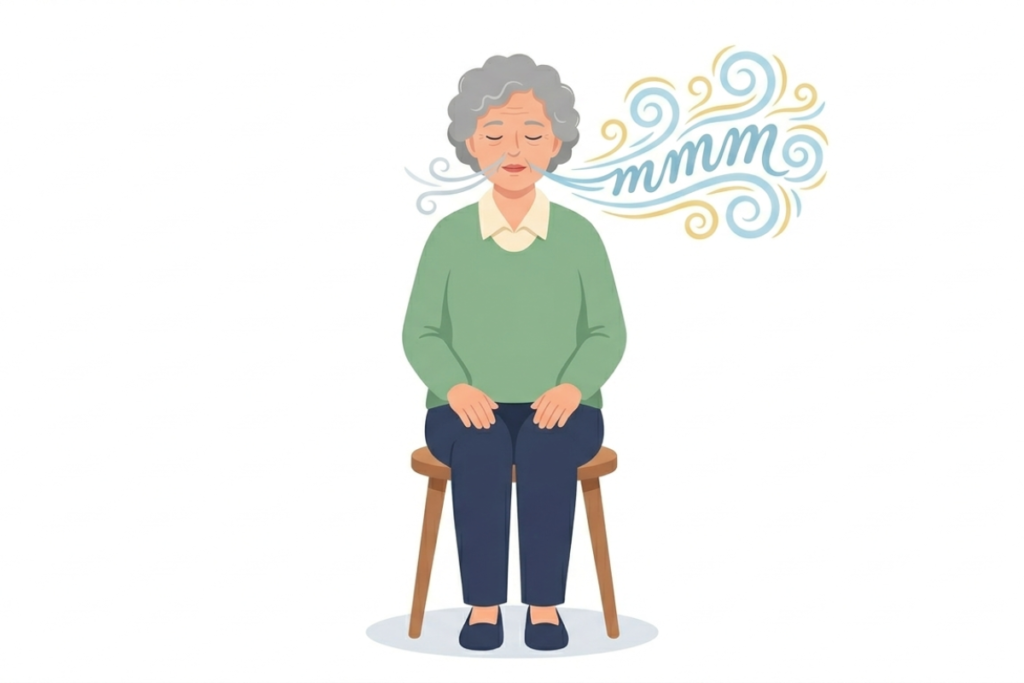
This exercise might seem a bit silly at first, but the vibration it creates is very calming for your nerves. It’s also a good way to block out noise from neighbors or the TV.
How to do it:
- Take a deep breath in through your nose.
- Keep your lips lightly closed.
- As you exhale, make a steady “mmm” humming sound.
- Continue the hum until you are out of breath.
- Notice how the vibration feels in your chest, throat, and even your head.
- Do this three or four times.
If someone catches you doing this, just say you’re practicing for an opera or talking to your inner honeybee. A little laughter is as good for you as a deep breath!
Exercise 4: The Equal Breath (Finding Your Balance)
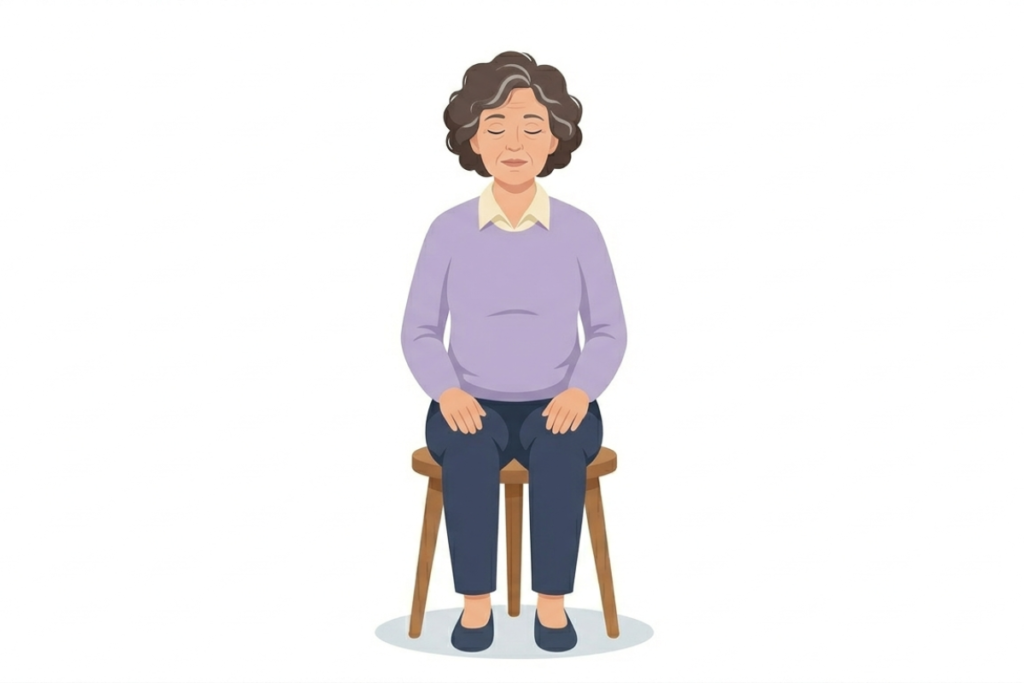
In yoga, this is called Sama Vritti. It’s about finding balance. When your inhales and exhales are the same length, your heart rate steadies and your mind calms down.
How to do it:
- Inhale through your nose for a count of four.
- Exhale through your nose for a count of four.
- That is it! Just keep the counts even.
- Pay attention to the sound of your breath. It might remind you of gentle ocean waves.
This exercise is great for waiting rooms or while watching the news. It helps you stay present instead of worrying about what might happen next.
Tips for Staying Consistent (Without Losing Your Mind)
You might be thinking, “This sounds good, but I’ll probably forget by tomorrow.” Here’s the secret: you don’t have to be perfect. Even a few minutes of breathing can make a difference.
Attach It to A Habit
Try belly breathing while your coffee brews, or box breathing during TV commercials. Linking a new habit to an old one makes it easier to remember.
Don’t Wait for a Crisis
You don’t have to wait until you’re stressed to practice these exercises. Practicing when you’re calm makes it easier to use them when you really need them. It’s like a fire drill—you want to be ready before there’s a problem.
Be Kind to Yourself
Some days, your mind will wander. You might start breathing and then think about dinner or a character in your book. That’s okay! When you notice, just gently bring your focus back to your breath. Be kind to yourself.
Safety First: A Quick Note
Breathing techniques for calming down are usually very safe, but always listen to your body. If you feel dizzy, lightheaded, or short of breath, stop and return to your normal breathing. Rest in your chair. If you have any respiratory or heart issues, let your doctor know about your new routine. They’ll probably be supportive, but it’s good to keep them informed.
Final Thoughts
You’ve finished this guide, which means you’re already making progress. You don’t need to master every exercise today. Just pick one to start, maybe the Belly Breath or the Humming Bee.
Take three minutes right now to sit and breathe. No phones, no chores, no worries—just you and your breath. You might be surprised how much lighter your shoulders feel after a few deep breaths.
You deserve to feel calm and centered. The best part is, you’ve always had the tool you need: your breath. Take a deep breath in, let it out slowly, and enjoy the peace you’ve created. You can do this!
