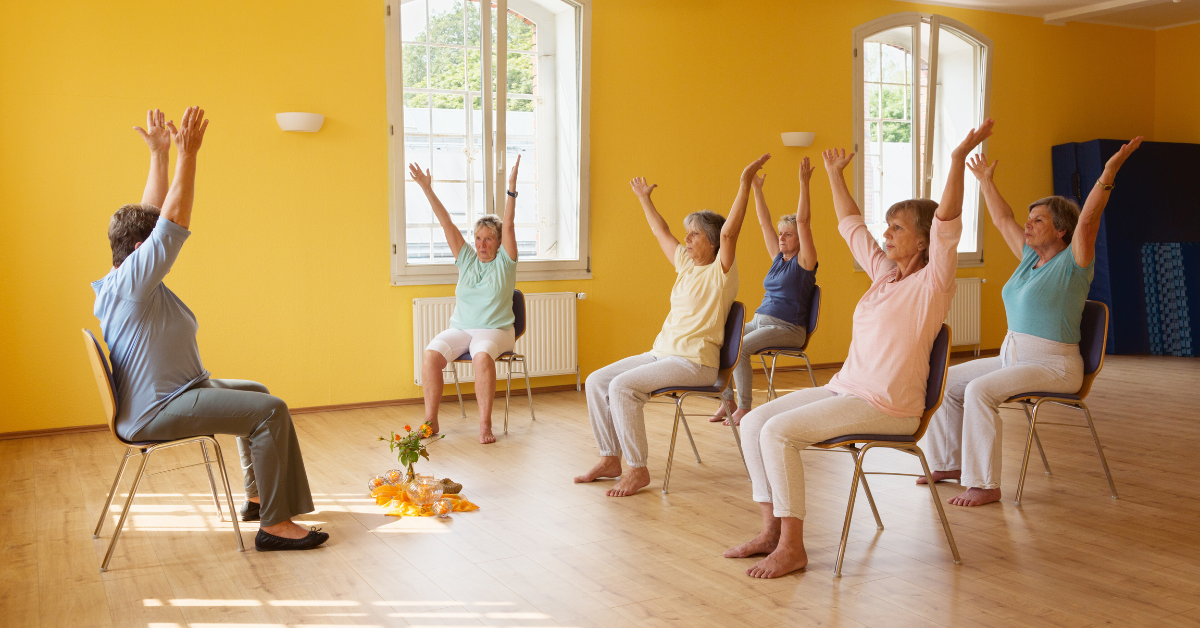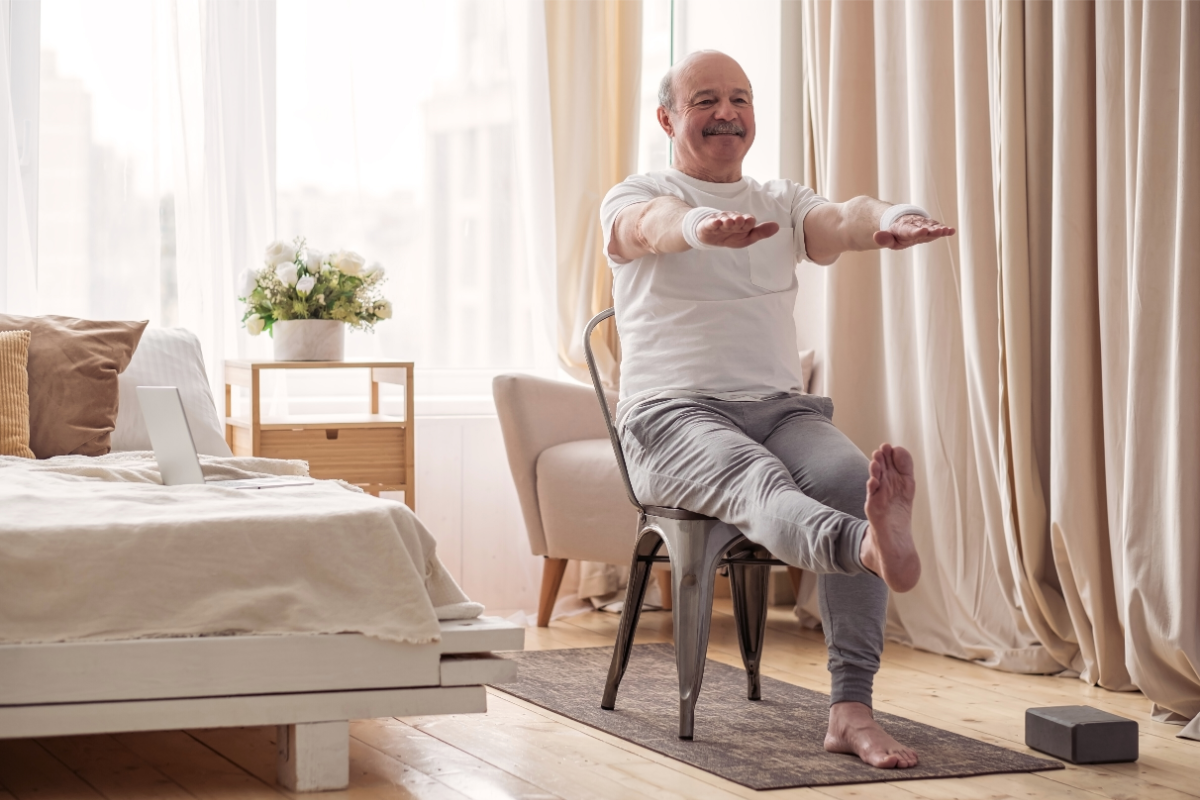


If you’re wondering, does chair yoga really work, you’re probably sitting there (maybe literally in a chair right now) thinking, “Can something this gentle actually make a difference?” Good news: yes, it absolutely can. And no, you don’t need to twist yourself into a pretzel or balance on one foot while humming “Om.” Chair yoga is the real deal, especially for seniors, beginners, or anyone who thinks traditional yoga looks a bit too… ambitious.
Getting older doesn’t mean you must stop feeling good in your body. Chair yoga helps you stay active, flexible, and strong without feeling overwhelmed. But how soon will you see results? What can you expect? Is it worth your time? Let’s find out.
Does Chair Yoga Actually Work? The Science Says Yes
Let’s look at the facts. Chair yoga not only feels good; research shows it provides real, measurable benefits:
Physical improvements include better flexibility, stronger muscles, improved balance, and less joint pain. One study found that seniors who did chair yoga twice a week for eight weeks improved physical function and reduced pain.
Chair yoga also supports mental health. Practicing regularly can ease anxiety, boost mood, lower stress, and improve quality of life. It’s a simple way to help your mind and body.
You may notice daily benefits, like reaching for something on a high shelf without discomfort, getting in and out of the car more easily, or feeling more confident moving around your home.
So yes, chair yoga works. The key is consistency. One session won’t bring big changes, but regular practice leads to results.
What Can Seniors Realistically Expect?
When starting chair yoga, it helps to have realistic expectations about what your body can do. Many seniors find guidance in a chair yoga book for seniors, which provides safe, gentle routines tailored to older adults. If you’ve ever wondered is chair yoga effective for seniors, the answer is yes—regular practice can improve flexibility, posture, and overall comfort, even if the results feel subtle at first.
Here’s what you can expect:
In the First Week or Two
You may not notice big changes right away. At first, you’re teaching your body new movements and using muscles that haven’t been active for a while. You might feel:
- Mild soreness (muscle use, not overexertion)
- More aware of your posture
- A sense of accomplishment from trying something new
- Maybe a little more relaxed after each session.
After 4-6 Weeks
In just a few weeks of regular practice, 2-3 times per week, many people notice:
- Easier movement in daily activities
- Less stiffness, especially in the morning
- Better balance and confidence when walking
- Improved mood and reduced stress
- Your clothes may even fit better.
After 2-3 Months
After a few months of regular practice, you may experience:
- Noticeably better flexibility
- Stronger core and leg muscles
- Reduced chronic pain
- Better sleep quality
- More energy throughout the day
Everyone’s timeline is different. Some feel benefits within a week, while others need more time. Remember, your progress is your own.
Simple Chair Yoga Exercises to Try Right Now
If you want to try chair yoga, here are three beginner-friendly exercises you can do today. Use a sturdy chair without wheels for safety.
Exercise 1: Seated Cat-Cow Stretch
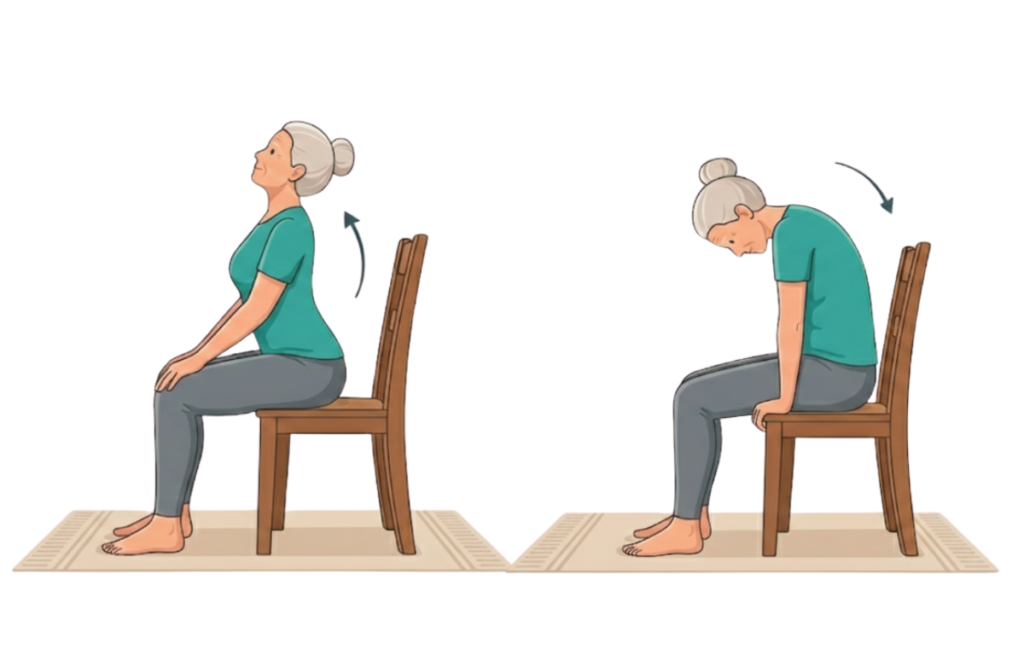
This exercise is great for your spine and can help reduce back stiffness.
- Sit near the front of your chair with feet flat on the floor, hip-width apart.
- Place your hands on your knees.
- Inhale deeply and arch your back gently, lifting your chest and looking slightly upward (that’s “cow”).
- Exhale and round your spine, tucking your chin toward your chest and pulling your belly button in (that’s “cat”).
- Repeat 5-8 times, moving slowly with your breath.
- Move only as far as is comfortable for you; do not force any movement.
Exercise 2: Seated Forward Fold
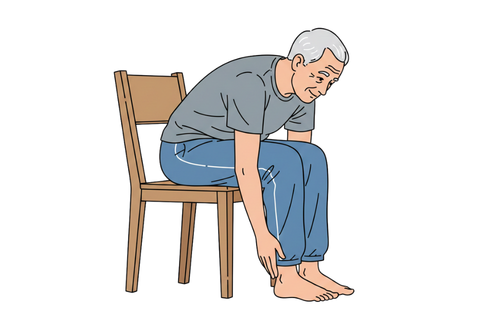
This stretch eases your back and hamstrings without getting on the floor.
- Sit toward the front of your chair with feet flat on the ground.
- Take a deep breath in and sit up tall, lengthening your spine.
- As you exhale, slowly hinge forward from your hips (not your waist).
- Let your arms hang down toward your feet or rest them on your thighs.
- Relax your neck and let your head hang.
- Hold for 3-5 breaths, feeling the gentle stretch in your back.
- Slowly roll back up, one vertebra at a time.
- Repeat 2-3 times
Exercise 3: Seated Twist
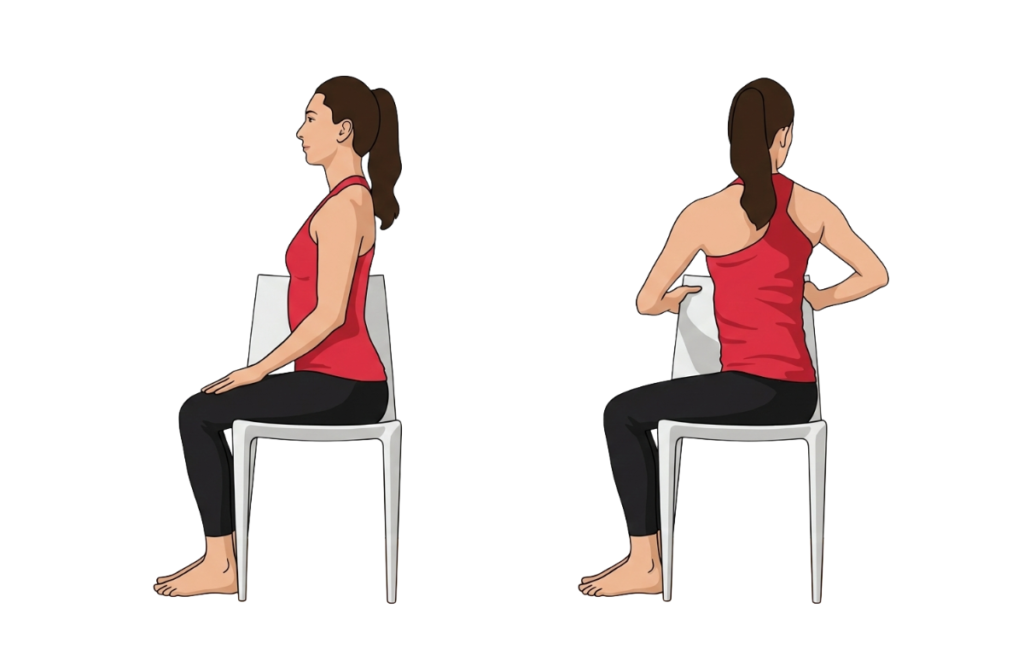
This exercise supports spine mobility and can also help with digestion.
- Sit up straight with both feet flat on the floor.
- Place your right hand on the outside of your left knee.
- Put your left hand on the chair back or armrest behind you.
- Inhale and sit up even taller.
- Exhale and gently twist to the left, looking over your left shoulder.
- Hold for 3-5 breaths, keeping your hips facing forward.
- Unwind slowly and repeat on the other side.
- Do each side 2-3 times.
If you feel pain (not just a gentle stretch), stop the exercise. Chair yoga should feel good, not uncomfortable.
How Long Does It Take to See Real Results?
The honest answer is that it depends. There is no single timeline that fits everyone.
Most people start feeling small improvements within 2-4 weeks of regular practice. “Regular” means at least twice a week, preferably three times a week. The more consistent you are, the faster you’ll notice changes.
It’s similar to learning a new skill. Practicing only once a month won’t help much, but doing it several times a week leads to real progress.
The 8-Week Sweet Spot: Many studies use an 8-week program because measurable improvements often appear then. Commit to chair yoga 2-3 times a week for two months for the best chance at results.
Even if big results take weeks, you may notice immediate relaxation, more purposeful movement, and quality time for yourself. These matter too.
Tips for Getting the Most Out of Chair Yoga
To get the most out of chair yoga, try these tips:
Start small and build up. Begin with 10-15 minutes and increase gradually. Consistency matters more than duration.
Focus on your breath. The breathing is just as important as the poses. Deep, steady breaths tell your nervous system to chill out.
Don’t compare yourself to others. Your journey is your own. Someone else’s flexibility or strength has zero impact on your progress.
Modify freely. Every pose can be adjusted. The “right” way is what feels safe for your body.
Consider taking a class. Whether online or in person, having an instructor can help ensure you’re doing poses safely and provide accountability.
Be patient. Some days you’ll feel great, others stiff. This is normal, so keep practicing.
Common Concerns (And Why They Shouldn’t Stop You)
“I’m not flexible enough.” That’s actually a good reason to try chair yoga. You don’t need to be flexible to begin; flexibility comes with practice.
“I’m too old.” Chair yoga is practiced by people in their 60s, 70s, 80s, and even 90s. If you can sit in a chair, you can do chair yoga.
“What if I look silly?” You won’t. Most people are focused on their own practice, and taking care of their health is always worthwhile.
“I have health conditions.” Chair yoga is actually designed for people with health considerations. Just check with your doctor first, and let any instructor know about your specific needs.
Frequently Asked Questions
How often should I do chair yoga to see results?
Aim for 2-3 sessions per week. Even twice a week often brings noticeable improvement in 4-8 weeks.
Is chair yoga good for arthritis?
Yes! Chair yoga can help reduce arthritis pain and stiffness by gently moving joints and strengthening supporting muscles. Always work within your pain-free range.
Can chair yoga help me lose weight?
Chair yoga supports weight management as part of a healthy lifestyle, but its strength and mobility benefits are typically more significant than its weight-loss benefits.
Final Thoughts
So, does chair yoga work? Yes. It’s a gentle way to move, ease pain, improve balance, and feel better. The best part? No fancy gear or toe-touching needed. Just a chair and a willingness to try.
Start with 10 minutes today. Try any exercise above. In a few weeks, you may be surprised how much better you feel. Your body’s carried you for years—this is your chance to say thanks. You’ve got this.