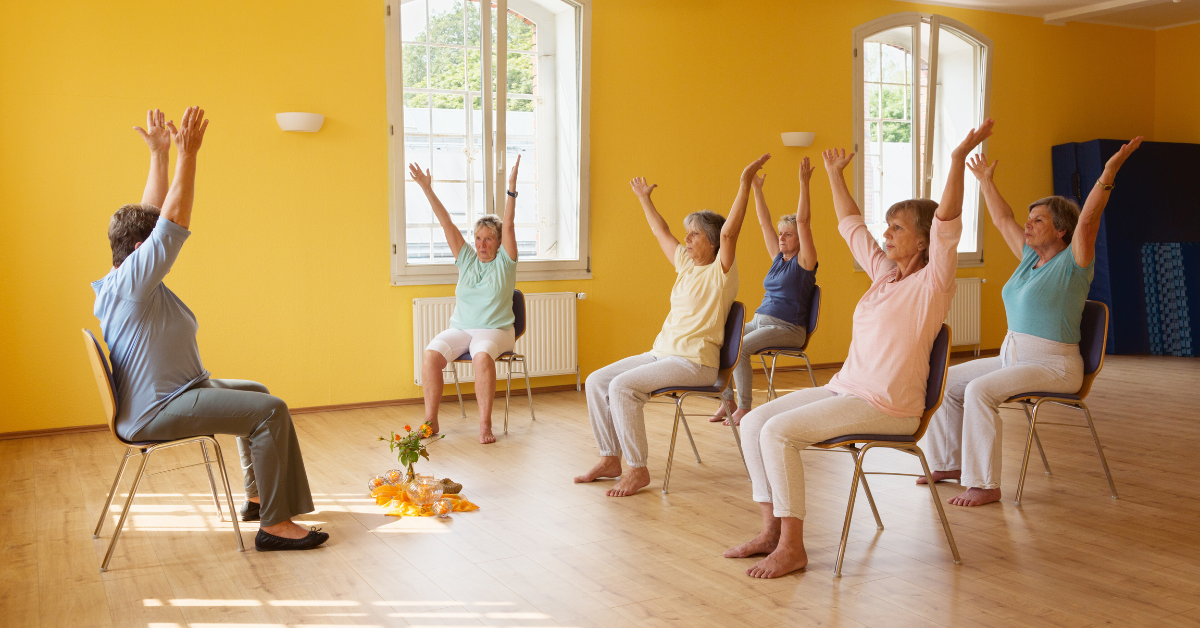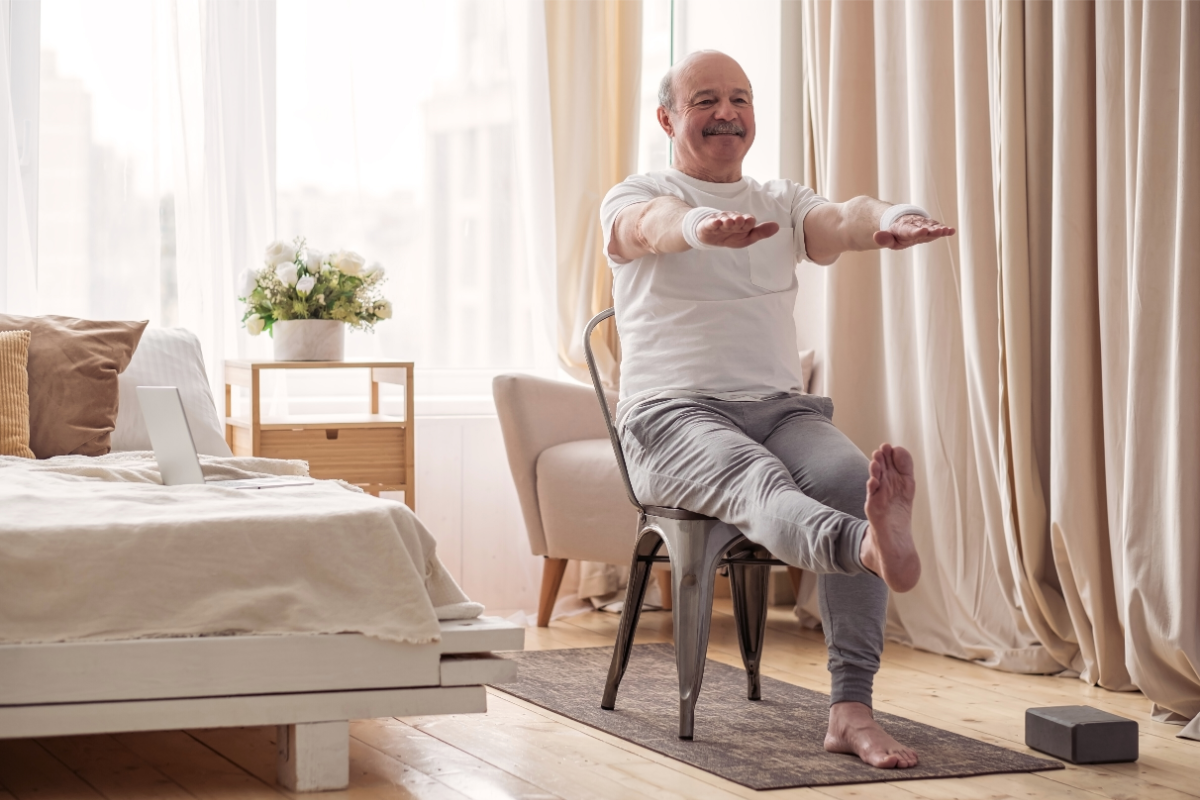


You’ve decided to try chair yoga—congratulations! This is one of the gentlest and most accessible ways to exercise. Still, not every chair yoga instructor is the same. Finding the right chair yoga teacher can help you enjoy your practice and stay safe.
Chair yoga is great if you have limited mobility, are recovering from an injury, or just want a gentle way to stay active. It’s important to find a teacher who understands the needs of seniors and beginners, and who won’t expect you to do difficult poses.
This guide will show you what to look for in a chair yoga instructor, warning signs to avoid, and some beginner poses to try. Use it as a helpful resource to find the right yoga teacher for you.
What Makes a Great Chair Yoga Instructor for Seniors?
Specialized Training and Certification
Not all yoga teachers are equipped to lead chair yoga safely—it’s a specialized skill. Many seniors find it helpful to complement their practice with a chair yoga book for seniors while learning from a professional chair yoga instructor. When looking for an instructor, check for:
- Certification in chair yoga specifically (not just general yoga training)
- Experience working with seniors or people with mobility limitations
- Knowledge of common age-related conditions like arthritis, osteoporosis, or balance issues
- CPR and first aid certification (bonus points!)
Feel free to ask about their qualifications. A good instructor will be happy to share their credentials and training.
Communication Style That Works for You
Your ideal chair yoga instructor should communicate clearly and patiently. They should:
- Give detailed verbal instructions (especially important for online classes where they can’t physically adjust to you)
- Offer modifications for different ability levels.
- Use everyday language instead of complicated Sanskrit terms.
- Check in regularly to see how you’re feeling.
- Never make you feel rushed or inadequate.
If you feel confused or uncomfortable in your first class, take that as a sign to keep searching for a better fit.
Safety-First Mindset
This is non-negotiable. Your instructor should:
- Always emphasize proper alignment over depth of stretch.
- Remind you to listen to your body.
- Explain which movements to avoid if you have specific conditions.
- Start every class with a gentle warm-up.
- Never push you beyond your comfort zone.
A great instructor understands that chair yoga is about moving safely and feeling good, not about doing difficult poses.
Online vs. In-Person Chair Yoga: Which Is Right for You?
Benefits of In-Person Classes
Pros:
- Direct, hands-on corrections and adjustments
- Easier to ask questions and get immediate feedback
- Social connection with other students
- Less technology stress (no Wi-Fi issues here!)
Cons:
- Need to travel to the location.
- Fixed schedule
- Usually more expensive
- Limited class availability in some areas
Benefits of Online Classes
Pros:
- Practice from the comfort of home
- More flexible scheduling (even pre-recorded options)
- Often more affordable
- Access to instructors worldwide
- No commute time
Cons:
- Can’t receive physical adjustments
- Requires basic tech skills
- Might feel less personal
- Need a reliable internet connection.
The Verdict: Try both if possible! Many seniors love the convenience of online classes but appreciate in-person sessions for the social aspect and personalized attention.
Red Flags to Avoid When Choosing an Instructor
Trust your gut! Steer clear of instructors who:
- Promise miracle cures or dramatic health transformations.
- Pressure you to buy expensive packages upfront.
- Don’t ask about your medical history or physical limitations.
- Move too quickly through poses without proper instruction.
- Dismiss your concerns or questions.
- It makes you feel bad about your current fitness level.
- Don’t offer any modifications for different abilities.
Remember, you are choosing the instructor. You deserve respect and patience from your teacher.
Where to Find Qualified Chair Yoga Instructors
Online Platforms
- YouTube (look for certified instructors with good reviews)
- SilverSneakers (if your insurance covers it)
- Senior centers offering virtual classes
- Yoga Alliance directory (filter for chair yoga specialists)
- Local community college continuing education programs
In-Person Options
- Senior community centers
- Retirement communities
- Local yoga studios (call and ask specifically about chair yoga)
- Physical therapy clinics
- Parks and recreation departments
- YMCA or community fitness centers
Tip: Many instructors offer a free first class or trial period. Use this opportunity to see if the class is right for you before making a commitment.
Beginner-Friendly Chair Yoga Poses to Try
Here are some safe, beginner poses your instructor should teach. You can also try these at home.
1. Seated Mountain Pose (Basic Starting Position)
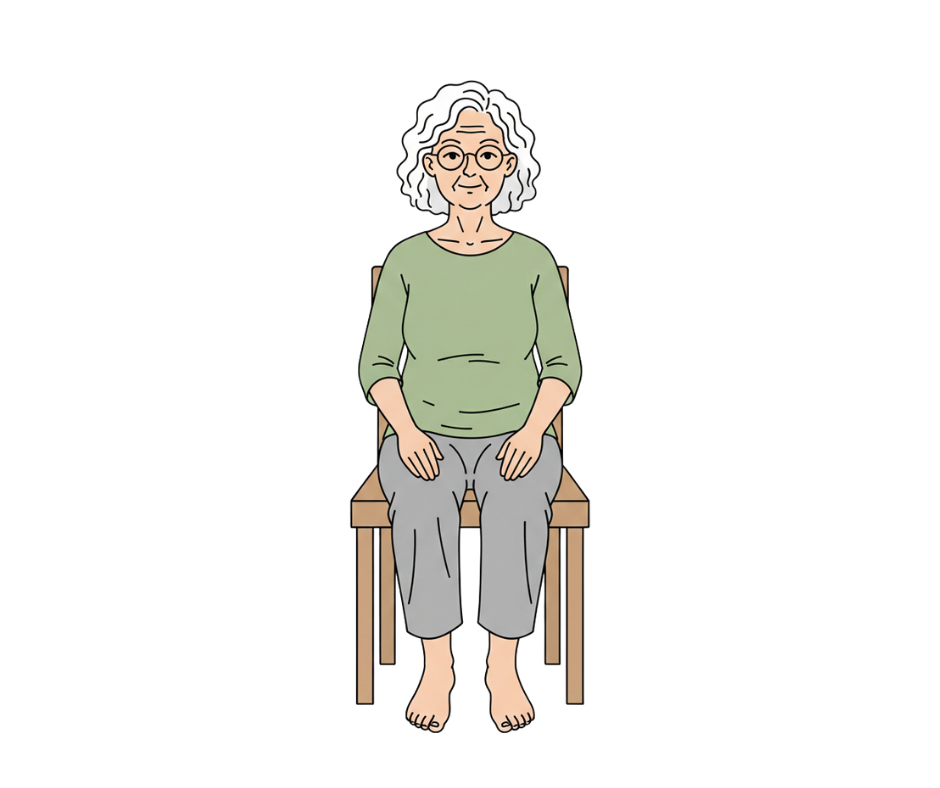
Step-by-step:
- Sit toward the front edge of a sturdy chair.
- Place your feet flat on the floor, hip-width apart.
- Rest your hands on your thighs.
- Sit up tall, lengthening your spine.
- Relax your shoulders away from your ears.
- Take 5 deep breaths.
Benefits: Improves posture and promotes body awareness.
2. Seated Cat-Cow Stretch
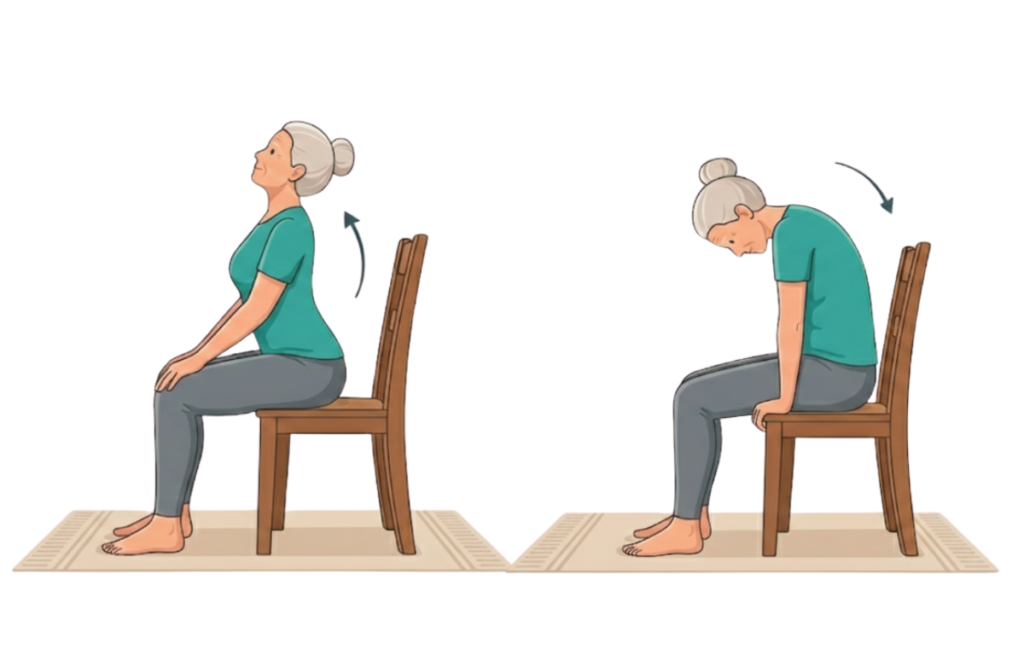
Step-by-step:
- Start in seated mountain pose.
- Place your hands on your knees.
- Inhale and gently arch your back, looking slightly upward (cow pose).
- Exhale and round your spine, tucking your chin toward your chest (cat).
- Repeat 5-8 times, moving slowly with your breath.
Benefits: Increases spine flexibility and releases tension in the back
3. Seated Neck Rolls
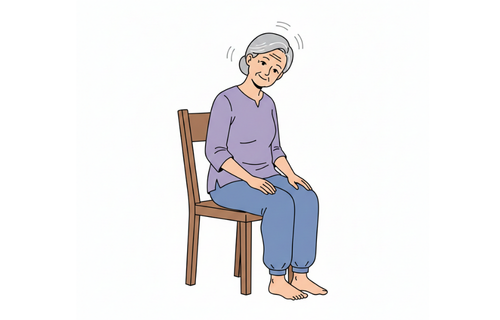
Step-by-step:
- Sit comfortably with your spine tall.
- Drop your right ear toward your right shoulder (don’t lift the shoulder!).
- Hold for 3 breaths.
- Slowly roll your chin down toward your chest.
- Continue rolling to the left side.
- Hold for 3 breaths.
- Return to the center and repeat in the opposite direction.
Benefits: Releases neck and shoulder tension, which is a common area for stress.
4. Seated Forward Fold
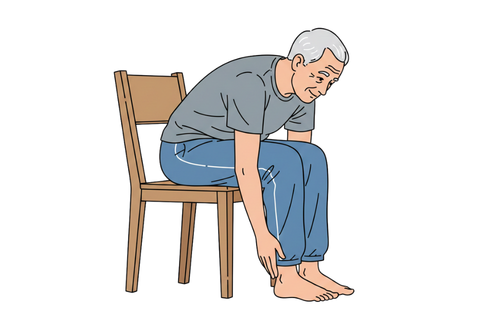
Step-by-step:
- Sit with your feet flat and hip-width apart.
- Inhale and lengthen your spine.
- Exhale and slowly hinge forward from your hips (not your lower back)
- Let your hands reach toward your shins, ankles, or the floor.
- Let your head hang heavy.
- Hold for 5 breaths.
- Slowly roll back up to sitting.
Benefits: Gently stretches the back, hamstrings, and calms the nervous system.
5. Seated Spinal Twist
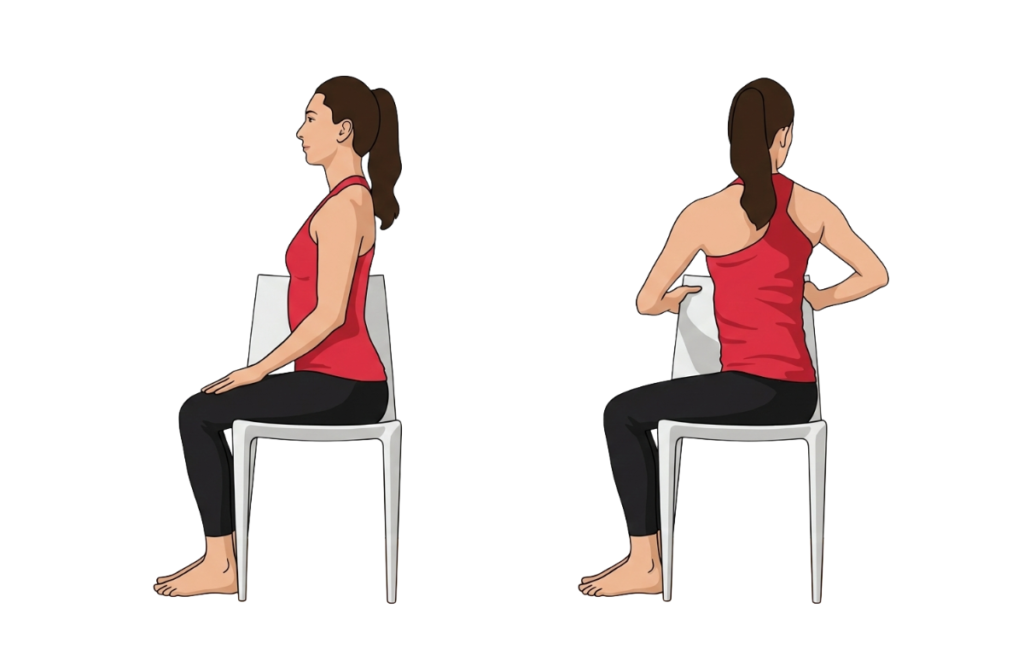
Step-by-step:
- Sit sideways on your chair with your right hip toward the back.
- Hold the back of the chair with both hands.
- Inhale and sit up tall.
- Exhale and gently twist to the right, using the chair back for support.
- Keep your hips facing forward.
- Hold for 5 breaths.
- Release and switch sides.
Benefits: Improves spinal mobility and aids digestion.
6. Ankle Circles
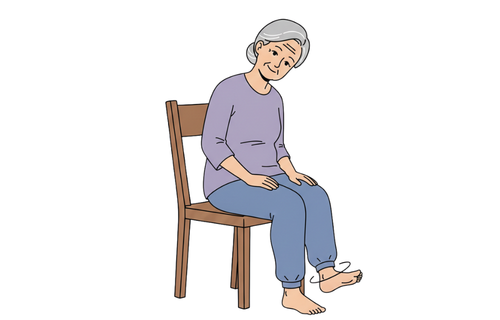
Step-by-step:
- Sit comfortably and lift your right foot slightly off the floor.
- Rotate your ankle slowly in circles, 5 times in each direction.
- Switch to the left foot and repeat.
- For extra support, hold onto the sides of your chair.
Benefits: Improves circulation and ankle flexibility
7. Seated Side Stretch
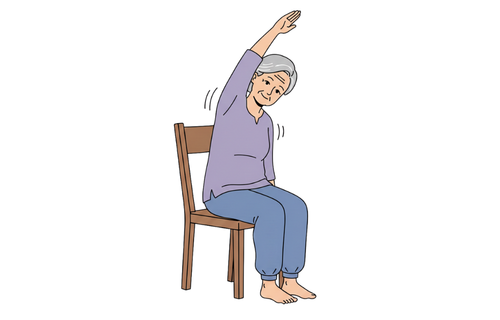
Step-by-step:
- Sit tall with feet flat on the floor.
- Raise your right arm overhead.
- Inhale and lengthen through your right side.
- Exhale and gently lean to the left.
- Keep both sitting bones on the chair.
- Hold for 3-5 breaths.
- Return to the center and switch sides.
Benefits: Stretches the side body and improves breathing capacity.
Important reminder: Your instructor should clearly demonstrate these poses and remind you that gentle stretching is normal, but pain is not. Do not force any movement.
Questions to Ask Before Your First Class
Come prepared with these questions:
- “What’s your experience teaching seniors or people with limited mobility?”
- “Do you offer modifications for different fitness levels?”
- “What should I wear and bring to class?”
- “How do you handle students with specific conditions like arthritis or high blood pressure?”
- “Can I try one class before committing to a package?”
- “What’s your cancellation policy?”
- “For online classes: Will I need any special equipment besides a chair?”
A good instructor will welcome these questions and answer them thoroughly.
Tips for Your First Chair Yoga Class
Before Class
- Eat a light snack 1-2 hours before (not right before).
- Wear comfortable, stretchy clothing.
- Use the bathroom beforehand.
- Have water nearby.
- Choose a sturdy chair without wheels.
- Arrive early (or log in early for virtual classes).
During Class
- Let the instructor know about any injuries or concerns.
- Don’t compare yourself to others.
- Take breaks whenever you need them.
- Ask questions if something isn’t clear.
- Focus on how you feel, not how you look.
After Class
- Notice how your body feels.
- Drink plenty of water.
- Be patient with yourself. It will get easier over time.
- Consider keeping a simple journal of your progress.
How to Know If Your Instructor Is a Good Fit
Give it a few classes, but you should notice:
- You feel energized (not exhausted) after class.
- The instructor remembers your name and any limitations you mentioned.
- You’re learning something new each session.
- You feel encouraged, not discouraged.
- Your flexibility or strength is gradually improving.
- You actually look forward to class.
If, after three or four classes, you are not enjoying it, it is fine to try a different instructor. The goal is for you to feel good.
Final Thoughts
Finding the right chair yoga instructor does not have to be overwhelming. Try one class, trust your instincts, and remember that the best instructor for someone else may not be the best for you. That is perfectly fine.
The most important thing is to begin. It does not matter if your instructor teaches in a studio or from home. What matters is that you are moving, breathing, and taking care of yourself.
Find a chair, choose an instructor who makes you feel comfortable, and allow yourself to be a beginner. Everyone starts somewhere, and you can start today.