
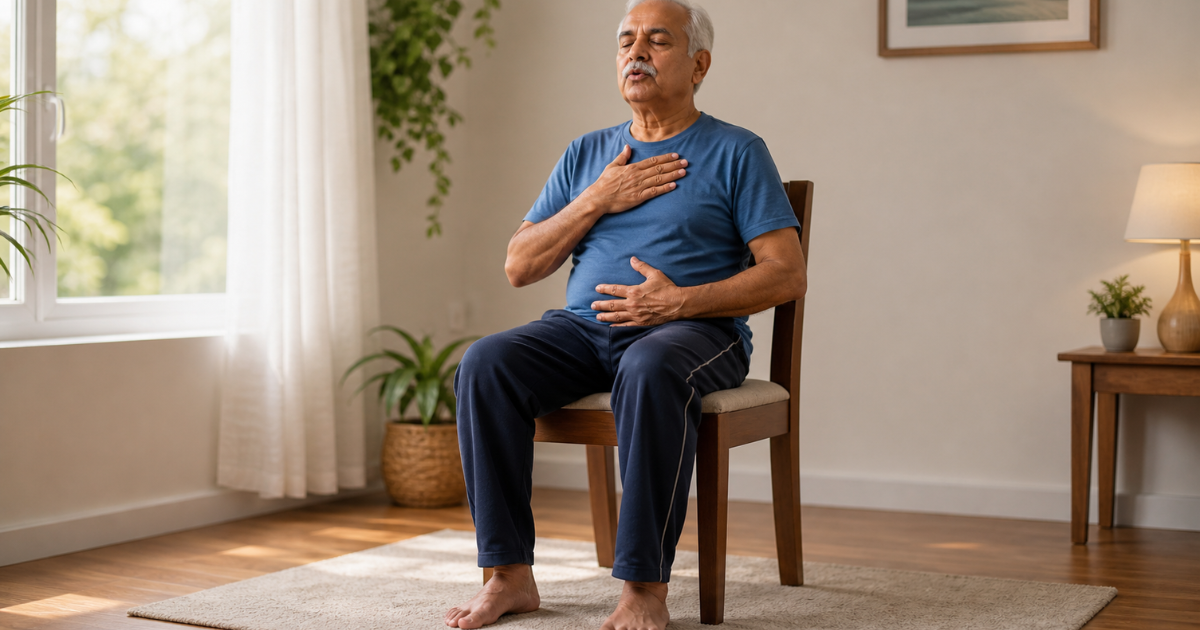
If you are reading this, maybe your doctor gave you a serious look, or the blood pressure machine at the pharmacy showed a number that surprised you. That is normal. We have all experienced it. Getting older is a bit like having a classic car: you look great and have lots of character, but sometimes the engine needs extra care, and things are a little noisier than before. One of the best ways to take care of your body is something you are already doing: breathing. You take about 22,000 breaths a day without noticing. Focusing on your breathing to lower blood pressure can actually help lower it. Science shows that paying attention to your breathing helps your body relax.
This guide is for everyday people. You do not need to be flexible or touch your toes. All you need is a sturdy chair, a few minutes, and your breath. We will look at simple chair yoga and breathing techniques to help you relax and support your heart.
Why Your Heart Loves a Deep Breath
Before we talk about how to do these breathing methods for blood pressure control, let us quickly explain why they help. Your body has two main settings: one for stress and one for rest. Doctors call these the sympathetic and parasympathetic nervous systems.
When you are stressed, your body reacts as if you are in danger. Your heart beats faster, and your blood vessels tighten. This is helpful in emergencies, but not when you are relaxing. Deep, slow breathing helps your body calm down, allowing your blood vessels to relax and your blood pressure to drop.
The Magic of the Vagus Nerve
The vagus nerve connects your brain and your heart. When you take slow, deep breaths, you send a message to your body that everything is okay and it can relax.
Getting Started: The “No-Fall” Zone
The great thing about chair yoga is that you stay seated the whole time. Before you begin, find a sturdy chair, like one from the dining room or kitchen. Avoid chairs with wheels or very soft sofas.
Your Setup Checklist
- Feet Flat: Make sure your feet can touch the ground. If you are on the shorter side, tuck a couple of sturdy books under your feet.
- Sit Tall: Sit up straight, as if you are gently reaching the top of your head toward the ceiling. You do not need to stretch too much, just enough to feel a little taller.
- Hands Down: Let your hands rest comfortably on your knees or in your lap.
- Smile: Smiling helps relax your jaw. When your jaw is relaxed, your body feels calmer.
Three Simple Breathing Techniques for Beginners
Let us begin with the main exercises. You can do these anywhere—at the doctor’s office, while watching TV, or waiting for the kettle to boil.
1. Belly Breathing
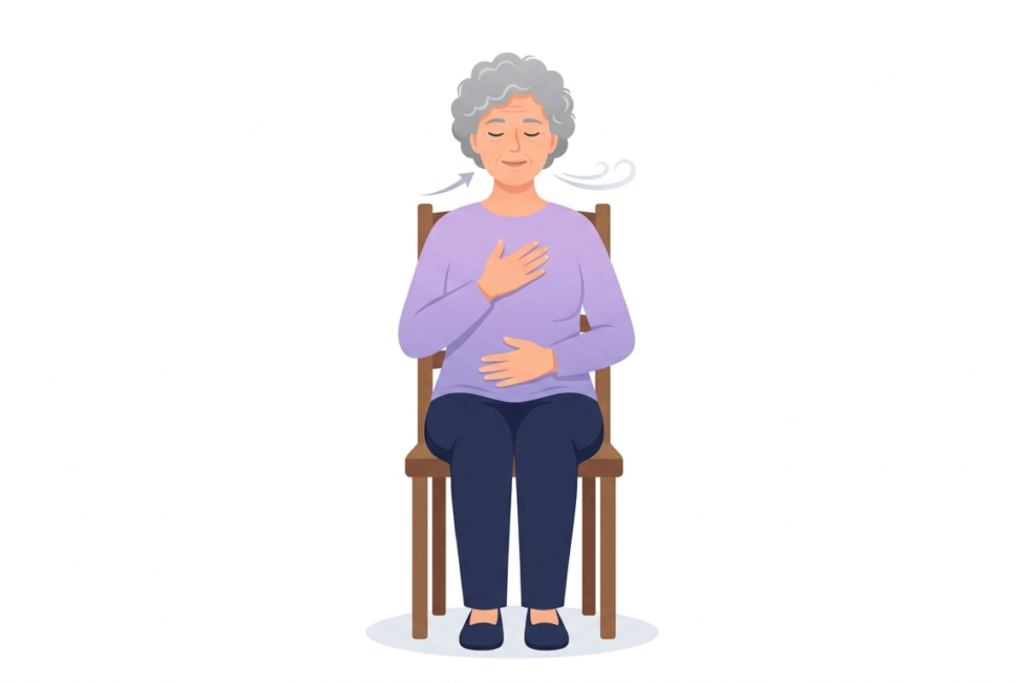
Most of us breathe into our chests. If your shoulders move up and down when you breathe, you are doing “chest breathing.” We want to move that air lower down into the belly.
- Place one hand on your chest and the other on your belly, right over your belly button.
- Breathe in slowly through your nose.
- Try to make the hand on your belly move out while the hand on your chest stays relatively still.
- Imagine you are filling up a balloon in your stomach.
- Exhale slowly through your mouth, like you are blowing out a single candle on a birthday cake.
- Repeat this 5 times.
If you feel a bit silly, remember that babies naturally breathe this way. It is a relaxed and healthy way to breathe.
2. The Box Breath
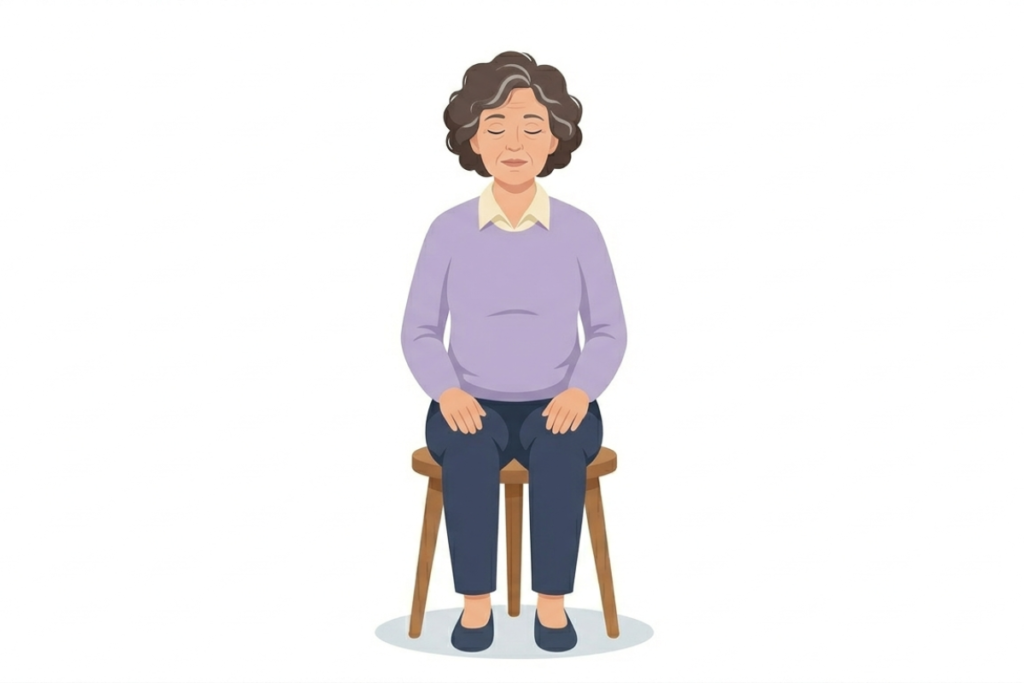
This technique is popular with people who have stressful jobs. It is structured and helps keep your mind focused.
- Inhale slowly for a count of 4.
- Hold that breath gently for a count of 4.
- Exhale slowly for a count of 4.
- Wait with empty lungs for a count of 4.
- Imagine you are drawing the four sides of a square in your mind as you go.
3. The Hummer (Bhramari Breath)
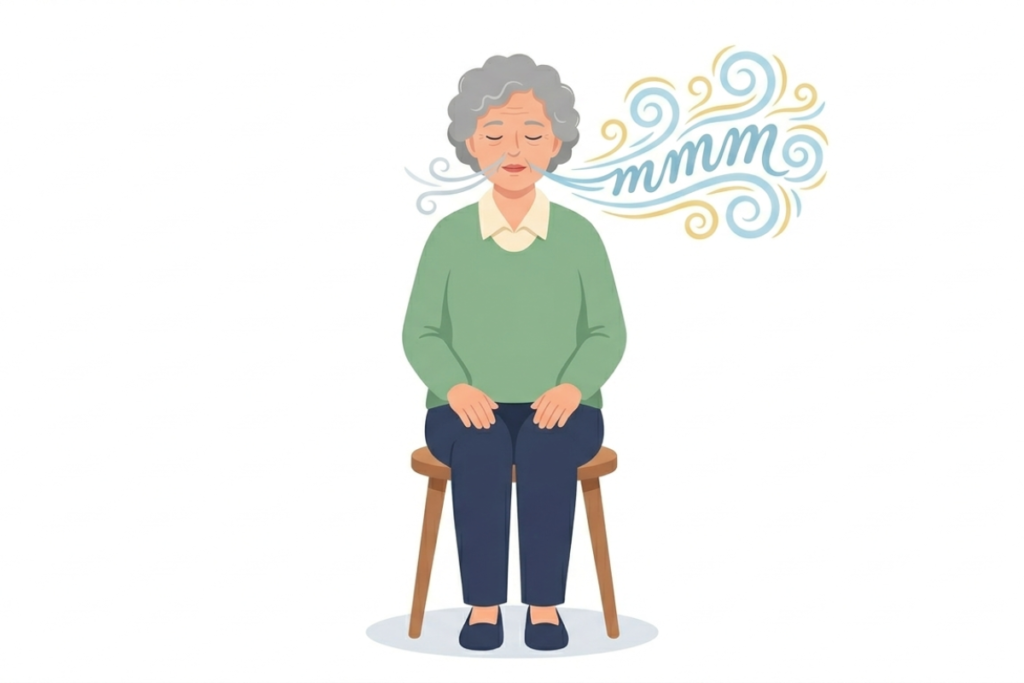
This technique involves making a gentle humming sound. The vibration is very calming for your nervous system.
- Take a deep breath in through your nose.
- As you exhale, keep your lips closed and make a soft “mmm” humming sound.
- Continue the hum until you are out of breath.
- Focus on the feeling of the vibration in your chest and throat.
Easy Chair Yoga Poses to Open Your Lungs
Now that you have practiced the breathing, let us add some gentle movement. These poses help open up your chest and lungs, making it easier to take deep breaths that can lower your blood pressure.
The Seated Cat-Cow
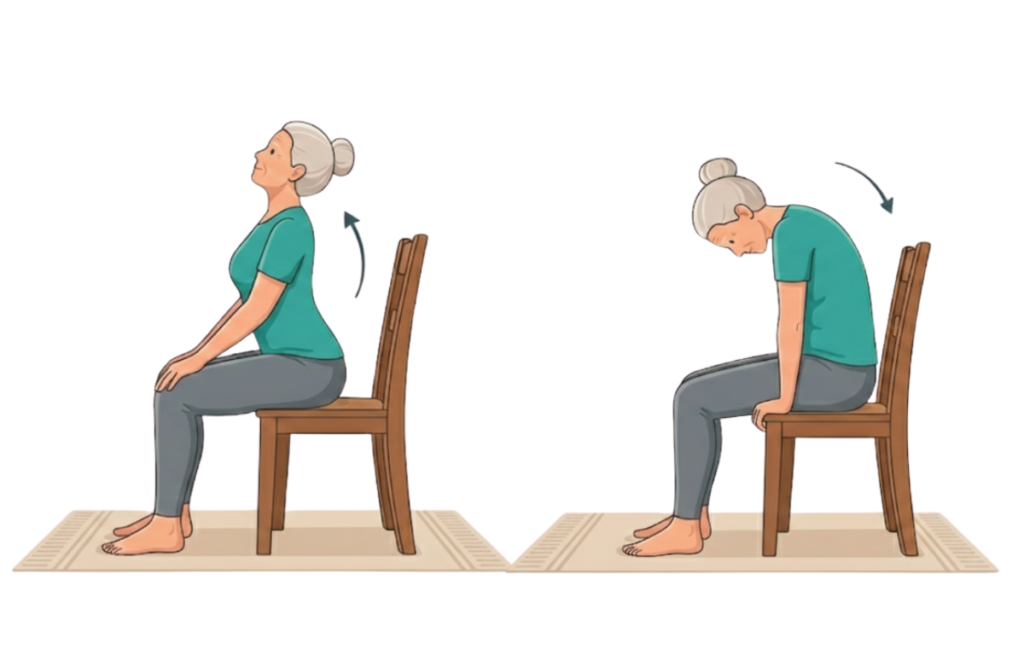
This movement helps wake up your spine and reduce stiffness from sitting or sleeping in one position.
- Sit toward the front edge of your chair with your feet flat.
- Place your hands on your knees.
- The Cow: Inhale and gently arch your back. Lift your chest and look slightly upward toward the corner where the wall meets the ceiling. Do not crinkle your neck back too far.
- The Cat: Exhale and round your spine like a grumpy Halloween cat. Tuck your chin toward your chest and look down at your lap.
- Flow back and forth between these two for 5 breaths.
The Side Stretch
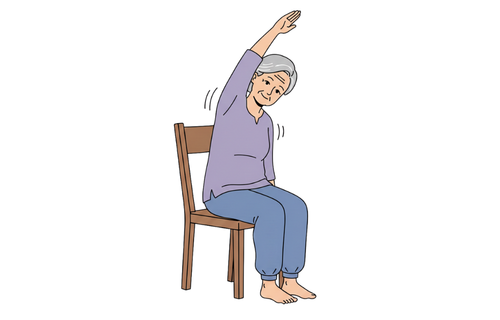
We sometimes forget that our lungs also expand to the sides and back. This stretch helps the muscles between your ribs, allowing your lungs to expand more.
- Sit tall and hold the side of your chair with your left hand for stability.
- Inhale and lift your right arm up toward the ceiling. If your shoulder says “no thanks,” just put your hand on your shoulder instead.
- Exhale and lean gently to the left.
- Keep both of your sitting bones firmly on the chair. Do not lean so far that you lose your balance.
- Take two deep belly breaths here, feeling your right side expand.
- Switch sides and repeat.
The Seated Forward Fold
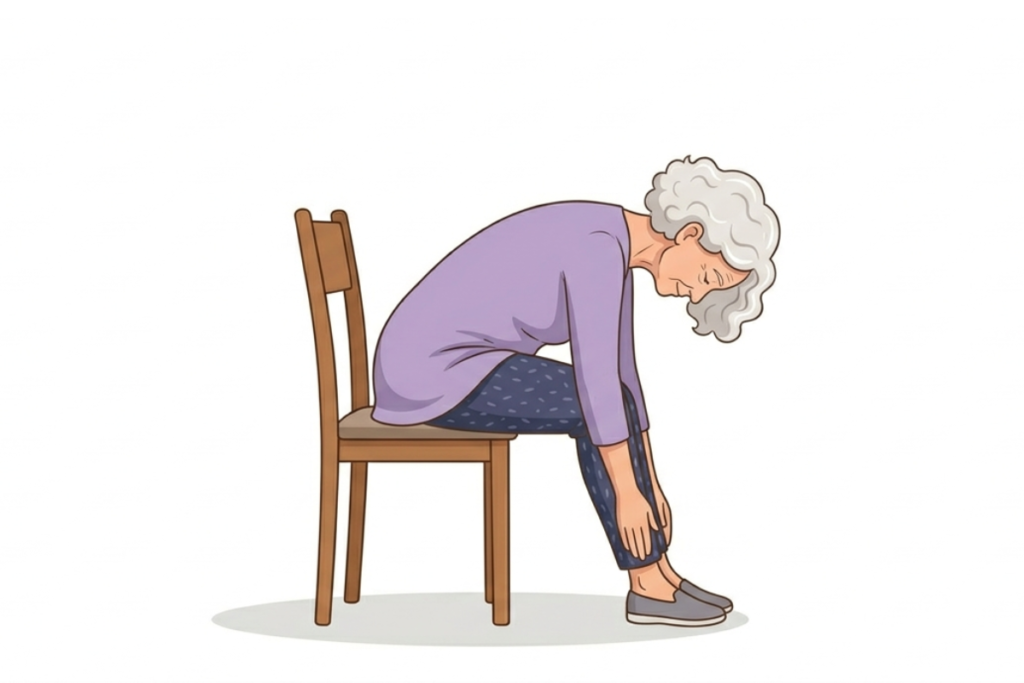
This is a very relaxing pose. Gravity helps you stretch gently.
- Sit with your feet a little wider than hip-width apart.
- Inhale and sit as tall as you can.
- Exhale and slowly start to lean forward. Rest your elbows on your knees first.
- If it feels okay and you do not feel dizzy, you can let your hands slide down toward your shins or the floor.
- Let your head hang heavy.
- Take 3 slow breaths here. When you are ready to come up, use your hands to “walk” yourself back up your legs so you do not strain your back.
Safety Note: If you have glaucoma or get dizzy easily, keep your head above your heart. Lean forward just a little and rest your elbows on your knees. You will still get the benefits without feeling dizzy.
Consistency: The Golden Rule
Here is something important: practicing breathing for 3 minutes a day is much more helpful than taking a long class once a month.
Your body responds well to routines. If you practice these breathing exercises to lower blood pressure every morning or evening, it will become a healthy habit, just like brushing your teeth.
Do not worry if your mind wanders. If you start thinking about other things, just notice the thought and return to your breath. This is normal, and you are still doing yoga correctly.
Making It Part of Your Day
You do not need a special space or equipment. You can use these techniques at any time during your day.
- In Traffic: If you feel frustrated while driving, try two rounds of Box Breathing. It can help keep your blood pressure steady and your mood calm.
- In the Waiting Room: Waiting at the doctor’s office can be stressful. Try Belly Breathing while you wait. It may even help you get a better blood pressure reading.
- Before Bed: The Hummer breath is a great way to signal to your body that it is time to relax and go to sleep.
Final Thoughts
You do not need to change everything at once. You do not have to give up your favorite foods or start running. Just sit down, get comfortable, and take one good breath. Lowering your blood pressure takes time, and every deep breath helps. You can start improving your health right now, without leaving your chair.
Before you leave this page, try one more Belly Breath. Breathe in calm, breathe out stress, and remember to appreciate your efforts. You are doing a great job caring for yourself, and your heart will thank you for it.
