
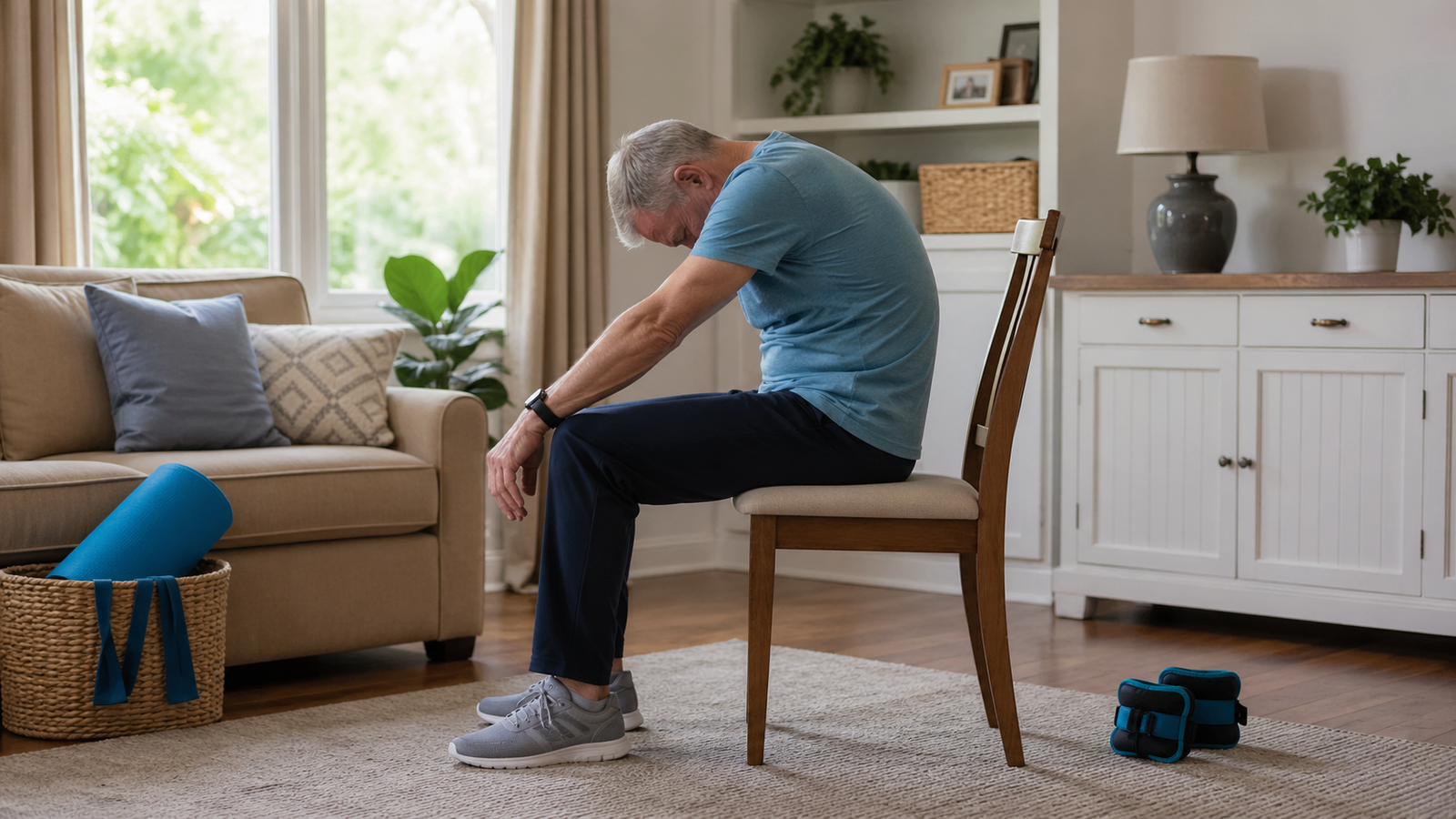
If you ever feel a little out of breath just walking to the mailbox, you are not alone. Maybe your breathing feels shallower than it used to, or perhaps you just want to feel more energized during your morning walk. Whatever the reason, practicing breathing exercises for elderly to improve lung function is one of the most effective, gentle, low-stress ways to support your health. The best part is that you can do most of these while sitting comfortably in your favorite chair—no special clothes or tricky yoga poses needed.
We often take lung health for granted until we notice ourselves getting out of breath. As we age, our lung tissue can lose some flexibility, and the muscles that help us breathe may become weaker.
Imagine your lungs as balloons that have been stored away for a while—they need gentle stretching and use to work their best. This article will show you easy, chair-based yoga and breathing techniques to help you feel refreshed and energized.
Why Your Lungs Deserve a Little Extra Love
Before we get into how to do these exercises, let’s talk about why they matter. We breathe around 20,000 times a day without thinking about it. Most people only use the top part of their lungs, which can make them feel more tired or stressed than necessary.
When you focus on deep, intentional breathing, you do more than just take in oxygen. You gently massage your internal organs and calm your nervous system. For seniors, better lung function can mean improved sleep, more energy for activities with grandkids, and a stronger immune system. Each time you practice, you give your body a helpful boost.
Setting Up Your “Yoga Studio” (A.K.A. Your Living Room)
You do not need a gym membership or a special retreat to get started. All you need is a sturdy chair. Avoid very soft recliners, since you need some support for your back. A dining room chair or a stable office chair without wheels works well.
- Find a flat surface: Make sure your chair is on a non-slip floor.
- Sit up straight, but stay comfortable: You do not need perfect posture, just try to keep your spine fairly straight. Picture a gentle thread lifting the top of your head toward the ceiling.
- Feet flat: Keep your feet resting comfortably on the floor. If your legs are a bit shorter, place a book or a firm cushion under your feet.
- Limit distractions: Turn off the TV or news for ten minutes. If you have a pet, let them stay nearby—they might watch you from the sofa.
5 Simple Breathing Exercises to Try Today
Now, let’s start the lung health exercises for the elderly like you. They are safe, slow, and effective. If you ever feel dizzy or lightheaded, stop and return to normal breathing. The goal is better health, not competition.
1. Belly Breathing (The “Balloon” Trick)
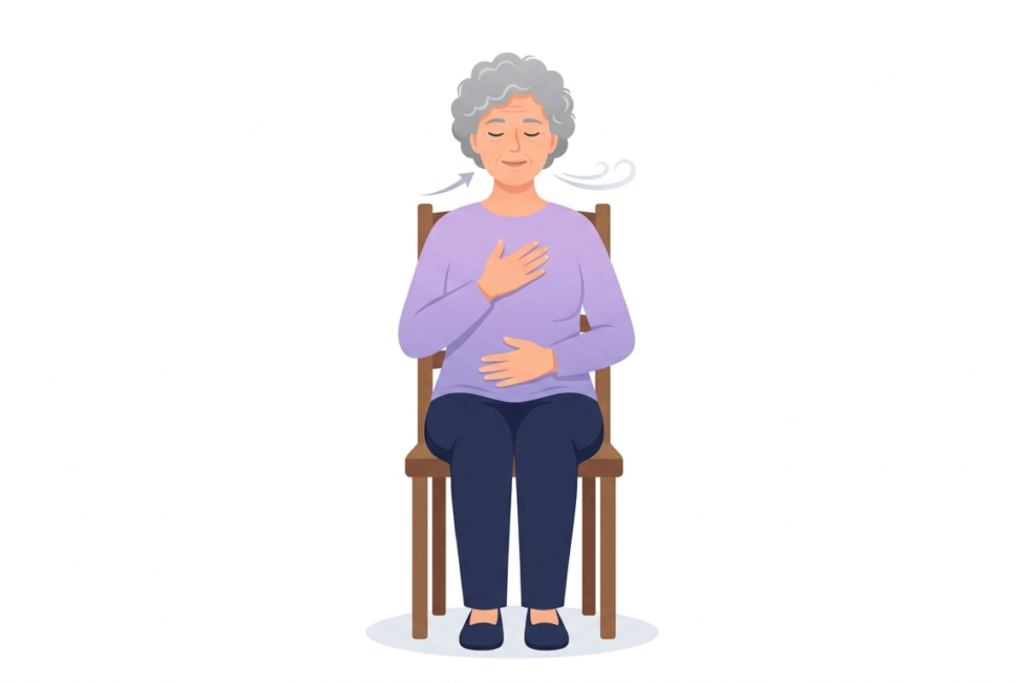
This is the basic exercise for good breathing. Most people breathe from their chests, but breathing from the belly is more effective. This exercise helps you use your diaphragm, the main muscle under your lungs that helps you breathe.
How to do it:
- Place one hand on your chest and the other hand on your belly, right over your belly button.
- Breathe in slowly through your nose. As you do, try to make the hand on your belly move outward while the hand on your chest stays relatively still.
- Imagine you are blowing up a balloon inside your stomach.
- Exhale slowly through your nose or mouth, feeling your belly sink back in.
- Repeat this 5 to 10 times.
If you have trouble feeling your belly move, try this exercise while lying down in bed at night. Gravity can make it easier to notice your belly rising and falling.
2. Pursed Lip Breathing (Cooling the Soup)
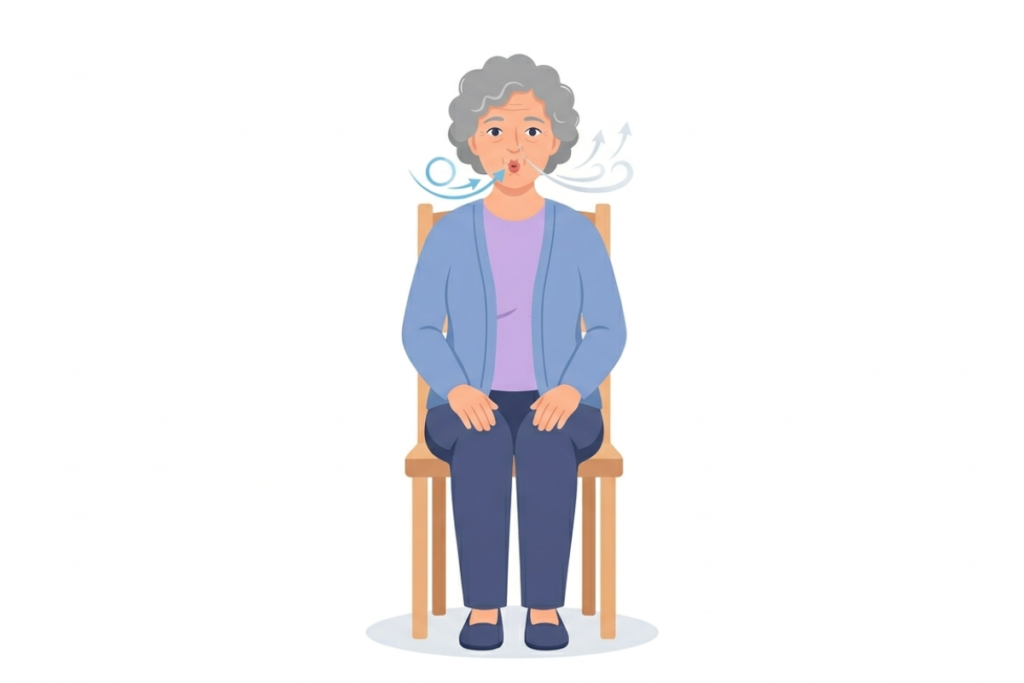
Respiratory therapists often recommend this technique. It helps keep your airways open longer, making it easier for your lungs to work and to clear out old air.
How to do it:
- Relax your neck and shoulders.
- Inhale slowly through your nose for a count of two.
- Pucker your lips as if you are about to whistle or gently blow on a hot spoonful of chicken noodle soup.
- Exhale slowly through those pursed lips for a count of four.
- Try to make your exhale last twice as long as your inhale.
This works because it creates gentle back-pressure, keeping your airways open and helping you get more benefit from each breath.
3. Seated Cat-Cow (The Gentle Spinal Wake-up)
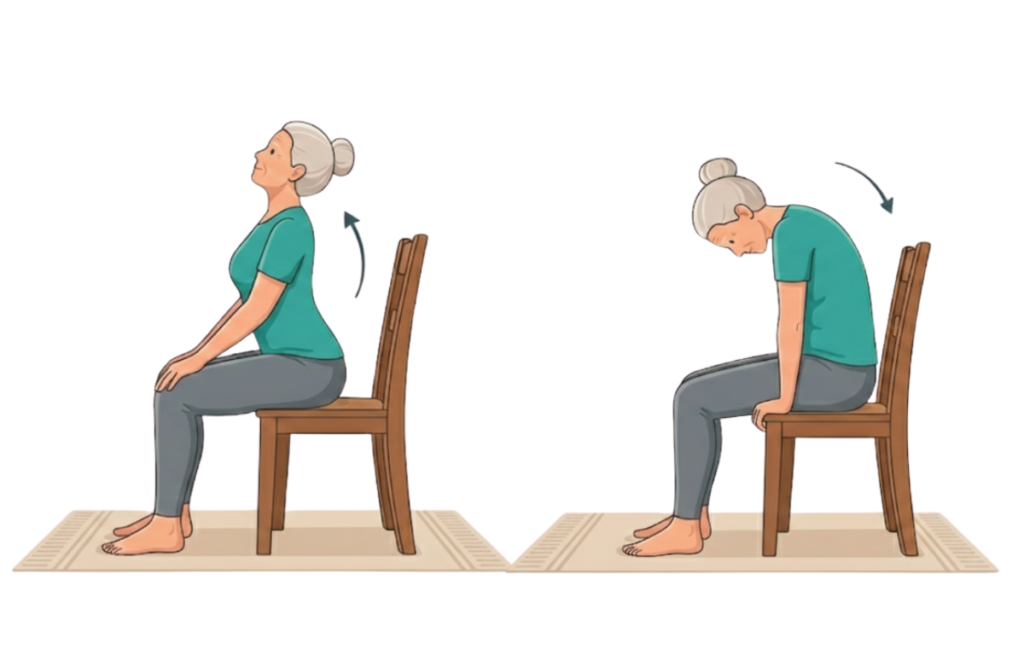
Although the name sounds like something from a farm, this is a great yoga move for opening your chest and ribcage. When your ribs are stiff, your lungs cannot expand fully.
How to do it:
- Sit toward the front edge of your chair with your hands on your knees.
- The Cow: As you inhale, gently arch your back, roll your shoulders back, and look slightly upward. Feel your chest open up wide.
- The Cat: As you exhale, round your spine like a grumpy Halloween cat. Tuck your chin toward your chest and pull your belly button in.
- Move back and forth between these two positions with your breath. Inhale to open, exhale to round.
- Do this for 5 cycles.
4. The Seated Side Stretch (Opening the Ribs)
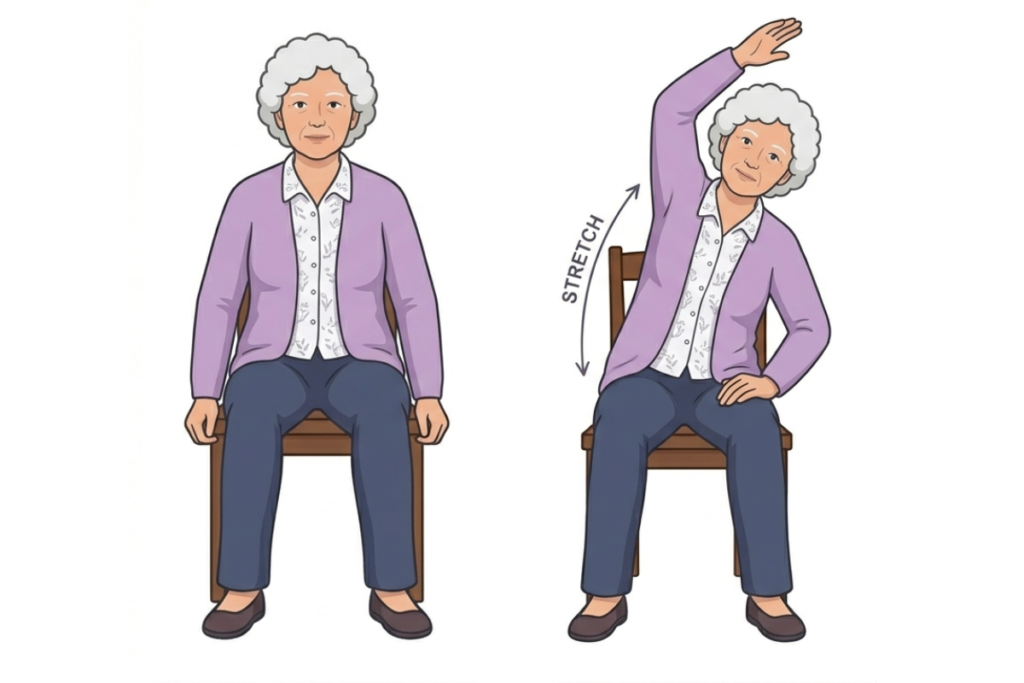
The muscles between your ribs, called intercostal muscles, can sometimes get tight. When this happens, they make it harder for your lungs to expand. These stretches can help loosen them.
How to do it:
- Sit tall and hold the side of your chair with your right hand for stability.
- Inhale and lift your left arm toward the ceiling. If your shoulder is fussy, just put your hand on your shoulder or hip instead.
- As you exhale, lean gently to the right.
- Take one big, deep breath into your left side while you are leaning. You should feel a stretch from your hip to your armpit.
- Inhale to return to the center, then switch sides.
- Repeat 3 times on each side.
5. Seated Mountain Pose (The Power Pause)
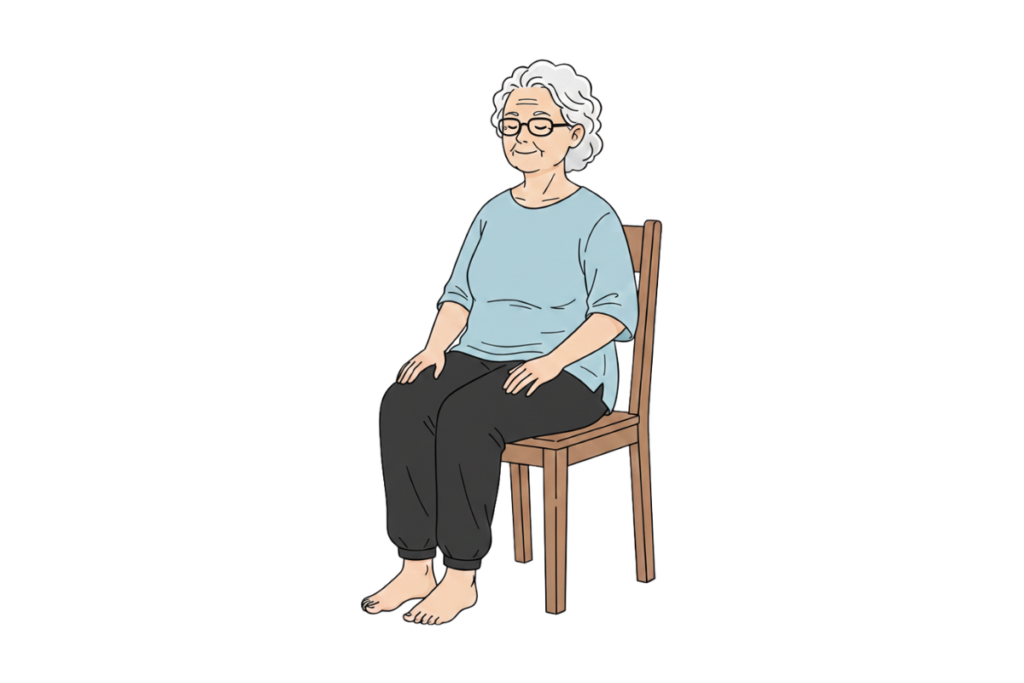
This exercise gives you a moment to focus on your breathing. It also helps improve your posture, which is important for good lung function. Sitting up straight gives your lungs more room to work.
How to do it:
- Sit with your feet flat and your spine long.
- Let your arms hang by your sides or rest your palms facing up on your thighs.
- Close your eyes if you feel comfortable.
- Take slow, even breaths in and out through your nose.
- With each inhale, picture yourself sitting a little taller. With each exhale, let your shoulders relax down.
- Stay here for 1 to 2 minutes.
Tips for Success (Without the Stress)
You do not need to be an expert in yoga to benefit from these breathing exercises for elderly lung function. Here are some tips to make them a regular part of your day without feeling like a chore:
- Consistency is more important than perfection: Doing two minutes of belly breathing every day is better than doing thirty minutes once a month. Try to pick a regular time, such as after you wake up or while waiting for your coffee.
- Listen to your body: If something pinches or feels uncomfortable, stop. Yoga should feel like a “good stretch,” not a “bad pain.”
- Remember to keep breathing steadily: Sometimes, when we focus, we forget to keep the air moving. Try to let your breath flow smoothly.
- Stay hydrated: Water helps keep the mucus in your lungs thin, which makes it easier to breathe and clear your airways.
- If you make a funny noise while exhaling, just laugh and keep going. Laughing is actually good exercise for your lungs, too.
Final Thoughts
You do not need to run marathons or climb mountains to take care of your lungs. Small, simple actions can make a big difference. By adding these easy chair-based exercises to your day, you help your body get the oxygen and care it needs to keep you comfortable.
Remember, you do not need to be perfect at these exercises. The goal is simply to feel a little better today than you did yesterday. Start small—try three belly breaths before your next meal. Even small steps are great for your health. You have been breathing your whole life, so you are already an expert. Now, you are just learning to do it with more intention. Take a deep breath, let it out with a smile, and enjoy the extra energy.
