
We all spend time worrying about things we can’t control, like the weather or rising prices. But there’s one thing you can control that can quickly change how you feel: your breath. If you’re looking for breathing exercises for beginners, you’re in the right place. The best part is you can do them right from your chair.
This guide is for anyone—older adults wanting to improve lung capacity, busy professionals needing a break, or anyone who feels they have been shallow-breathing for years. We’ll keep things simple and easy to follow. No special gear or difficult poses needed, just you and a comfortable chair.
Why Breathing Matters (More Than You Think)
We breathe about 22,000 times a day, but most of us are actually chest breathers. This means we take short, shallow breaths that stay at the top of our lungs. This type of breathing signals to our brain that we are stressed, even when we are just relaxing at home.
With a few simple techniques, you can shift from feeling stressed to feeling calm. Deep breathing lowers your heart rate, reduces cortisol (the stress hormone), and can help you sleep better. It’s like having a free remote control for your nervous system.
Setting Up Your “Chair Studio”
Before we start, make sure your setup is comfortable. You don’t need a special chair—any sturdy chair will work, as long as it’s not too soft.
- Sit up straight by moving forward slightly so your back is not slouched. Picture a string gently lifting the top of your head toward the ceiling.
- Place your feet flat on the floor. If they don’t reach, use a few books or a box to support them.
- Rest your hands on your thighs or in your lap. Keep them relaxed and loose.
- You can close your eyes if you prefer, or simply look at a spot on the floor in front of you.
3 Simple Breathing Exercises for Beginners
Now that you are comfortable, let’s begin. Focus on consistency rather than perfection. If your mind drifts, gently bring your attention back to your breath.
1. The Belly Breath (Diaphragmatic Breathing)
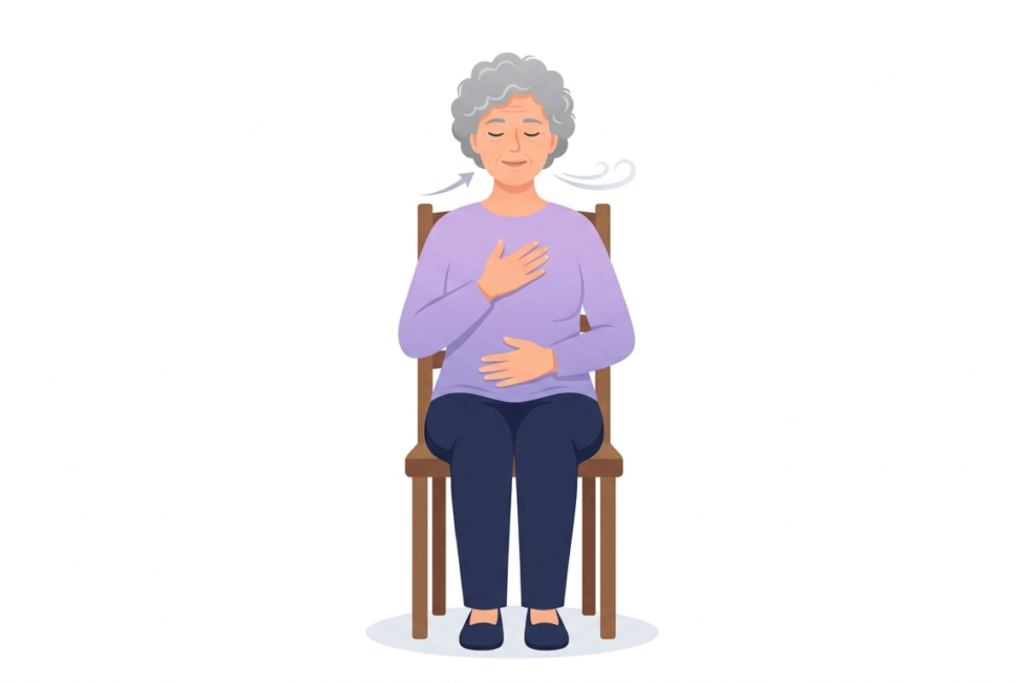
This is considered the best way to breathe. If you watch a baby or a sleeping puppy, you’ll see their bellies rise and fall. That’s how we naturally breathe before daily stress changes our habits.
The Step-by-Step:
- Place one hand on your chest and the other hand on your belly, right over your belly button.
- Inhale slowly through your nose. Try to feel the hand on your belly move outward while the hand on your chest stays mostly still.
- Exhale slowly through your mouth or nose. Feel your belly sink back in toward your spine.
- Repeat this for 5 to 10 breaths.
Why it’s helpful: It encourages your lungs to fill from the bottom, making breathing more efficient and calming for your heart.
2. The Box Breath (The Square Technique)
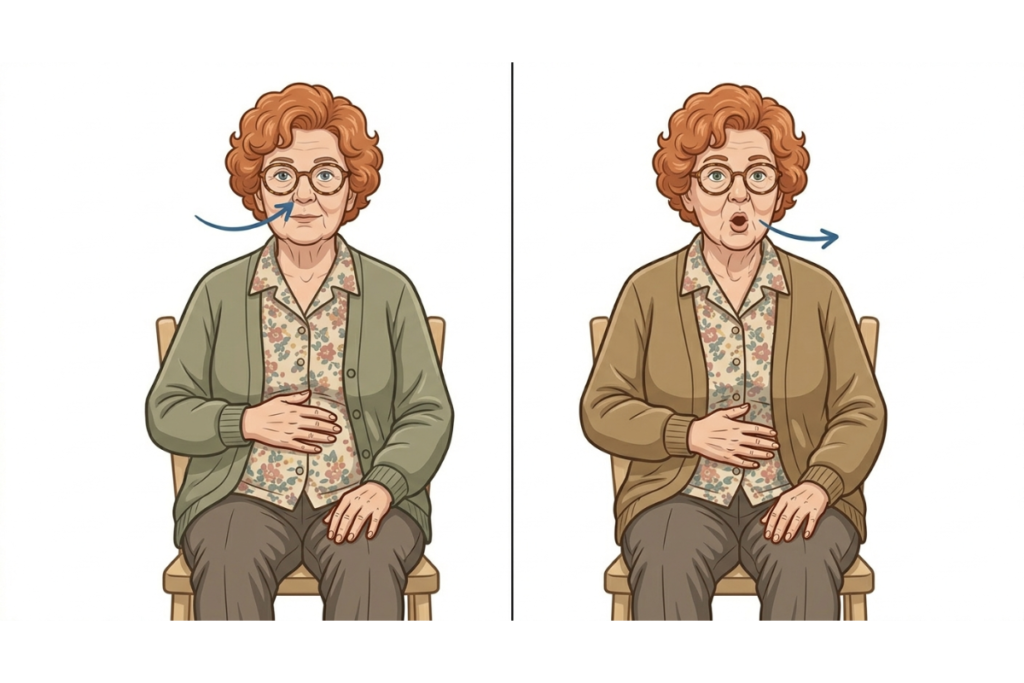
This exercise is great for those who like structure. It’s even used by Navy SEALs to stay calm in stressful situations. If it works for them, it can help you too during daily stress.
The Step-by-Step:
- Exhale all the air out of your lungs.
- Inhale through your nose for a count of 4.
- Hold that breath in for a count of 4.
- Exhale through your mouth for a count of 4.
- Hold your lungs empty for a count of 4.
- Repeat the cycle 4 times.
Why it’s helpful: Counting gives your mind something to focus on, making this exercise ideal for beginners with active thoughts.
3. The 4-7-8 Relaxer
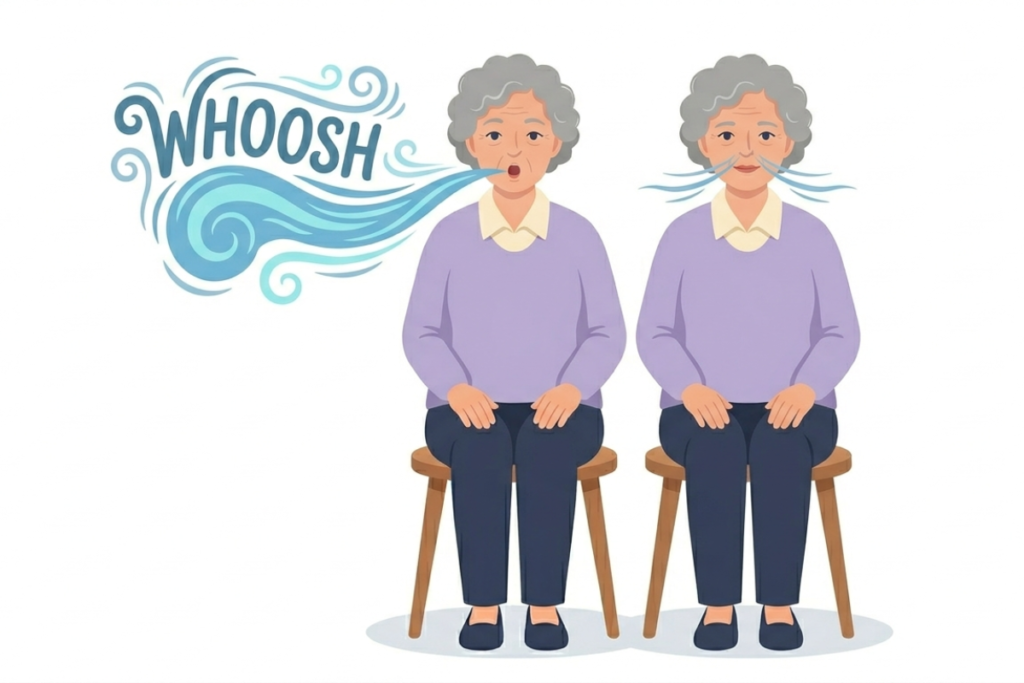
If you have trouble sleeping, this exercise can help. It works as a natural way to calm your nervous system.
The Step-by-Step:
- Place the tip of your tongue against the ridge of tissue just behind your upper front teeth and keep it there.
- Exhale completely through your mouth, making a “whoosh” sound.
- Close your mouth and inhale quietly through your nose to a count of 4.
- Hold your breath for a count of 7.
- Exhale completely through your mouth, making that “whoosh” sound again to a count of 8.
- This is one breath. Repeat for a total of 4 cycles.
Why it’s helpful: The long exhale tells your body it is safe and helps you relax.
Simple Chair Yoga Poses to Open Your Lungs
Breathing becomes easier when your chest is open. Here are two simple seated poses to help you make more space for deep breaths.
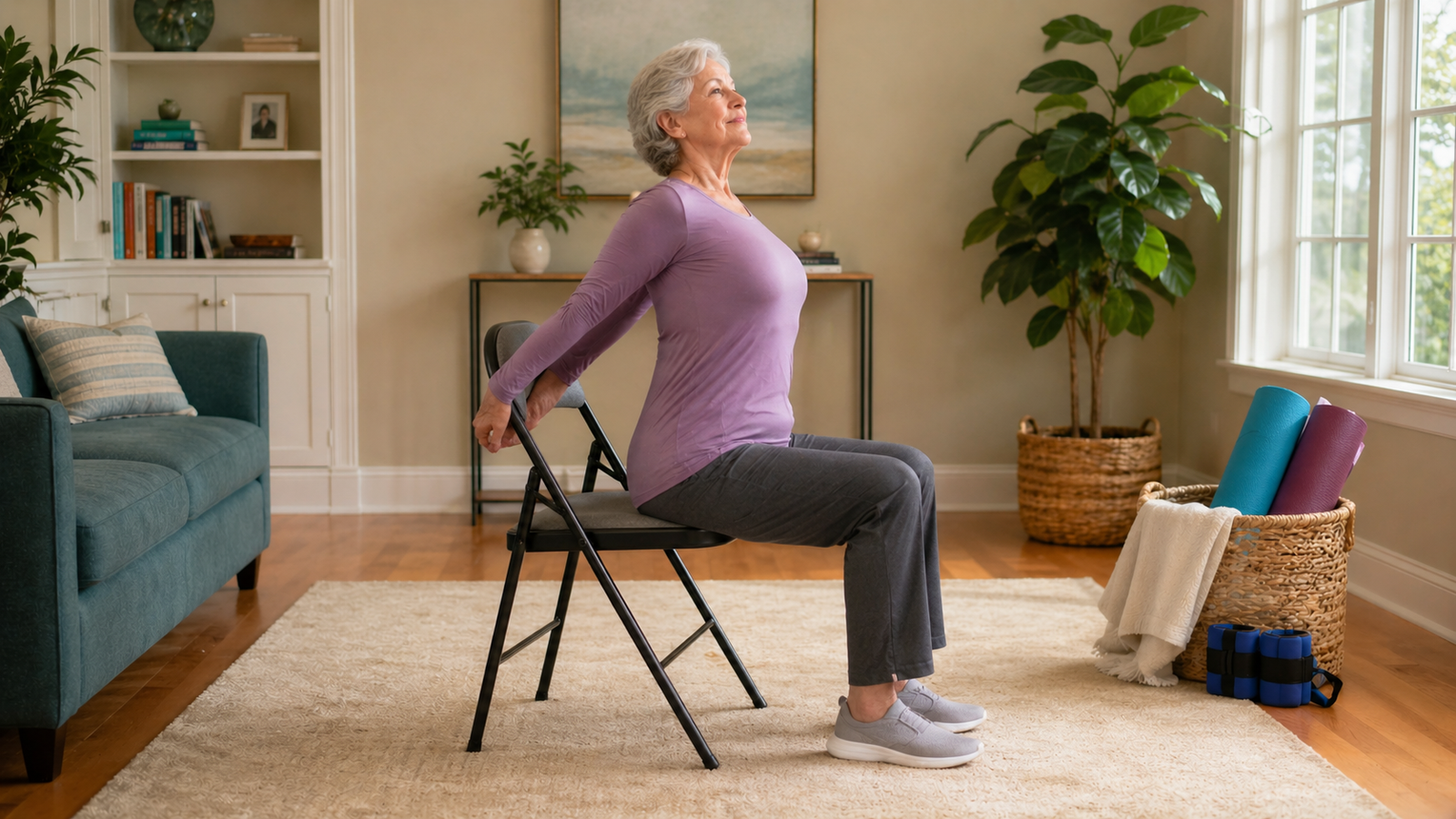
The Seated Heart Opener
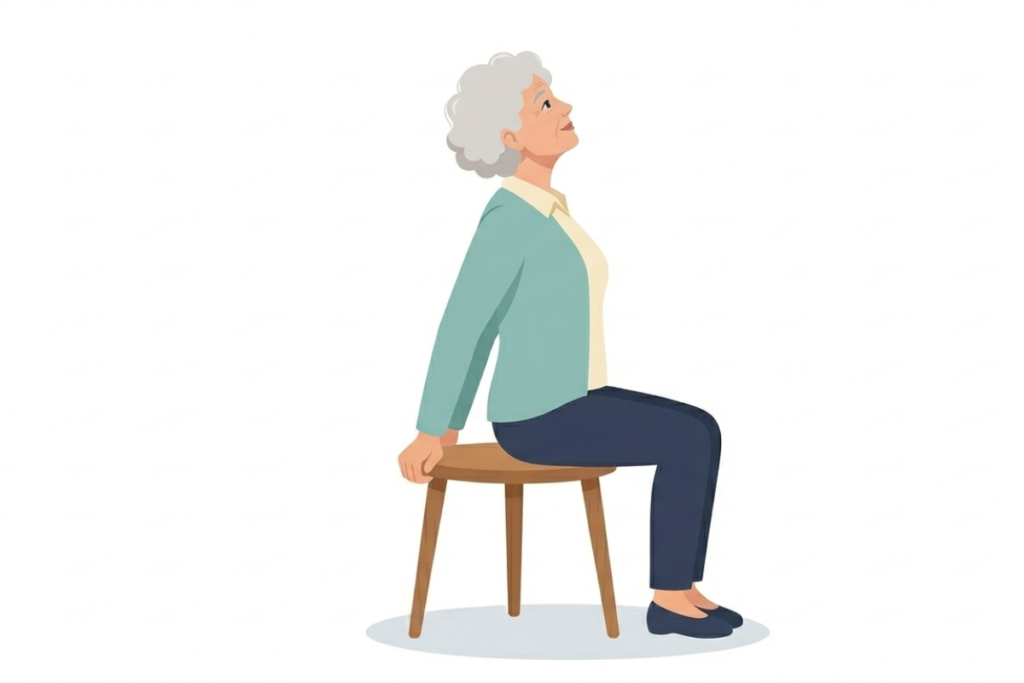
Many people spend hours hunched over devices, which restricts breathing. This pose helps open your chest.
- Sit toward the edge of your chair.
- Reach your arms behind you and hold onto the back of the chair or the sides of the seat.
- Gently pull your shoulders back and lift your chest toward the sky.
- Take 3 big “Belly Breaths” here.
- Notice the stretch in your chest. This helps your lungs work better.
Seated Side Stretch
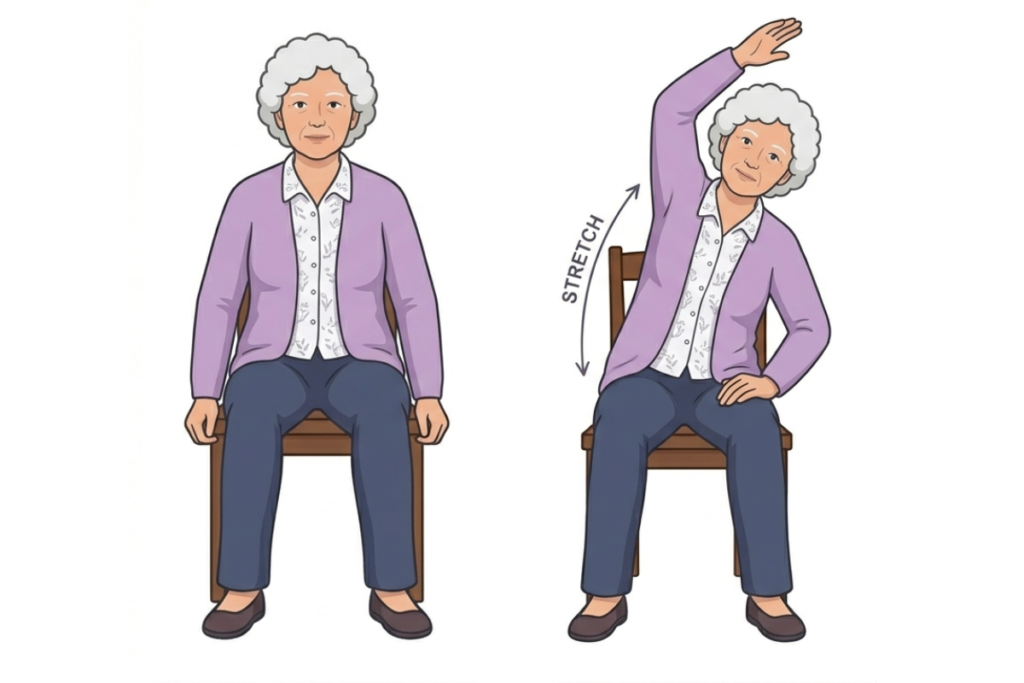
Remember, your lungs extend to your sides as well as the front.
- Sit tall with your feet flat.
- Hold the side of your chair with your left hand for stability.
- Reach your right arm up toward the ceiling.
- Gently lean to the left, feeling a stretch all along your right side.
- Take 2 deep breaths into your right ribs.
- Switch sides and repeat.
Helpful Tips for Success
As you begin practicing these techniques, keep a few things in mind. There is no need to be perfect.
Don’t Force It
If holding your breath for seven counts feels uncomfortable, shorten the numbers. For example, try a 3-3-6 rhythm. The goal is to feel relaxed, not to compete.
Use “Anchor” Moments
It can be easy to forget to breathe deeply when life is busy. Try linking your practice to daily habits. For example, take three deep breaths when you put the kettle on, during TV commercials, or before checking your email.
Consistency Beats Intensity
You do not need to spend 30 minutes a day on these breathing techniques for newbies. Five minutes of focused breathing is more helpful than an hour of perfect yoga once a month. A few minutes each morning can improve your whole day.
Final Thoughts
If you are reading this, you have already taken the first step by showing up for yourself. You do not need special equipment or a big lifestyle change to feel better. Simply start by noticing your breath.
Try it now. Before you move on, take a slow inhale through your nose and a long exhale out of your mouth. Notice if your shoulders relax. This is the benefit of chair yoga and mindful breathing.
Take a small step today. Set a timer for two minutes tomorrow morning and practice Belly Breathing. You may be surprised at how much better you feel when you give your lungs more space. Enjoy your practice.
