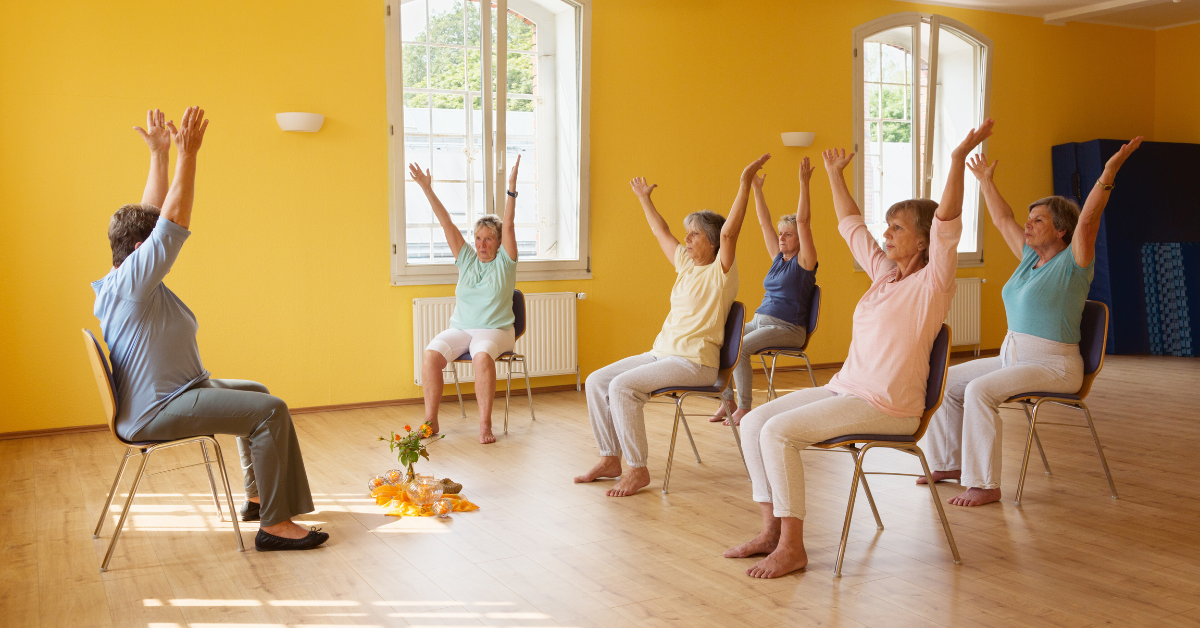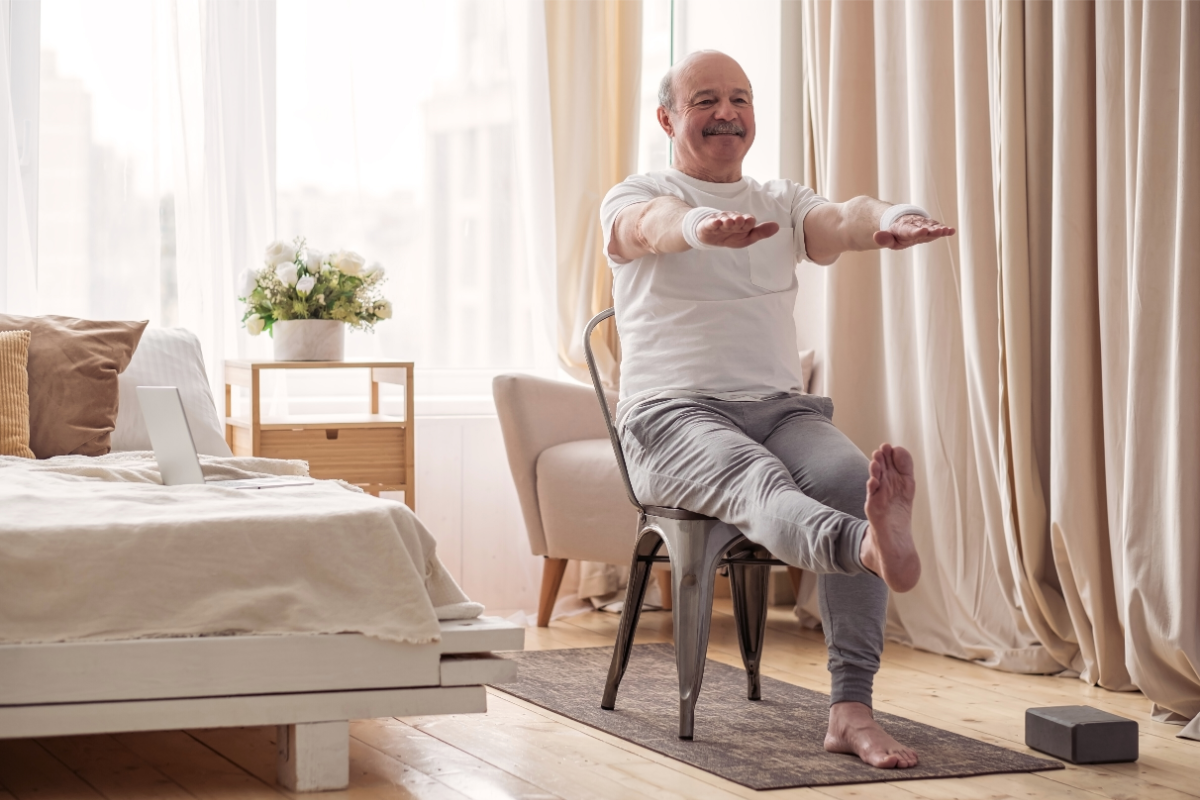


Getting older brings plenty of surprises. Your knees might start making bubble wrap sounds, and you may find yourself grunting when you sit down. Suddenly, balance feels less like riding a bike and more like walking on a tightrope during an earthquake. The good news is, if you’re using a walker, you’ve already made a smart choice to stay safe and independent. With the right balance exercises for seniors with walkers, you can build even more strength and confidence.
If you want the best balance exercises or just hope to feel steadier, this guide is for you. We’ll go over simple, beginner-friendly exercises you can do with your walker to help you move through your day with less wobbling and more confidence. You don’t need a gym membership or fancy equipment, just your walker and a few minutes each day.
Why Balance Matters (Especially When You Have a Walker)
Your walker is like your personal bodyguard, keeping you upright and stable. But here’s the thing: your muscles still need to do their part. Think of your walker as training wheels, not a replacement for your own strength.
The stronger your legs, core, and stabilizing muscles become, the easier everything gets: walking to the mailbox, playing with grandkids, or even just reaching for that top shelf (you know, the one where all the good snacks hide).
Better balance leads to fewer falls, more confidence, and the freedom to keep doing what you love. Exercise also releases feel-good endorphins, which is like your brain giving you a high-five.
Before You Start: Safety First, Always
Before starting these movements, let’s review a few safety basics to help you stay confident and steady. Many seniors find it helpful to follow guidance from a chair yoga book for seniors, along with practicing walker-assisted balance exercises for seniors at home. Keep these tips in mind:
- Always use your walker for support during these exercises.
- Wear sturdy, non-slip shoes (no socks on slippery floors, please).
- Clear the area of rugs, cords, or anything else that might trip you up.
- Have a chair nearby in case you need extra support or a rest.
- If something hurts (not the good “I’m working my muscles” feeling, but actual pain), stop and check with your doctor.
- Start slow and build up gradually. Rome wasn’t built in a day, and neither is a better balance.
Are you ready? Let’s get started!
Beginner Balance Exercises With Your Walker
1. Walker-Supported Weight Shifts
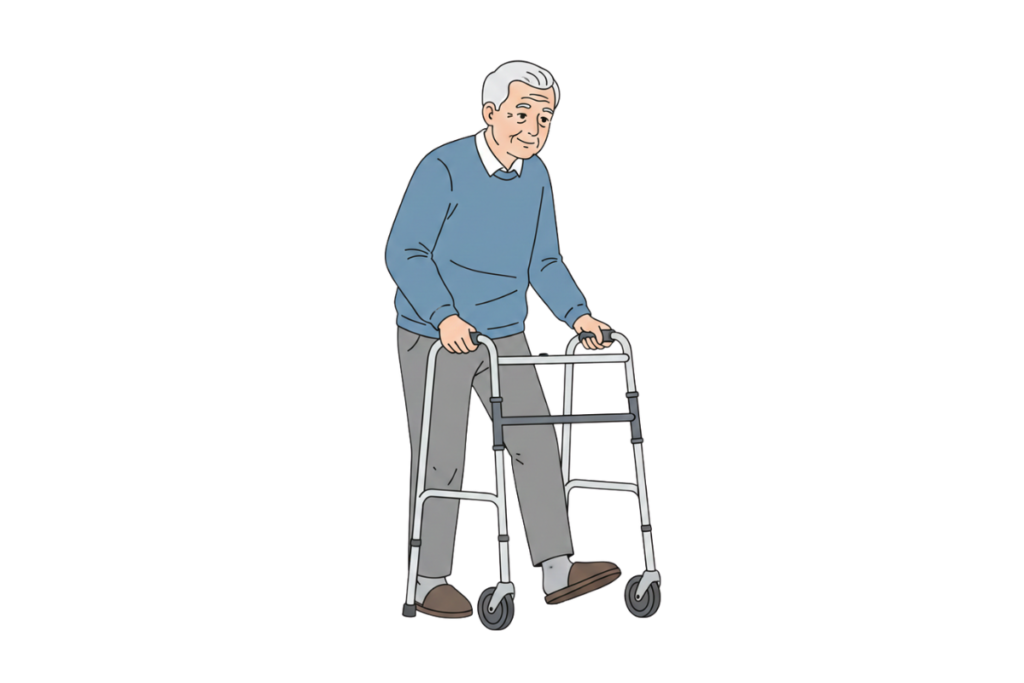
This is a great place to start because it’s simple and helps build the foundation for all the other exercises.
How to do it:
- Stand behind your walker with both hands on the grips.
- Keep your feet hip-width apart.
- Slowly shift your weight to your right foot, lifting your left heel slightly off the ground.
- Hold for 3-5 seconds (or as long as comfortable).
- Shift back to the center.
- Now shift your weight to your left foot and lift your right heel slightly.
- Hold for 3-5 seconds.
- Repeat 5-10 times on each side.
Why it works: This teaches your body to balance on one leg at a time, which is basically what you’re doing every time you walk. Plus, it’s so gentle that you’ll wonder if it’s even doing anything.
2. Marching in Place
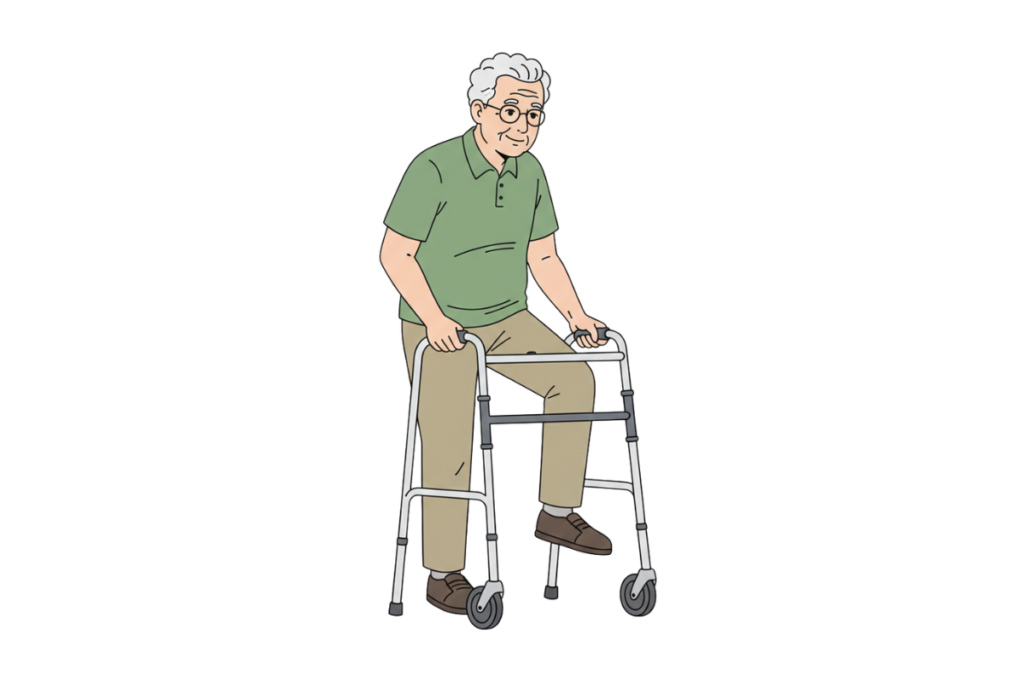
This is like walking in place without moving forward. It’s similar to using a treadmill, but you can do it for free right in your living room.
How to do it:
- Stand behind your walker, holding the grips firmly.
- Lift your right knee as high as is comfortable (even a few inches counts!).
- Lower it back down.
- Lift your left knee.
- Keep alternating, like you’re marching in a very slow parade.
- Do this for 30 seconds to 1 minute.
- Rest and repeat 2-3 times.
Why it works: This exercise strengthens your hip flexors and improves coordination. It also gets your heart pumping a bit, which is good for your overall health.
3. Heel Raises (Calf Strengtheners)
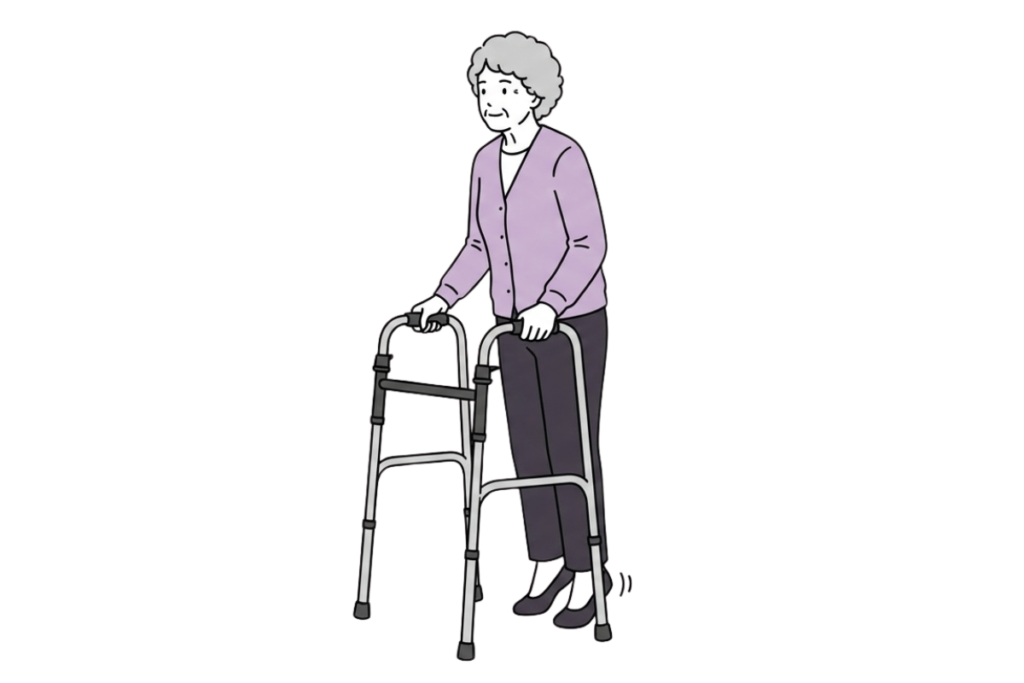
Strong calves help improve your balance. There’s real science behind it.
How to do it:
- Stand behind your walker with both hands on the grips.
- Keep your feet hip-width apart.
- Slowly rise up onto your tiptoes.
- Hold for 2-3 seconds. If you wobble a little, that’s completely normal.
- Lower back down slowly.
- Repeat 10-15 times.
- Rest, and if you feel up to it, do another set.
Why it works: Your calf muscles help move you forward when you walk. Stronger calves lead to steadier steps.
4. Side Steps
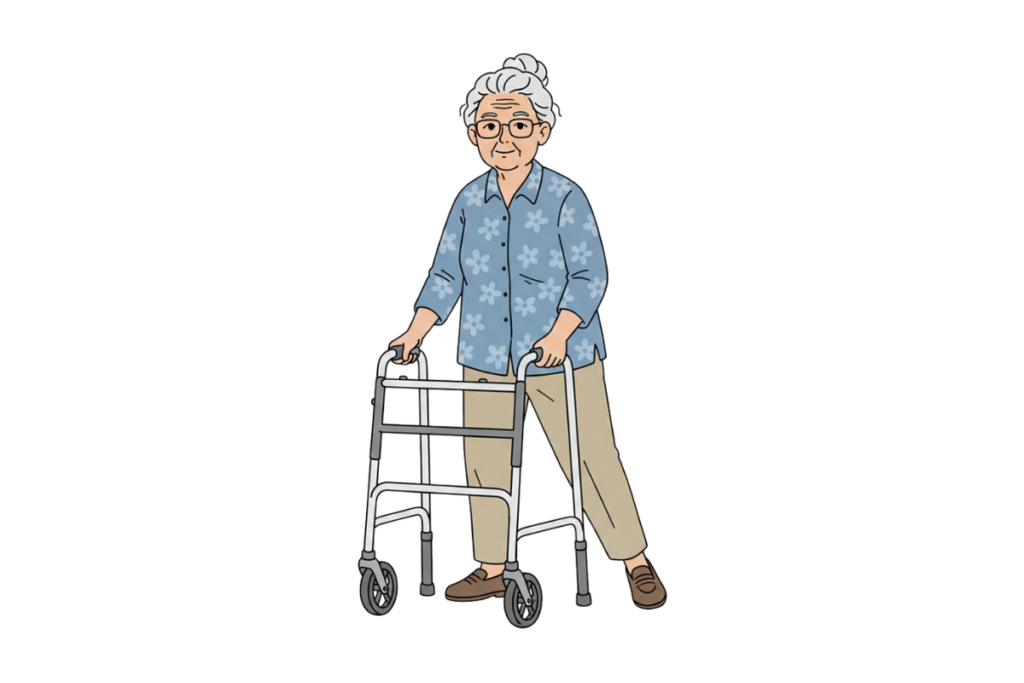
Now it’s time to move sideways. This exercise is great for improving your ability to stay steady when reaching for something.
How to do it:
- Stand behind your walker.
- Take a small step to the left with your left foot.
- Bring your right foot to meet it.
- Take another step to the left.
- Do 5-10 side steps in one direction.
- Now reverse and go back to the right.
- Repeat 2-3 times each direction.
Why it works: Most people usually move forward and backward, but daily life requires movement in all directions. This exercise helps your body stay balanced when moving sideways.
5. Hip Extensions
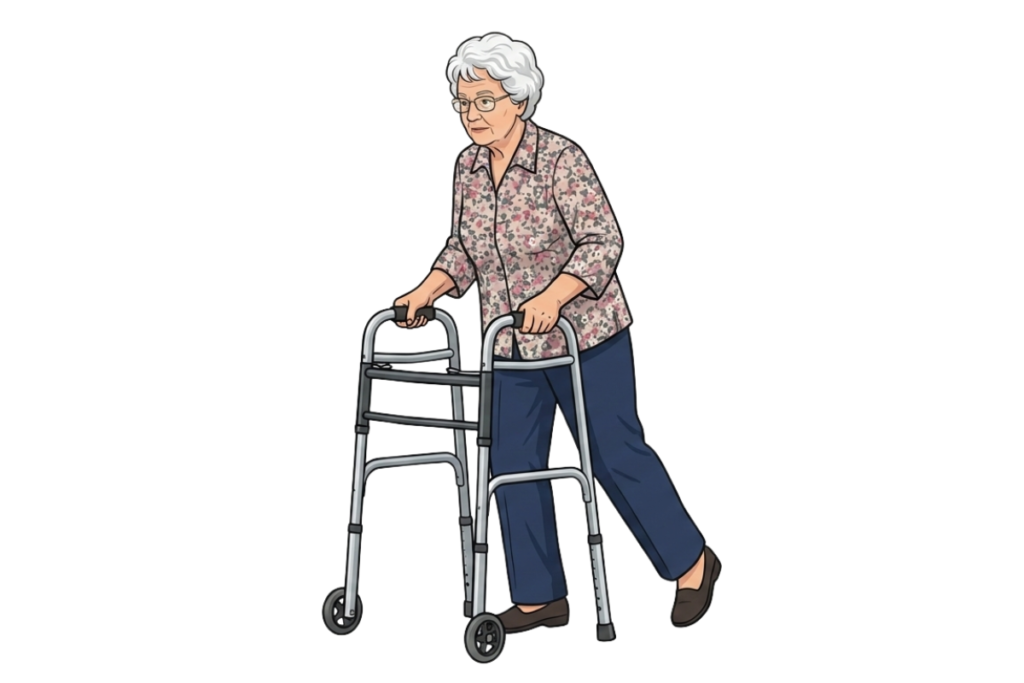
This exercise targets your glutes, or butt muscles, which are very important for balance and walking.
How to do it:
- Stand behind your walker and hold on firmly.
- Keep your standing leg slightly bent.
- Slowly lift your right leg straight back, keeping your knee straight.
- Don’t lean forward. Stand up straight and tall.
- Hold for 2-3 seconds.
- Lower your leg back down.
- Do 8-10 repetitions.
- Switch to the left leg and repeat.
Why it works: Strong glutes keep your pelvis stable and help you walk with better posture. Plus, who doesn’t want a perkier behind?
6. Knee Lifts (Standing)
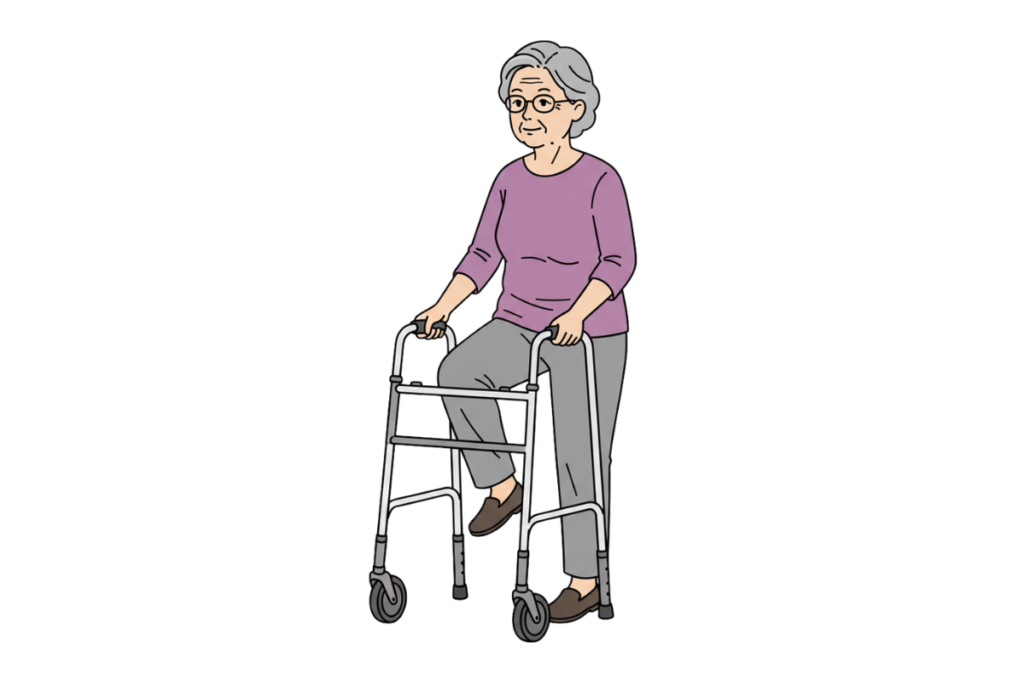
Similar to marching, but we’re focusing on holding the position.
How to do it:
- Stand behind your walker with good posture.
- Lift your right knee up toward your chest.
- Hold for 5-10 seconds (or as long as you can).
- Lower it down slowly.
- Repeat with your left leg.
- Do 5-8 repetitions on each side.
Why it works: This exercise builds single-leg strength and challenges your balance in a safe way. The longer you can hold the position, the stronger you become.
7. Toe Taps
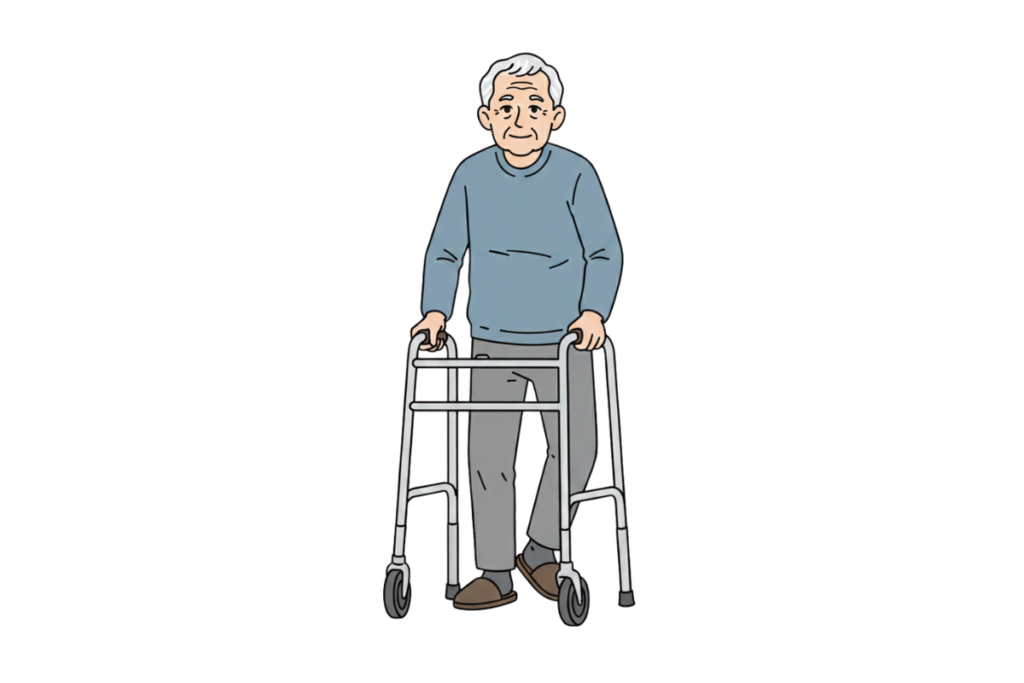
This exercise may look simple, but your muscles will definitely feel it.
How to do it:
- Stand behind your walker.
- Lift your left foot and tap your toes on the ground about 6-12 inches in front of you.
- Bring it back to the starting position.
- Repeat 10 times.
- Switch to your right foot.
- Do 2-3 sets on each side.
Why it works: This exercise improves coordination and strengthens the muscles around your ankles and shins, which are important for preventing trips and stumbles.
8. Chair Sit-to-Stands (With Walker Support)
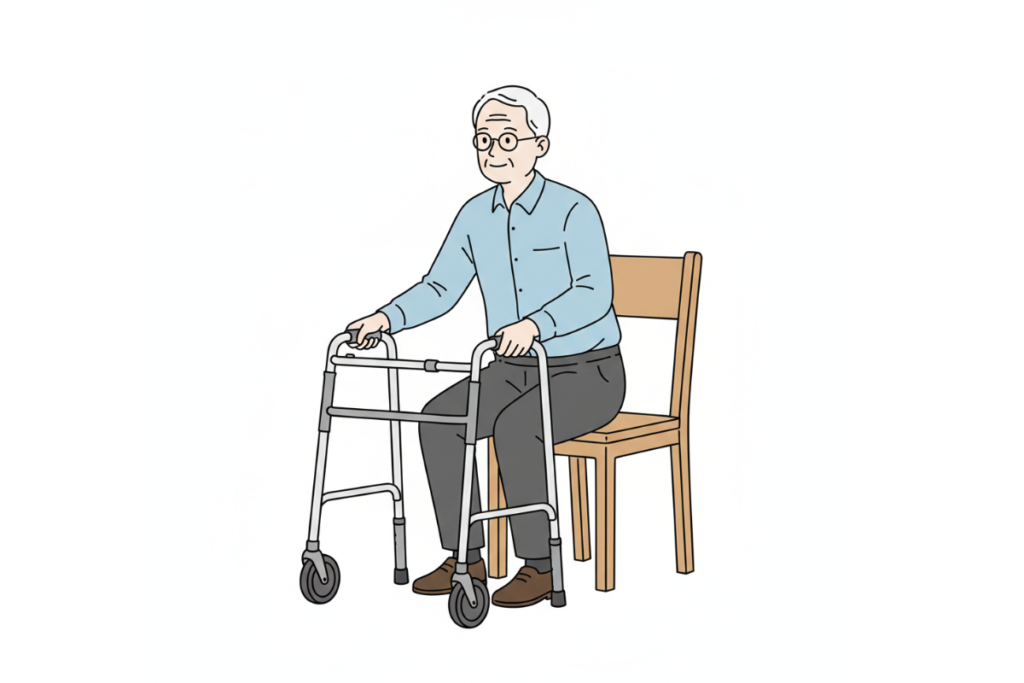
This exercise is practical because you sit and stand many times each day. Let’s make those movements count.
How to do it:
- Place a sturdy chair behind you.
- Position your walker in front of you.
- Slowly sit down in the chair, using your walker for balance.
- Pause for a second.
- Now stand back up, using your leg muscles rather than relying solely on your arms to pull the walker.
- Repeat 5-10 times
Why it works: This exercise builds strong leg muscles and mimics a movement you do often. As you get stronger, everyday life becomes easier.
Building Confidence One Step at a Time
The great thing about these gentle balance exercises for elderly adults with walkers is that they work quietly in the background of your life. You may not notice big changes right away, but one day you’ll realize you walked through the grocery store with less fatigue, reached for something without worrying about tipping over, or felt steadier stepping over your front door threshold.
That’s the magic of consistency. Small efforts compound into real results.
Remember, using a walker is not a sign of weakness. It shows wisdom. Choosing safety and independence takes courage.
Final Thoughts
If you’ve read this far, you’re already motivated to make a change. That’s great! Now, just pick one exercise from this list and try it today if you can.
It could be weight shifts while you stand at the kitchen counter or while you march in place during a commercial break. It doesn’t have to be perfect. What matters is that you do it.
The best exercise program is not the most intense or the most complicated. It’s the one you will actually do. You can do this. Your walker will support you, and these exercises will help you feel stronger, steadier, and more confident with every step. Go ahead and take that first step. Your future, more balanced self is cheering you on.