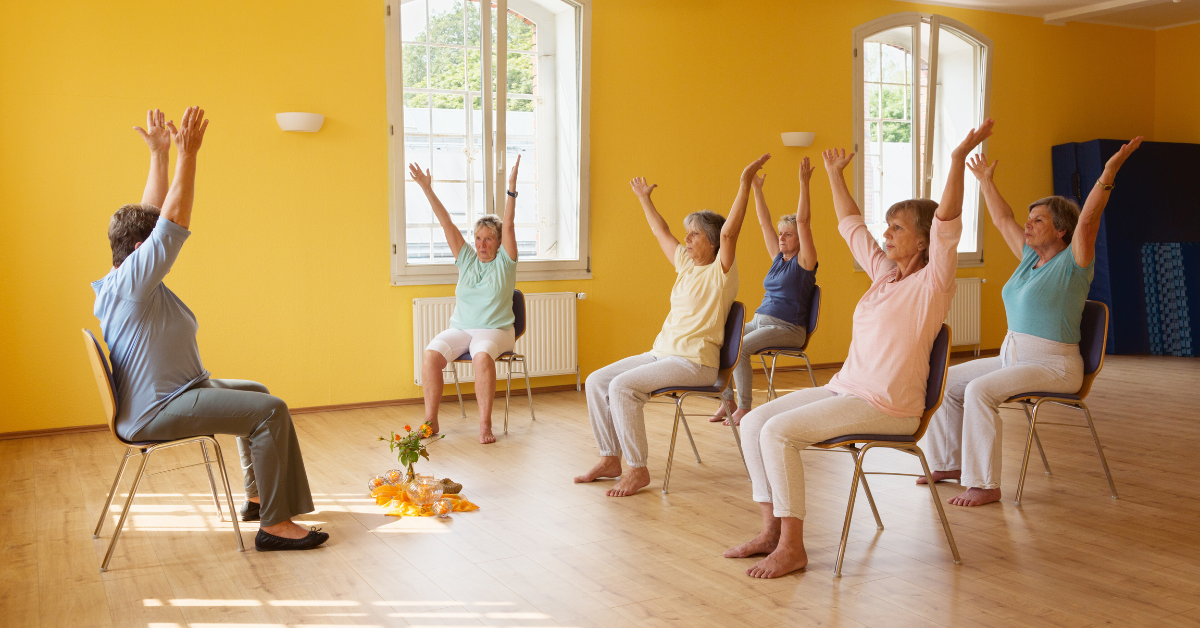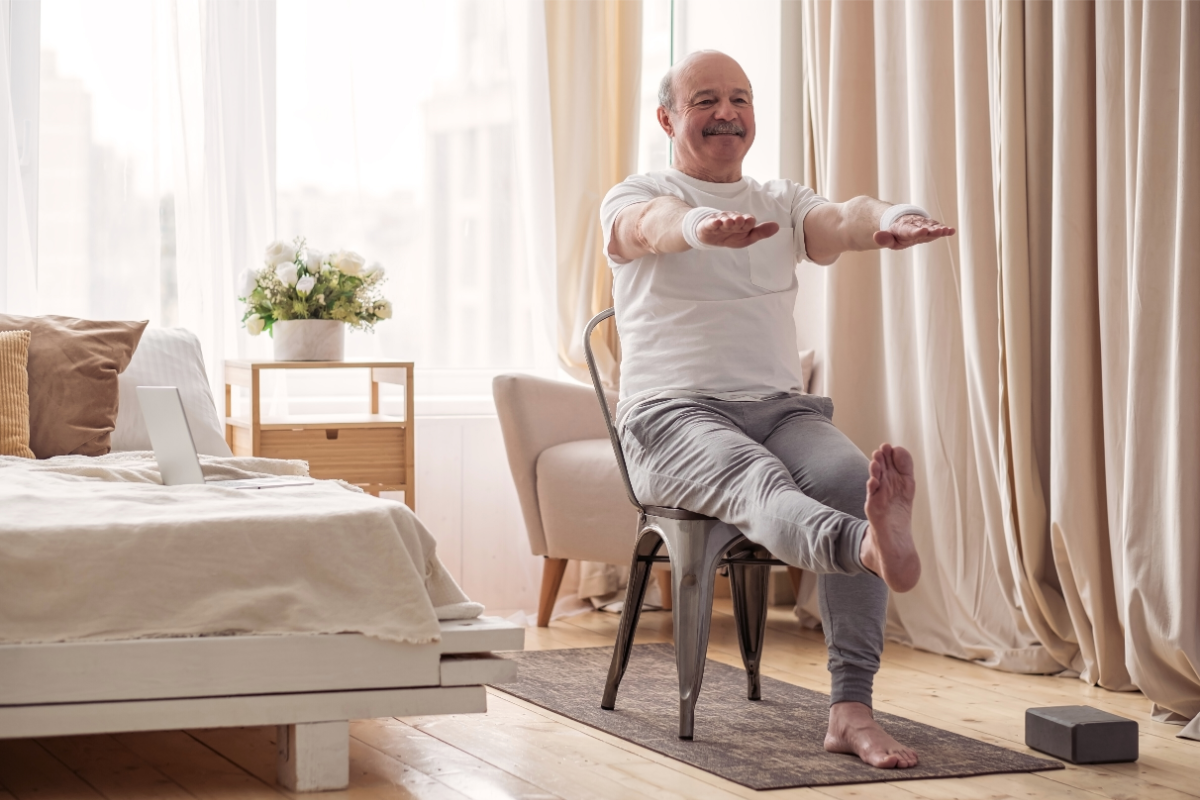

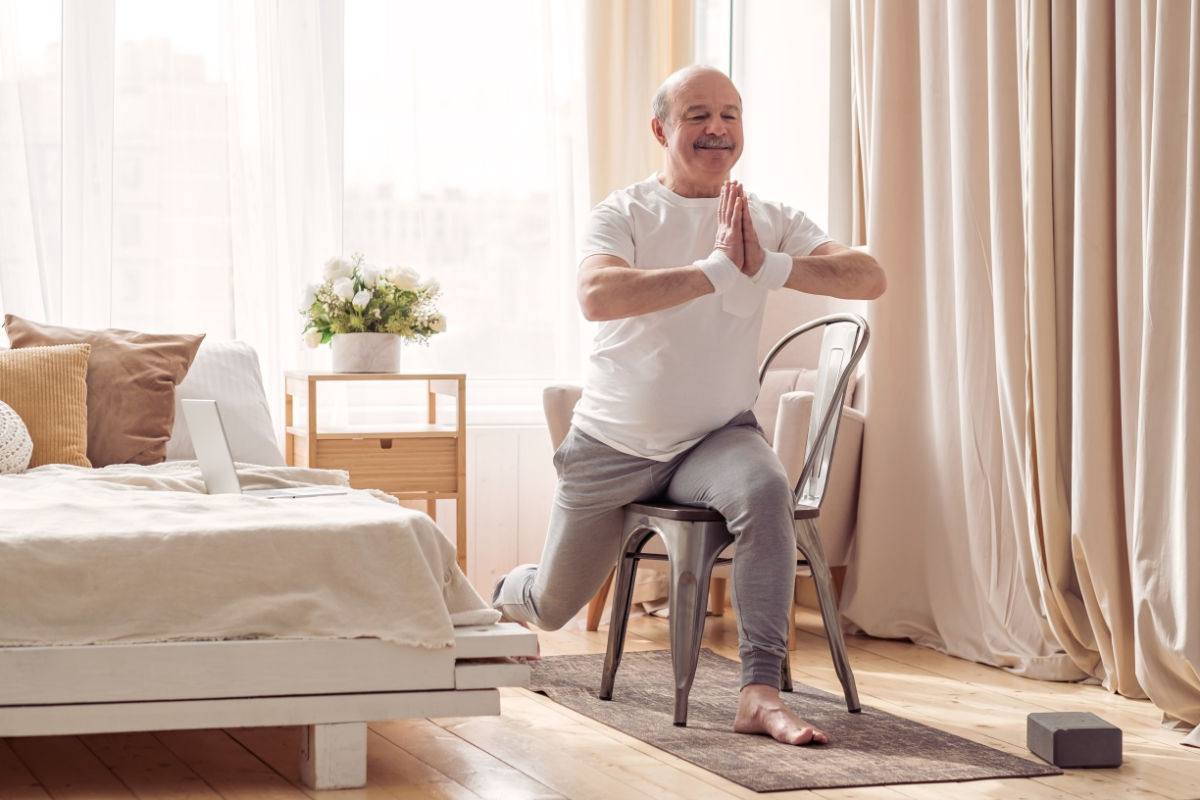
Knee pain is nobody’s idea of a good time. One day, you’re walking around just fine, and the next, your knees are creaking like an old wooden floor. But here’s the good news that might surprise you. The right balance exercises for knee pain can actually help strengthen the muscles around your knees, improve stability, and reduce discomfort. Yes, you read that right. Moving might be exactly what those cranky knees need!
If you’re a senior with knee pain, balance exercises might not sound very appealing. But give them a chance. These moves aren’t about tricky stunts or standing on one leg for a long time. They’re gentle and simple, made for people who want to feel steadier without making their knees hurt more.
In this guide, we’ll walk through safe, beginner-friendly balance exercises that won’t send your knees into revolt. No fancy equipment needed, just you, maybe a chair for support, and a few minutes of your day.
Why Balance Exercises Matter When You Have Knee Pain
You may wonder, “If my knees hurt, shouldn’t I rest them?” Not always. When your knees are weak or sore, your balance can get worse. Poor balance can lead to stumbling, bad posture, or extra stress on your joints.
Balance exercises help by:
- Strengthening the muscles that support your knees (think thighs, calves, and hips)
- Improving coordination so you move more smoothly.
- Building confidence in your movements
- Reducing fall risk, which is a big deal as we age
It’s like giving your knees extra help. When the muscles around them are stronger, your knee joints don’t have to work as hard.
Safety First: What You Need Before Starting
Before starting the exercises, let’s go over a few basics to help you stay safe and comfortable.
Always check with your doctor first. If you have severe knee pain, recent injuries, or other health issues, make sure your healthcare provider approves before you start any new exercises.
Keep support close by. Use a sturdy chair, counter, or wall within reach. Holding on for balance is not only okay, it’s a smart choice.
Wear proper shoes. Avoid slippers and socks. Choose supportive, non-slip shoes that help keep your feet stable.
Pay attention to how your body feels. Some muscle tiredness is normal, but sharp pain or more swelling is not. If you feel real pain, stop and rest.
Beginner-Friendly Balance Exercises for Knee Pain
Let’s get started. These exercises start gently and are designed to gradually build your strength and stability. Many seniors find it helpful to follow along with a chair yoga book, especially when learning exercises to improve knee balance. Beginning with simple movements creates a safe foundation and allows your body to progress at a comfortable pace.
1. Chair Stands (Sit-to-Stand)
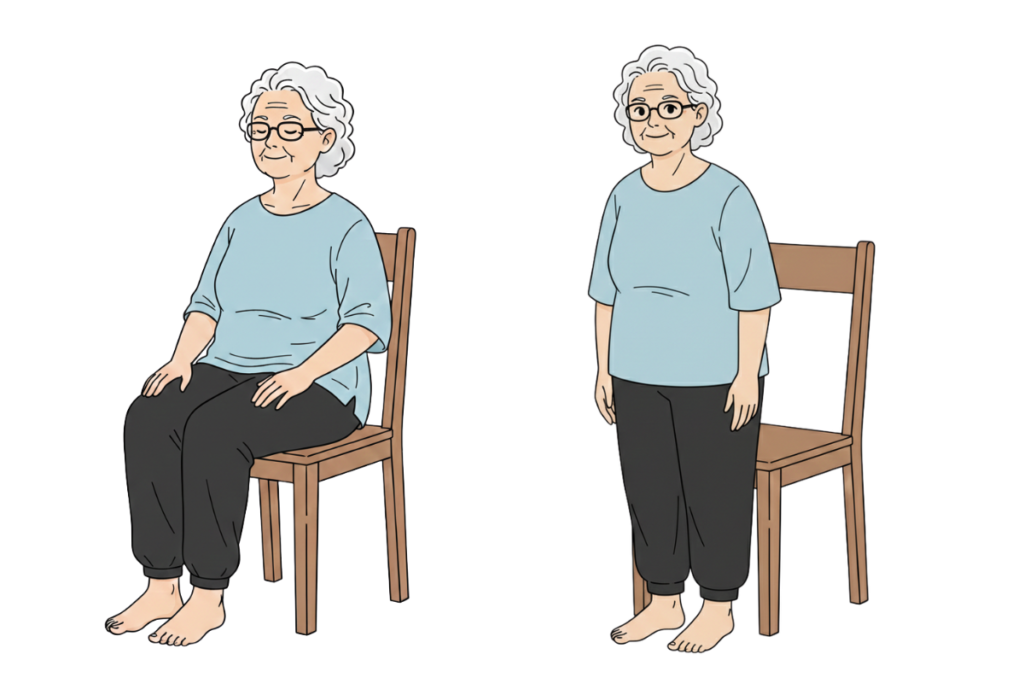
This is a great exercise to start with because it’s simply standing up and sitting down—something you already do every day.
Step-by-step:
- Sit in a sturdy chair with your feet flat on the floor, hip-width apart.
- Place your hands on the armrests or let them rest on your thighs.
- Lean forward slightly and slowly stand up, using your leg muscles (not your hands if possible).
- Pause for a moment while standing.
- Slowly lower yourself back to a sitting position.
- Repeat 8 to 10 times.
Why it helps: This strengthens your quadriceps (thigh muscles) and glutes, which are crucial for supporting your knees and maintaining balance.
Tip: If this is too easy, try crossing your arms over your chest. If it’s too hard, use your hands on the armrests to help push yourself up.
2. Standing Knee Lifts (Marching in Place)
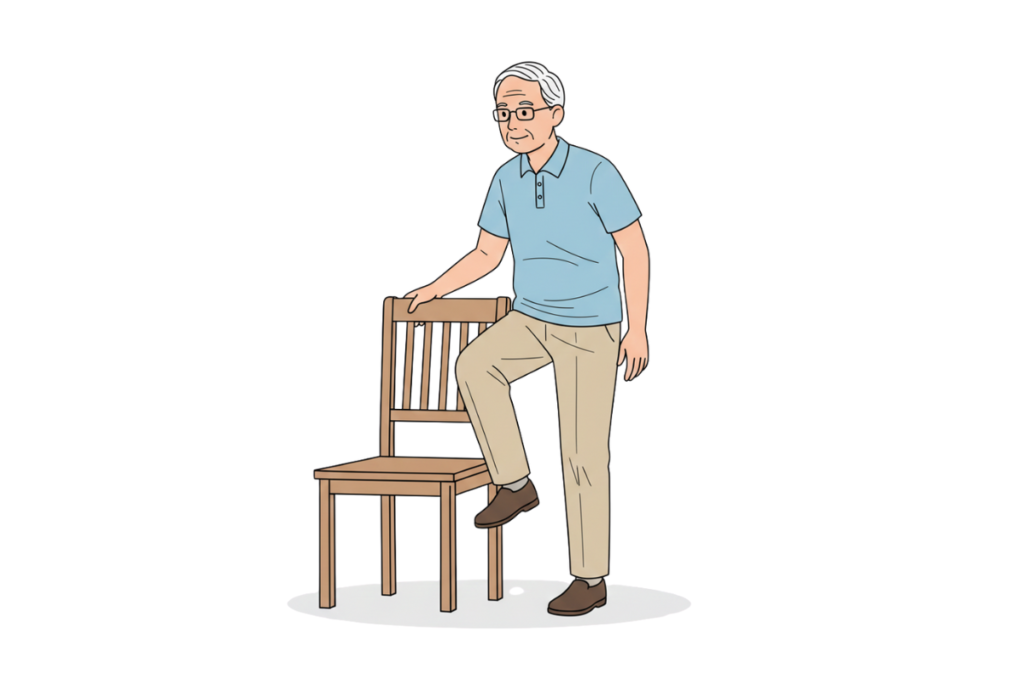
Imagine this as a slow and careful marching movement.
Step-by-step:
- Stand beside a sturdy chair, holding it for support.
- Keep your feet hip-width apart and stand tall.
- Slowly lift your right knee toward your chest (only as high as is comfortable; no need to get it to your chin).
- Hold for 2 to 3 seconds.
- Slowly lower your foot back to the floor.
- Repeat with your left knee.
- Continue alternating legs for 10 to 12 lifts per leg.
Why it helps: This exercise improves hip strength and challenges your balance gently while keeping weight off your knees most of the time.
Tip: Focus on standing tall through your supporting leg. Picture yourself being gently pulled upward from the top of your head.
3. Heel Raises (Calf Raises)
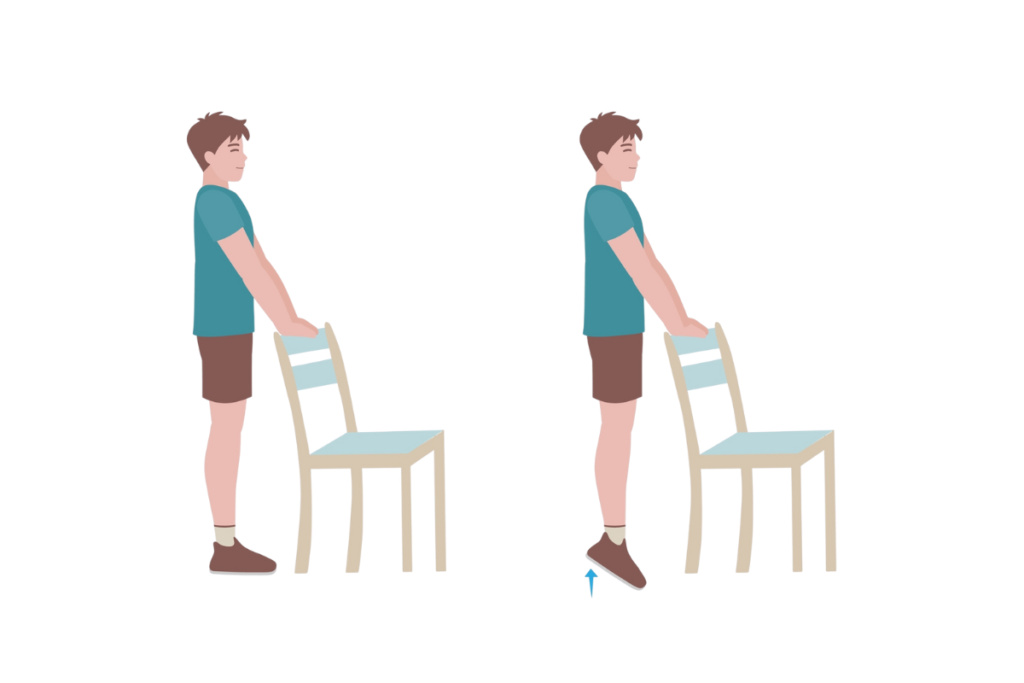
Strong calves help your ankles stay stable, which improves your overall balance.
Step-by-step:
- Stand behind a chair with your hands resting lightly on the back.
- Keep your feet hip-width apart and your knees soft (slightly bent, not locked).
- Slowly rise up onto your tiptoes, lifting your heels off the ground.
- Hold for 2 to 3 seconds at the top.
- Slowly lower your heels back to the floor.
- Repeat 10 to 15 times.
Why it helps: Strong calves support your ankles and help prevent wobbling, which reduces strain on your knees.
Tip: If this feels too easy, try doing it on one foot at a time (while still holding the chair for safety).
4. Heel-to-Toe Walk (Tandem Walking)
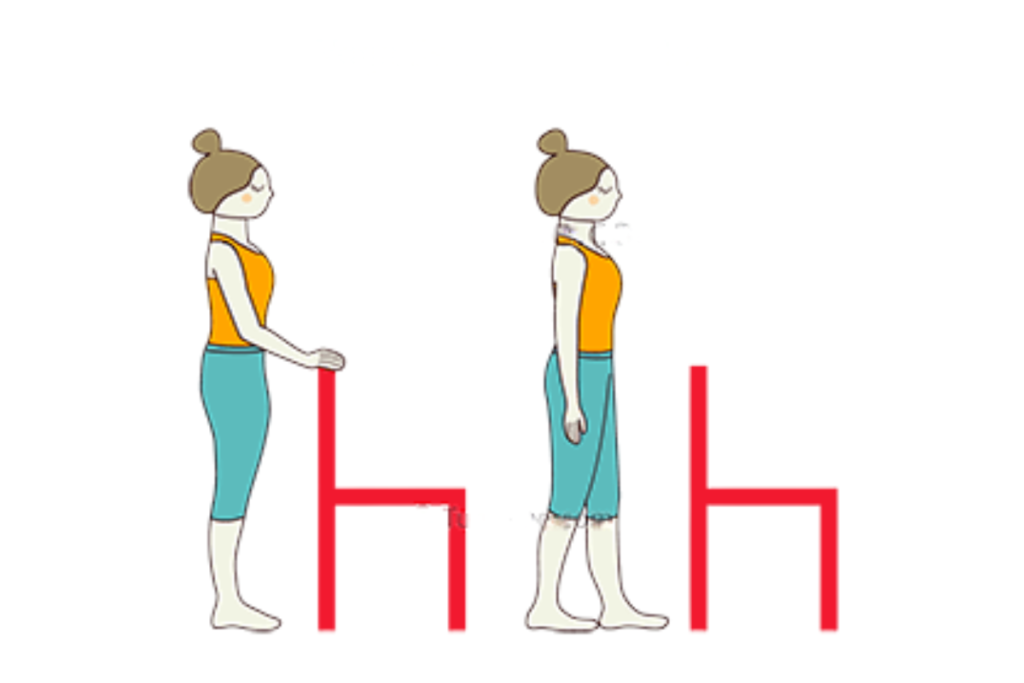
This exercise is simpler than it sounds. You’ll walk in a straight line, similar to walking on a tightrope, but it’s much easier and safe.
Step-by-step:
- Stand next to a wall or counter for support if needed.
- Position your right foot directly in front of your left foot so the heel of your right foot touches the toes of your left foot.
- Step forward, placing your left foot directly in front of your right foot, heel to toe.
- Continue walking this way for 10 to 15 steps.
- Turn around and walk back.
Why it helps: This exercise seriously challenges your balance and coordination while strengthening the stabilizing muscles around your knees and ankles.
Tip: Keep your eyes focused ahead, not down at your feet. Looking down can throw off your balance.
5. Single-Leg Stands (With Support)
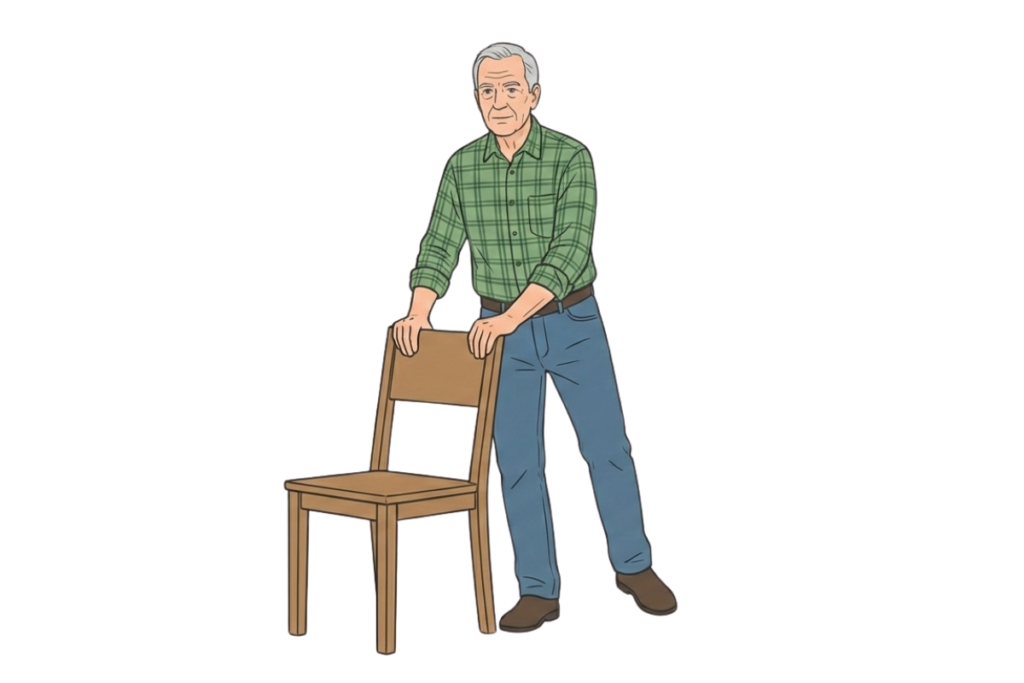
This next exercise is a little more challenging, but you’ll do it safely.
Step-by-step:
- Stand behind a sturdy chair and hold on with both hands.
- Shift your weight onto your right leg.
- Slowly lift your left foot just an inch or two off the ground.
- Hold this position for 10 to 15 seconds (or as long as you can comfortably).
- Lower your left foot back down.
- Repeat on the other leg.
- Do 3 to 5 repetitions on each side.
Why it helps: This is one of the best exercises for better knee balance because it forces one leg to do all the stabilizing work.
Tip: As you get stronger, try using just one hand on the chair, then just fingertips, then maybe no hands at all. But there’s no rush. Holding on is perfectly fine.
6. Toe Taps
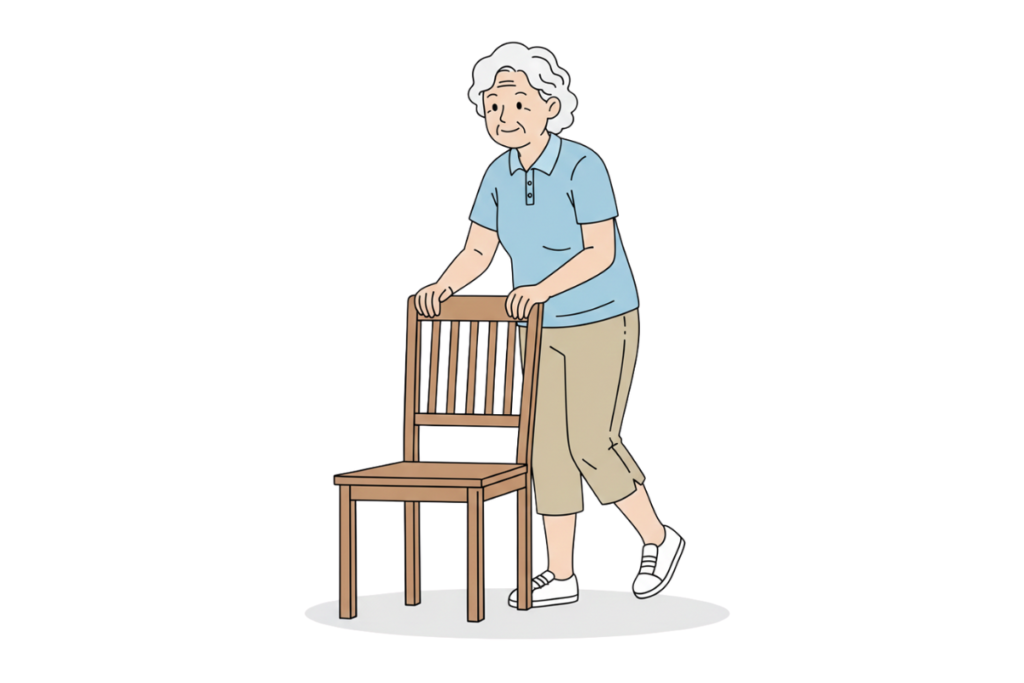
This exercise may look simple, but it’s very effective for improving your balance and coordination.
Step-by-step:
- Stand behind a chair, resting your hands on the back for support.
- Keep your left foot planted firmly on the ground.
- Slowly tap your right toe out in front of you, then return it to the starting position.
- Tap your right toe out to the side, then return.
- Tap your right toe behind you, then return.
- Repeat this sequence 5 times with your right foot.
- Switch and do 5 repetitions with your left foot.
Why it helps: This exercise improves your ability to shift weight safely and strengthens the muscles that stabilize your knees in different directions.
Tip: Move slowly and deliberately. This isn’t a race. The slower you go, the more you challenge your balance.
When to Progress and When to Pull Back
As you get stronger, you may want to move ahead quickly. It’s good to be enthusiastic, but take your time. Here’s how to know when you’re ready to do more:
- You can complete all repetitions with good form and no pain.
- The exercises feel noticeably easier than when you started.
- You feel steady and confident throughout the movements.
If you notice more knee pain, swelling, or the exercises become harder, it’s time to slow down. Rest for a day or two, and consider talking to a physical therapist or your doctor.
Final Thoughts
Dealing with knee pain and balance problems isn’t easy, but you don’t have to live with them forever. The simple exercises in this guide can help you feel steadier, stronger, and more confident in your daily life.
You don’t have to do these exercises perfectly. Just getting started is what matters. Even five minutes a few times a week can make a real difference. Grab a chair, choose one or two exercises that feel right for you, and give them a try.
Your knees and your future self will thank you. You can do this!