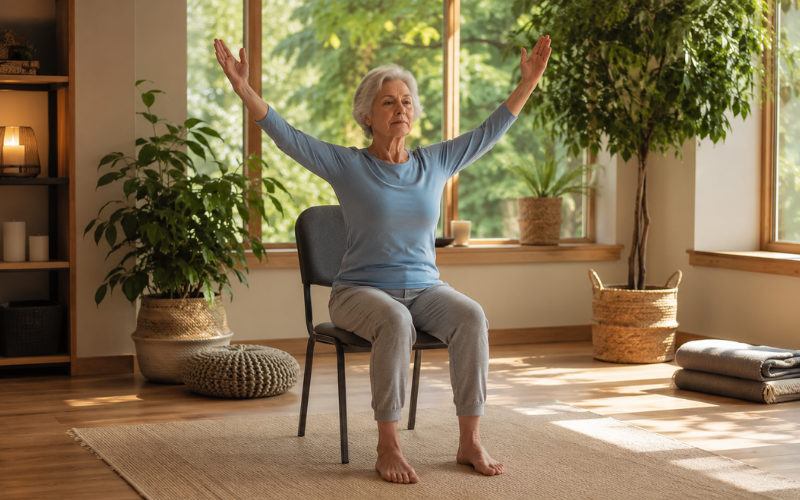
Life doesn’t slow down just because we get older. With doctor appointments to remember, confusing TV remotes, and noisy neighbors, things can feel overwhelming. That’s when visual breathing exercises for anxiety can really help. These exercises aren’t like gym-class lunges or tricky gymnastics. They’re more like a gentle hug for your mind, and you can do them while sitting in your favorite chair. You don’t need special clothes—if you’re in your pajamas, you’re already set.
A lot of people think yoga means twisting into tough poses or balancing in ways that are hard on the knees. If that doesn’t sound appealing, you’re in the right place. Chair yoga is a relaxed, seated version of yoga that focuses on gentle stretching and breathing. It’s perfect for seniors or anyone new to wellness, helping you feel better in your body without worrying about losing your balance.
In this guide, we’ll show how simple chair movements and visual breathing can make a difference in your day. We’ll explain why visualization helps the brain and share easy exercises you can try right away. You don’t need any experience or flexibility—if you can sit and breathe, you’re ready.
Why Your Brain Loves a Good “Mind Movie”
Have you noticed that when you worry, your mind can create vivid stories about things that haven’t even happened? You might think about a bill, and suddenly imagine the worst-case scenario. Since our brains are already good at picturing the bad, we’re going to use that skill in a positive way.
Visual breathing exercises help by giving your mind something calm to focus on. Instead of worrying about things like the stove or a clicking knee, you picture a peaceful image. When you match this image with your breath, you tell your body to relax. It’s a way to remind yourself that you’re safe and comfortable.
This is especially helpful for seniors. Even if our bodies slow down, our minds can still race. Visualization helps you feel steady and calm without needing to be physically active.
The Best Seat in the House: Setting the Stage
Before we start the exercises, let’s set up your space. Your favorite chair is all you need—no special equipment required. A sturdy kitchen or living room chair works well, as long as it doesn’t have wheels. We want you to feel steady and safe while you practice.
Sit near the front of your chair if possible to help keep your back straight. Place your feet flat on the floor, about hip-width apart. Picture a gentle string lifting the top of your head, just enough to help you sit tall and breathe easily. Rest your hands on your lap in a way that feels comfortable. Now you’re ready to begin.
Exercise 1: The Big Yellow Balloon
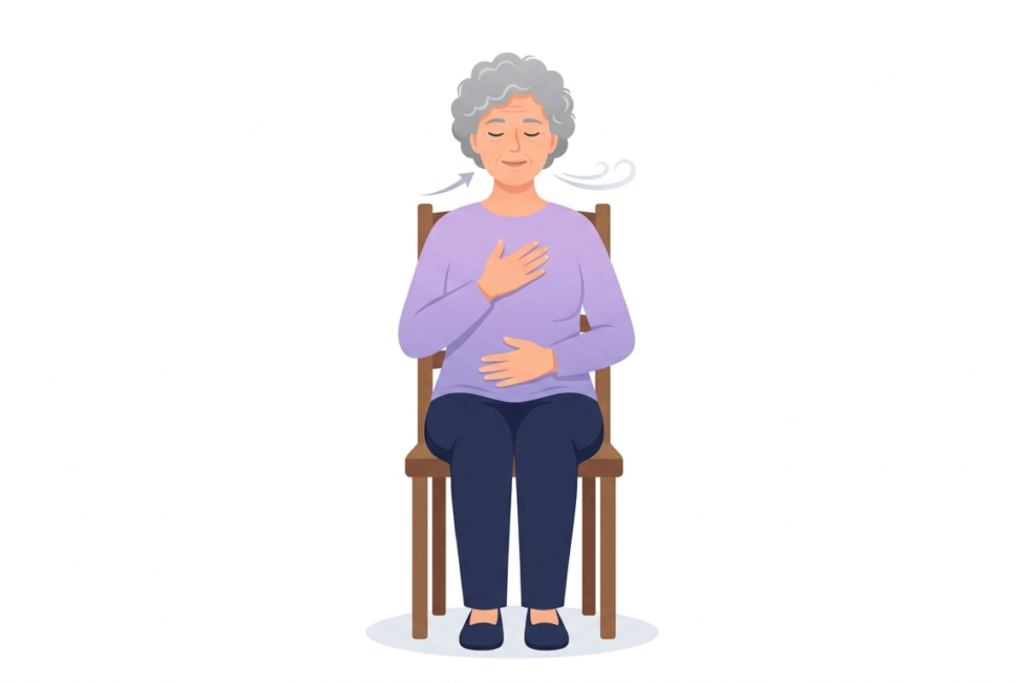
This is a great exercise for beginners. It’s simple, effective, and even a bit fun. It focuses on deep belly breathing, which quickly helps reduce anxiety.
- Close your eyes or simply soften your gaze toward the floor.
- Imagine there is a bright, cheerful yellow balloon sitting right inside your belly.
- As you take a slow breath in through your nose, imagine that balloon inflating. See it getting bigger and rounder, gently pushing your belly outward.
- As you breathe out slowly through your mouth, imagine the air leaving the balloon. See it slowly shrinking back down.
- Try to make your exhale a little longer than your inhale. If you breathe in for a count of four, try to breathe out for a count of six.
Why does this help? When we’re stressed, we often breathe quickly and shallowly from our chest. Imagining the balloon in your belly encourages deeper breathing, which helps you relax. And thinking about a big yellow balloon can also lift your mood.
Exercise 2: The Square Window of Calm
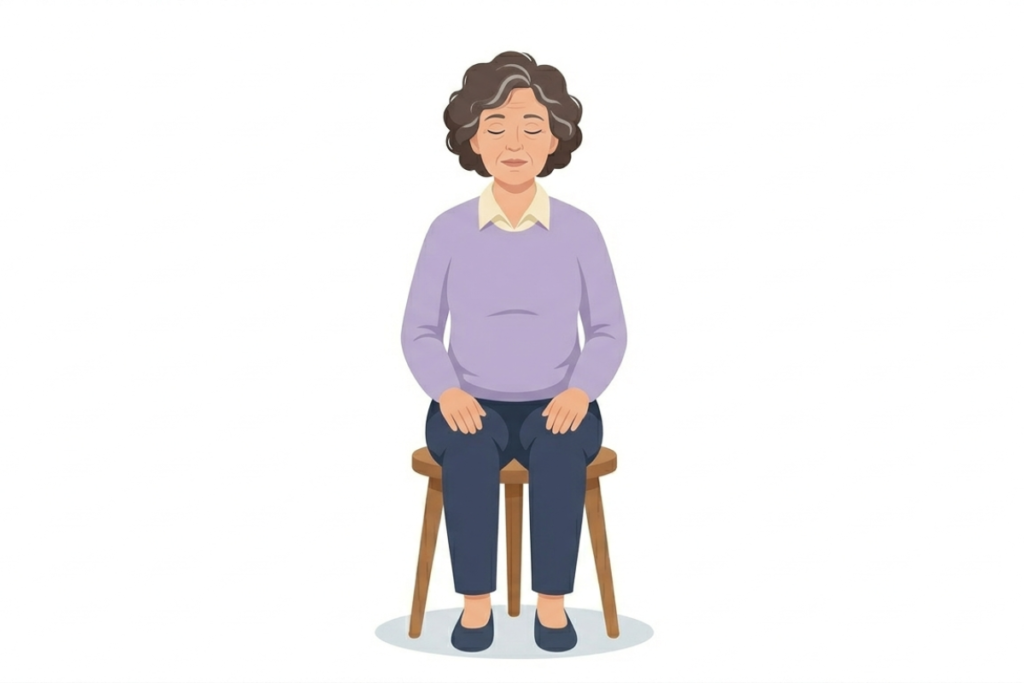
If your mind often jumps from thought to thought, this structured exercise can help. It’s called “Box Breathing,” but here we’ll imagine it as a window frame looking out onto a peaceful garden.
- Visualize a square window in front of you.
- Start at the bottom left corner. As you breathe in for four seconds, “trace” your way up to the top left corner with your mind’s eye.
- Hold that breath for four seconds as you trace across the top of the window to the right corner.
- Exhale for 4 seconds as you trace down to the bottom-right corner.
- Hold the empty space for four seconds as you trace back to the start at the bottom left.
This exercise creates a steady rhythm for your breathing. Holding your breath helps calm your heart rate, and picturing the square gives your mind something to focus on. If four seconds is too long, try two or three. There’s no right or wrong way to do it.
Exercise 3: The Ocean Wave Rise and Fall
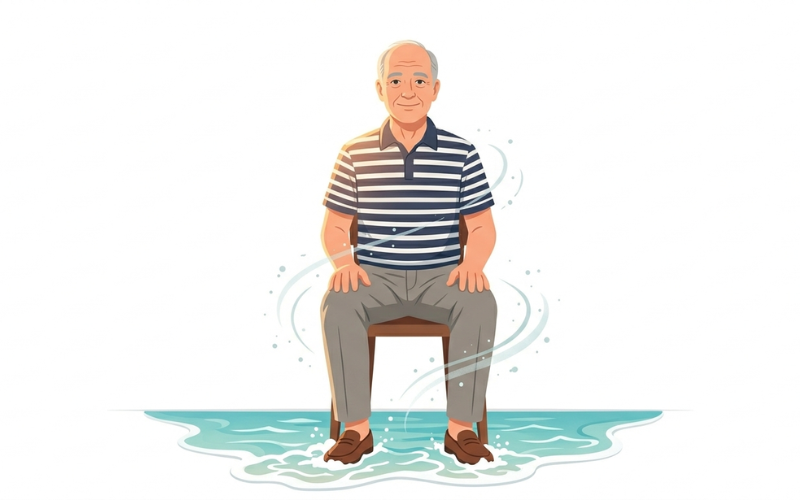
Nature can be very calming, but we can’t always visit the beach. This exercise helps you imagine being there and is great for grounding yourself when you feel scattered.
- Sit tall and rest your hands on your thighs.
- Imagine you are sitting at the edge of a very calm, turquoise ocean. The sun is warm on your shoulders.
- As you inhale, imagine a gentle wave rolling in over your feet and up toward your knees. See the white foam and feel the coolness.
- As you exhale, imagine the wave receding back into the ocean, pulling all your tension, worries, and “to-do” lists away with it.
- With every breath, the wave gets a little slower, and the water gets a little clearer.
This exercise uses rhythm to help you relax. Imagining the ocean reminds you that your anxiety is just a small wave, while your inner self stays calm and steady underneath.
Exercise 4: The Five-Finger Mountain Climb
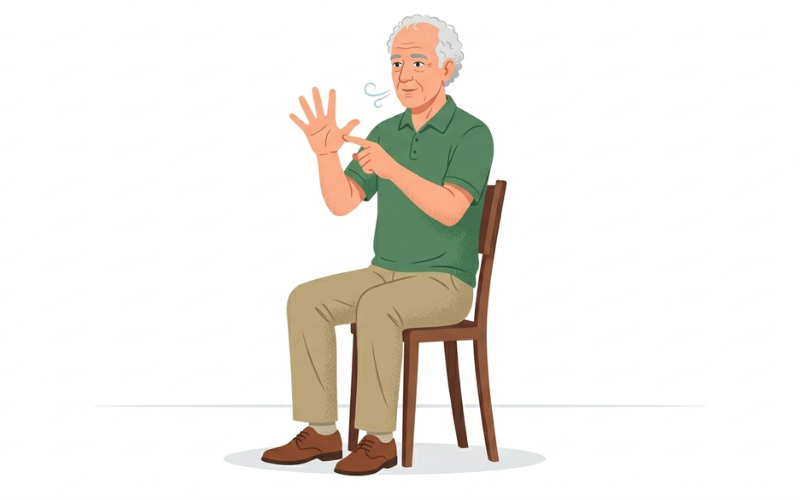
Sometimes having something to touch helps us focus. This exercise is great for beginners because it uses your hand as a guide.
- Hold one hand out in front of you, fingers spread wide like a star.
- With the pointer finger of your other hand, start at the base of your thumb on the outside.
- As you breathe in, slide your finger up to the top of your thumb. Imagine you are climbing a mountain.
- As you breathe out, slide your finger down the other side of the thumb.
- Breathe in as you climb up the index finger.
- Breathe out as you slide down the index finger.
- Continue this for all five fingers until you reach the outside of your pinky.
When you finish with your pinky, you’ll have taken five deep, focused breaths. This is a simple way to calm yourself anywhere, whether you’re waiting or on a long phone call.
Consistency Over Perfection: The Golden Rule
You don’t have to do these visual relaxation breathing techniques perfectly to benefit from them. Some days, your visualizations might not be clear or strong, and that’s completely fine.
The goal isn’t to clear your mind completely. It’s to notice when your thoughts wander and gently bring your focus back. If you get distracted, just acknowledge it and return to the exercise.
Try to do one of these exercises each day, perhaps while your coffee brews or before bed. Even five minutes of visual breathing is helpful. Over time, these small moments of calm will add up and help your mind relax more easily.
Finding Your Grounded Self
Being grounded means feeling steady and present, not lost in worries. For seniors, staying grounded supports independence and confidence. When we feel calm, we move more carefully, think more clearly, and enjoy daily moments more.
These visual breathing exercises are simple tools you can use anytime you feel overwhelmed or anxious. You don’t need special equipment or flexibility, and you can always be yourself while practicing them.
Final Thoughts
You’ve already done something important by learning something new today. Try the “Big Yellow Balloon” exercise now before you finish reading—just one breath in and one breath out.
Remember, you’re doing great. Taking care of your mental well-being is a wonderful gift to yourself. Start small, stay comfortable, and keep breathing. You can do this, and your chair is always there to support you. Here’s to a calmer, more grounded you, one step at a time.
