

Breathing might seem simple, but many of us forget how to do it deeply as we age. Instead of taking full, satisfying breaths, we often settle for shallow ones. Practicing deep breathing exercises for seniors is an easy, affordable way to improve your health—no special clothes or leaving your chair required.
If your joints creak in the morning or you get tired just thinking about stairs, you are not alone. This guide is designed for you. We will focus on chair yoga and easy breathing exercises that do not require flexibility, just relaxation. Think of it as a gentle tune-up to help your body get the oxygen it needs.
Why Breathing Matters More Than You Think
As we get older, our lung capacity can decrease, our rib cages may become stiffer, and our diaphragm might not work as well. This can make us feel tired, stressed, or unfocused. Shallow breathing keeps our bodies in a mild state of stress, which can slow us down.
Practicing certain breathing techniques signals your nervous system to relax. This can lower your heart rate, help balance your blood pressure, and support digestion. It is also a great way to feel more in control. While you cannot control everything, you can control your breath.
1. The Belly Breath: The Gold Standard of Relaxation
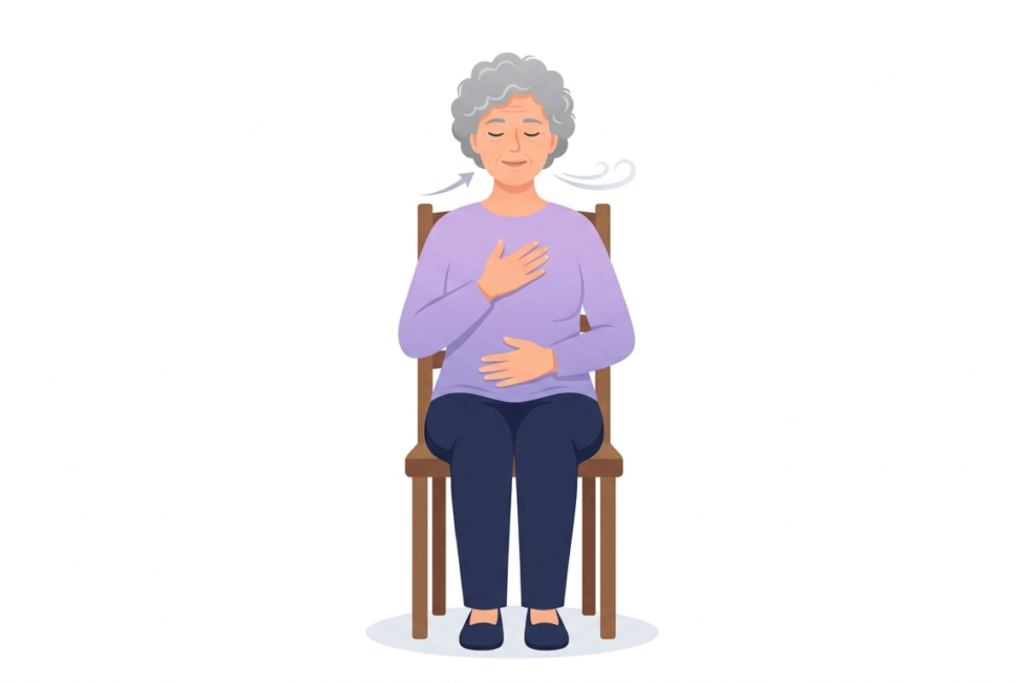
This is the basic breathing exercise. Many people breathe from their chest, which is shallow. Belly breathing, or diaphragmatic breathing, is more effective.
How to do it:
- Place one hand on your chest and the other on your belly, right over your navel.
- Close your eyes if you feel comfortable, or just soften your gaze on something boring like a lamp.
- Inhale slowly through your nose. As you breathe in, try to make the hand on your belly move outward while the hand on your chest stays relatively still.
- As you inhale, picture your belly expanding like a balloon.
- Exhale slowly through your mouth, making a soft “whoosh” sound. Feel your belly sink back in.
- Repeat this for five cycles.
If this feels awkward at first, that is normal. If your belly does not move much, those muscles just need practice. Keep trying—everyone can improve with time.
2. The 4-7-8 Technique: The Natural Tranquilizer
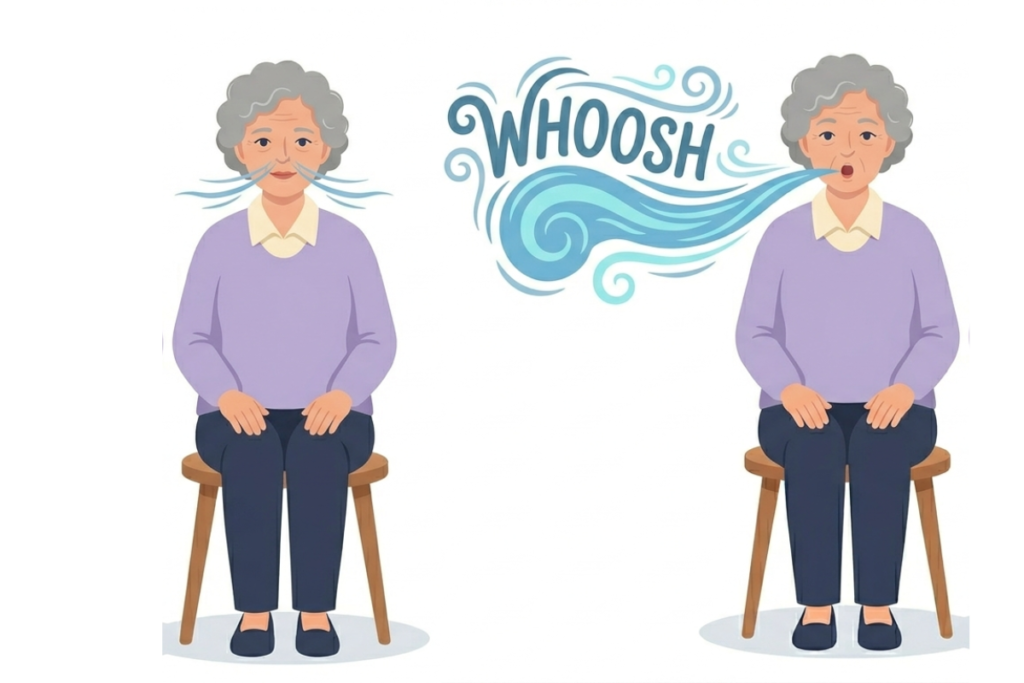
If you have trouble relaxing at night or calming your mind, this exercise can help. It is very soothing for your nervous system.
How to do it:
- Get into your comfortable seated position.
- Empty your lungs of air.
- Breathe in quietly through your nose for a count of 4.
- Hold your breath for a count of 7. If that feels too long, just hold it as long as you comfortably can.
- Exhale forcefully through your mouth, pursing your lips, for a count of 8. It should make a “whoosh” sound.
- This completes one breath. Repeat the cycle four times.
The important part is the long exhale. It signals to your brain that you are safe and can relax.
3. The Humming Bee Breath (Bhramari)
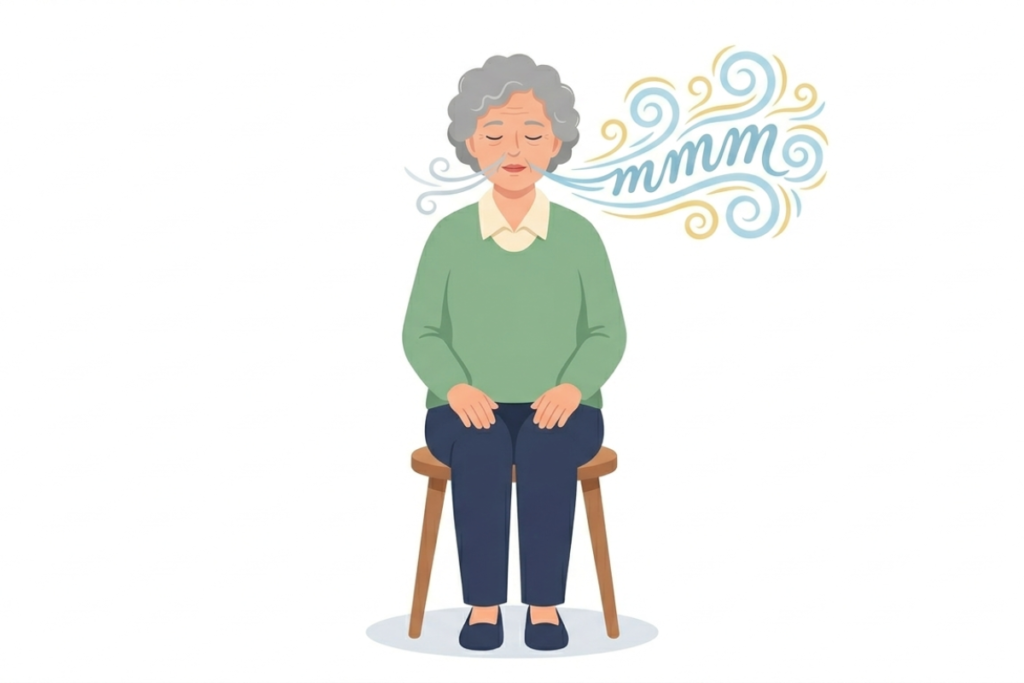
This exercise can feel a bit silly, but it is enjoyable and helpful when your mind feels busy or you have a headache. The humming vibration can be very soothing.
How to do it:
- Sit up tall and relax your jaw.
- Place your index fingers on the cartilage of your ears (the little bump between your ear and your cheek).
- Take a deep breath in through your nose.
- As you exhale, keep your mouth closed and make a steady, low-pitched humming sound like a bee.
- While you hum, gently press in and out on your ear cartilage.
- Continue the hum throughout your exhale.
Repeat this 3 to 5 times. You may feel a gentle vibration in your chest and head, which is normal.
4. Box Breathing: For Focus and Energy
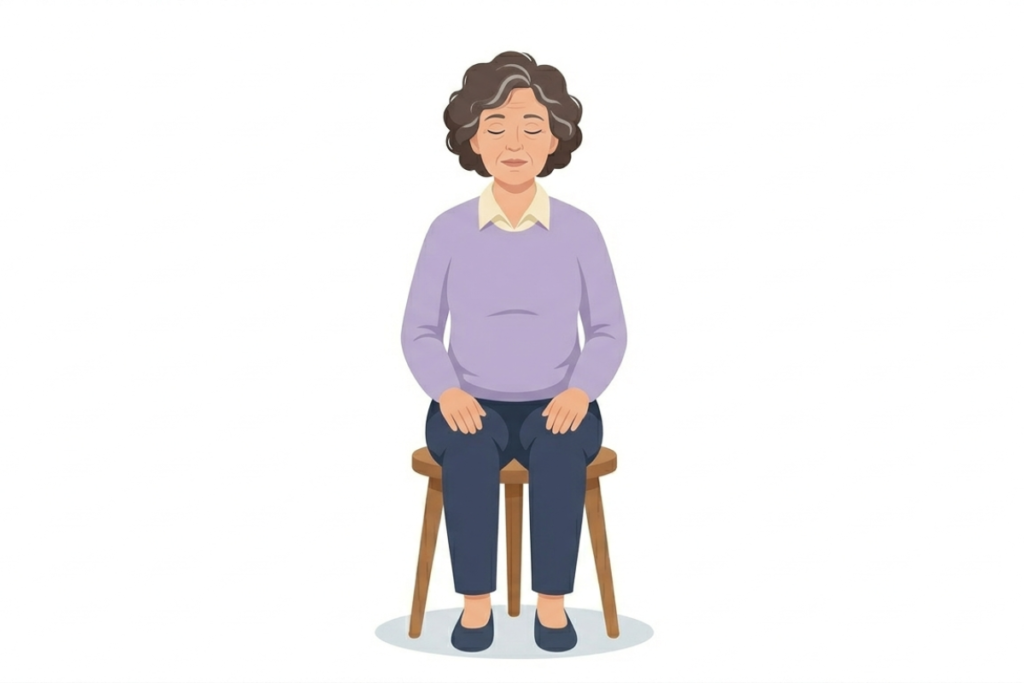
Box breathing is a helpful technique for clearing your mind and boosting your energy. It is called box breathing because it uses four equal steps.
How to do it:
- Inhale through your nose for a count of 4.
- Hold that breath in for a count of 4.
- Exhale through your mouth for a count of 4.
- Hold your lungs empty for a count of 4.
- Repeat the “box” four times.
This technique is rhythmic and helps balance your energy. If you feel tired in the afternoon, try this exercise instead of reaching for more coffee.
5. Seated Cat-Cow: Adding a Little Movement
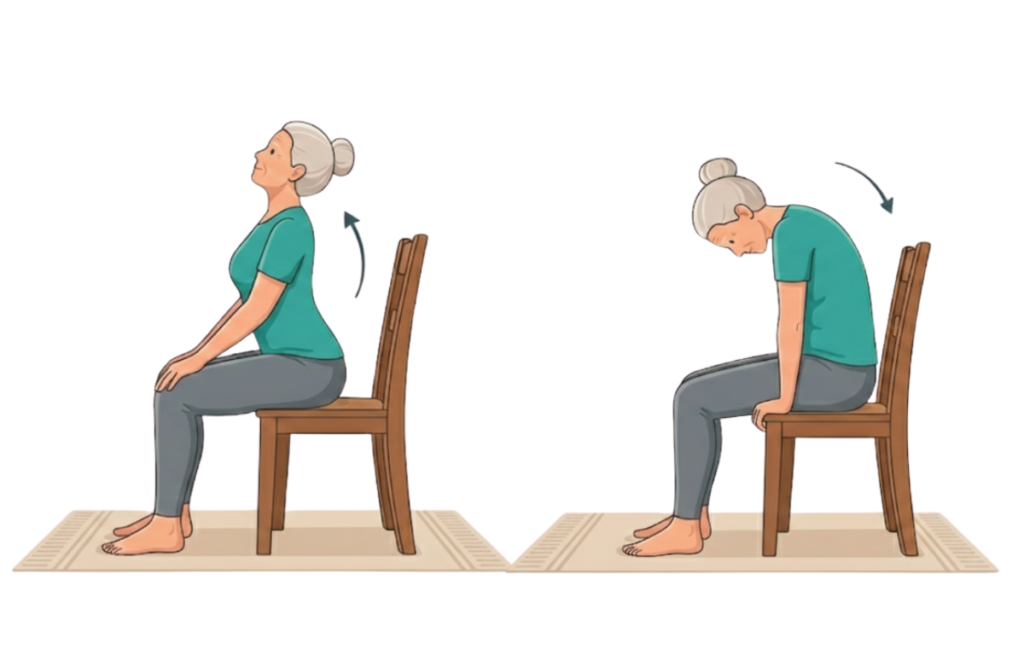
Once you are comfortable with the deep breathing exercises for older adults, you can add a small movement. This classic yoga pose, adapted for a chair, helps loosen your spine and open your chest for deeper breaths.
How to do it:
- Place your hands on your knees or thighs.
- The Cow: As you inhale, lift your chest and look slightly upward. Allow your back to arch gently and pull your shoulders back.
- The Cat: As you exhale, round your spine like a grumpy Halloween cat. Tuck your chin toward your chest and pull your belly button in.
- Move back and forth between these two positions, following the rhythm of your breath.
- Do this for 5 to 10 breaths.
This should feel like a gentle stretch, not a workout. If you feel any discomfort, make the movement smaller.
6. The Lion’s Breath: Let It All Out
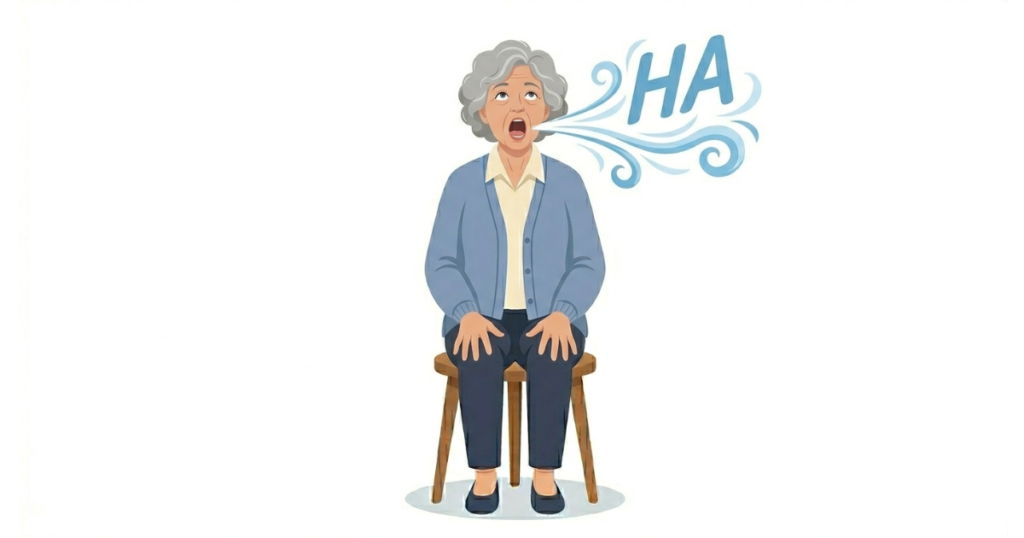
Sometimes, you need to release tension. Lion’s Breath is a great way to reset and let go of stress.
How to do it:
- Sit up straight and place your hands on your knees with your fingers spread wide.
- Inhale deeply through your nose.
- Open your mouth wide, stick out your tongue as far as it will go toward your chin, and exhale forcefully with a “HA” sound.
- Look up toward the ceiling as you exhale.
- Do this 2 or 3 times.
You may feel a bit silly doing this, but it is a good way to stretch the muscles in your face and throat.
Consistency Over Perfection
Remember, you do not need to be perfect at this. Some days your breathing will feel easy, and other days it may feel more difficult. That is normal.
The key is to be consistent. Try to do one or two of these exercises each day. You can fit them in while making coffee or during TV breaks. Even a few minutes of focused breathing can make a big difference.
If you miss a day, do not worry. Just start again the next day. Your lungs will always be ready for you.
A Note on Safety
Easy breathing techniques for older adults are usually very safe, but always listen to your body. If you feel dizzy or lightheaded, stop and breathe normally. Take a break, drink some water, and try again later more gently.
Final Thoughts
You have finished the article, so you have already started your journey to better health. Take a moment now to sit up straight, close your eyes, and take a slow, deep breath into your belly. Hold it briefly, then exhale with a sigh. You are already practicing.
Deep breathing is something you can do anytime, anywhere. It is a simple way to find calm, reduce stress, and feel more present in your daily life. Keep practicing and remember, you are doing well.
