

Life can get more complicated as we age. With doctor’s appointments, spending time with grandkids, and even dealing with a stubborn TV remote, stress often finds its way in. The good news is that breathing exercises for relieving stress are one of the simplest and most effective ways for seniors to relieve stress, and you can do them right from your favorite chair.
No gym membership, special equipment, or complicated poses that require the flexibility of a pretzel. Just you, your breath, and a few quiet minutes.
Whether you are new to breathing exercises or just want a gentle refresher, this guide is for you. We’ll keep things simple, light, and easy to follow, even on days when the word “exercise” feels overwhelming.
Why Breathing Exercises Are Especially Great for Seniors
You might be thinking, “It’s just breathing. Don’t I already do that?” Yes, you do, but intentional, controlled breathing is very different from the automatic breathing your body does without thinking.
Here’s why it matters so much as we age:
- Stress piles up differently. Seniors often face unique stressors like health concerns, loss of loved ones, or changes in independence. The nervous system needs extra support.
- The breath is always accessible. You don’t need to drive anywhere or wait for a class to start.
- It’s gentle on the body. No impact, no strain, no soreness the next morning.
- It really works. Deep breathing activates the parasympathetic nervous system, the “rest and digest” mode that slows your heart rate and relaxes your muscles.
Think of it as a free, portable stress reset button. And who doesn’t want one of those?
Getting Comfortable Before You Begin
Before we start the exercises, let’s make sure you’re comfortable. You don’t need anything fancy, just:
- A sturdy chair with a back (your couch works too)
- Comfortable, loose clothing
- A quiet spot, even if just for five minutes
- Maybe a glass of water nearby
Sit up tall but relaxed, with both feet flat on the floor. Rest your hands gently on your thighs or in your lap. Close your eyes if that feels comfortable, or just soften your gaze downward. That’s it. You’re already doing great.
5 Simple Chair Yoga Breathing Exercises to Try Today
1. Natural Breath Awareness (The “Hello, Breath” Exercise)
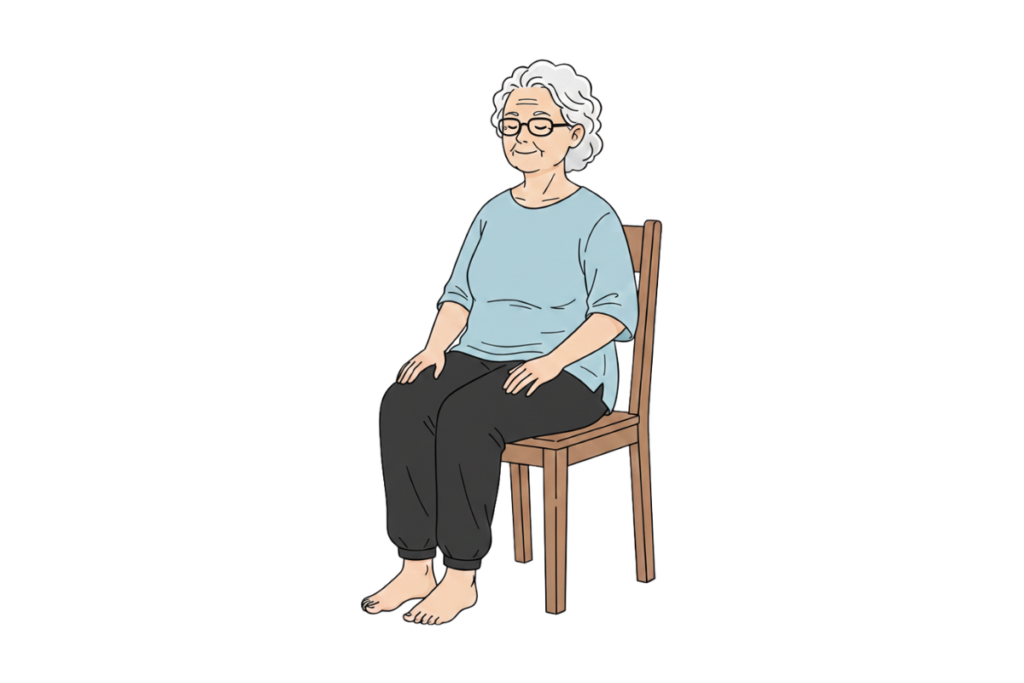
This exercise is perfect for beginners because you don’t have to do anything except notice your breath.
How to do it:
- Sit comfortably and close your eyes.
- Without changing anything, simply notice your breath coming in and going out.
- Feel your chest or belly gently rise and fall.
- Do this for 1 to 2 minutes.
That’s the whole exercise! It might sound too simple, but this practice helps your brain slow down and check in. Think of it as the warm-up before doing other simple breathing exercises for stress.
2. Belly Breathing (Diaphragmatic Breathing)
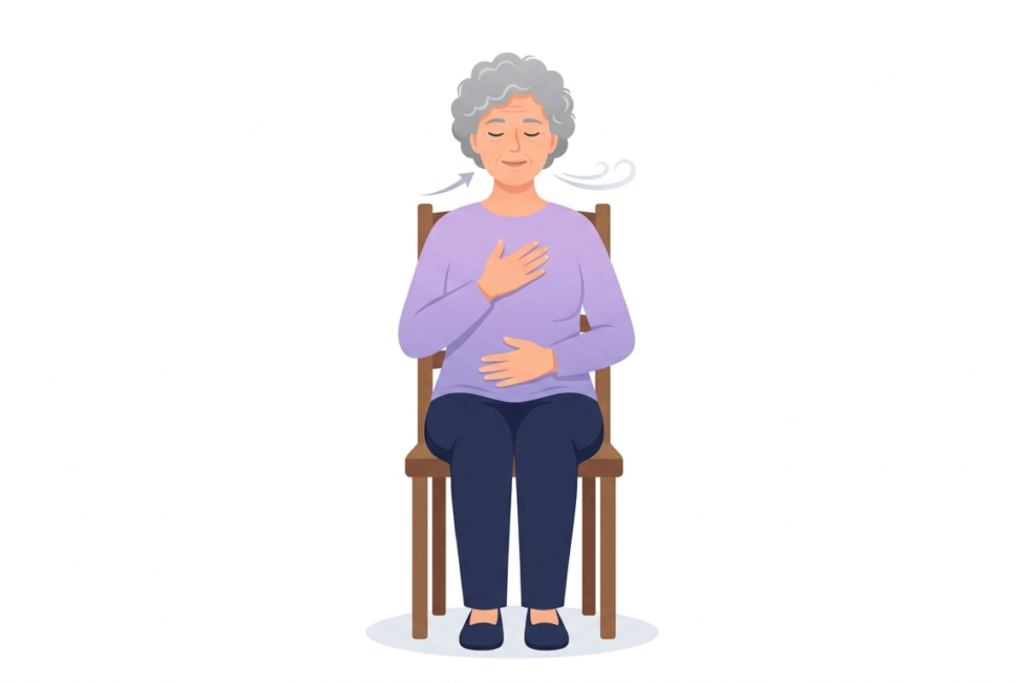
This is the foundation of most breathing practices and one of the best ways to quickly calm stress. Many people breathe shallowly into their chests without noticing, but this exercise helps you bring your breath down into your belly.
How to do it:
- Place one hand on your chest and one on your belly.
- Inhale slowly through your nose, letting your belly push outward (like a balloon filling up). Your chest should stay relatively still.
- Exhale slowly through your mouth, letting your belly fall.
- Repeat for 5 to 10 slow breaths.
Tip: If your belly doesn’t move at first, don’t worry. It takes a little practice. Just keep trying, and it will become easier.
3. The 4-7-8 Breath (Nature’s Tranquilizer)
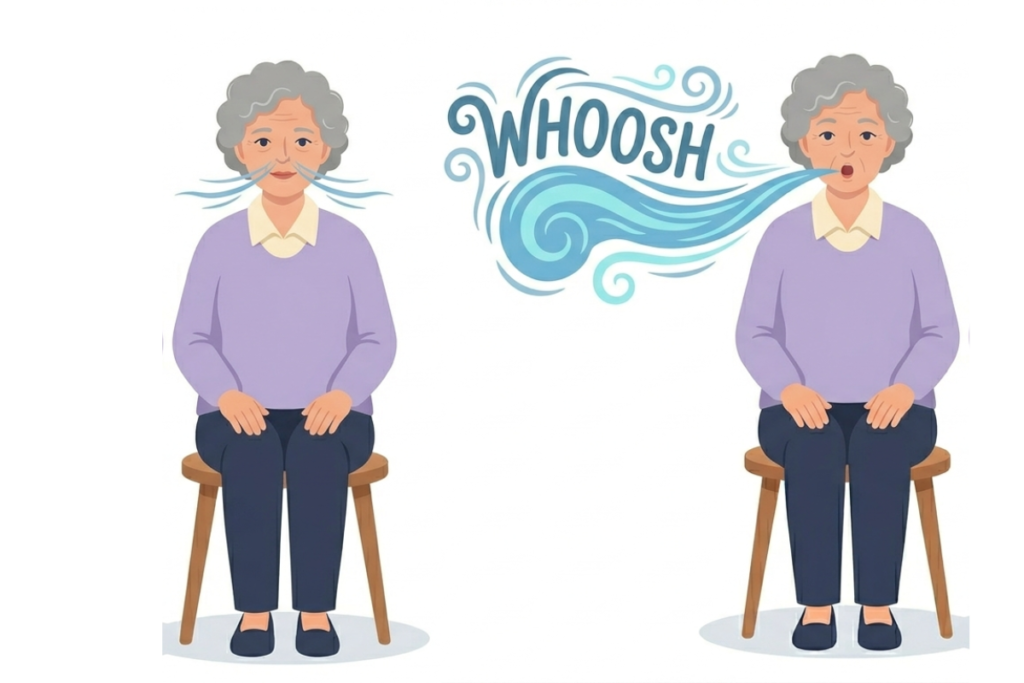
This technique is popular for a reason. The rhythmic counting gives your mind something to focus on, which is helpful if your thoughts tend to wander (no judgment, everyone experiences this sometimes).
How to do it:
- Inhale quietly through your nose for a count of 4.
- Hold your breath for a count of 7.
- Exhale completely through your mouth for a count of 8, making a “whoosh” sound.
- That’s one cycle. Repeat 3 to 4 times.
Important note: If holding your breath for 7 counts feels uncomfortable, simply shorten the counts. Try 3-5-6 instead. There’s no need to push yourself. Adjust as needed and listen to your body.
4. Box Breathing (The “Four Corners” Technique)
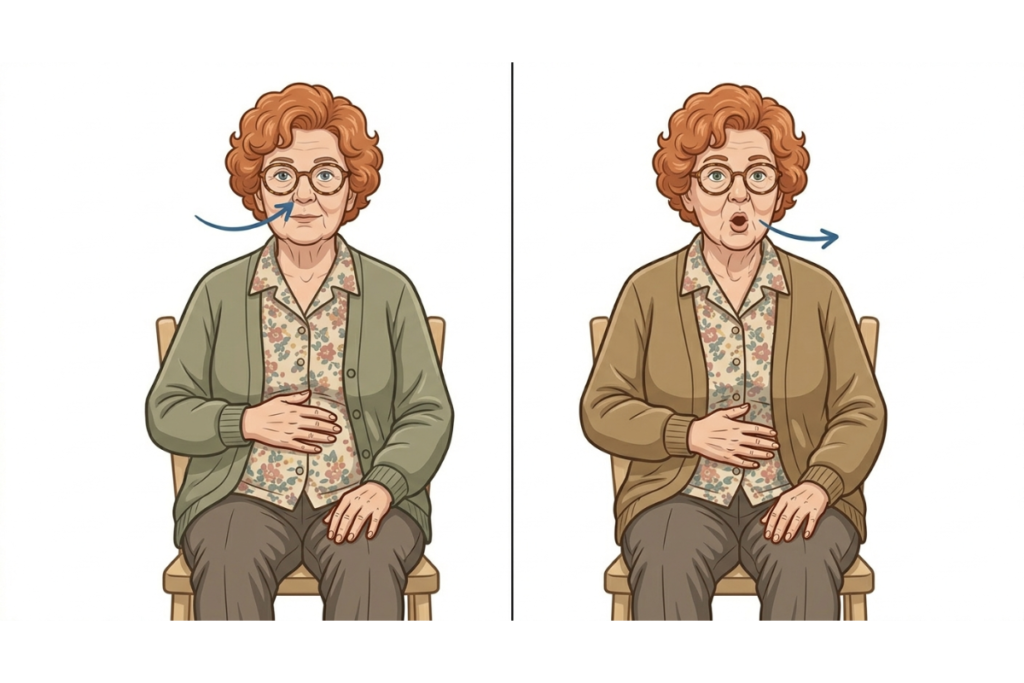
Box breathing is simple and very effective for bringing calm and mental clarity. It is called box breathing because you can imagine the four equal sides of a box as you practice.
How to do it:
- Inhale through your nose for 4 counts.
- Hold at the top for 4 counts.
- Exhale through your mouth for 4 counts.
- Hold at the bottom for 4 counts.
- Repeat 4 to 6 times.
If you like visual cues, imagine drawing a square in your mind as you breathe through each side. This can help your mind stay calm while your body relaxes.
5. Humming Breath (Bhramari)
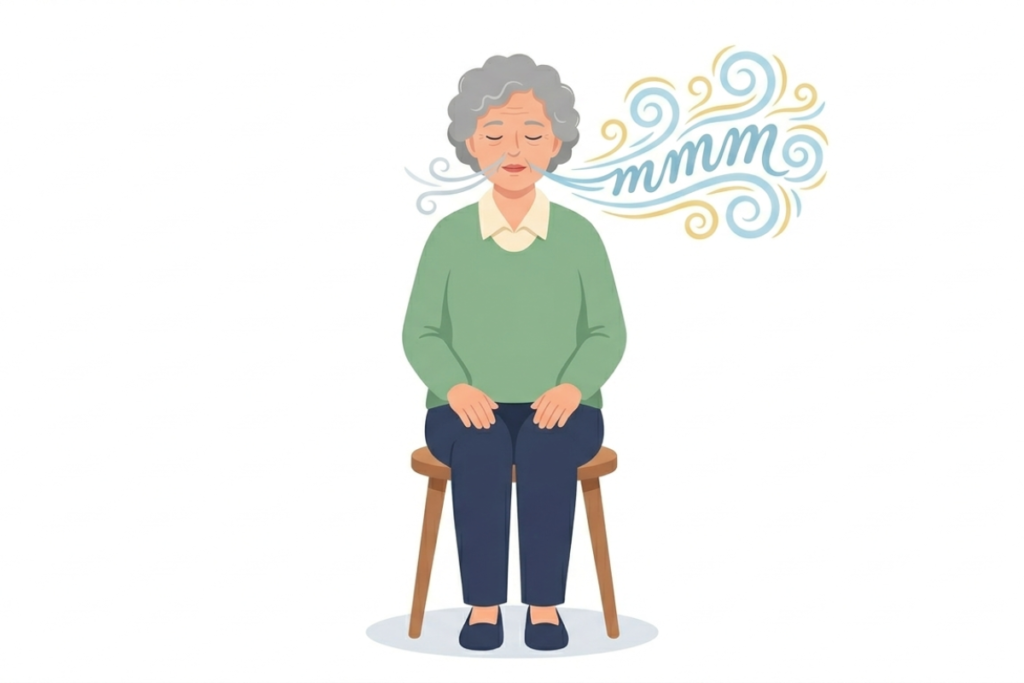
This exercise might feel a little silly at first, but that’s part of what makes it enjoyable. Humming creates gentle vibrations throughout your body, calming your nervous system. It’s also hard to feel stressed while you are humming. Both science and common sense support this.
How to do it:
- Close your eyes and take a gentle inhale through your nose.
- On the exhale, make a soft humming sound (like a quiet “mmm”) until your breath runs out.
- Keep your lips gently closed, letting the vibration fill your head and chest.
- Repeat 5 to 7 times.
You can also cover your ears lightly with your fingers to make the effect stronger. Go ahead and try it now. You might already notice you feel calmer.
Tips for Sticking With It (Without Making It a Chore)
The hardest part is not the breathing itself, but remembering to do it regularly. Here are a few gentle reminders to help:
- Start tiny. Even two minutes a day is a real win.
- Attach it to a habit you already have, like your morning coffee or TV time.
- Don’t aim for perfection. Your mind will wander. Your breath will go uneven. That’s completely normal and not a failure.
- Notice how you feel afterward. Even a small change in your mood or tension is a reward, and these small changes add up over time.
Being consistent is more important than being perfect. Five minutes of practice today, even if it’s not perfect, are better than waiting for the perfect session that never happens.
Final Thoughts
If there’s one thing to take away from all of this, it’s that you don’t need to overhaul your entire lifestyle to feel better. You just need to start somewhere, even if it’s small.
Choose any of these daily breathing exercises to reduce stress, whichever feels easiest to start with. Maybe you prefer Natural Breath Awareness because it requires nothing extra, or maybe you like the idea of Humming Breath to help ease your stress. Try it for a few days and see how you feel.
Your breath has been with you your whole life. Now it’s time to put it to work for you. You’ve totally got this.
