
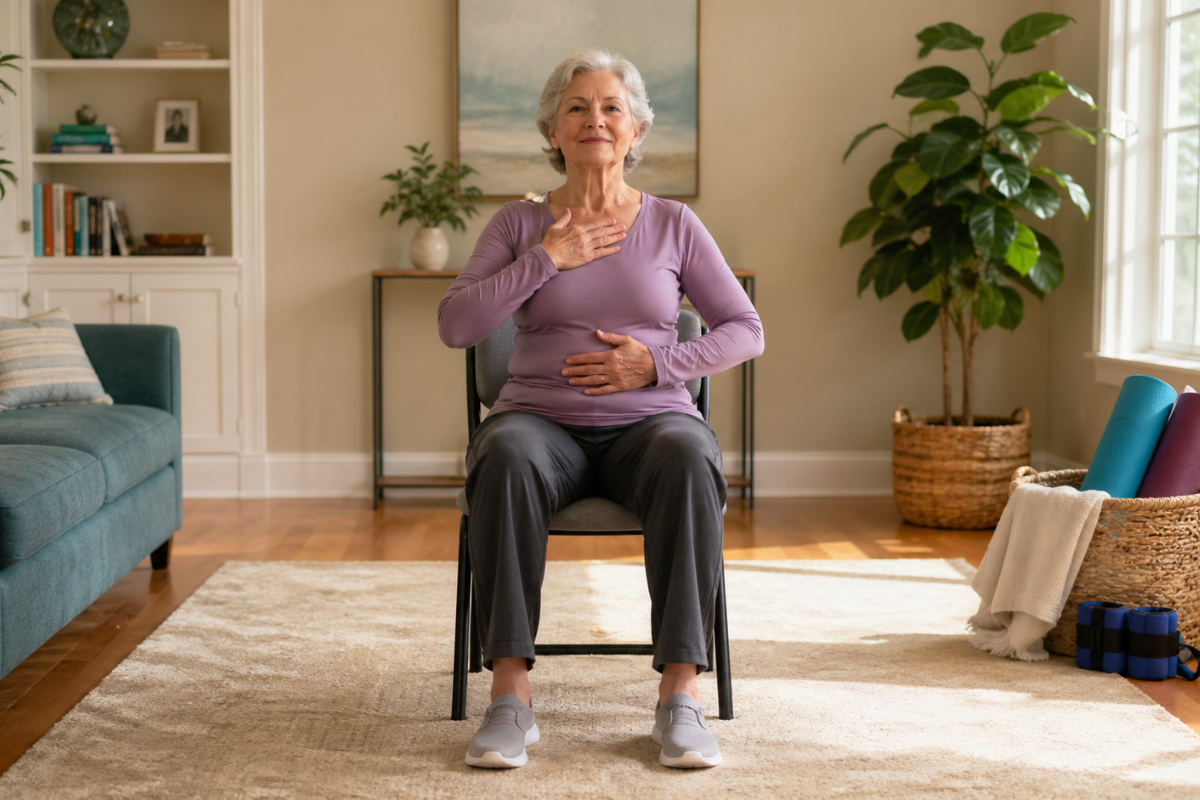
If you have ever felt your heart racing while just sitting on the sofa, you are not alone. Life moves quickly, and sometimes our nerves get the best of us when we would rather be enjoying a quiet cup of tea. If you are looking for breathing exercises for anxiety attack relief, you are in the right place. Imagine this guide as a friendly conversation with a neighbor who knows a few ways to stay calm when things get overwhelming.
Getting older can be like owning a classic car. We have character and some unique parts, but sometimes things don’t work quite right. Anxiety can feel like a “check engine” light coming on, even when everything seems fine.
It is uncomfortable and can be a little scary. The good news is you have a “reset button” with you all the time: your breath. You do not need special clothes, a gym, or flexibility to find some peace. All you need is a sturdy chair and a few minutes.
Why Breathing Matters (The Science Bit, Simplified)
When we feel anxious, our bodies switch into “fight or flight” mode. Long ago, this helped us escape danger. Today, we might feel the same way just because we can’t find our glasses or the news is stressful. Your brain reacts as if there is real danger, making your heart beat faster and your breathing shallow.
When you slow your breathing on purpose, you signal your brain to relax. There is no danger, just you and your evening crossword. This simple change helps lower your heart rate and calms your nervous system. It is an easy, natural way to feel better, even if it feels a little odd at first.
Setting the Stage: Your Throne of Calm
Before we start the exercises, let’s talk about your space. For chair yoga, your studio is simply the chair you are sitting in now. But not every chair works the same way.
- Avoid the “Sinker”: That deep, plush recliner is great for naps, but for breathing techniques to quickly reduce anxiety, it can make you slouch. Slouching squishes your lungs, and we want to give them plenty of room to dance.
- Safety First: If your chair has wheels, make sure they are locked, or place the chair against a wall for safety. This way, you can focus on relaxing without worrying about moving around.
- Feet on the Floor: Sit so both feet are flat on the floor. If your feet do not reach, place sturdy books or a firm pillow under them. This helps you feel steady and secure, which can make you feel calmer.
Exercise 1: The Balloon Belly (Diaphragmatic Breathing)
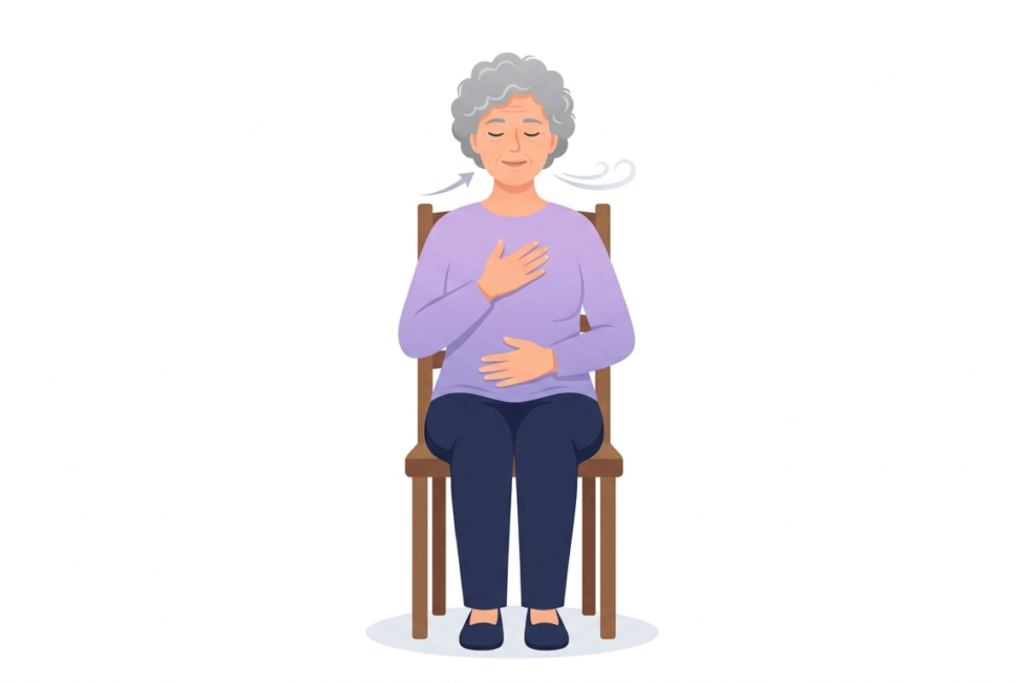
This is one of the best ways to calm your nerves. When we are stressed, we often breathe high in our chests, which keeps us feeling tense. Instead, we want to breathe deeply into our bellies.
- Sit up as tall as you can without feeling stiff. Imagine a tiny string pulling the top of your head toward the ceiling.
- Place one hand on your chest and the other hand on your belly, right over your navel.
- Breathe in slowly through your nose. As you do, try to make the hand on your belly move outward. Imagine you have a colorful balloon in your stomach and you are filling it up with air.
- The hand on your chest should stay relatively still. If it is moving a lot, you are still breathing “high.”
- Exhale slowly through your mouth, like you are blowing out a single birthday candle. Feel your belly sink back in.
- Repeat this five times.
If your belly does not move much at first, do not worry. It may take some practice. Let your belly relax and expand as you breathe.
Exercise 2: The “Box” Breath
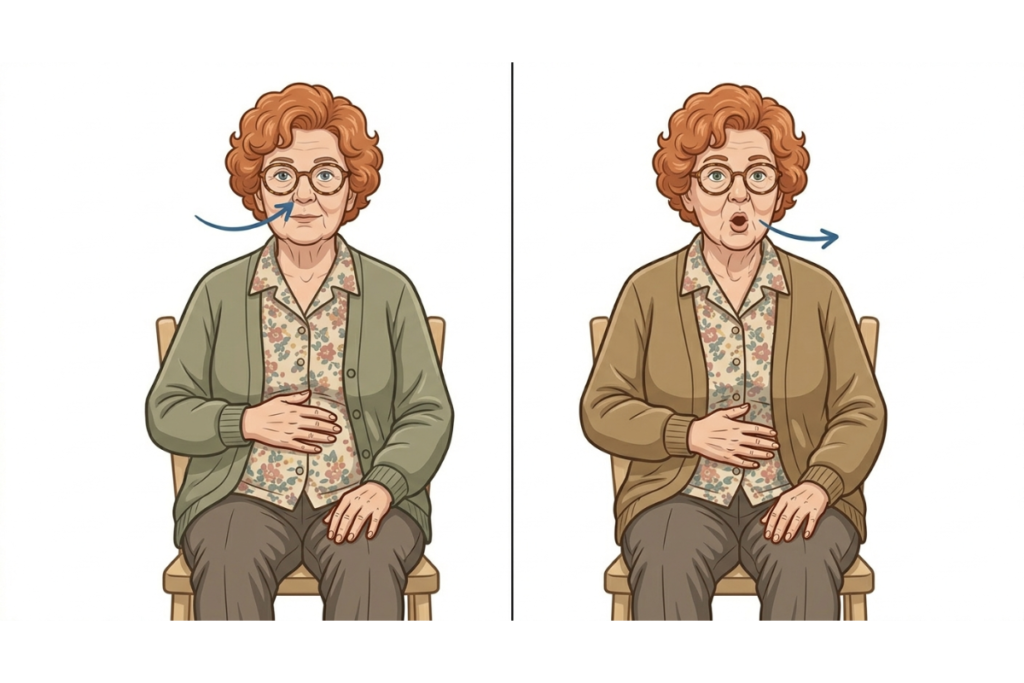
This exercise is well known and even used by Navy SEALs. It is called “Box Breathing” because it has four equal parts. It can help when you feel overwhelmed.
- Inhale through your nose for a count of four. (1, 2, 3, 4)
- Hold that breath gently in your lungs for a count of four. (1, 2, 3, 4)
- Exhale slowly through your mouth for a count of four. (1, 2, 3, 4)
- Wait with your lungs empty for a count of four. (1, 2, 3, 4)
If counting to four feels too long or makes you anxious, try counting to two or three instead. The goal is to find a steady rhythm that feels comfortable. The pause after inhaling is what helps your body reset.
Exercise 3: The Cooling Straw Breath
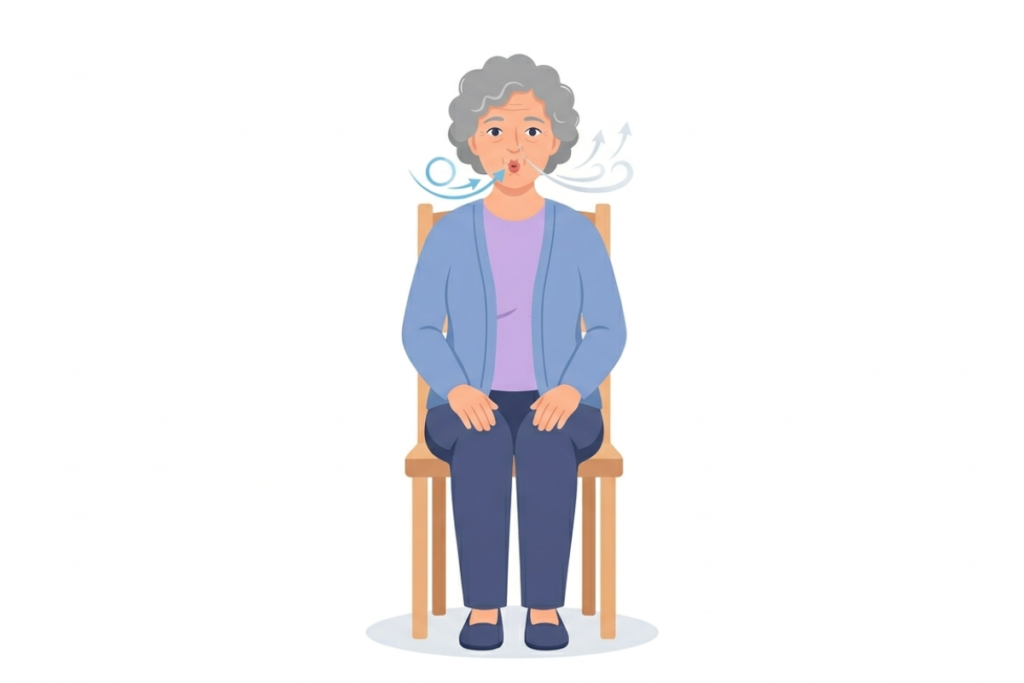
Sometimes anxiety can make you feel warm or uncomfortable. This exercise helps cool you down and is great for moments when you feel stressed.
- Sit comfortably and relax your shoulders. Let them drop down away from your ears.
- Pucker your lips as if you are about to sip through a very thin straw.
- Inhale slowly through the “straw” in your lips. You will feel a cool sensation on your tongue.
- Close your mouth and exhale gently through your nose.
- Pay attention to the cool feeling as you breathe in. This can help you feel refreshed and calm.
This exercise is easy to do in public because it looks like you are simply thinking or relaxing.
Exercise 4: The Hummingbird (Bhramari)
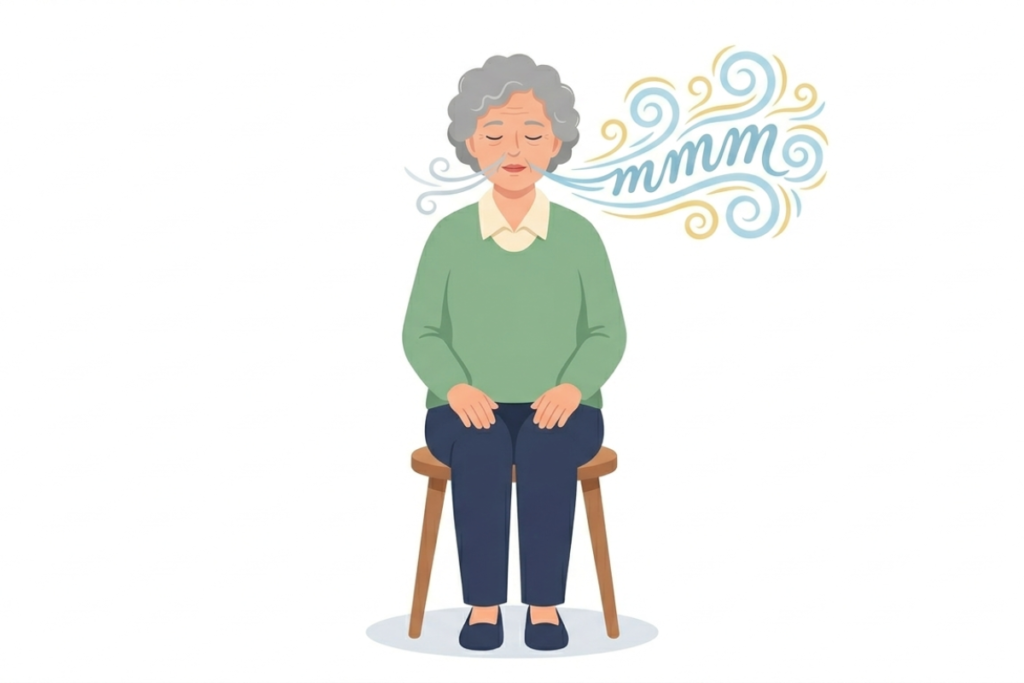
This exercise is a little different, but it is great for helping you relax. It also makes a humming sound, which can even make you smile.
- Take a deep breath in through your nose.
- As you exhale, keep your lips closed and make a steady “mmm” humming sound.
- Keep the hum going throughout your exhale.
- Feel the vibration in your lips, your teeth, and even your head.
- Do this three times.
The humming sound stimulates an important nerve in your body called the Vagus nerve, which helps you relax. If you have a cat, you are copying their purr. Cats are usually very calm, and this exercise can help you feel that way, too.
Adding a Little Movement: The Seated Heart Opener
Anxiety can make us curl inward and round our shoulders. To help with this, we can add a gentle movement to our breathing.
- While sitting tall, inhale and stretch your arms out to the sides as if you’re about to give someone a giant hug.
- Gently lift your chin a little and feel your chest open.
- As you exhale, bring your arms around and hug yourself, tucking your chin toward your chest.
- Inhale and open your arms wide, letting your belly expand.
- Exhale and hug yourself, gently squeezing the air out.
This reminds your body that it is safe to take up space and that you are allowed to breathe deeply.
Consistency Over Perfection
The most important thing is that you do not need to be perfect. If you lose count during “Box Breathing” or your “Balloon Belly” does not expand much, that is completely fine.
The goal is not to master every breath, but to be kinder to yourself. Anxiety pushes you to be perfect and worried, but breathing helps you stay present and relaxed.
Choose one exercise to try today. You can do it while waiting for coffee or during a commercial break. You do not have to wait for anxiety to practice. Practicing when you are calm makes it easier to remember what to do when you feel anxious.
Final Thoughts
You have finished this guide, and that is something to be proud of. You have learned a new way to support your well-being. You have many good years ahead, and now you have a helpful tool to calm anxiety with breathing exercises.
Before you continue with your day, try one “Balloon Breath” now. Take a deep breath in through your nose, let your belly expand, and then slowly breathe out through your mouth.
You did it. You took a moment to calm your nervous system. No matter your age, your body is strong and ready to help you feel better. Keep your chair steady, keep breathing, and remember you are doing great.
