

Getting older can feel a bit like owning a classic car. You have plenty of history and still turn heads, but sometimes things don’t work quite like they used to. Life can get overwhelming, whether you’re juggling doctor appointments or trying to figure out what “TikTok” means. If you’ve been feeling a little frazzled, here’s some good news: you don’t need to join a boot camp or climb a mountain to find some peace. All you need is a chair and your breath. Today, we’ll explore box breathing benefits, and I promise it’s easier than finding your glasses when they’re right on your head.
Box breathing might sound like something you do when packing boxes, but it’s actually a proven relaxation technique. It’s also called four-square breathing, and it’s used by everyone from athletes to Navy SEALs. You might wonder, “Why do I need this if I’m not jumping out of planes?” The same methods that help soldiers stay calm can help us stay relaxed when the grandkids are noisy, or the store is out of our favorite tea.
What Exactly is Box Breathing?
Box breathing is all about rhythm. Picture a square: breathe in for four seconds, hold for four seconds, breathe out for four seconds, and hold again for four seconds. This simple pattern tells your body to relax and helps calm your nerves.
As we get older, our “fight or flight” response can become more sensitive, almost like a smoke alarm that goes off too easily. Box breathing helps quiet that response. It can lower your heart rate and clear your mind, so you can focus on what matters, like enjoying a game of bridge or remembering why you walked into the kitchen.
Why Should You Care About Box Breathing Benefits?
You might wonder if this is just another wellness trend. Fortunately, the benefits of box breathing are real, especially for seniors. It can help your whole body feel better.
First, box breathing is great for your heart. Deep, steady breathing can help lower blood pressure and relax your blood vessels, which is good for your heart. Second, it helps clear your mind. If you ever feel distracted or overwhelmed, this practice can help you focus.
Third, it helps your lungs work better. As we get older, we often breathe more shallowly, using only the top of our lungs. Box breathing encourages you to use your full lungs, bringing more oxygen to your brain and muscles. It’s free, needs no special equipment, and you can do it in your pajamas. That’s a win-win.
How to Do Your First Box Breath
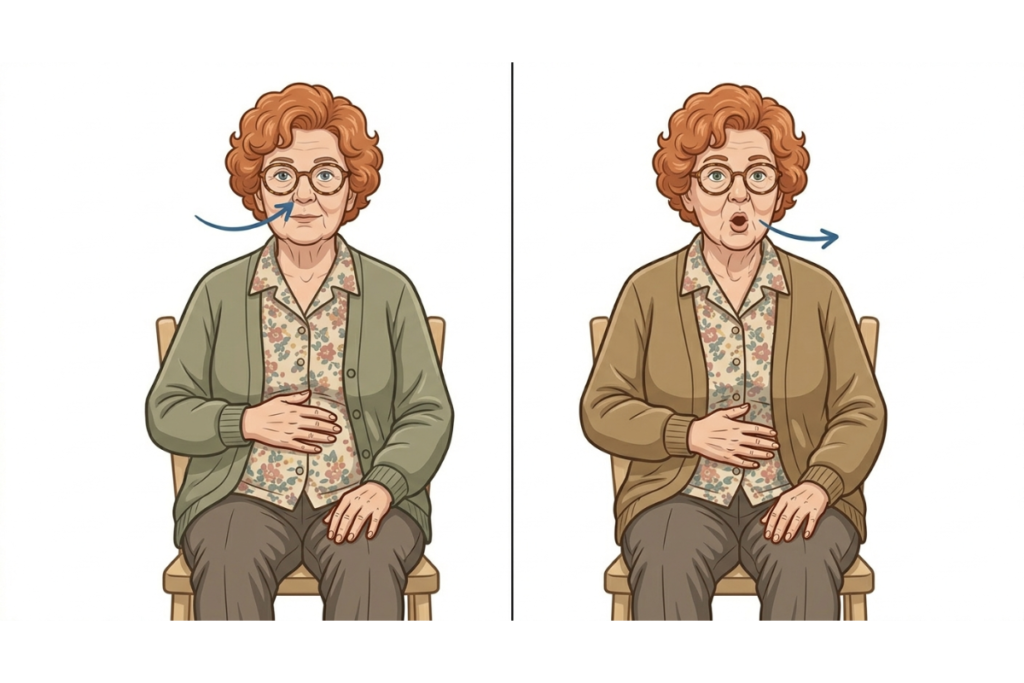
Before we add some gentle movement, let’s just practice the breath itself. Find a comfortable chair where your feet can touch the floor. Sit up reasonably straight, but don’t feel like you need to act like a soldier on parade. Just get comfortable.
- Exhale completely: Get all that old air out through your mouth.
- Inhale for four: Slowly breathe in through your nose while counting 1, 2, 3, 4 in your head. Feel your belly expand like a balloon.
- Hold for four: Keep the air in. Don’t clamp your throat shut too tight, just a gentle pause for 1, 2, 3, 4.
- Exhale for four: Slowly let the air out through your mouth for 1, 2, 3, 4. Imagine you are blowing out a few birthday candles.
- Hold empty for four: This is the part that feels a bit strange at first. Just wait for 1, 2, 3, 4 before taking the next breath.
Repeat this cycle four times. If four seconds feels too long, start with two or three. There’s no need to be perfect. The goal is to feel better, not to compete.
Combining Box Breathing with Beginner Chair Yoga
Now that you know the breathing pattern, let’s add some simple chair yoga poses. These movements help loosen stiff joints, and the breathing helps keep your mind calm.
Seated Mountain Pose (Tadasana)
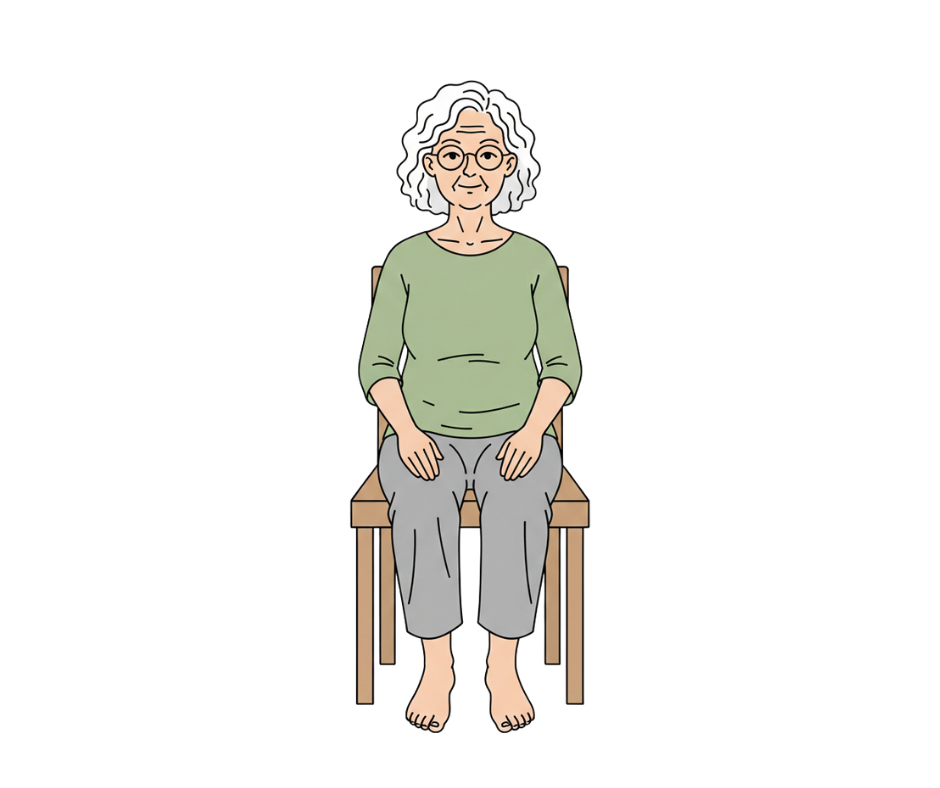
This is the foundation of everything. It helps improve your posture and makes you feel grounded.
- Sit at the front edge of your chair with your feet flat on the floor, hip-width apart.
- Rest your hands on your thighs.
- As you start your four-second inhale, imagine a string is pulling the top of your head toward the ceiling.
- During the four-second hold, feel your shoulders drop away from your ears.
- As you exhale for four, feel your feet pressing firmly into the floor.
- During the empty hold, just notice how tall and strong you feel.
Seated Cat-Cow Stretch
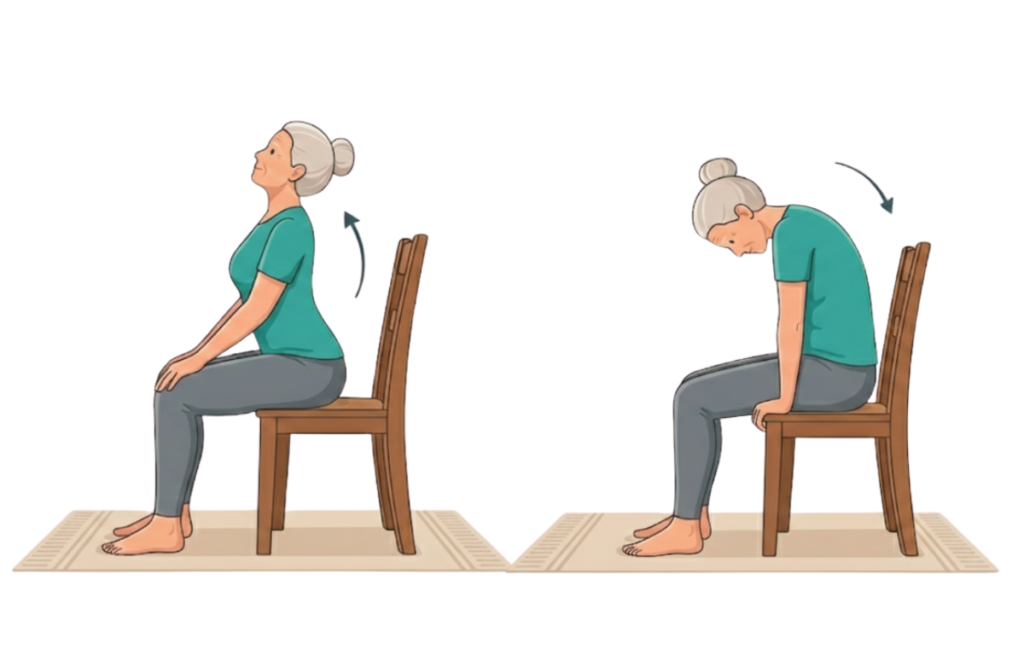
This is perfect for a stiff back. It gently wakes up the spine.
- Place your hands on your knees.
- The Cow: As you inhale for four, gently arch your back and look up slightly toward the ceiling. Let your belly move forward.
- The Hold: Stay in this gentle arch for four seconds.
- The Cat: As you exhale for four, round your back like a grumpy Halloween cat. Tuck your chin toward your chest and look toward your belly button.
- The Hold: Stay in that rounded position for four seconds before starting again.
Seated Side Stretch
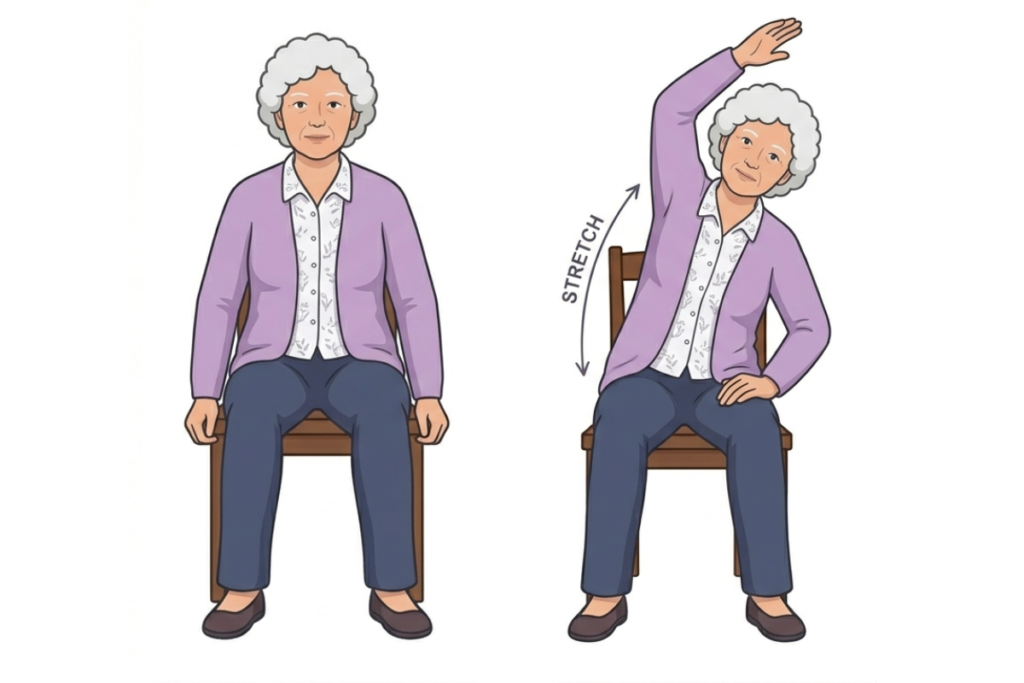
If you feel tightness along your ribs, this stretch can help. It creates more space for your lungs to expand.
- Hold onto the side of your chair with your left hand for stability.
- As you inhale for four, reach your right arm up toward the sky (or just as high as your shoulder allows, no pressure!).
- During the hold, keep that arm reaching high.
- As you exhale for four, lean slightly to the left. You should feel a nice stretch along your right side.
- Hold the position for four seconds.
- Switch sides and repeat. If your shoulders feel stiff today, you can keep your hand on your hip instead of reaching up.
Seated Sun Breath
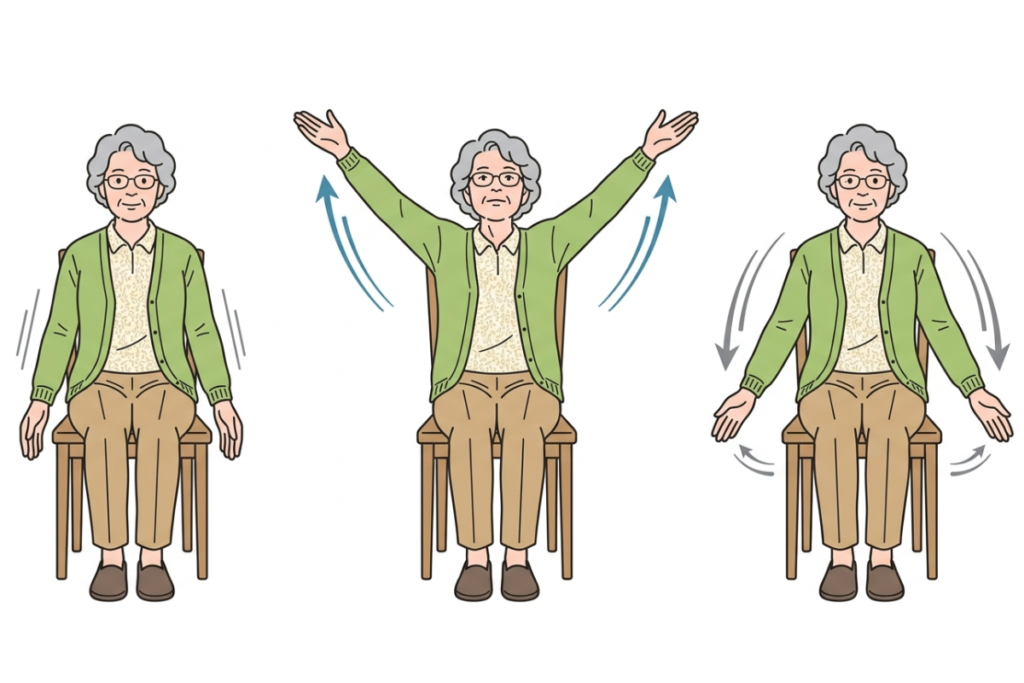
This is a great way to coordinate your full range of motion with your breath.
- Start with your arms hanging at your sides.
- Inhale for four seconds while sweeping your arms out to the sides and up toward the ceiling (like you are tracing a giant sun).
- Hold for four seconds with your arms raised.
- Exhale for four seconds as you slowly bring your arms back down to your sides.
- Hold empty for four seconds and feel the weight of your arms.
Consistency Over Perfection
Remember, you don’t have to be perfect at this. If you lose count or get interrupted, that’s fine. The box breathing technique benefits add up over time.
It’s like caring for a plant. A little bit of attention every day works better than a lot all at once. Doing two minutes of box breathing each morning is more helpful than a long session once a month.
If holding your breath for four seconds feels hard, don’t force it. Some days, breathing feels easier than others. Just do what feels comfortable. The goal is to help your body relax, not to add stress.
Making It a Daily Habit
The hardest part of any new habit is remembering to practice it. Here are a few easy ways to fit box breathing into your day:
- Commercial Break Zen: Whenever a commercial comes on during your favorite show, do two rounds of box breathing.
- The Waiting Game: If you are in a waiting room or waiting for a phone call, use that time to practice. No one will notice you’re doing it.
- Bedtime Calm: Use the box breath once you are tucked into bed. It is a fantastic way to tell your brain that the day is over and it is time to sleep.
Final Thoughts
You’ve finished the guide, and now it’s time for the fun part. You don’t need a yoga mat, special clothes, or to touch your toes. All you need is to take one breath.
The world can be loud and busy, but you have a way to find calm within yourself. By practicing these simple chair yoga moves and focusing on box breathing, you’re taking a big step toward feeling happier and calmer.
Why not try one round right now? Inhale, hold, exhale, hold. You’re already doing great. Keep practicing, be kind to yourself, and enjoy the calm that comes with it. You deserve this peace, one breath at a time.
