
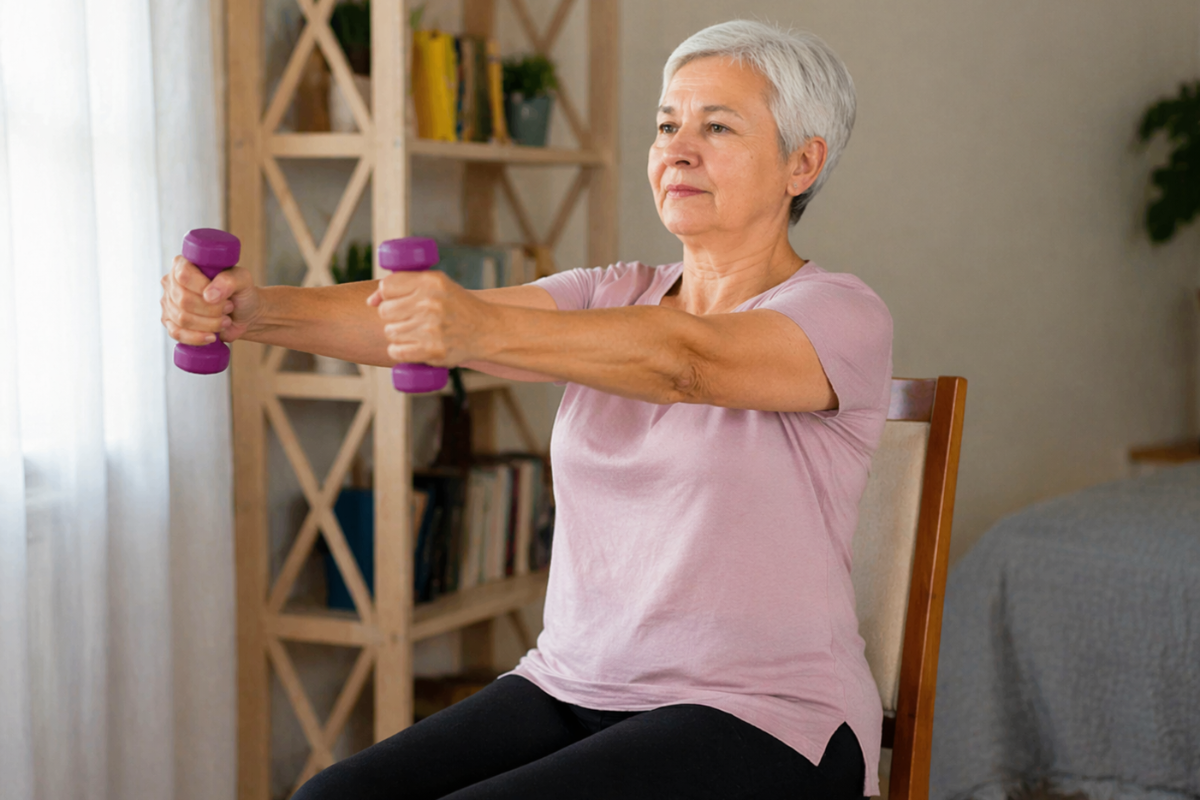
Have you noticed that pickle jars are harder to open these days? Maybe lifting a laundry basket feels more challenging than before. If your arms feel weaker lately, don’t worry. Adding seated arm exercises for seniors to your routine can help you regain strength without going to a noisy gym.
Many people picture exercise as lifting heavy weights in bright workout clothes, but that’s not what we’re doing here. We’ll focus on chair yoga and simple movements that fit into your daily life. You can do these exercises while waiting for your coffee or watching your favorite show. Building strength is about making everyday tasks easier, like reaching shelves, carrying groceries, and hugging your grandkids.
This guide is simple and enjoyable. We’ll cover 10 arm moves using just a sturdy chair and some space. Sit tall, take a breath, and get ready.
Why Upper Body Strength Matters for Seniors
As we age, our bodies naturally lose some muscle each year. Scientists call this sarcopenia. Losing muscle can affect your balance, posture, and independence. Doing regular arm exercises helps keep your muscles strong and useful for daily activities.
Exercising while seated is very effective because it lowers the risk of tripping or losing balance. It lets you focus on your upper body muscles while keeping your lower body safe. It can also improve your circulation and mood.
Getting Started: Your Setup
Before starting, make sure you have the right chair. Choose a sturdy, flat chair, such as one from your kitchen or dining room. Avoid chairs with wheels or deep, soft sofas, as they make it harder to sit up straight.
Sit with your feet flat on the floor, about hip-width apart. Keep your back straight, imagining a gentle pull upward from the top of your head. If you need support, lean slightly against the chair back, but try to keep your spine active. Now you’re ready to start the chair arm exercises for seniors.
1. Seated Arm Circles
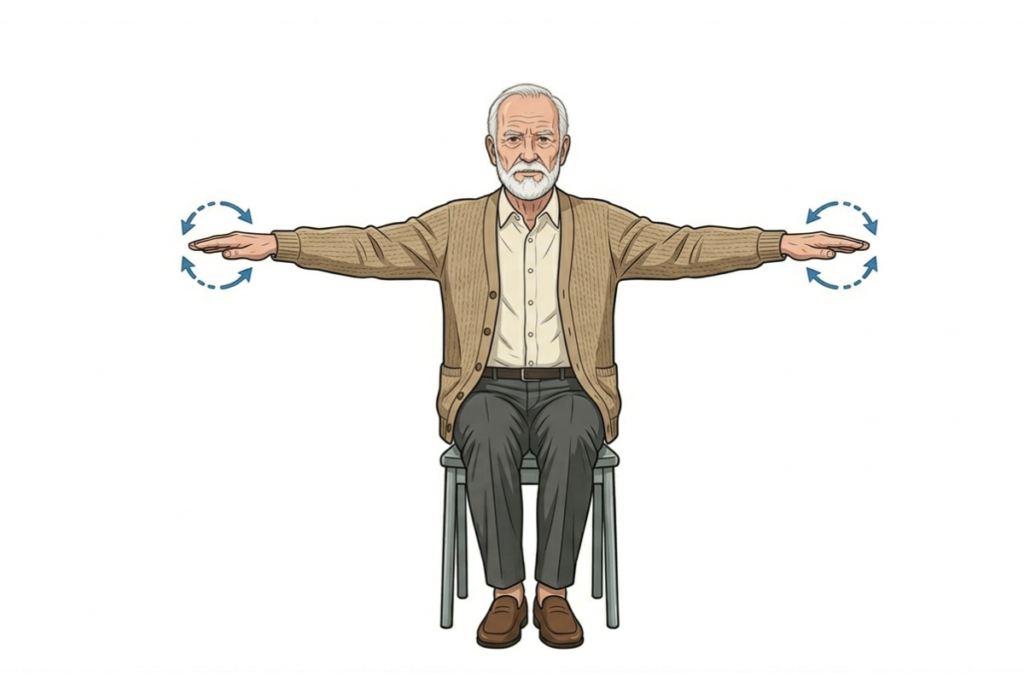
We begin with Seated Arm Circles because they are a great way to warm up your shoulder joints. This helps prepare your upper body for movement.
- Extend your arms straight out to your sides so your body forms a “T” shape.
- Keep your palms facing downward.
- Start making small, controlled circles in the air about the size of a saucer.
- Do ten circles forward, then ten circles backward.
This exercise works your deltoids, the muscles on the top of your shoulders. If your arms feel heavy, take a short break before continuing.
2. Seated Bicep Curls
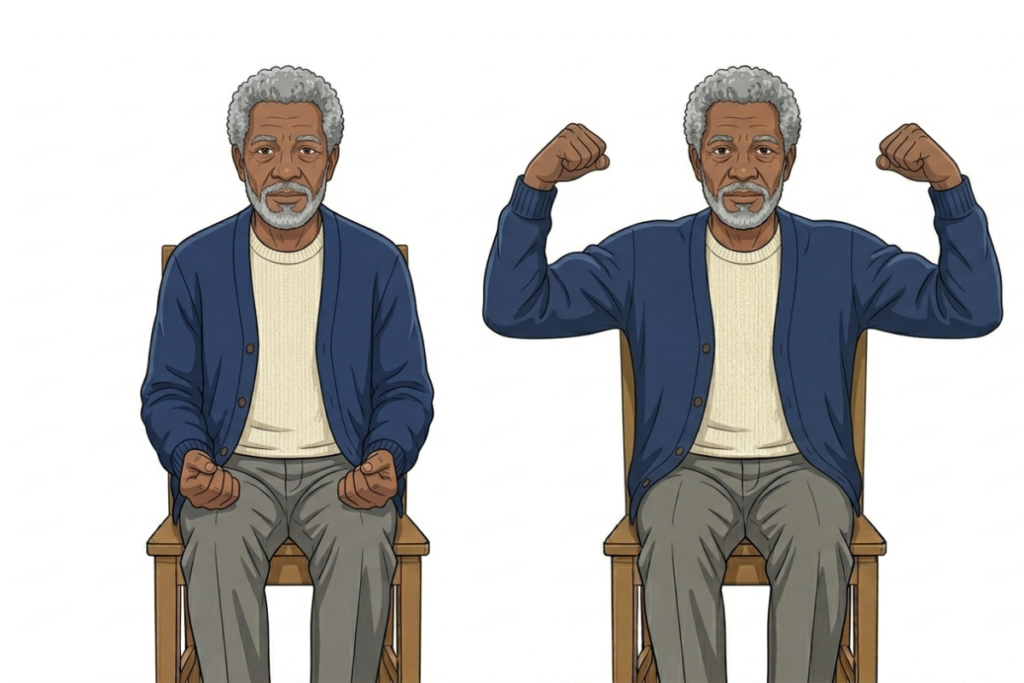
The bicep is the muscle on the front of your arm that helps you lift things. You don’t need special weights for this exercise; two water bottles or cans of soup work well.
- Let your arms hang down by your sides, palms facing forward.
- Keep your elbows close to your ribs as you move.
- Slowly bend your elbows and bring your hands up toward your shoulders.
- Squeeze your muscles at the top, then slowly lower your hands back down.
Repeat this ten times. Move slowly and with control for the best results.
3. Seated Chest Flies
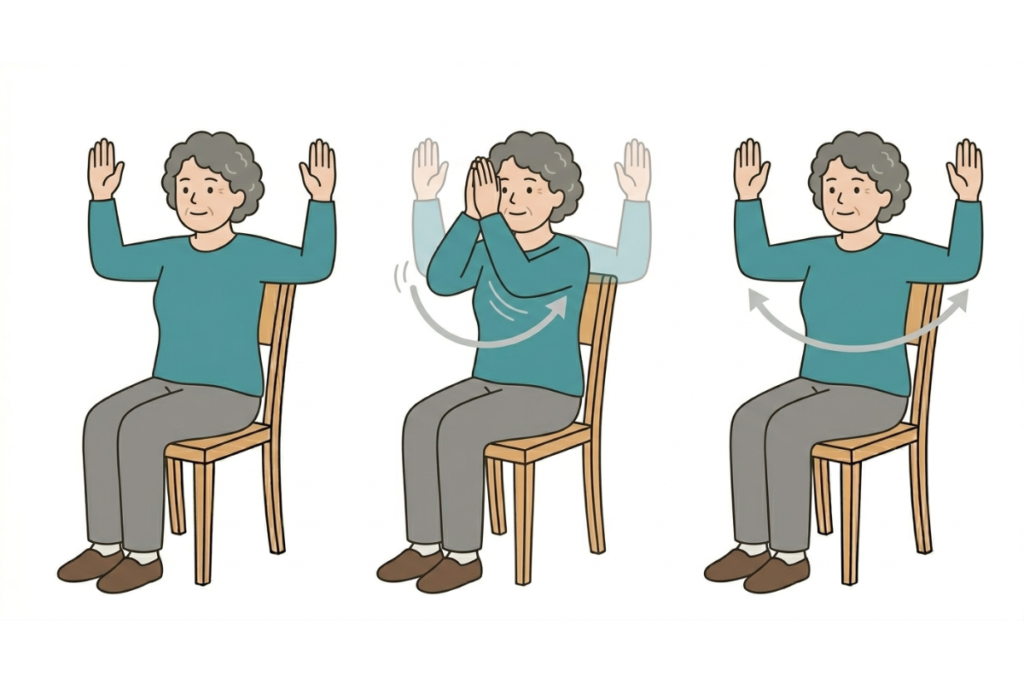
This exercise works your chest and the front of your shoulders. It also helps improve your posture by encouraging you to keep your chest open.
- Raise your arms so your elbows are at shoulder height and bent at 90 degrees, forming a goalpost shape.
- Slowly bring your forearms and elbows together in front of your face until they touch (or get as close as they can).
- Squeeze them together for a second, then slowly open them back up to the starting position.
- Repeat ten times.
If you feel a gentle stretch across your chest as you open your arms, you are doing the exercise correctly.
4. Seated Overhead Press
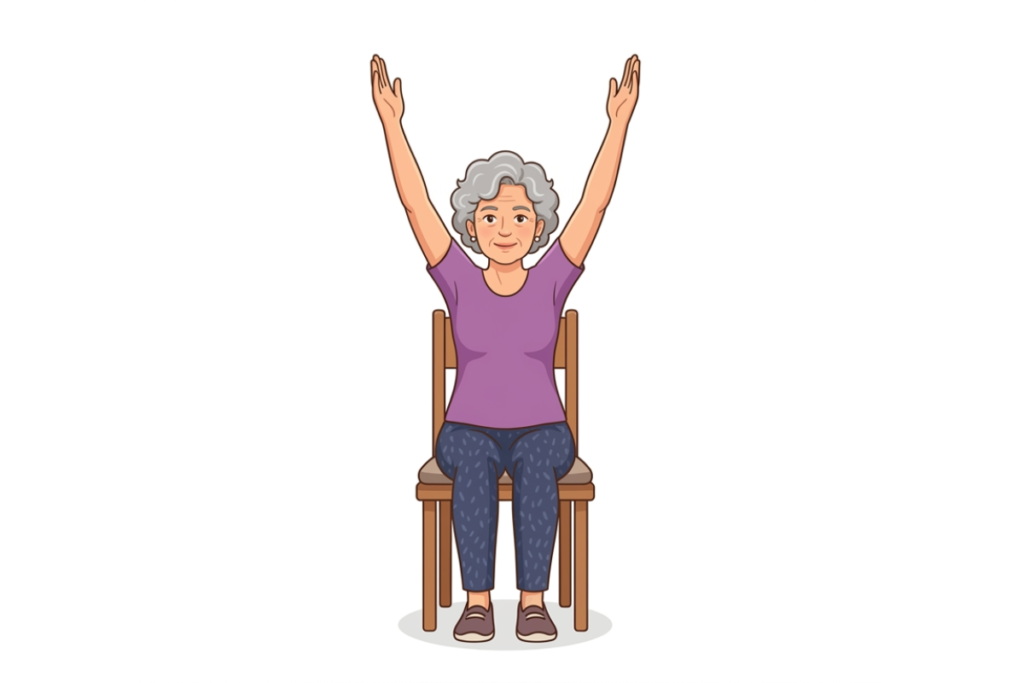
This exercise is similar to reaching for a high shelf. It works your shoulders and the back of your arms.
- Start with your hands near your shoulders, palms facing forward, and elbows bent.
- Push your hands up toward the ceiling as high as you can comfortably reach.
- Straighten your arms as much as you comfortably can without locking your elbows.
- Slowly bring your hands back down to shoulder level.
If reaching straight up is hard, you can reach slightly forward at an angle. Only go as high as feels comfortable for your shoulders.
5. Seated Tricep Kickbacks
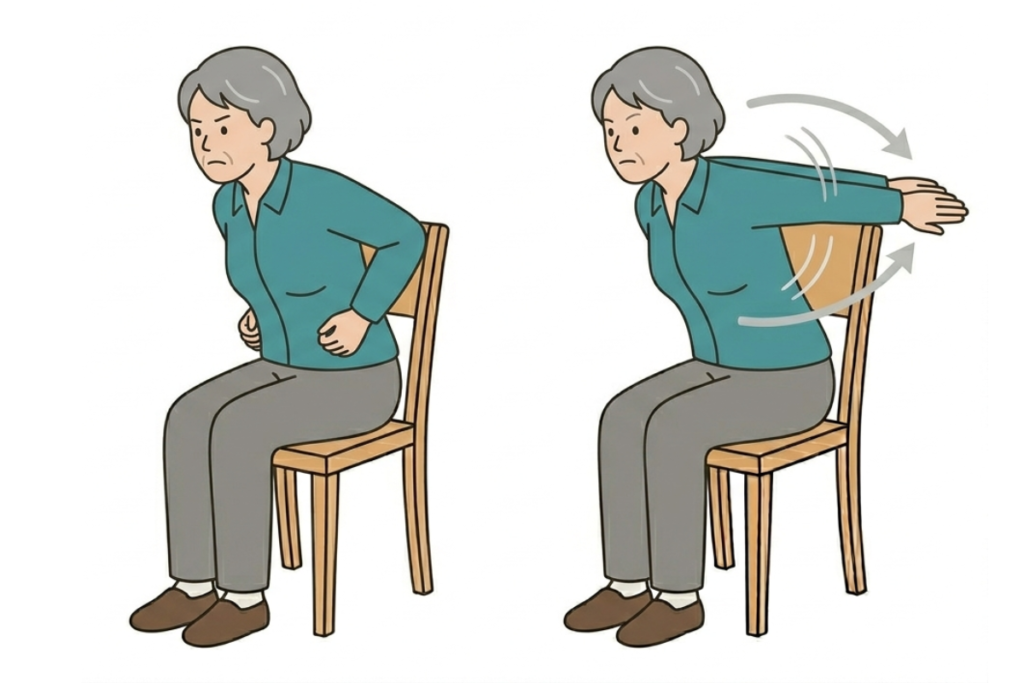
The triceps are the muscles on the back of your arms. They help with pushing movements and keeping your arms stable.
- Lean forward slightly while keeping your back straight.
- Tuck your elbows into your sides and hold your hands near your hips.
- Straighten your arms back behind you as far as they will go.
- Squeeze the back of your arms for a moment, then bring your hands back to your hips.
This is a small movement, but you will feel your muscles working.
6. Seated Lateral Raises
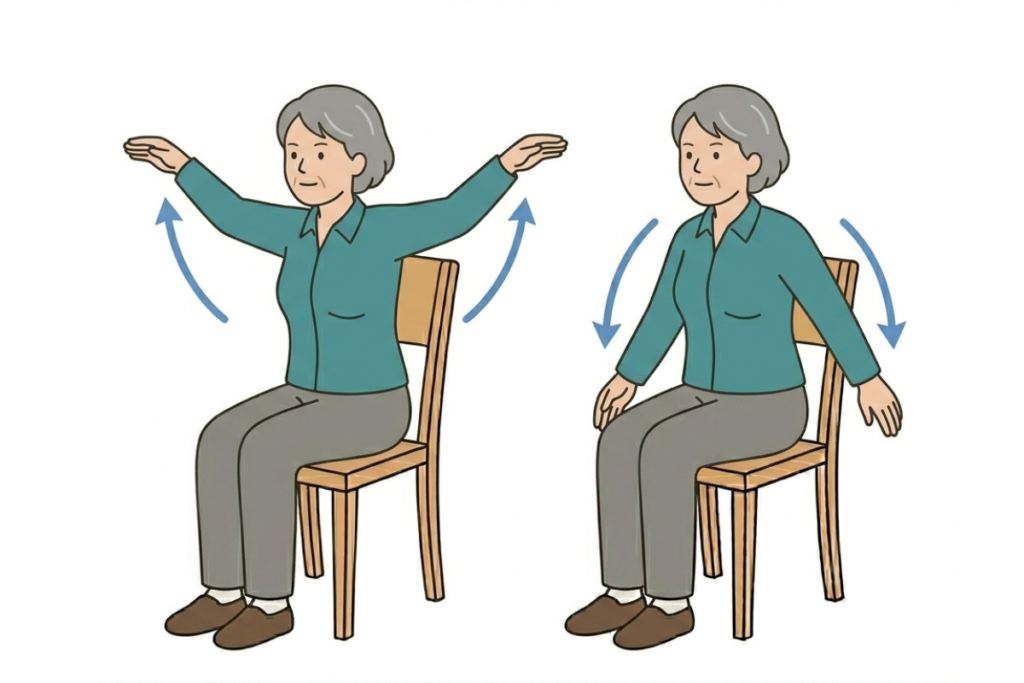
This exercise works the middle part of your shoulder, which helps you lift objects to the side.
- Let your arms hang at your sides, palms facing your body.
- Keep a slight bend in your elbows and lift your arms out to the sides until they are level with your shoulders.
- Pause for a second, then slowly lower them back down.
- Repeat ten times.
Keep your neck relaxed. If your shoulders rise toward your ears, try the exercise without weights until your form improves.
7. Seated Rows
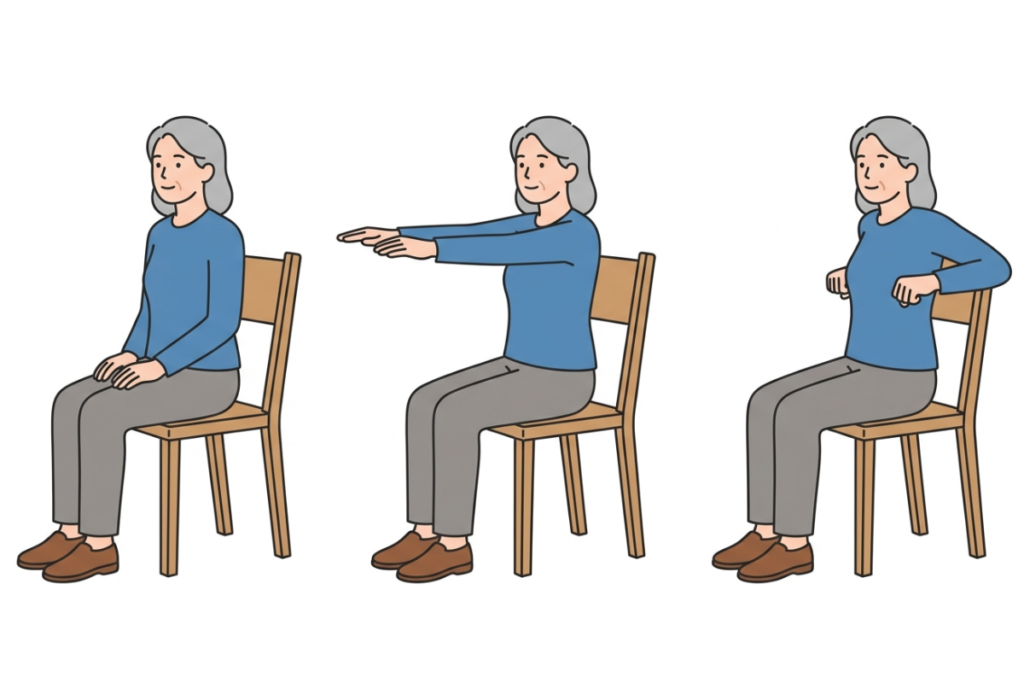
Seated rows are great for your upper back and the backs of your shoulders. Strong back muscles help you maintain good posture while standing and sitting.
- Extend your arms straight out in front of you at chest height.
- Pretend you are holding a pair of handles or a rope in front of you.
- Pull your elbows back past your ribs and squeeze your shoulder blades together.
- Extend your arms back out and repeat.
This exercise should feel like a steady, pulling motion. Many people find it enjoyable once they get used to it.
8. Seated Front Raises
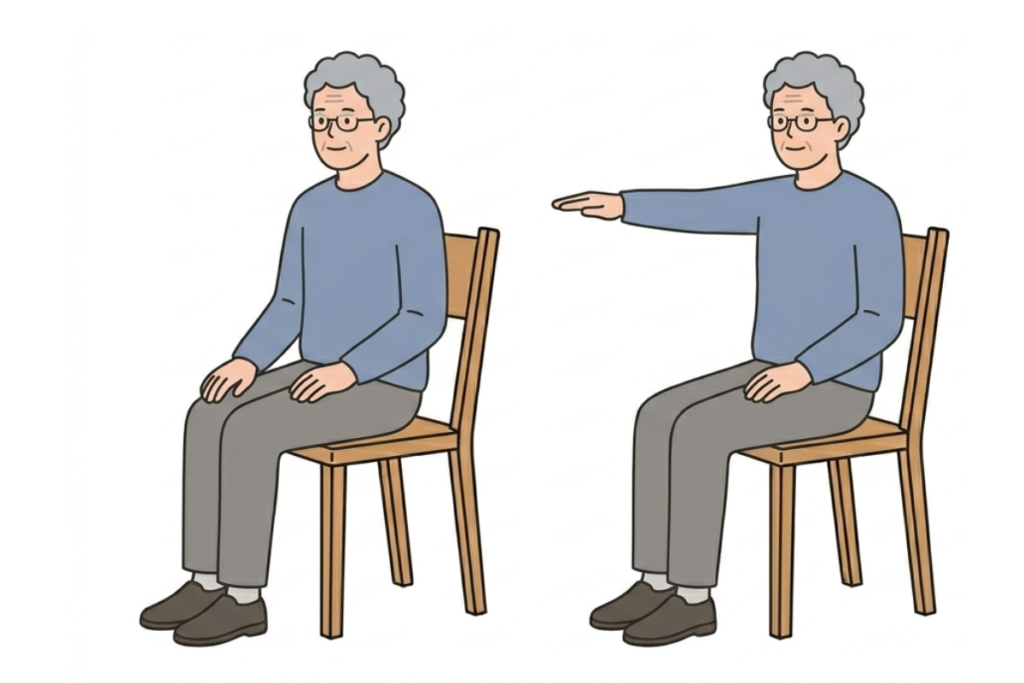
While lateral raises move your arms to the side, front raises lift your arms forward. This works the front part of your shoulder, called the anterior deltoid.
- Rest your hands on your thighs, palms down.
- Keeping your arm straight, lift one hand up to shoulder height.
- Lower it slowly and then switch to the other arm.
- Repeat ten times for each arm.
Keep your core muscles slightly engaged during this exercise to help prevent your body from swaying.
9. Shoulder Shrugs
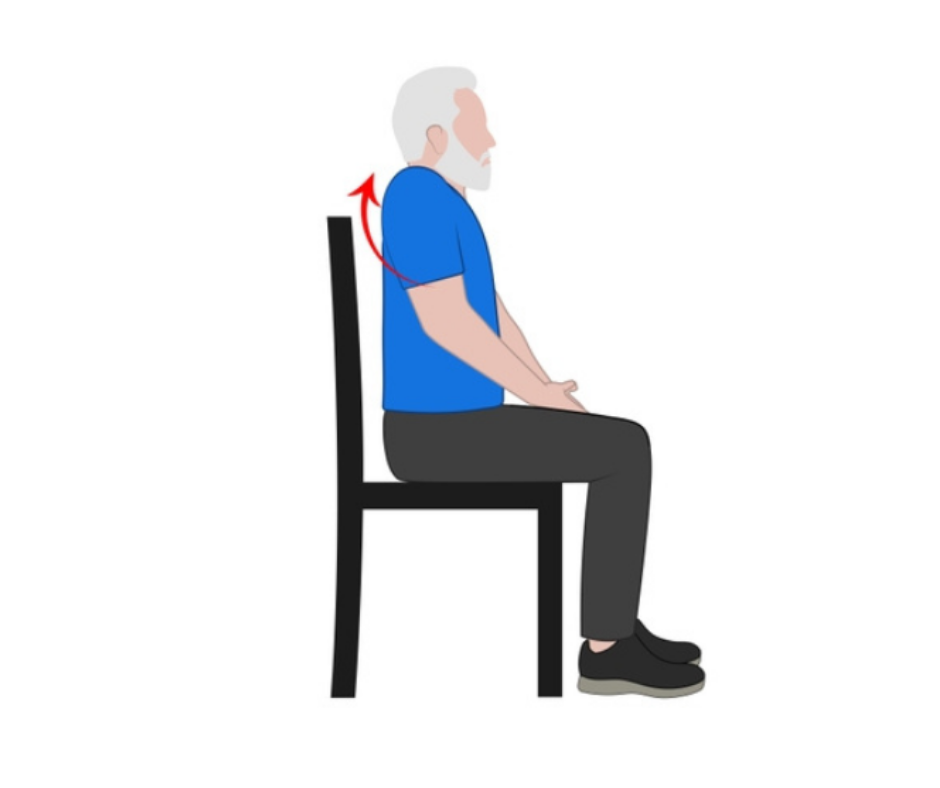
This is one of the easiest exercises, but it helps release neck tension and strengthens your trapezius muscles.
- Let your arms hang loosely at your sides.
- Lift your shoulders up toward your ears as high as you can.
- Hold the squeeze at the top for two seconds.
- Let them drop back down completely.
This exercise is helpful if you have been sitting at a computer or reading for a long time.
10. Wrist Rotations and Finger Extensions
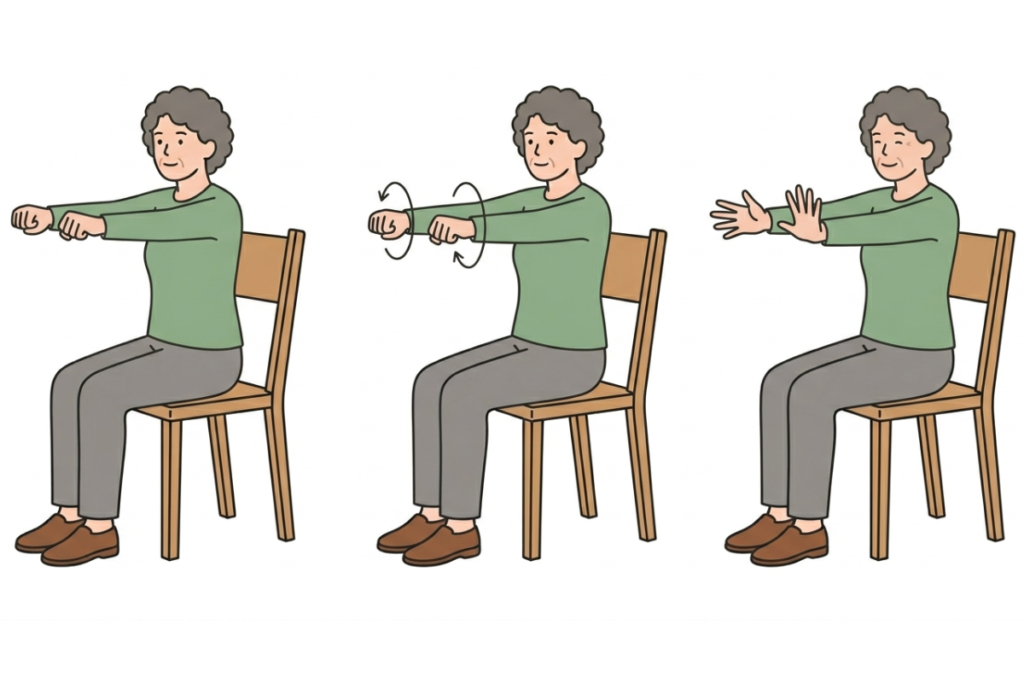
We use our hands for many daily tasks, like buttoning shirts or using a remote control. Keeping your wrists and fingers flexible is important for arm strength.
- Extend your arms in front of you.
- Make a gentle fist and roll your wrists in circles. Do ten circles in each direction.
- Open your hands and stretch your fingers out as wide as you can.
- Clench them back into a fist, then repeat 10 times.
This exercise helps keep your hand joints flexible and may reduce stiffness from arthritis.
Final Thoughts
All you need is a sturdy chair, easy moves, and willingness. Start with simple exercises—you might be surprised how your body responds. Many chair yoga books for seniors emphasize how small, consistent movements can make a big difference over time. Adding low-impact arm workouts for seniors into your routine is a gentle yet effective way to build strength without straining your joints. Focusing on arm strength is self-care. It can boost energy and confidence, making daily activities easier. Every bit of effort counts toward your well-being.
