

When we hear the word “core,” many of us picture a young person at the gym working on a six-pack. But for those with more life experience, seated ab exercises for seniors are about something much more useful. We are not aiming for a bodybuilding trophy; we just want to reach for a jar on the top shelf without wobbling or put on our socks without losing our balance. Strengthening your core is really about staying steady, upright, and ready for whatever life or your grandkids bring your way.
If you have been feeling a bit unsteady lately, you are in the right place. Maybe your balance is not what it used to be, or you have noticed your shoulders slouching more often. That is where your core helps. It is the powerhouse of your body, and the best part is that you can strengthen it without leaving your favorite chair.
The Core Truth: Why Your Middle Matters
Think of your core as the trunk of a tree. If the trunk is weak, the branches will be shaky. For us, the “trunk” means your abdominal muscles, lower back, and hips. When these muscles are strong, they work like a natural corset, keeping everything in place.
For seniors, a strong core is key to better balance. Most falls happen when our center of gravity shifts and our core cannot react fast enough. By working on these muscles, you are giving your body better stability. It also helps your posture. Instead of feeling pulled forward by gravity, a strong core helps you sit tall and proud.
Setting the Stage: Choosing Your Throne
Before we start the exercises, let’s talk about what you need. You do not need a gym membership or special equipment. All you need is a chair, but not just any chair will work.
- Avoid wheels: Unless you want to turn your workout into an accidental trip across the kitchen, please use a chair with four solid legs.
- Pick a firm seat: A dining room chair or a sturdy office chair is best. A soft recliner is comfortable for resting, but it won’t provide the support you need for these exercises.
- Check the height: Your feet should rest flat on the floor, with your knees at 90 degrees. If your feet are dangling, adjust the chair so you feel stable and comfortable.
Getting Started: The Warm-Up
We cannot start exercising without warming up. We need to get the muscles ready for movement. Sit up as tall as you can, away from the back of the chair. Picture a string gently pulling the top of your head toward the ceiling.
- The Seated Cat-Cow: Place your hands on your knees. As you inhale, gently arch your back and look up slightly. As you exhale, round your spine and look toward your belly button. Do this five times.
- Shoulder Rolls: Roll your shoulders up to your ears, then back and down. Each roll should help you feel more relaxed and loose.
- The Gentle Twist: Reach your right hand to the outside of your left knee and gently look over your left shoulder. Hold for a second, then switch sides. Do not force the movement; just move gently and smoothly.
5 Simple Seated Ab Exercises for Seniors
Now that we are warmed up, let’s start the exercises. Remember, the goal is not to push yourself until it hurts. The goal is to move with purpose and notice your muscles working.
1. Seated Knee Marches
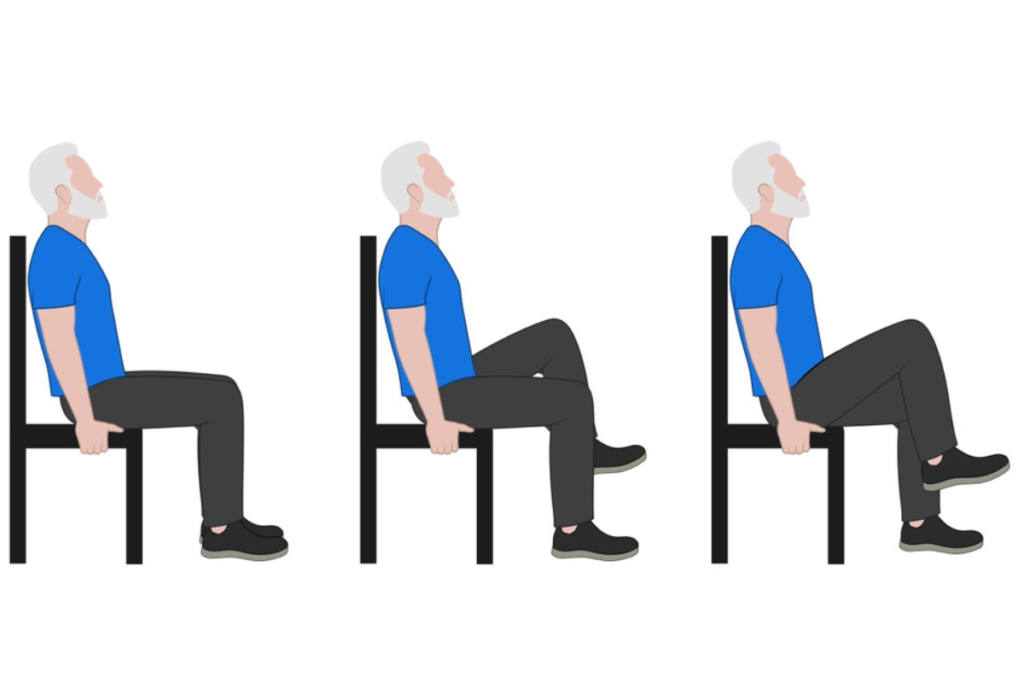
This is the ultimate beginner move. It targets your lower abs and hip flexors, which are crucial for walking and stability.
How to do it:
- Sit tall with your feet flat on the floor and your hands gripping the seat sides for support.
- Slowly lift your right knee as high as is comfortable, as if you were marching in slow motion. Lower it with control, then lift your left knee.
- Do not let your back slump as you lift your leg. Keep your head lifted, as if a gentle string were pulling it upward.
- Try for 10 marches on each side. If you feel comfortable, try doing it without holding onto the chair.
2. The Side-to-Side Lean
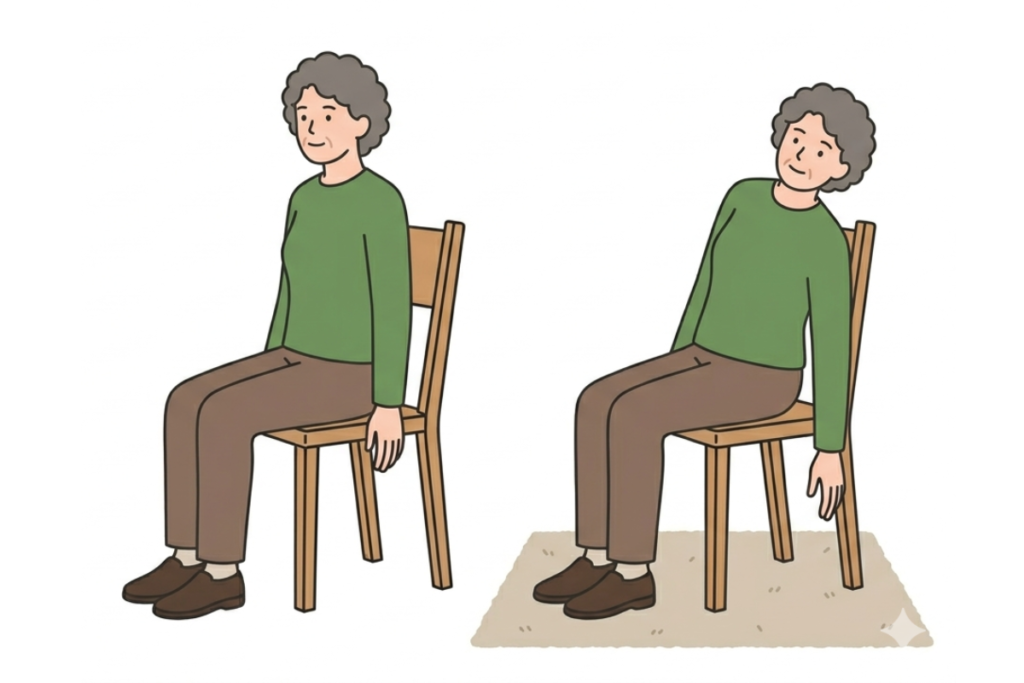
This exercise targets your obliques, the muscles on the sides of your waist. These help you with twisting movements and side-to-side stability.
How to do it
- Sit toward the front of your chair with your feet wide for a stable base. Let your arms hang down at your sides.
- Slowly lean to the right, reaching your right hand toward the floor. Use your side muscles to pull yourself back up to the center. Repeat on the left side
- Keep both sides of your hips firmly on the chair. If one side starts to lift off the seat, you have leaned too far.
- Aim for 8 to 10 leans on each side.
3. Seated Torso Twists
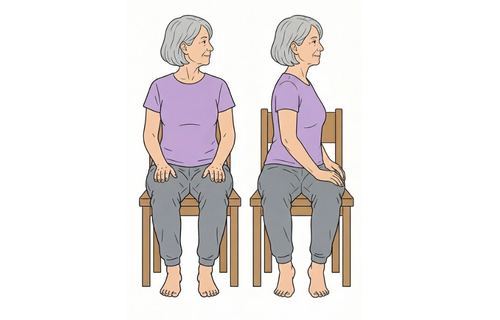
This is great for spinal mobility and those deep abdominal muscles.
How to do it:
- Cross your arms over your chest or place them on your thighs.
- While keeping your hips facing forward, slowly rotate your upper body to the right. Take a breath, then rotate all the way to the left.
- Move from your waist, not your neck. Your head should just follow where your chest goes.
- 10 twists total (5 to each side).
4. The Tummy Squeeze (Pelvic Tilts)
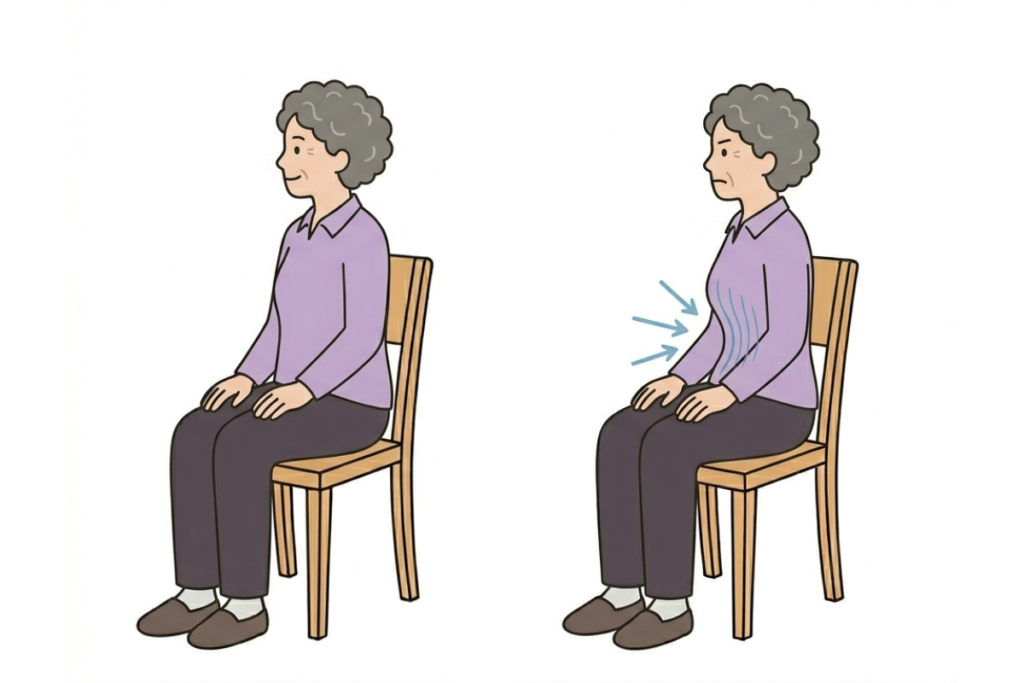
This move is very subtle. You can do it while waiting for the doctor or watching the news, and no one will notice. It is a basic core-strength exercise.
How to do it:
- Sit tall and place your hands on your lap.
- Imagine someone is about to poke you in the belly. Pull your belly button in toward your spine as hard as you can without holding your breath. Hold for three seconds, then release.
- Try to tilt your pelvis slightly forward as you squeeze. It is a small movement, but it is very helpful for your lower back health.
- Do 10 squeezes.
5. Seated Leg Extensions
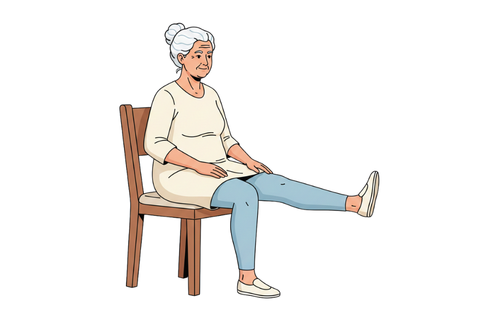
While this may seem like a leg exercise, your abs also work hard to keep you balanced as your legs move.
How to do it:
- Sit back slightly in your chair, but keep your spine straight. Hold the sides of the seat.
- Straighten your right leg out in front of you, flexing your toes toward your face. Hold for a count of two, then slowly lower it. Switch to the left leg.
- Keep your core tight so your back doesn’t arch when your leg goes out.
- Repeat 5 to 10 on each side.
Consistency Over Perfection
A common mistake when starting a new routine is thinking you need to do it perfectly for an hour every day. That is not necessary. If you only have five minutes while your coffee brews, do two sets of knee marches and a few tummy squeezes. That still counts.
Consistency is the key. Doing these exercises three times a week for ten minutes is much better than doing them once for an hour and then being too sore to continue. Your muscles need regular reminders to stay strong.
If a move feels too difficult, make the movement smaller. If you can only lift your foot an inch off the ground, that is fine. Any progress is good, and your body will benefit from your effort.
Listening to Your Body
It is important to know the difference between helpful effort and harmful pain. When you do these exercises, you might feel some tension or a dull ache in your muscles. That means your body is getting stronger. However, if you feel sharp or stabbing pain in your back or joints, stop right away.
There is no benefit to pushing through pain that feels wrong. The goal is to age well, not to risk injury. Always check with your doctor before starting a new exercise plan, especially if you have had recent surgeries or chronic back problems.
Final Thoughts
Building a stronger core does not require a complete lifestyle change or special workout clothes. It starts with the simple choice to sit up straighter and move with more purpose.
By incorporating these chair ab workouts for seniors into your day, you are investing in your independence. You are telling your body that you want to stay active, stay upright, and stay confident in your movements.
So, why not start right now? While you are still sitting and reading this, try five tummy squeezes. Just like that, you have started your fitness for the day. Keep it simple, keep it consistent, and keep smiling. You can do this!
