
Starting a fitness routine can seem intimidating. Maybe you’ve seen workout videos with people doing backflips in matching outfits and thought, “Yeah, that’s not for me.” That’s completely understandable. A chair workout for beginners shows you don’t need fancy equipment, a gym membership, or even to touch your toes. Just grab a sturdy chair, set aside a few minutes, and be willing to give it a try.
Chair workouts are especially helpful for older adults, people recovering from injuries, or anyone returning to exercise after a break. They are gentle on your joints, low-impact, and can still help you build strength, improve flexibility, and lift your mood.
So grab a chair and let’s get started.
Why Chair Workouts Work So Well for Beginners
Before we begin the routine, let’s talk about why exercising while sitting is such a good idea.
- They are safe and low-impact, which is easier on your joints.
- They help you build real strength. You might be surprised how much your core, legs, and arms work during a seated routine.
- They are accessible. You don’t need a gym—your kitchen chair works just fine.
- They help build confidence. When you don’t have to worry about losing your balance, you can focus on moving well.
- They are a great place to start. As you build strength and balance, you can slowly add more challenging movements.
Think of these beginner-friendly chair exercises as the foundation for your fitness. Start here, take it slow, and celebrate each rep.
Before You Begin: A Few Quick Tips
Follow these simple tips to set yourself up for success:
- Choose the right chair. Use a sturdy, armless chair that doesn’t roll or wobble. Avoid using office chairs with wheels.
- Sit near the edge of the chair. Keep your back away from the backrest during exercises. Sit up straight with your feet flat on the floor.
- Wear comfortable clothing. Stretchy pants aren’t required, but you’ll be glad if you wear them.
- Pay attention to your body. Some muscle fatigue is normal, but sharp pain is not. If something hurts, stop.
- Remember to breathe. Many beginners forget to hold their breath during exercise. Inhale before you start a movement, and exhale as you exert effort.
Your Beginner Chair Workout Routine
This routine gently works your whole body. Try to do it three or four times a week. Each session should take about 20 to 30 minutes.
Warm-Up (5 Minutes)
Always begin with a warm-up. Your muscles need a little time to warm up before you start exercising.
Seated March
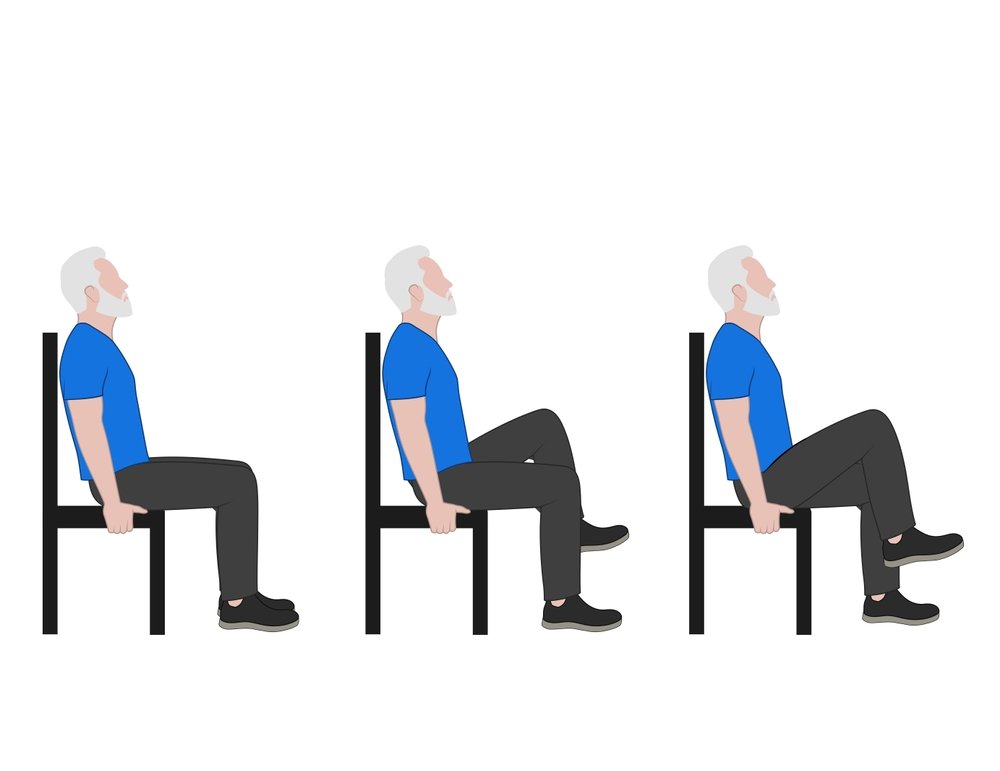
- Sit tall at the edge of your chair, feet flat on the floor.
- Slowly lift your right knee up toward your chest, then lower it.
- Alternate with your left knee.
- Continue marching for 60 seconds at a comfortable pace.
This exercise gets your blood flowing and loosens up your hips. It’s a great way to prepare your body for movement.
Neck Rolls
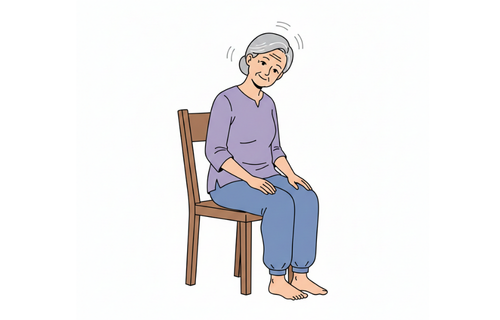
- Sit tall and drop your right ear toward your right shoulder.
- Slowly roll your chin down to your chest.
- Continue to the left shoulder.
- Reverse the direction.
- Do 3 to 4 slow rolls each way.
Upper Body Exercises
Seated Shoulder Press
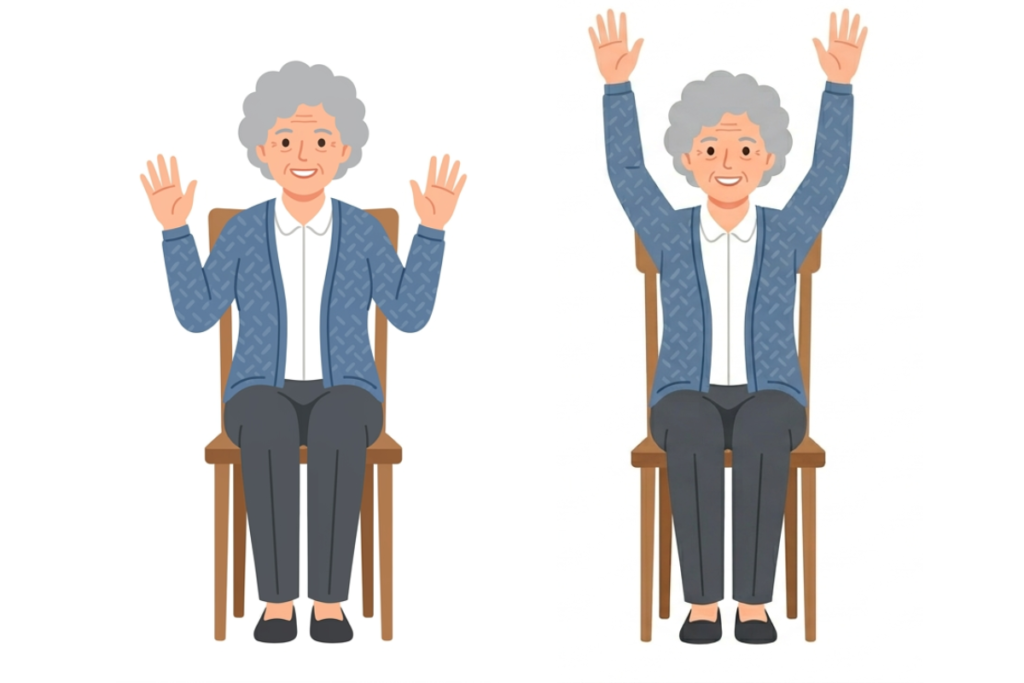
This exercise works your shoulders and upper arms.
- Sit tall with feet flat on the floor.
- Bend your elbows and raise your hands to shoulder height, palms facing forward.
- Press both arms straight up overhead.
- Slowly lower back to the starting position.
- Repeat 10 to 12 times for 2 sets.
Seated Row
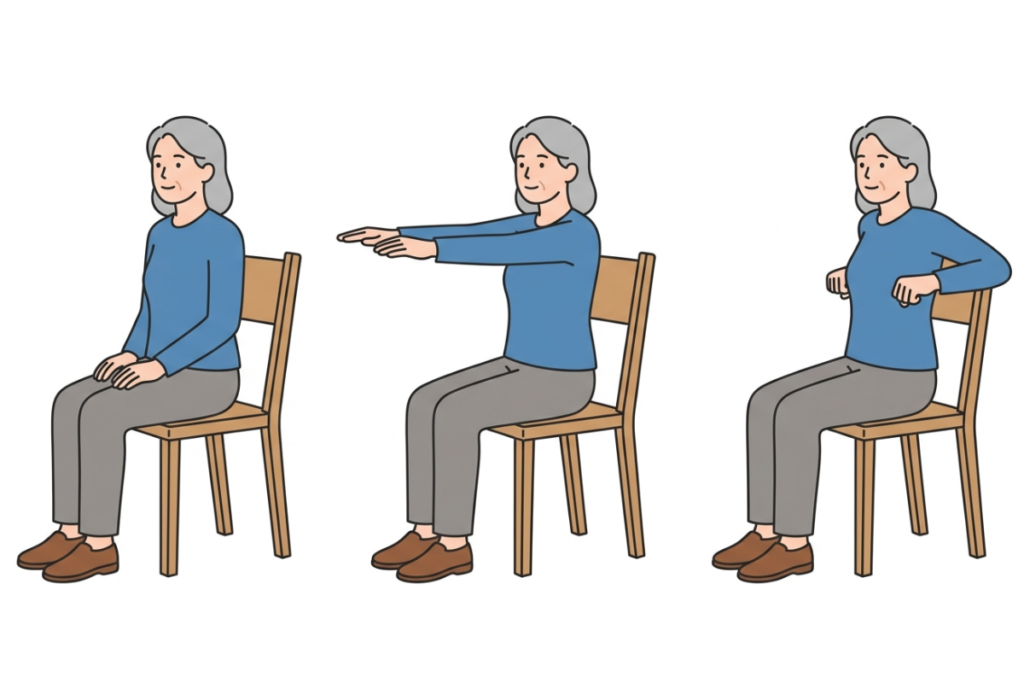
This exercise is great for your upper back and helps improve your posture.
- Sit at the edge of your chair, feet flat.
- Extend both arms straight out in front of you at chest height.
- Pull your elbows back like you’re rowing a boat, squeezing your shoulder blades together.
- Extend arms forward again.
- Repeat 10 to 12 times for 2 sets.
Core Exercises
Your core is more than just your abs. It includes all the muscles that support your spine. A strong core leads to better posture, less back pain, and more confidence in your movements.
Seated Tummy Tuck
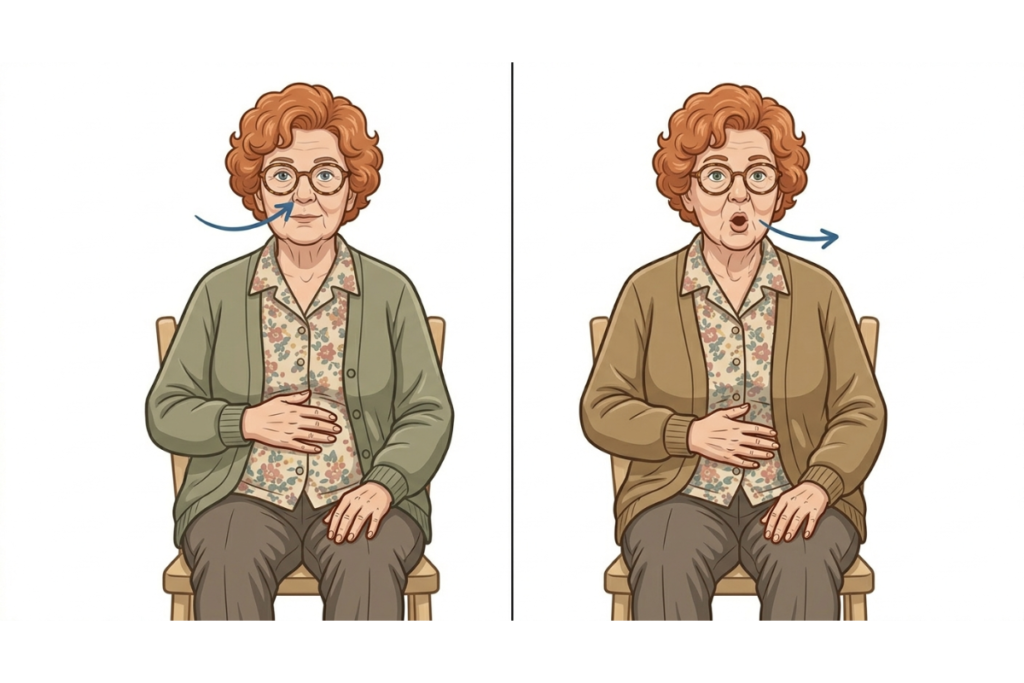
- Sit tall at the edge of your chair, hands resting on your thighs.
- Take a deep breath in.
- As you exhale, pull your belly button gently toward your spine.
- Hold for 5 to 10 seconds, then release.
- Repeat 8 to 10 times.
This exercise is subtle but very effective for building core stability. You can even do it in public without anyone noticing.
Seated Side Bend
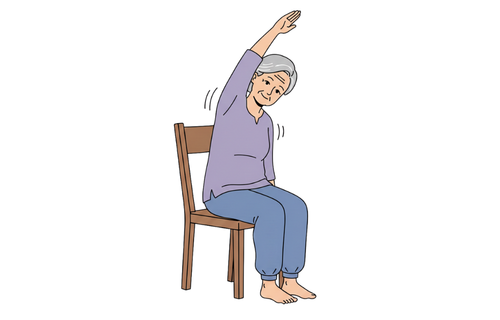
- Sit tall with feet flat and hands resting on your thighs.
- Raise your right arm overhead.
- Gently lean to the left, feeling a stretch along your right side.
- Hold for 3 to 5 seconds, then return to center.
- Switch sides. Repeat 8 to 10 times per side.
Lower Body Exercises
Seated Leg Extension
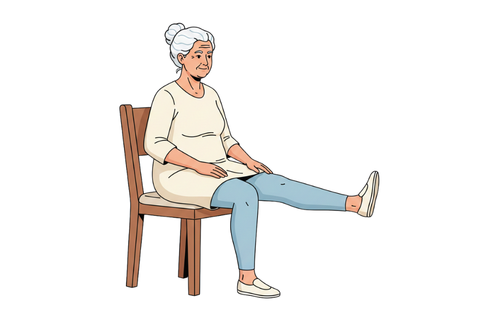
This exercise targets your quads, which are the muscles at the front of your thighs.oor.
- Slowly extend your left leg straight out in front of you, squeezing your thigh.
- Hold for 2 seconds, then lower.
- Alternate legs.
- Repeat 10 to 12 times per leg for 2 sets.
Seated Calf Raises
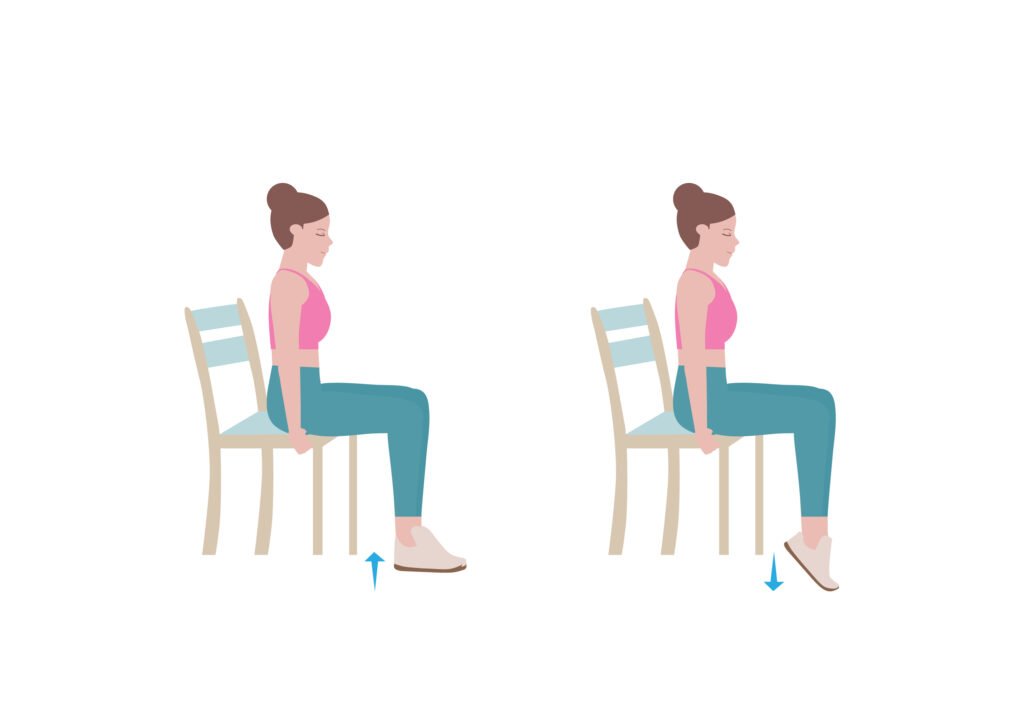
These exercises work your calves and also help improve circulation in your lower legs.
- Sit tall with feet flat on the floor.
- Slowly raise both heels as high as you comfortably can.
- Lower them back down with control.
- Repeat 15 times for 2 sets.
Chair-Assisted Stand and Sit
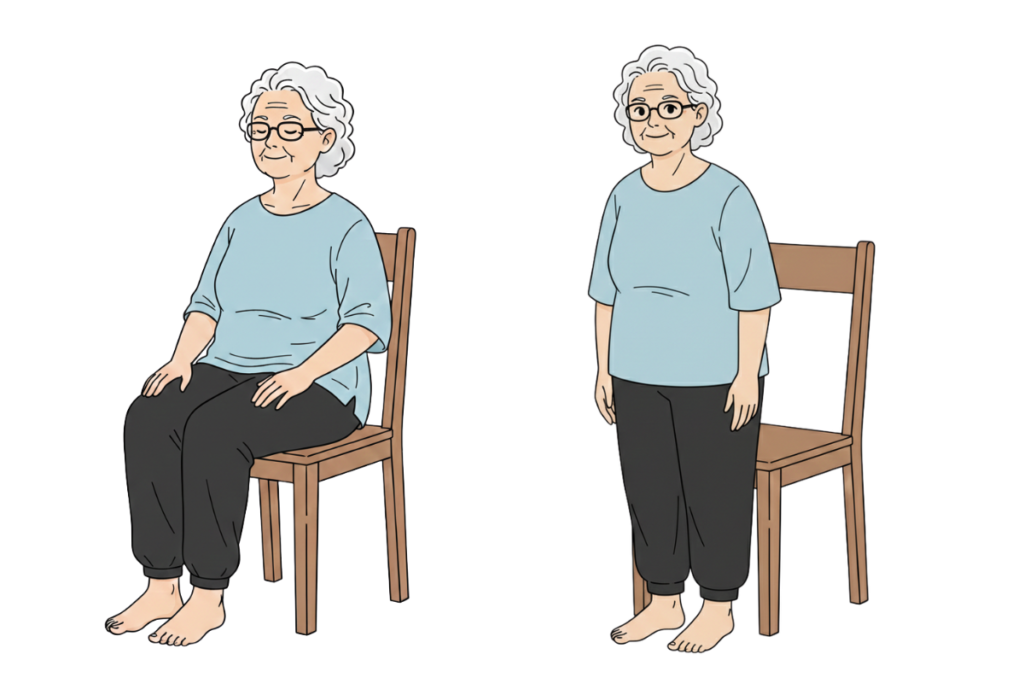
This exercise is like a mini squat and is one of the best ways to build leg strength and improve your movement in daily life.
- Sit at the edge of your chair.
- Place your feet hip-width apart, flat on the floor.
- Lean slightly forward and slowly push through your heels to stand up.
- Pause for a moment, then slowly lower yourself back down into the chair with control.
- Repeat 8 to 10 times for 2 sets.
If this feels difficult at first, use the chair armrests for support. It’s smart to use support when you need it.
Cool-Down Stretches (5 Minutes)
Always finish with a cool-down to help your muscles relax and reduce soreness.
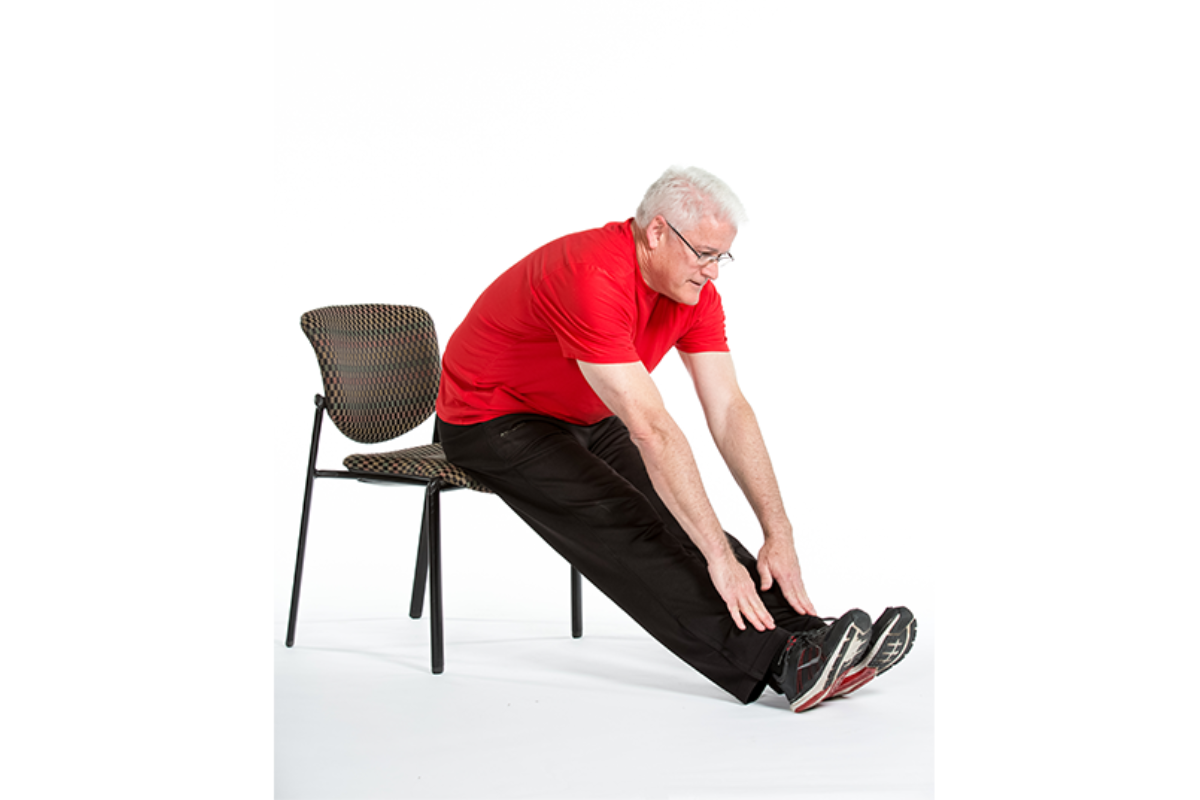
Seated Hamstring Stretch
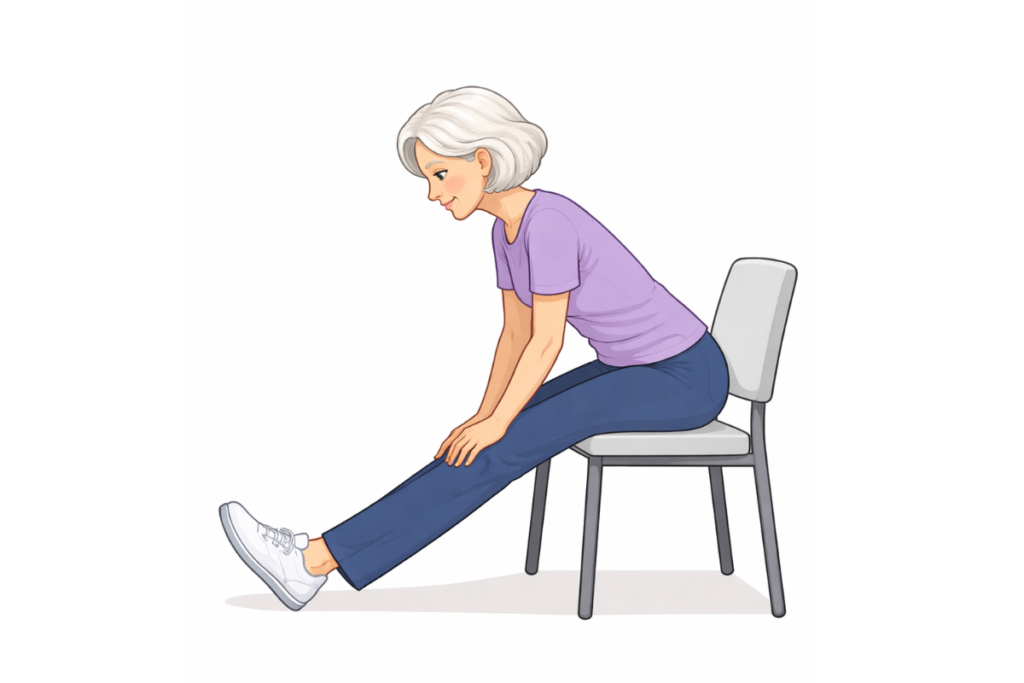
- Sit tall and extend your right leg straight with your heel on the floor.
- Gently hinge forward from your hips (not your waist) until you feel a mild stretch in the back of your thigh.
- Hold for 20 to 30 seconds.
- Switch legs.
Seated Chest Opener
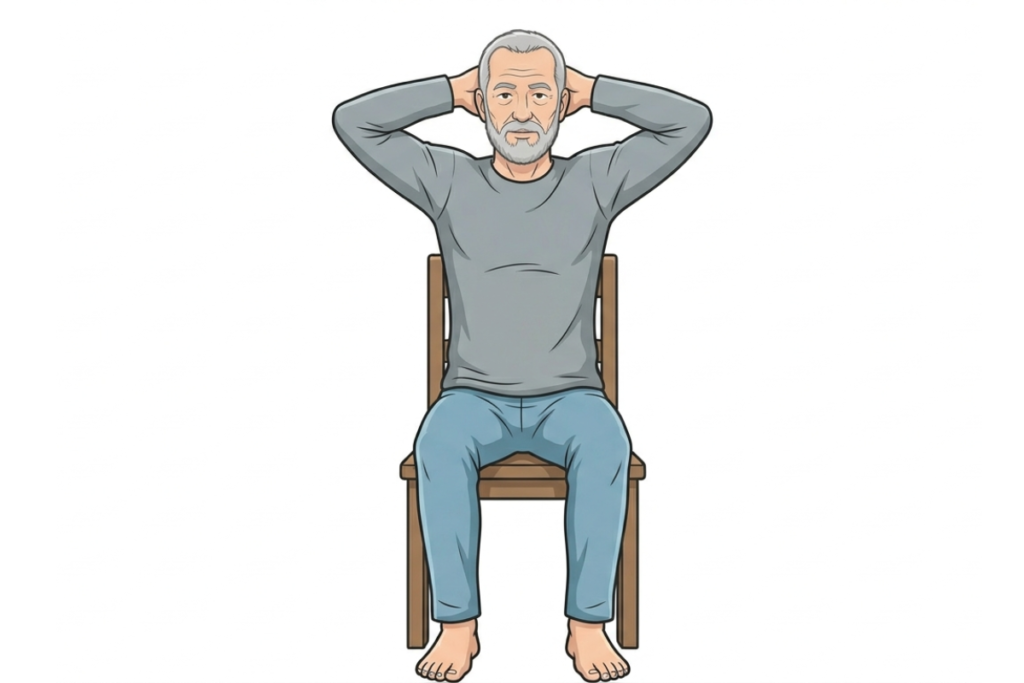
- Sit tall, interlace your fingers behind your back.
- Gently squeeze your shoulder blades together and lift your chest.
- Hold for 20 to 30 seconds.
- Breathe deeply.
This stretch feels great, especially if you spend a lot of time sitting at a desk.
How to Stay Consistent (Without Being Too Hard on Yourself)
Here’s the truth: the best workout routine is the one you actually do. You don’t have to be perfect. Just show up and do your best.
A few ways to stay on track:
- Start small. Even 10 minutes counts. Seriously.
- Pick a consistent time. Morning tea, lunch break, or after dinner. Whatever fits your life.
- Keep track of your progress. Write down what you do each session. Seeing your progress can be very motivating.
- Celebrate your achievements. If you completed three sessions this week, that’s something to be proud of.
- Be patient. Strength and flexibility take time to develop. Trust yourself and the process.
Final Thoughts
The most important step in any fitness journey is just getting started. You don’t need to be fit to begin; you start so you can become fit. It really does work that way. Easy chair workouts for beginners are gentle, effective, and possible no matter your current fitness level. Whether you’re 35 or 75, just starting out or coming back after a break, this routine is designed for you. Today, grab your favorite chair, take a deep breath, and try just one exercise from this list. That’s all you need to get started.
