
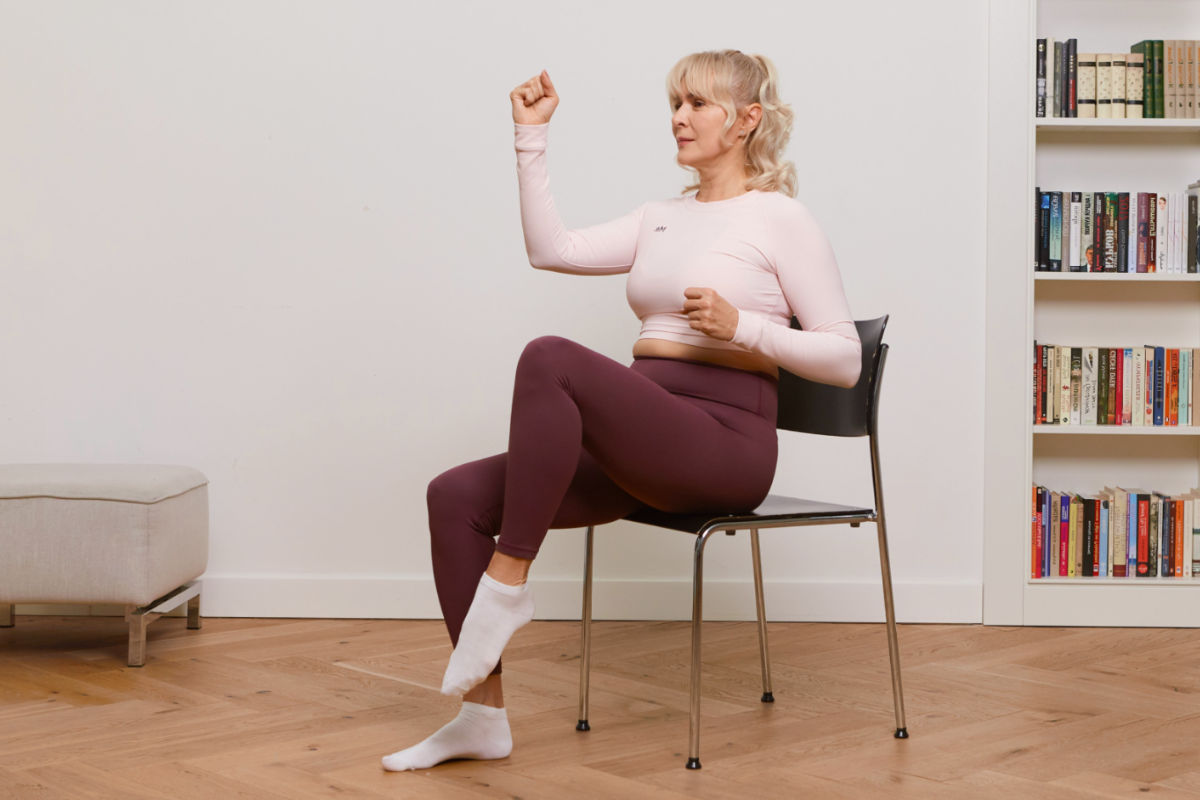
Achy knees often come with age. Maybe you notice stiffness in the morning, a dull ache after walking, or knees that crackle and pop. Knee pain is real, and for many older adults, the thought of exercising to help it isn’t very appealing. The good news is you don’t need a gym, a trainer, or special equipment. Chair exercises for knee pain are a simple, low-impact way to strengthen the muscles around your knees, improve flexibility, and ease discomfort. All you need is a sturdy chair and about 10 to 15 minutes.
There’s no need for floor exercises or awkward positions. It’s just you, your chair, and some gentle care for your knees.
Why Chair Exercises Work So Well for Knee Pain
Before we start the exercises, let’s look at why they help.
Knee pain often occurs when the muscles around the joint (such as the quadriceps, hamstrings, and hip muscles) are weak. When these muscles don’t do their job, your knee has to work harder, which can lead to pain.
Chair exercises let you:
- Strengthen the right muscles without putting excess pressure on your knees.
- Improve circulation to reduce swelling and stiffness.
- Build flexibility gradually and safely.
- Boost confidence by showing your body that movement is possible.
The chair provides support, reduces your risk of falling, and lets you control your effort. It’s a reliable way to exercise safely.
Before You Begin: A Few Quick Tips
- Use a sturdy chair without wheels (your dining chair works perfectly).
- Sit tall with feet flat on the floor, hip-width apart.
- Move slowly and breathe through each exercise.
- If something hurts (not just feels challenging, but actually hurts), stop.
- Check with your doctor before starting any new exercise routine, especially if you have a knee replacement or serious joint condition.
Ready to begin? Let’s get started.
7 Chair Exercises for Knee Pain Relief
Exercise 1: Seated Knee Extension
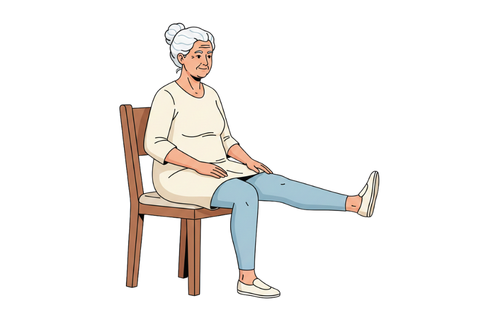
This exercise is a classic for knee pain because it works so well. It targets the quadriceps, the muscles that help protect your knee joint.
How to do it:
- Sit up straight with both feet flat on the floor.
- Slowly straighten your right leg until it’s parallel to the floor (or as far as comfortable).
- Hold for 3-5 seconds, gently squeezing your thigh muscle.
- Lower your foot back down slowly, with control.
- Repeat 10 times, then switch to the left leg.
Tip: Move smoothly and with control. Avoid swinging or kicking your leg. Focus on steady, gentle movement.
Exercise 2: Heel Slides
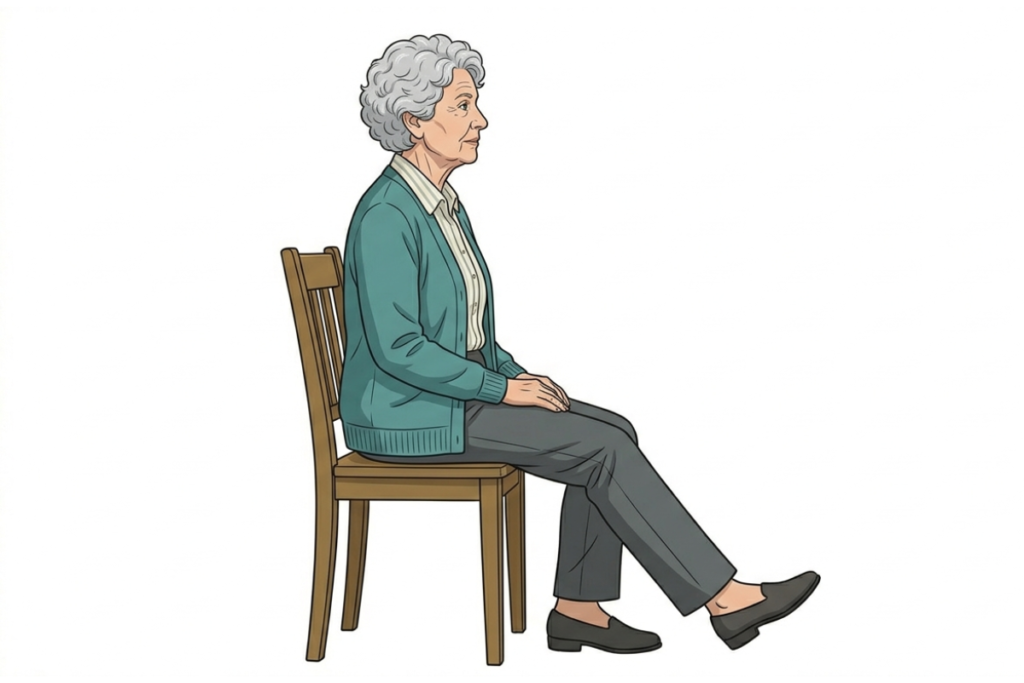
This gentle exercise helps your knee move better without putting weight on it. It’s simple and effective.
How to do it:
- Sit at the edge of your chair, with your legs slightly extended in front of you.
- Slowly slide your right heel back toward the chair legs, bending your knee.
- Go as far as feels comfortable, then hold for 2-3 seconds.
- Slide the heel forward again to the starting position.
- Repeat 10 times per leg.
Tip: If your heel slides too easily on hard floors, put a small towel under your foot to help it glide smoothly.
Exercise 3: Seated Marching
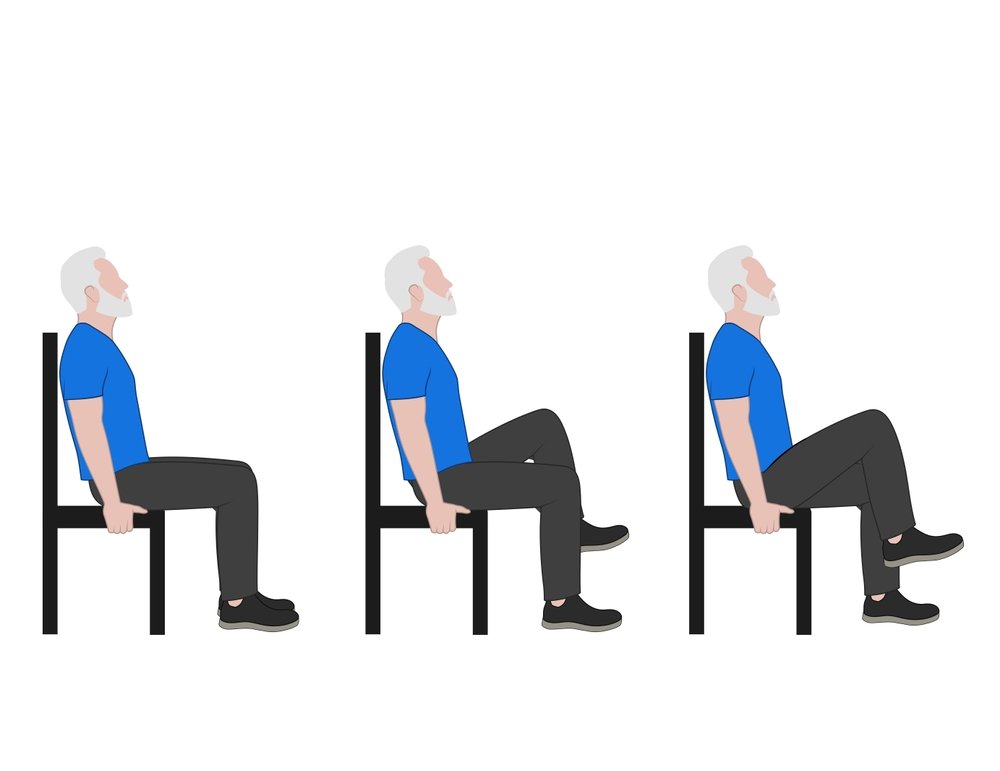
Despite the name, you won’t be moving around, but this exercise is great for your knees. Seated marching works your hip flexors and quadriceps and helps loosen stiff knee joints.
How to do it:
- Sit upright with feet flat on the floor.
- Lift your right knee up toward your chest (as high as comfortable).
- Lower it back down.
- Lift your left knee.
- Alternate legs in a slow, steady marching rhythm for 20-30 seconds.
Tip: Hold onto the sides of the chair for extra stability if needed.
Exercise 4: Ankle Circles
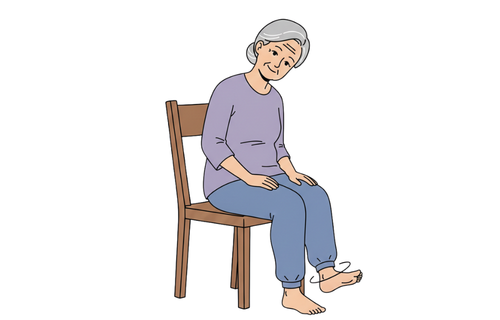
This exercise focuses on your ankles, but your ankles, knees, and hips all work together. Stiff ankles can affect your knees, so loosening your ankles helps your whole leg move better.
How to do it:
- Sit back comfortably and lift one foot slightly off the floor.
- Slowly rotate your ankle clockwise 5 times.
- Then 5 times counterclockwise.
- Switch feet and repeat.
Tip: Make the circles as large and smooth as you can, using your big toe to guide the movement.
Exercise 5: Seated Hamstring Stretch
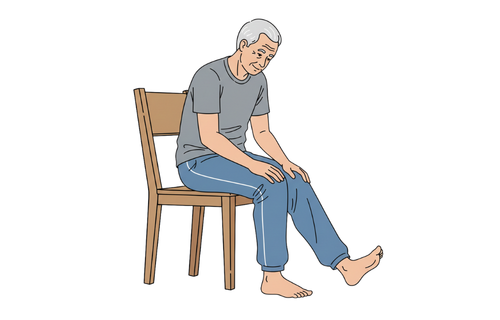
Tight hamstrings pull on the back of the knee, contributing to pain and stiffness. This gentle stretch helps release tension without any floor work.
How to do it:
- Sit at the edge of your chair.
- Extend your right leg straight out with your heel on the floor and your toes pointing up.
- Sit tall and gently lean forward from your hips (not your waist) until you feel a mild stretch in the back of your thigh.
- Hold for 20-30 seconds.
- Slowly come back up and switch legs.
Tip: You should feel a pull in the back of your thigh, not pain. There is a difference, and your body knows which is which.
Exercise 6: Seated Calf Raises
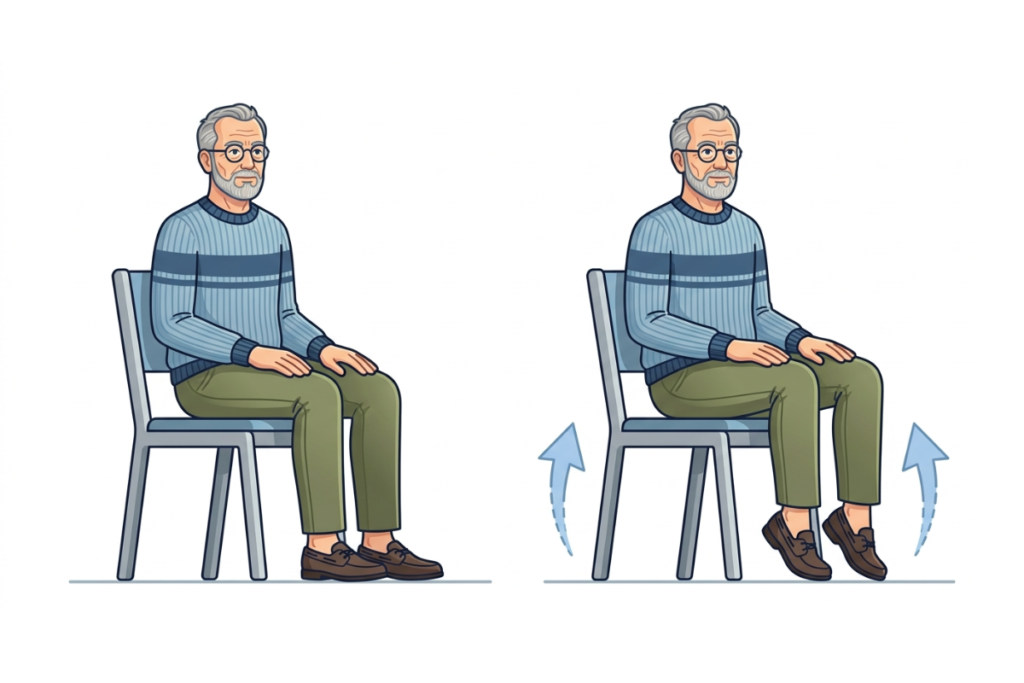
Strong calves support your knees more than most people realize. This simple move also gets your blood circulating, which helps with swelling and stiffness.
How to do it:
- Sit upright with both feet flat on the floor.
- Slowly raise both heels off the floor, coming up onto your toes.
- Hold for 2-3 seconds at the top.
- Lower slowly back down.
- Repeat 12-15 times.
Tip: To make this exercise easier, try lifting one leg at a time. To make it harder, pause for a moment at the top.
Exercise 7: Hip Abduction (Side Leg Lift)
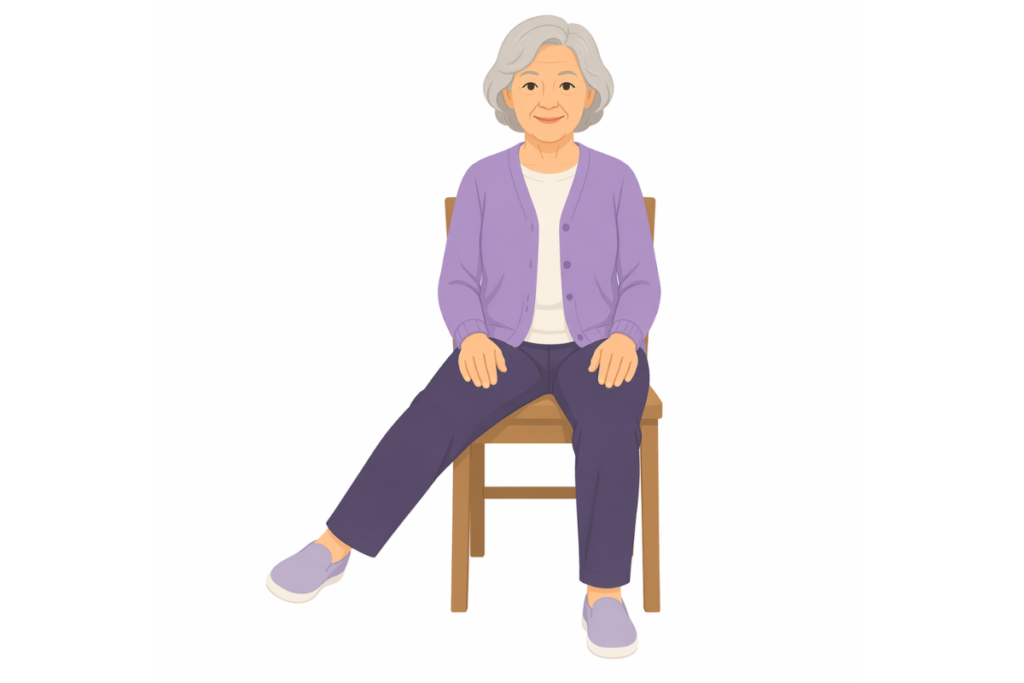
Weak hip muscles are a common cause of knee pain. When your outer hips are not strong, your knee may twist inward, putting extra stress on the joint. This exercise helps strengthen those muscles.
How to do it:
- Sit upright with feet flat on the floor.
- Keeping your foot flexed, slowly lift your right leg out to the side a few inches.
- Hold for 2-3 seconds.
- Lower it back down with control.
- Repeat 10 times per leg.
Tip: Keep your torso steady during the exercise. If you start to lean, try lifting your leg a little less. Focus on small, controlled movements.
Building a Simple Routine
You don’t have to do all seven exercises every day to see results. Even starting with two or three is helpful.
Here’s a simple beginner schedule to try:
- Days 1, 3, 5: Knee Extensions + Seated Marching + Calf Raises
- Days 2, 4: Heel Slides + Hamstring Stretch + Ankle Circles
- Day 7: Hip Abductions + any two favorites from the week
Aim for 2-3 sets of each exercise. Rest for 30-60 seconds between sets. The whole routine should take no longer than 15 minutes.
Being consistent is more important than working out intensely. Doing ten minutes each day will help your knees more than one long session followed by days of rest.
Final Thoughts
Knee pain does not have to last forever, and you do not need to make big changes to start feeling better. The important thing is to begin. Choose one exercise from this list today and do it twice. You do not need to change your whole routine or make a big commitment. Just sit in your chair and move. Your knees have supported you for years. Now is a good time to take care of them with gentle chair exercises for seniors with knee pain. You can do this!
