
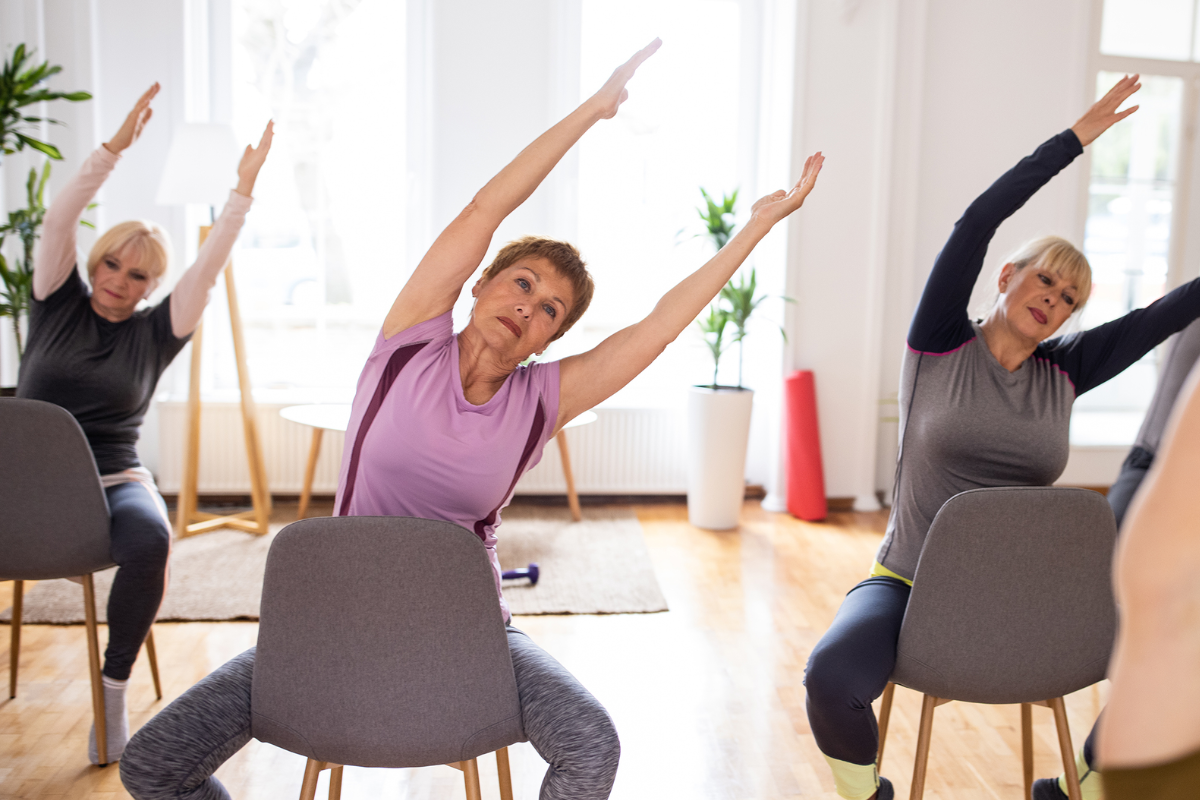
The word “exercise” usually conjures up images of teenagers in neon spandex lifting weights that look like they belong on a construction site. If that sounds like your personal nightmare, you are in the right place. Staying active does not have to involve loud music, sweaty crowds, or trying to figure out how to use a machine that looks like a medieval torture device. The truth is, a good exercise plan for older adults isn’t about pushing through pain.
It’s about making small changes that lead to big improvements. We want you to feel strong enough to reach the top shelf or get up from the sofa more easily. Today, we’ll look at chair yoga—a simple way to build strength and flexibility right in your living room.
Why Your Living Room is the New Best Gym
One of the best things about exercising at home is that no one is watching. If you lose your balance or make a funny move, there’s no one to judge. And your kitchen is close by for a quick snack after you finish.
Chair yoga is great because it makes fitness feel less intimidating. Using a sturdy chair for support keeps your joints safe. You’ll enjoy the benefits of traditional yoga—like better posture, less back pain, and a calmer mind—without worrying about getting up from the floor.
Getting Started: Your High-Tech Equipment
Before we get started, let’s talk about what you need. You don’t need an expensive yoga mat or special clothes. All you need is a chair, but it should be the right kind.
- Pick a sturdy chair: Avoid chairs with wheels, so you don’t accidentally roll across the room during your workout.
- It’s best to use a chair without armrests: A dining chair works well because armrests can get in the way when you move your arms.
- Flat ground: Make sure your chair is on a non-slip surface so it stays put while you move.
- Comfortable clothes: Anything you can move in works. Pajamas are perfectly acceptable workout attire in this gym.
Phase 1: The “Wake Up” Warm-Up
We shouldn’t start exercising right away. It’s important to warm up our muscles so they’re ready to move. These warm-up moves help your joints and get your blood flowing.
Seated Neck Rolls
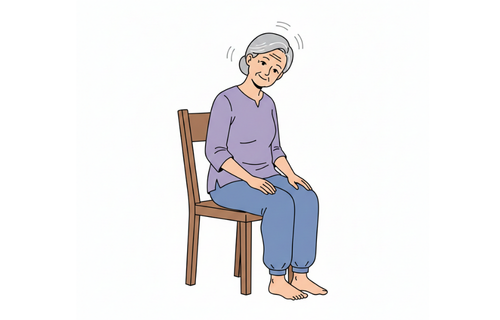
Sit up tall with your feet flat on the floor. Imagine there is a string pulling the top of your head toward the ceiling.
- Slowly drop your right ear toward your right shoulder.
- Hold for a second, then chin to chest.
- Roll over so your left ear is near your left shoulder.
- Repeat this five times. Go slowly so you don’t get dizzy.
Shoulder Shrugs and Circles
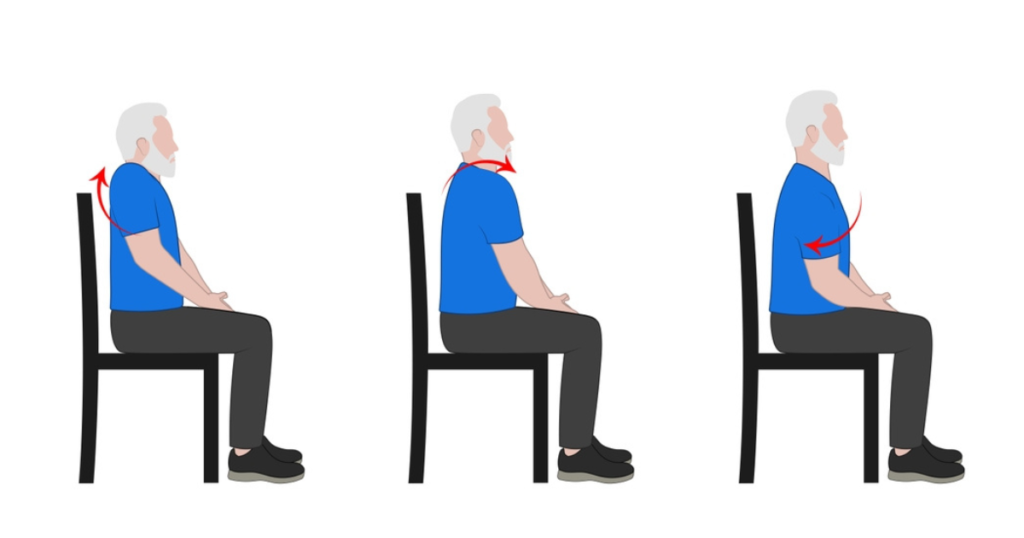
Many people hold stress in their shoulders, which can make them feel tense and raised.
- Inhale and shrug your shoulders up toward your ears.
- Exhale and drop them down heavily.
- Next, roll your shoulders in big circles. Move them backward five times, then forward five times.
The “Hello, Feet” Point and Flex
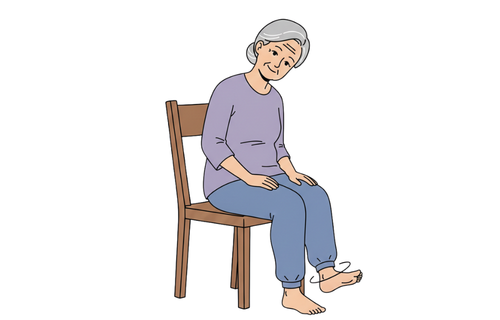
Your feet work hard every day, so let’s give them some care.
- Lift one foot off the floor (keep your knee bent).
- Point your toes away from you, then flex them back toward your shin.
- Rotate your ankle in one direction, then switch and rotate it the other way.
- Repeat with the other foot.
Phase 2: Beginner Chair Yoga Poses
Now that you’re warmed up, let’s start the main exercises. These poses help you build strength and flexibility without straining your body.
Seated Mountain Pose (Tadasana)
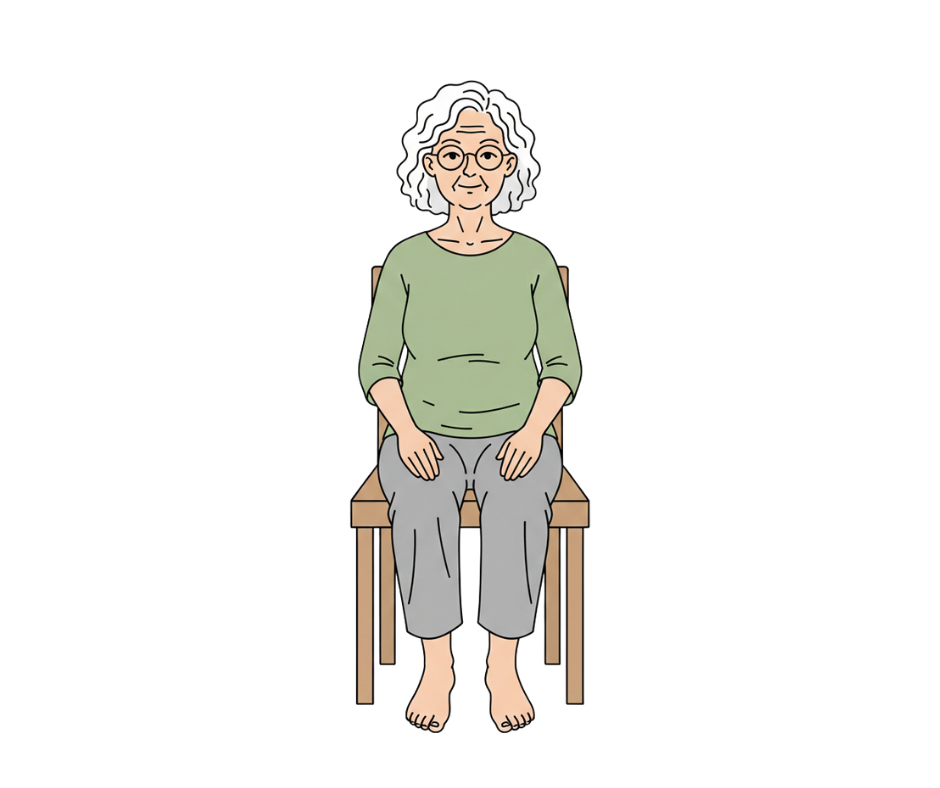
This may look like you’re just sitting, but it’s the foundation for all the other moves. The key is to sit actively.
- Sit toward the front edge of your chair. Keep your feet hip-width apart and flat on the floor. Place your hands on your thighs with palms up.
- Engage your core. Imagine pulling your belly button slightly toward your spine. Sit as tall as you possibly can.
It improves your posture and reminds your back muscles that they have a job to do.
Seated Cat-Cow Stretch
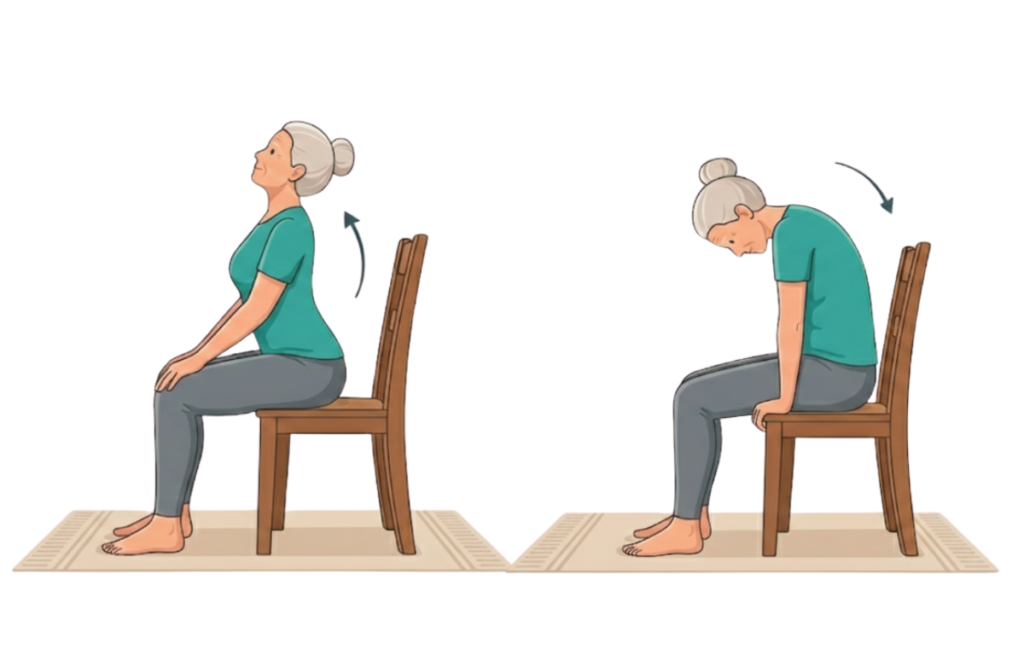
This stretch is excellent for your back. It moves your spine in two directions and can feel very relaxing.
- Place your hands on your knees.
- The Cow: Inhale, lift your chest, and look slightly upward as you arch your back.
- The Cat: Exhale, round your spine like a grumpy Halloween cat, and tuck your chin toward your chest.
- Flow between these two movements five to ten times, following the rhythm of your breath.
Seated Warrior I
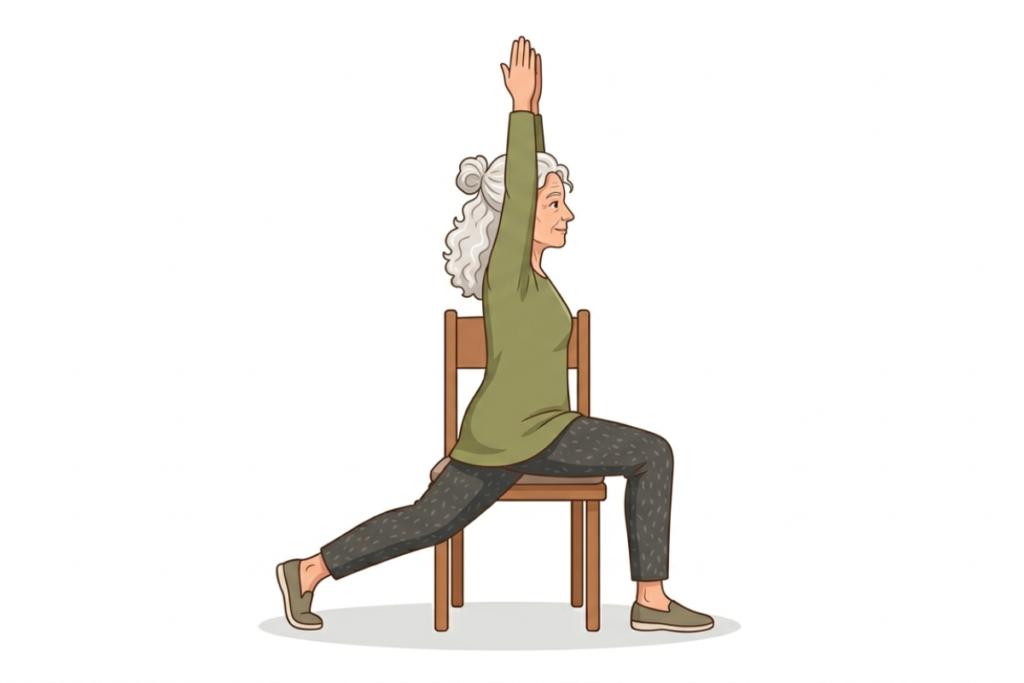
You don’t need any special equipment for this pose—just some focus. It helps build upper-body strength and opens your chest.
- Sit tall and turn your body to the right so your right leg is hanging off the side of the chair.
- Keep your right foot flat. If you feel stable, you can extend your left leg behind you or just keep it bent.
- Reach both arms up toward the ceiling, palms facing each other.
- Hold this pose for three deep breaths.
- Switch sides and repeat.
The Seated Twist
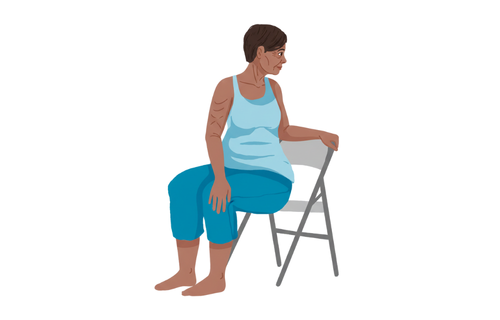
Twisting helps digestion and keeps your spine flexible for everyday movements, such as turning to look behind you.
- Sit sideways on your chair so the backrest is to your right.
- Keep your feet flat on the floor.
- Turn your upper body to the right and hold onto the back of the chair for support.
- Take a deep breath in and sit up tall. As you breathe out, gently twist a little further.
- Hold for thirty seconds, then swivel around and do the other side.
Phase 3: Building Real-World Strength
Flexibility is important, but building some strength is helpful too. These exercises support the movements you do every day.
The “Almost” Sit-to-Stand
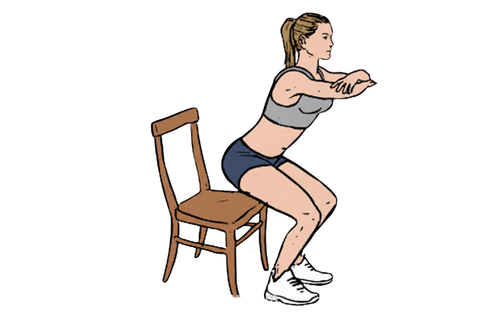
This exercise is similar to a squat, but we’ll call it the sit-to-stand. It’s one of the best ways to keep your legs strong.
- Sit at the edge of your chair with your feet firmly planted.
- Lean forward slightly and push through your heels to lift your bottom just an inch or two off the chair.
- Hold for a moment. It’s normal if your legs feel a little shaky.
- Sit back down gently.
- Try to do this five times. If you feel strong, stand all the way up and sit back down slowly.
Seated Leg Extensions
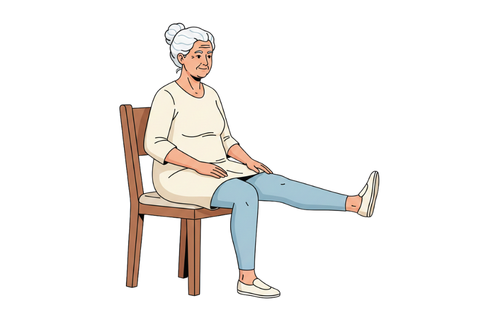
If you want to strengthen your knees, this is your go-to move.
- While sitting tall, slowly straighten your right leg out in front of you.
- Flex your toes back toward you and hold for three seconds.
- Lower your leg back down slowly and with control.
- Do ten repetitions on each leg.
Keys to Success: Consistency Over Perfection
A common mistake when starting daily exercise routines for seniors is doing too much at once. You don’t need to do an hour of yoga today. If you overdo it, you might feel too sore to continue.
The “Magic Formula” for success is:
- Start small: Five or ten minutes is plenty.
- Be consistent: Doing five minutes every day is much better than doing sixty minutes once a month.
- Listen to your body. If something hurts, stop. There’s a difference between a muscle working (a dull ache) and pain (a sharp feeling). Stop if you feel pain.
- Remember to breathe. Many people hold their breath when focusing, but steady breathing is important in yoga.
Final Thoughts
You don’t need a gym membership, special shoes, or to touch your toes to be fit. All you need is the willingness to move a little more than you did before.
Chair yoga is something your future self will thank you for. It helps you stay independent, keeps your joints healthy, and reminds you of your strength. You don’t need to be perfect—just keep showing up.
Why not try a Seated Cat-Cow stretch right now? Your back will feel better, and you don’t even need to put on shoes. You can do this!
