
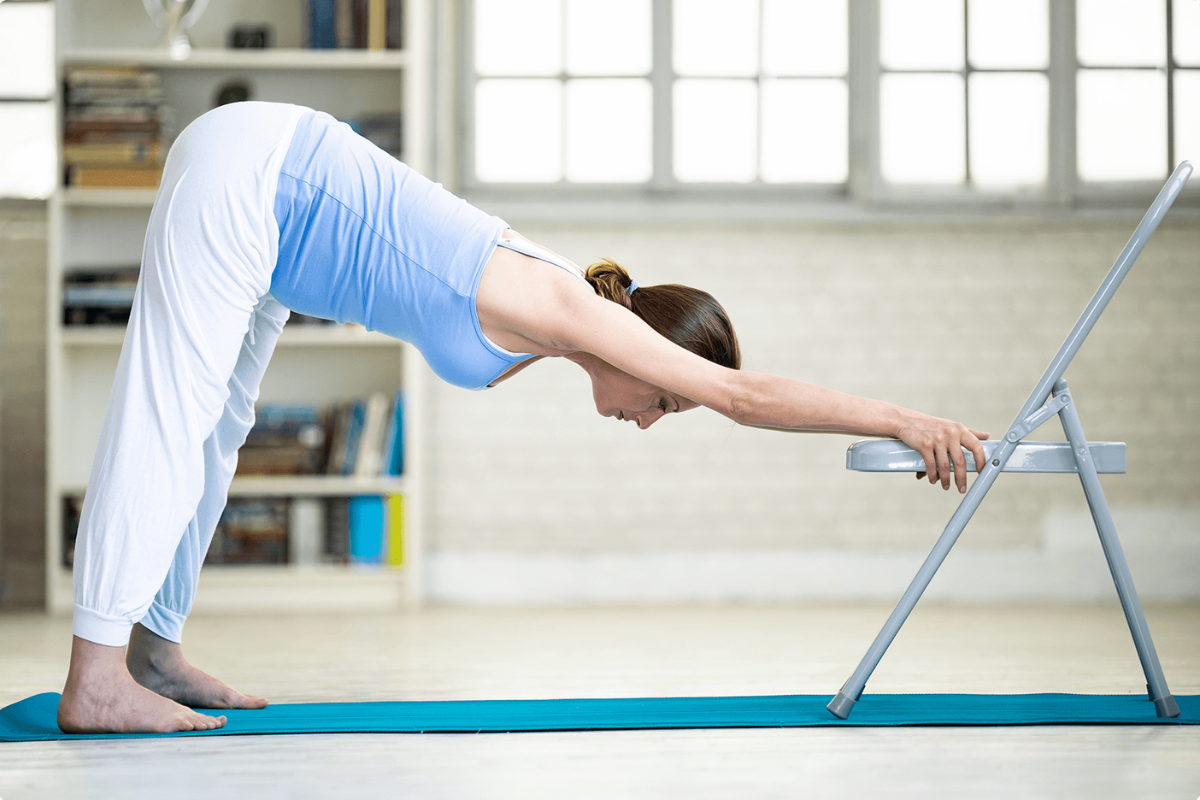
When many people hear the word yoga, they picture a young influencer doing complicated poses on a mountaintop at sunrise. If your range of motion is more like reaching for the remote than putting your foot behind your head, that image can feel intimidating. The good news is that fitness does not require special clothes or extreme flexibility. Engaging in elderly exercise at home is really about making daily life easier, safer, and more enjoyable.
If you want to keep up with your grandkids, reach the top shelf more easily, or feel steadier on your feet, chair yoga can help. It is gentle, effective, and the chair supports you throughout. You can think of it as yoga with extra support.
Why Chair Yoga is a Total Game Changer
As we age, gravity can feel like it puts more strain on our joints. Chair yoga lets you enjoy the benefits of stretching and strengthening without worrying about losing your balance or struggling to get up from the floor.
Here is why this matters:
- Joint-Friendly: This routine is low-impact and gentle on your joints, yet still offers great benefits.
- Better Balance: Strengthening your stabilizer muscles helps you avoid slips or stumbles at home.
- Mental Clarity: Spending ten minutes on breathing and movement can help you feel more alert and focused.
- Independence: Building strength in your legs and core helps you stay active and manage your daily routine on your own.
Setting the Stage: Your “Gym” (a.k.a. Your Living Room)
You do not need a gym membership or a personal trainer to try at-home workouts for the elderly. You only need a few basic items to get started safely:
- A Sturdy Chair: This is the most important part. Use a dining chair or a folding chair without wheels. Avoid using a rolling office chair to prevent accidents.
- Clear Space: Make sure there are no stray rugs or dog toys nearby that could cause a trip.
- Flat Ground: Ensure your chair is on a level surface.
- Comfortable Clothes: Wear something that lets you move. Your favorite old t-shirt and some sweatpants are perfect.
Gentle Warm-Ups: Waking Up the Engines
Before starting the main exercises, it is important to prepare your body to move. These warm-up moves help get your blood flowing without making you tired.
The Neck Nudge
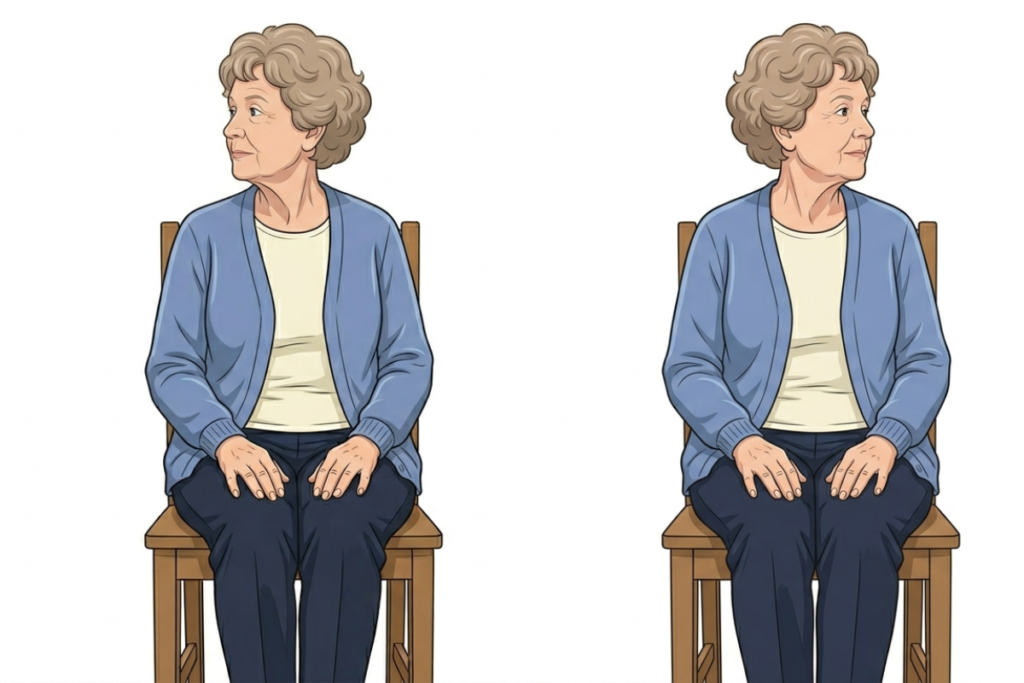
Sit up tall with your feet flat on the floor. Imagine there is a string pulling the top of your head toward the ceiling.
- Slowly turn your head to the right as if you are looking for a lost sock.
- Hold for a breath, then slowly turn to the left.
- Repeat five times on each side.
- Pro Tip: Do not push yourself. If your neck feels tight, stop at a comfortable point.
Shoulder Rolls
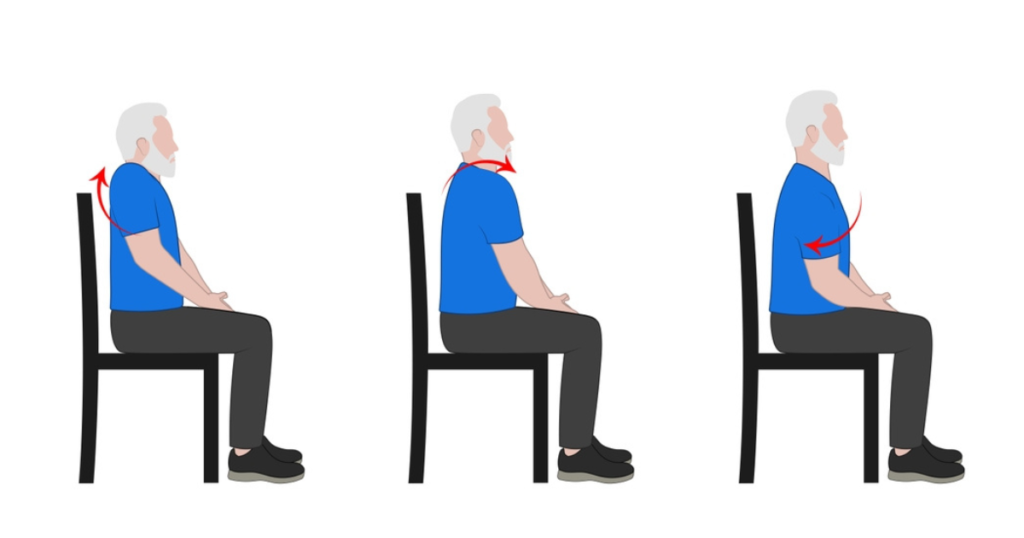
Our shoulders often hold tension, especially during stressful times.
- Inhale and shrug your shoulders up to your ears.
- Exhale and roll them back and down.
- Imagine you are drawing circles with your shoulder blades.
- Repeat this movement ten times. It should feel relaxing.
Beginner Poses for Strength and Flexibility
Now that you are warmed up, you can start the exercises that help build everyday strength. If you feel pain, stop. A good stretch should feel like a gentle pull, not a sharp pain.
Seated Cat-Cow
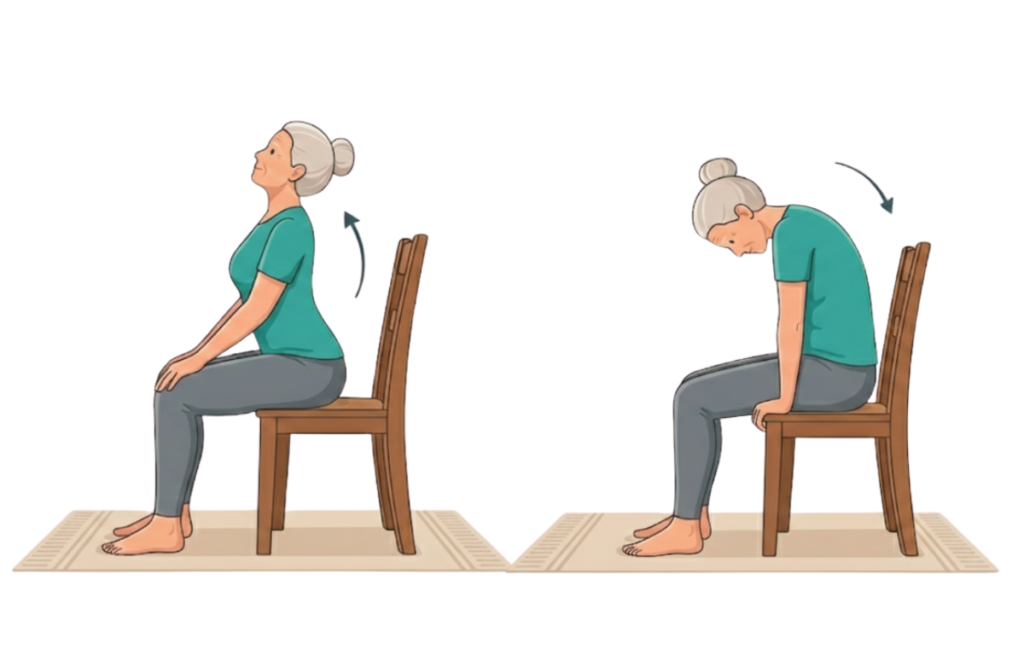
This exercise is excellent for back health. It keeps your spine flexible and improves posture.
- Sit toward the front edge of your chair with your hands on your knees.
- The Cow: Inhale, lift your chest, and look slightly upward. Arch your back just a little bit.
- The Cat: Exhale, round your spine like a grumpy Halloween cat, and tuck your chin toward your chest.
- Flow back and forth with your breath five times.
Seated Warrior I
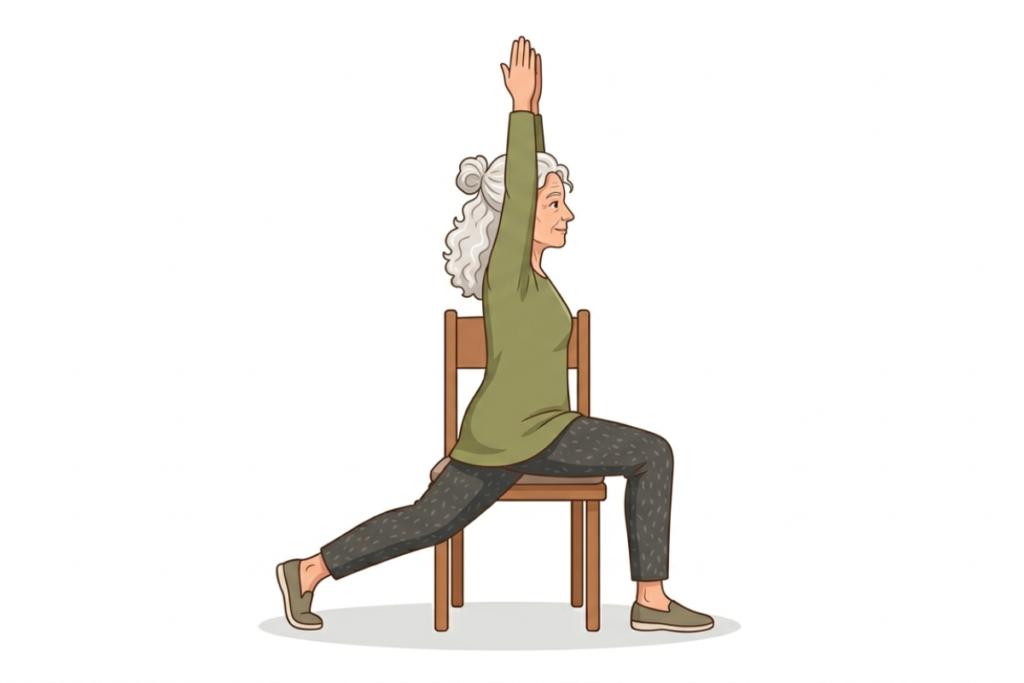
This exercise helps build leg strength and loosen the hips, which can become tight from sitting.
- Turn your body so you are sitting sideways on the chair, facing to the right.
- Keep your right buttock on the seat and your right foot flat on the floor.
- Swing your left leg behind you, keeping the knee bent or straightening it if you are comfortable.
- Raise your arms toward the sky.
- Take three deep breaths, then switch sides.
The “Knee-to-Chest” Hug
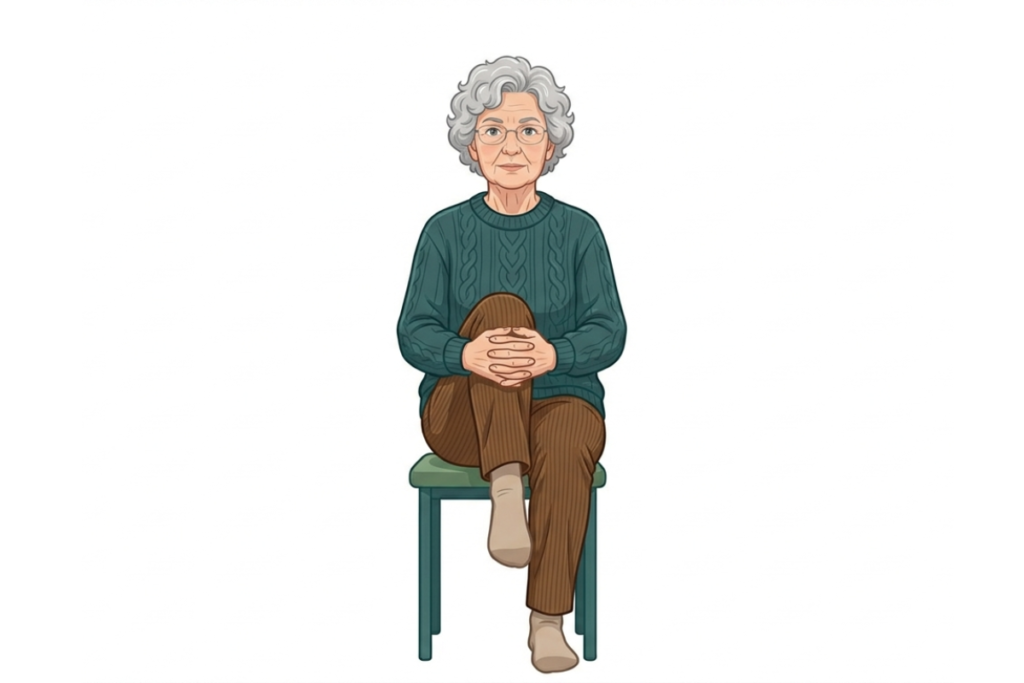
This exercise helps digestion and can relieve lower back tension.
- Sit back in your chair so your spine is supported.
- Interlace your fingers around your right shin.
- Gently pull your knee toward your chest.
- Rotate your ankle in circles while you are holding it.
- Lower it down and repeat with the left leg.
Seated Forward Fold
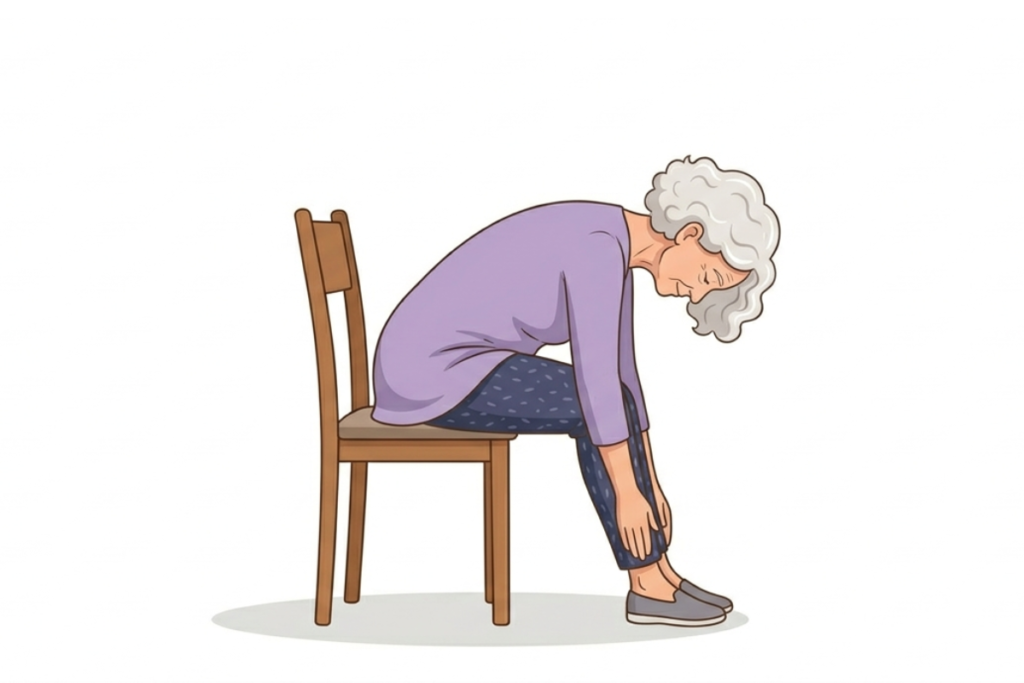
Tight hamstrings can cause back pain, so it is important to keep them flexible.
- Sit on the edge of the chair with your feet wider than your hips.
- Slowly lean forward, sliding your hands down your legs toward your ankles.
- Let your head hang heavy for a moment.
- Slowly roll back up, moving gently to avoid feeling dizzy.
Building Real World Muscle: Functional Moves
Yoga is helpful for stretching, but it is also important to build the muscles you use for daily activities like getting out of a car or carrying groceries.
The “Almost” Stand Up
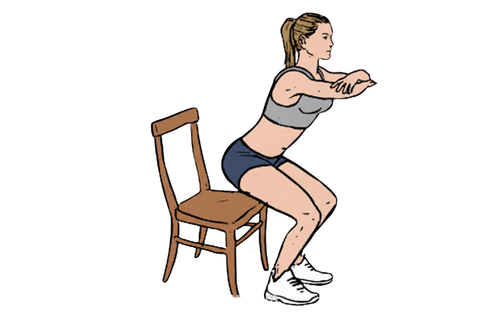
This exercise is similar to a squat, but the chair provides support.
- Sit on the edge of your chair with your feet firmly planted.
- Lean forward slightly, engage your tummy muscles, and push through your heels.
- Lift your bottom just two inches off the chair.
- Hold for a second, then slowly sit back down.
- Try to do this five times. It is one of the best ways to keep your legs strong.
Seated Twists
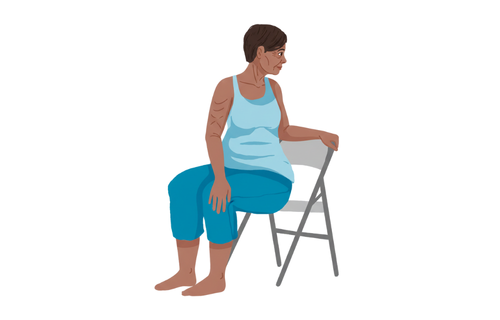
Twisting exercises help keep your core flexible. This can make daily tasks, like reaching for a seatbelt, easier.
- Sit tall with feet together.
- Place your left hand on your right knee.
- Place your right hand on the back of the chair.
- Gently twist to look over your right shoulder.
- Take a deep breath and swap sides.
How to Be Consistent
A helpful tip: 5 minutes of movement every day is much better than a long workout once a month.
You do not need to do every exercise perfectly. Some days, you might only do shoulder rolls while waiting for the kettle to boil, and that is still progress. Other days, you might complete the whole routine twice, which is also great.
The goal of exercising at home as an older adult is not to win a medal. The aim is to feel a bit better tomorrow than you do today. If you move your body, even a little, you are on the right track.
Tips for Staying Motivated
- Pair it with a habit: Do your chair yoga right after your morning coffee or while the evening news is on.
- Invite a friend: Call someone and do the exercises together over the phone. Exercising with others can make it more enjoyable.
- Listen to music: Play songs you enjoy while exercising. Music can make the activity feel more fun.
Final Thoughts
You do not need a gym, special equipment, or the ability to touch your toes. All you need is a chair and a positive attitude.
Improving your strength and balance is a great way to care for yourself. It helps you stay active, independent, and confident. Take a deep breath, sit up straight, and try one of these exercises now.
You can do this. Take it one stretch, one breath, and one small step at a time. Your future self will appreciate the effort you start today. Now, grab your chair and begin.
