

No one plans to wake up one day with a hunchback. It just happens over time. A bit of slouching here, a forward neck there, and suddenly your spine looks like a question mark, making you wonder, “What happened to me?” The good thing is you don’t need a gym, a yoga mat, or to be as flexible as a young gymnast to improve your posture. Seated posture exercises for seniors are gentle and effective for strengthening the muscles that keep you upright, easing daily aches, and helping you feel better in your body. Best of all, you can do them right from your favorite chair.
If you’re new to exercise or want something gentle on your joints, this guide is for you. There’s no judgment, no complicated moves, and you won’t need to get on the floor.
Why Posture Matters More as We Age
Posture isn’t just about looking confident, though that’s a nice bonus. Good posture helps with your breathing, digestion, balance, and even your mood.
As we age, the muscles that support our spine can weaken if we don’t keep them active. Sitting for long periods can lead to rounded shoulders, neck pain, and lower back tension. Poor posture also makes daily tasks more difficult and increases the risk of falls.
The great news is that it’s never too late to make improvements. Even small, regular movements can make a real difference over time.
10 Simple Seated Posture Exercises for Seniors
Tall Spine Sit (The Foundation)
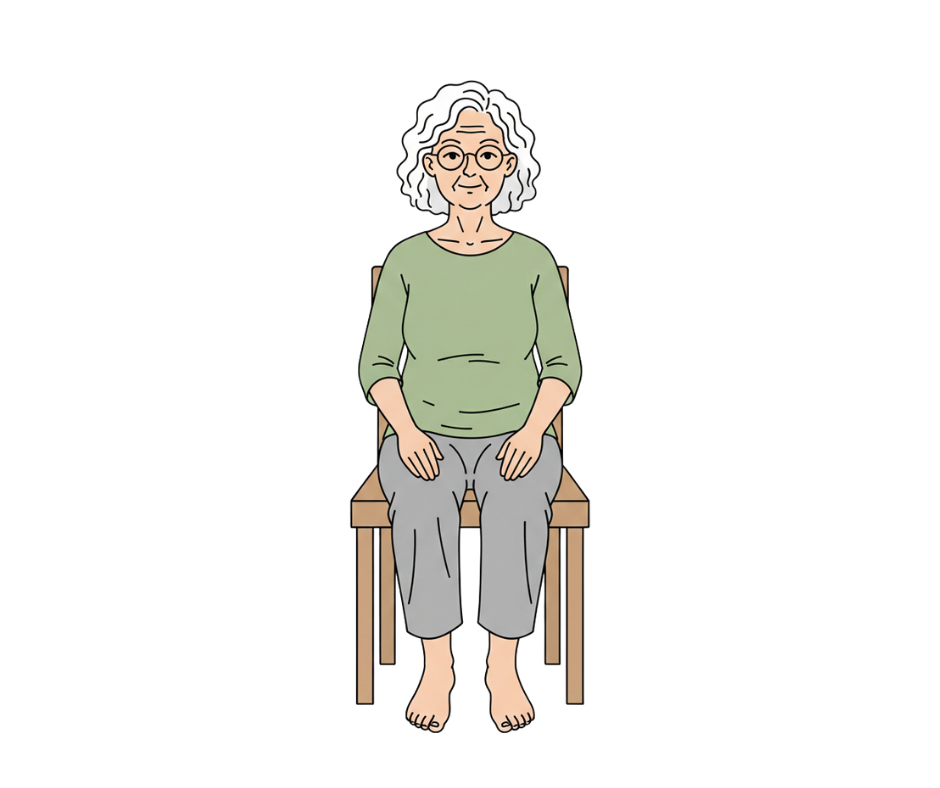
This move may seem simple, but it’s the foundation for everything else.
How to do it:
- Sit at the edge of your chair with feet flat on the floor.
- Imagine a string gently pulling the top of your head toward the ceiling.
- Let your shoulders relax down and back, away from your ears.
- Hold this tall position for 5 to 10 slow breaths.
Why it helps: Sitting tall on purpose activates your core and the muscles that support your spine. It’s like hitting the reset button for your posture.
Shoulder Blade Squeeze
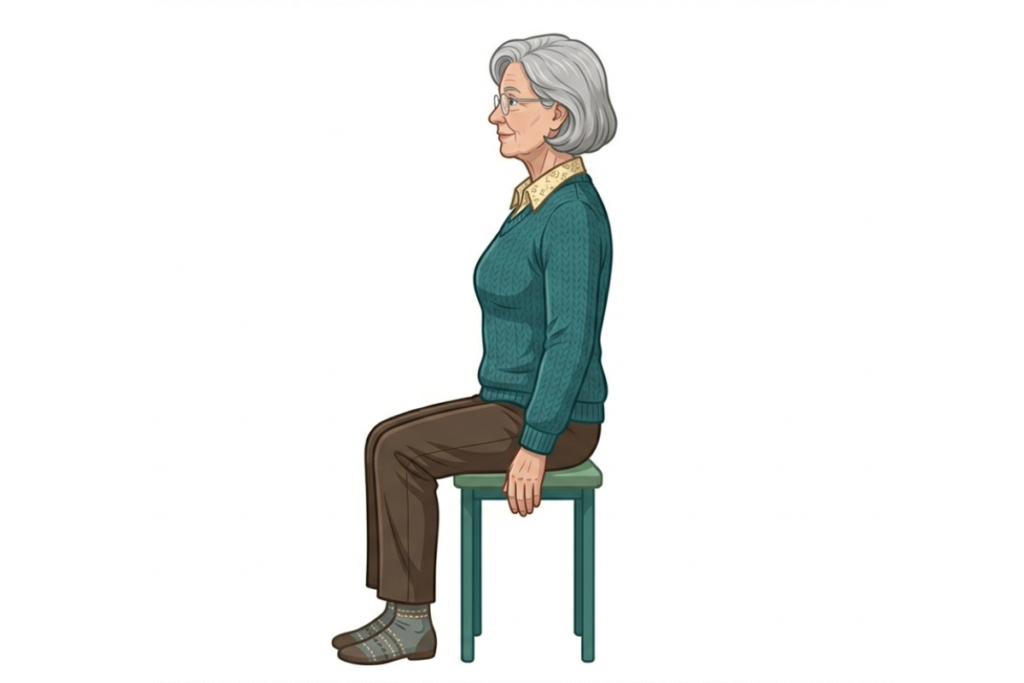
The muscles in your upper back help keep your shoulders from rounding forward, and they need some attention.
How to do it:
- Sit tall with your arms resting at your sides.
- Gently squeeze your shoulder blades together as if you’re trying to hold a pencil between them.
- Hold for 3 to 5 seconds, then release.
- Repeat 8 to 10 times.
Why it helps: This move strengthens the muscles between your shoulder blades, helping undo the effects of sitting and screen use.
Chin Tucks
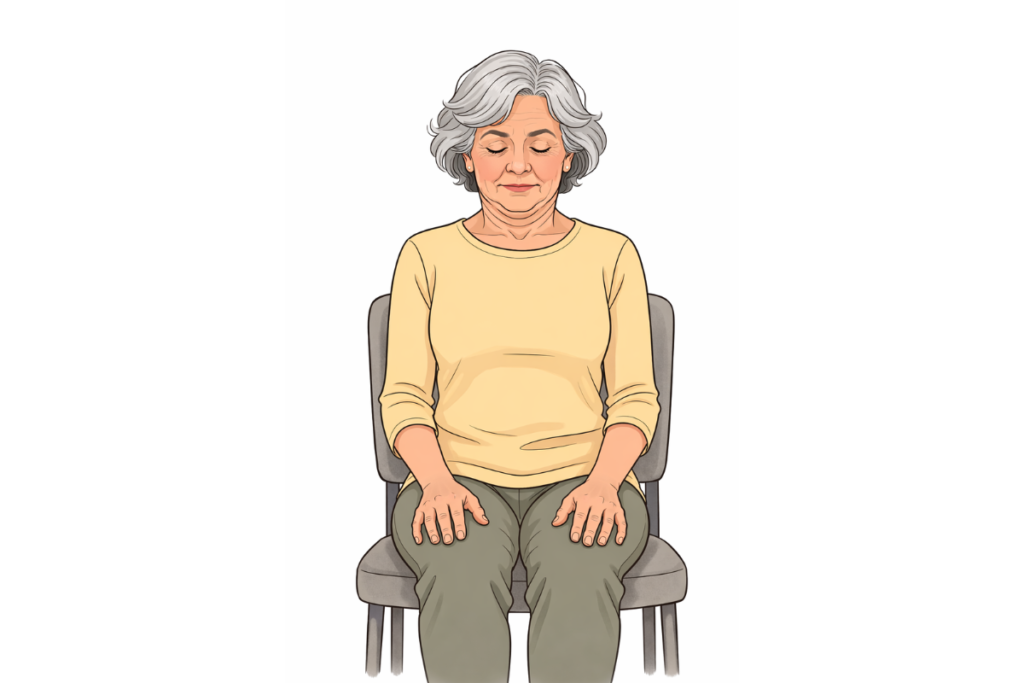
This exercise might feel a bit odd at first, but it can really help with neck pain and the common “tech neck” posture.
How to do it:
- Sit tall and look straight ahead.
- Gently pull your chin straight back, like you’re making a double chin. (Yes, really. It’s a good thing this time.)
- Hold for 3 to 5 seconds, then release.
- Repeat 8 to 10 times.
Why it helps: This move helps realign your head over your shoulders and stretches the muscles at the back of your neck, which often get tight from leaning forward.
Seated Cat-Cow Stretch
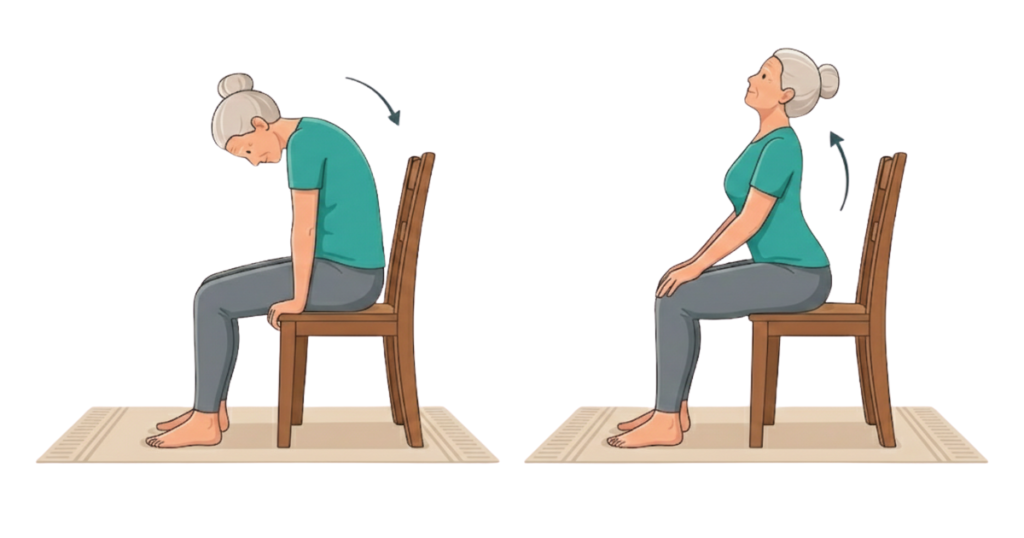
This gentle movement, borrowed from yoga, feels great for your spine.
How to do it:
- Sit tall with your hands resting on your knees.
- Cat: Round your back, tuck your chin to your chest, and pull your belly button inward.
- Cow: Arch your back gently, lift your chest, and look slightly upward.
- Flow between the two movements slowly, 8-10 times.
Why it helps: This stretch increases spine flexibility and gently massages the muscles along your back.
Chest Opener Stretch
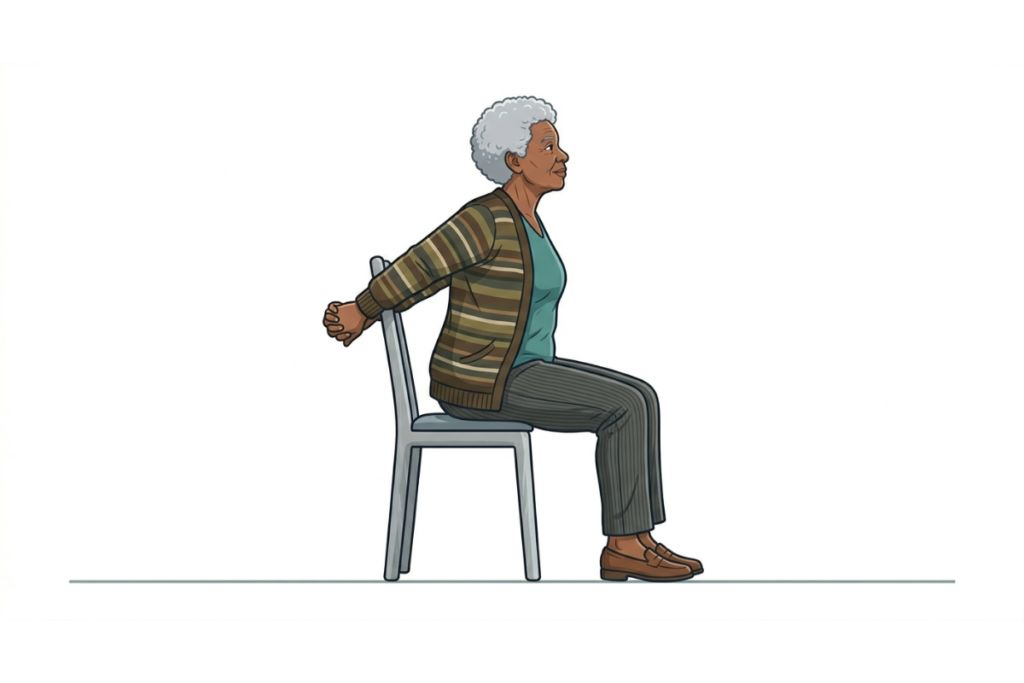
This stretch helps reverse the effects of slumping forward and opens up your chest.
How to do it:
- Clasp your hands behind your back (or hold the back of the chair if that’s easier).
- Gently squeeze your shoulder blades together and lift your chest upward.
- Hold for 5 to 10 seconds and breathe deeply.
- Repeat 3 to 5 times.
Why it helps: This move stretches your chest and the front of your shoulders, which often get tight from hunching forward.
Seated Side Stretch
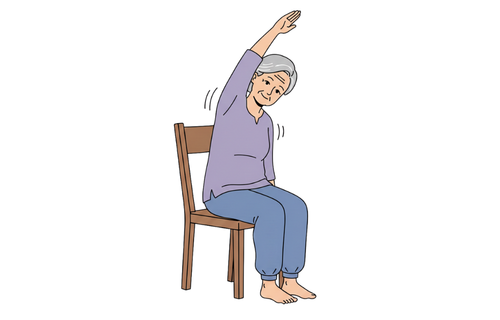
Gentle side-to-side stretches can do a lot for your spine.
How to do it:
- Sit tall and raise your right arm overhead.
- Gently lean to the left, reaching your right arm up and over.
- Hold for 3 to 5 breaths, feeling the stretch along your right side.
- Return to the center and repeat on the other side.
- Do 3 rounds on each side.
Why it helps: This stretch targets the muscles along your sides and spine, improving flexibility and easing tension.
Neck Side Stretch
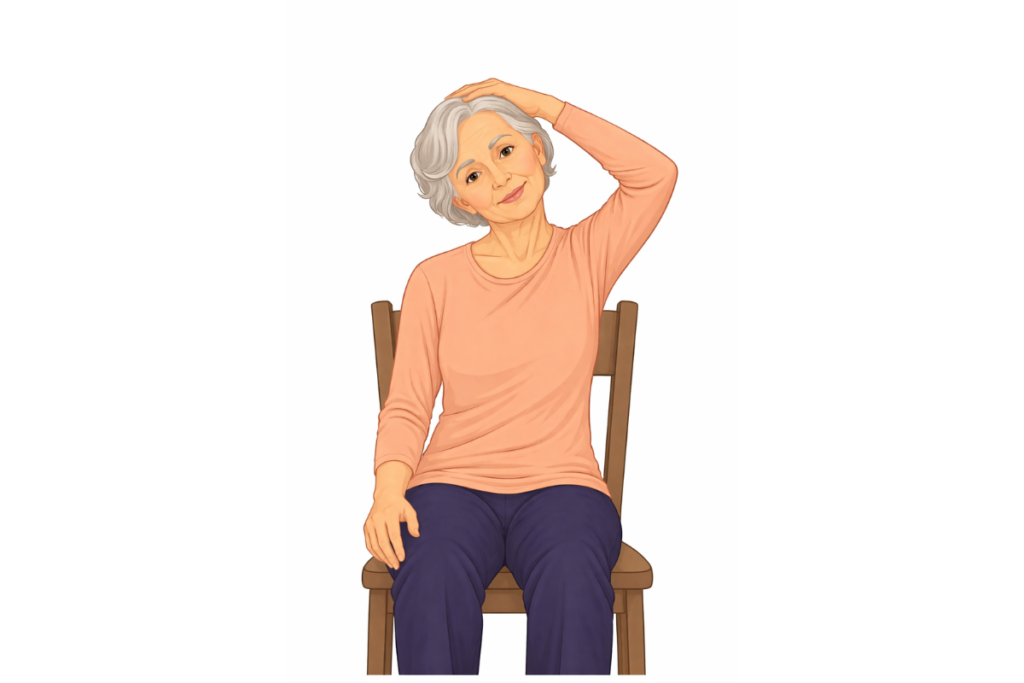
Tight neck muscles are a major cause of poor posture. This stretch helps release that tension.
How to do it:
- Sit tall and drop your right ear toward your right shoulder.
- For a deeper stretch, gently rest your right hand on top of your head (no pulling, just light pressure).
- Hold for 5 to 10 breaths.
- Slowly return to the center and repeat on the left side.
Why it helps: This stretch releases tight neck and upper shoulder muscles that pull your head forward and can cause tension headaches.
Seated Thoracic Extension (Back of Chair Stretch)
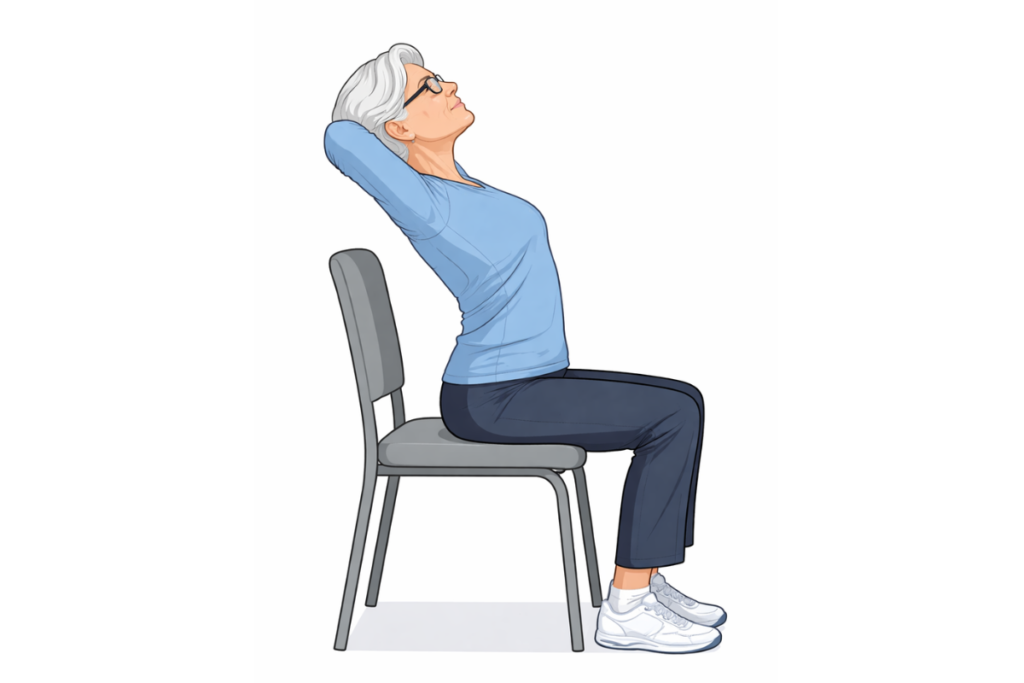
This move is great for reversing upper back rounding, and you can use your chair to help.
How to do it:
- Sit toward the front edge of your chair and clasp your hands behind your head.
- Gently lean back over the top edge of the chair, arching your upper back.
- Hold for 3 to 5 seconds, then slowly return to a sitting tall position.
- Repeat 5 to 8 times.
Why it helps: This exercise targets the upper and middle parts of your spine, which often become stiff and rounded as we age.
Seated Pelvic Tilts
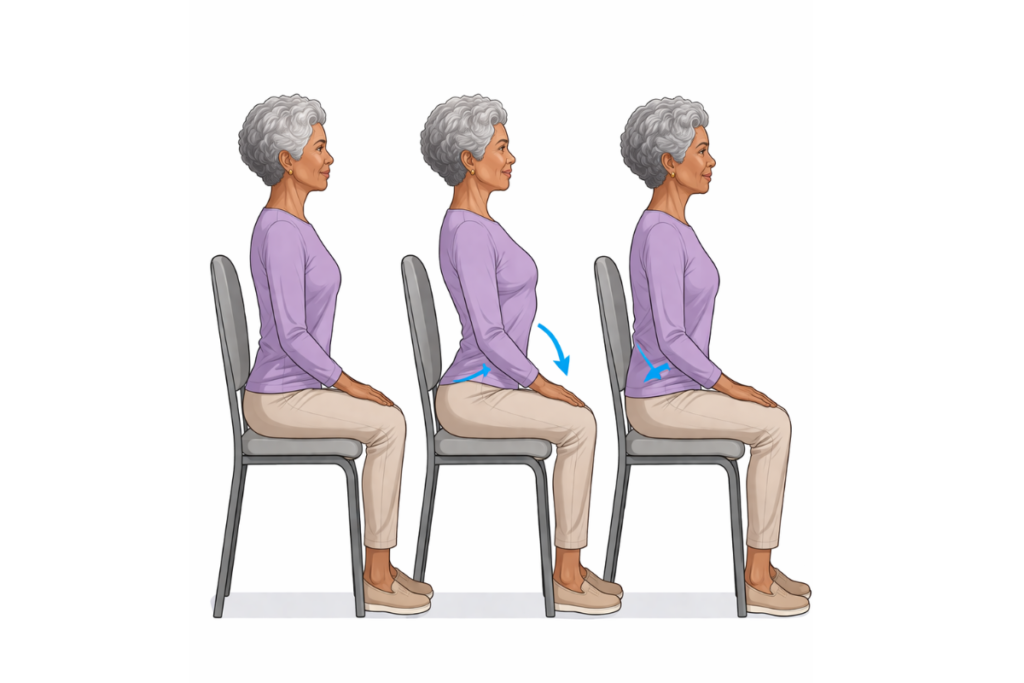
Your pelvis supports your spine. If it’s not in the right position, it can affect everything above it.
How to do it:
- Sit tall with feet flat on the floor.
- Gently arch your lower back, tilting your pelvis forward (think: sticking your tailbone out slightly).
- Then gently flatten your lower back, tilting your pelvis backward.
- Rock slowly between the two positions, 8 to 10 times.
Why it helps: This move activates your lower back and core muscles and helps you become more aware of your pelvic position, which is important for good posture.
Deep Belly Breathing
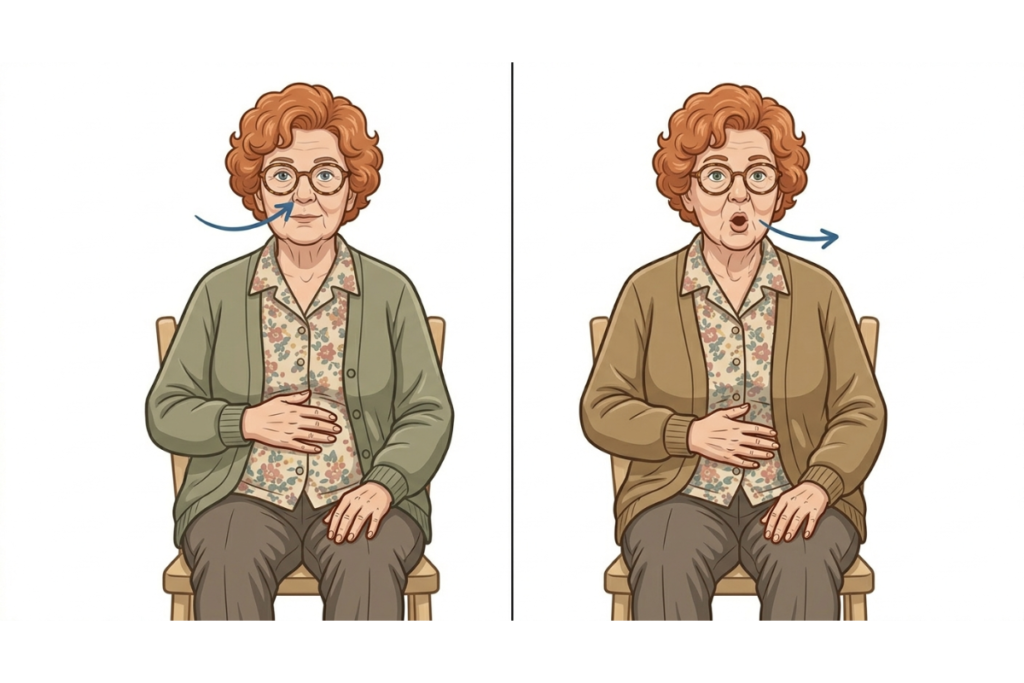
This last exercise is simple, effective, and often overlooked.
How to do it:
- Sit tall and place one hand on your belly.
- Breathe in slowly through your nose for 4 counts, feeling your belly expand outward.
- Breathe out slowly through your mouth for 6 counts.
- Repeat 5 to 8 times.
Why it helps: This exercise activates your deep core muscles, including the diaphragm, which support your spine. It also helps reduce stress, which can lead to muscle tension and poor posture.
How Often Should You Do These?
The truth is, even a little bit of these chair posture exercises for seniors can make a big difference.
Try to do 3 to 5 of these exercises once or twice a day. You don’t need to do all 10 at once. Even 5 to 10 minutes in the morning and a few more in the afternoon can help you build better habits.
Being consistent is more important than being perfect. A gentle 5-minute routine you do regularly is better than one perfect week followed by nothing.
Set a reminder on your phone or link these exercises to something you already do, like your morning coffee or watching the evening news. Making it easy helps you stick with it.
Final Thoughts
The most important thing to remember is that improving your posture isn’t about looks. It’s about moving with less pain, breathing easier, feeling more confident, and staying independent for as long as possible.
You don’t have to be perfect or do all ten exercises every day. Just start somewhere—even if it’s just one chin tuck while you watch TV tonight.
Your body is capable of more than you might think. With simple, gentle movements, you can start feeling better and more supported each day. If you’re not sure where to begin, you can explore our seated posture exercise guide to discover easy ways to improve your posture and overall comfort. So go ahead, sit a little taller and give yourself that moment of care. It’s never too late to feel stronger and more at ease in your body.
