

If your elbow has been hurting lately, maybe it started as a small twinge and turned into a steady ache. Now it bothers you when you lift a coffee mug, type an email, or open a jar. This is a common problem, and you don’t have to be an athlete to get tennis elbow. You also don’t need a gym or pricey therapy to start feeling better. Stretching exercises for tennis elbow ease the pain and support your forearm muscles as they heal. You can even do these stretches while sitting in a chair.
This routine is for anyone—whether you’re new to stretching, an older adult looking for gentle relief, or someone who overdid it in the garden. You don’t need a yoga mat or complicated poses. Just simple, gentle movements, your arms will thank you for.
What Is Tennis Elbow?
Despite the name, tennis elbow isn’t just for tennis players. Anyone can get it.
Officially called lateral epicondylitis, tennis elbow is inflammation or microtears in the tendons that attach your forearm muscles to the bony bump on the outside of your elbow. It usually comes from repetitive arm, wrist, or hand movements. Think typing, painting, cooking, using tools, or yes, swinging a racket.
Common signs include:
- A burning or aching pain on the outside of your elbow
- Weak grip strength
- Pain when lifting, gripping, or twisting your wrist
- Stiffness in the morning
The muscles along your forearm are usually the most affected. That’s where today’s stretches will help.
Before You Start: A Few Gentle Reminders
This section will help you avoid worsening your elbow pain.
- Move slowly. These aren’t intense exercises. Taking your time is the best way to relieve pain.
- Avoid any sharp pain. Mild tension is okay, but if you feel sharp or shooting pain, stop right away.
- Keep breathing steadily as you do these exercises. Inhale and exhale at a comfortable pace.
- Sit up comfortably in a sturdy chair with both feet flat on the floor.
Ready to begin? Let’s get started.
The Wrist and Forearm Relief Routine
1. Wrist Extension Stretch (The Classic)
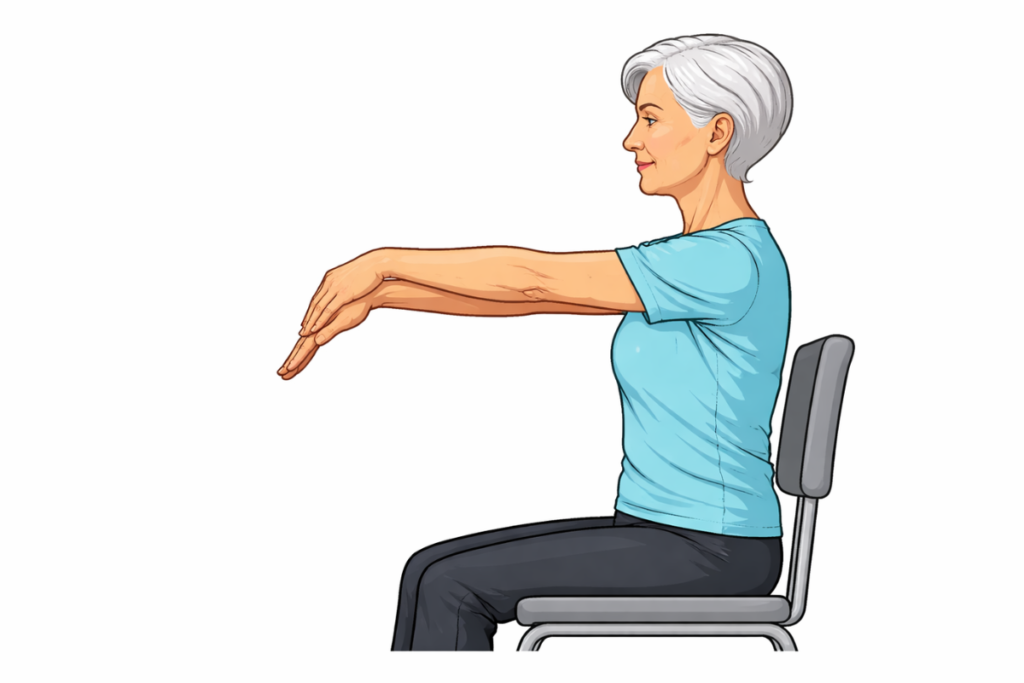
This stretch is especially helpful for tennis elbow. It targets the tight muscles on the back of your forearm.
How to do it:
- Extend one arm straight out in front of you, palm facing down.
- Use your other hand to gently press the top of your extended hand downward, bending your wrist toward the floor.
- Hold for 20 to 30 seconds. You should feel a gentle pull along the top of your forearm.
- Release slowly and repeat on the other side.
- Do this 2 to 3 times per arm.
Tip for beginners: You don’t need to bend your wrist a lot. Even a small movement is effective.
2. Wrist Flexion Stretch (The Flip Side)
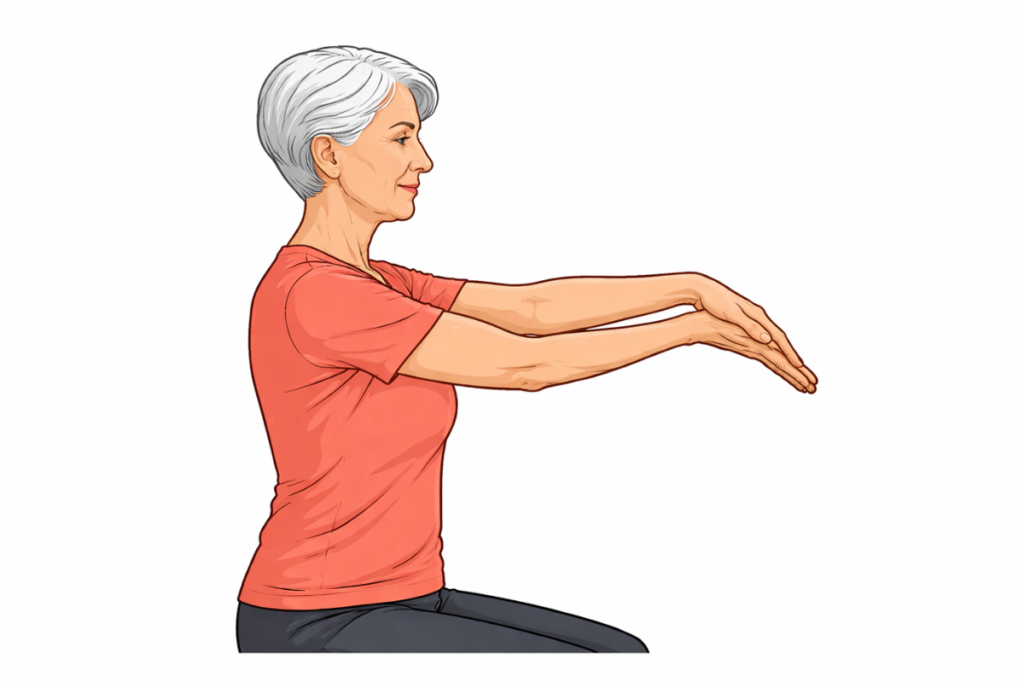
This stretch is similar, but works in the opposite direction. It targets the underside of your forearm.
How to do it:
- Extend your arm out again, this time with your palm facing up.
- Use your free hand to gently press your fingers downward, bending your wrist toward the floor.
- Hold for 20 to 30 seconds.
- Repeat on both sides, 2 to 3 times.
This is the opposite of the first stretch. Keeping both sides of your forearms flexible is important.
3. Forearm Pronation and Supination (The Doorknob Move)
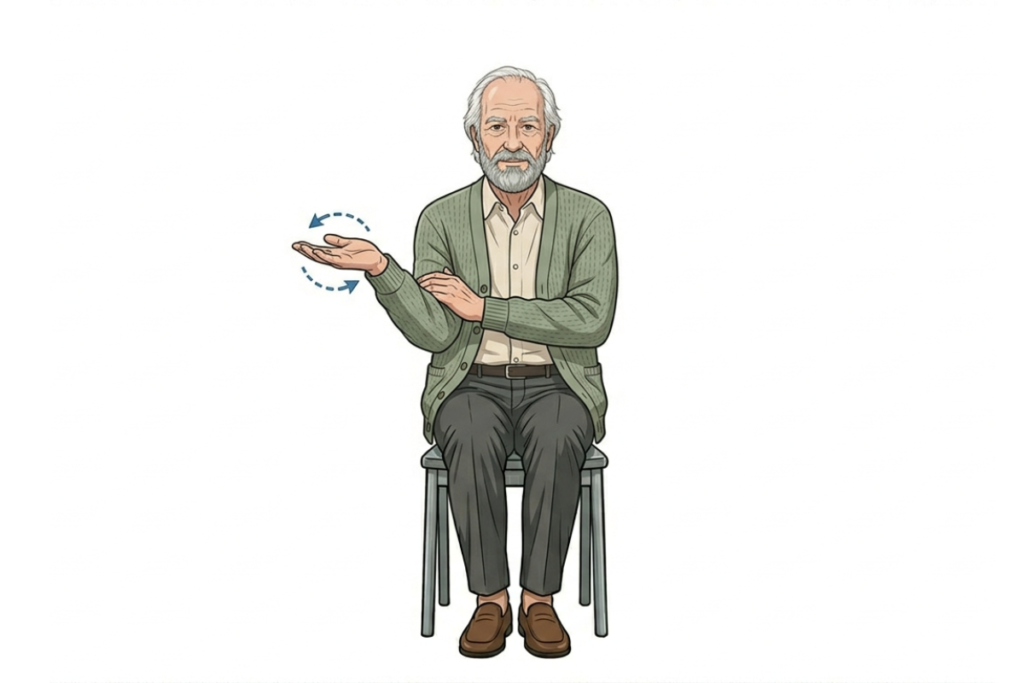
This stretch helps your forearm rotate better, which can be difficult with tennis elbow. It’s as simple as turning your wrist like you’re opening a doorknob.
How to do it:
- Sit up straight and bend your elbow at a 90-degree angle, like you’re holding a small tray.
- Slowly rotate your forearm so your palm faces up. Pause.
- Then slowly rotate it so your palm faces down. Pause.
- Repeat 10 times on each side.
Move slowly and steadily with each repetition. Don’t rush through the exercise.
4. Wrist Circles
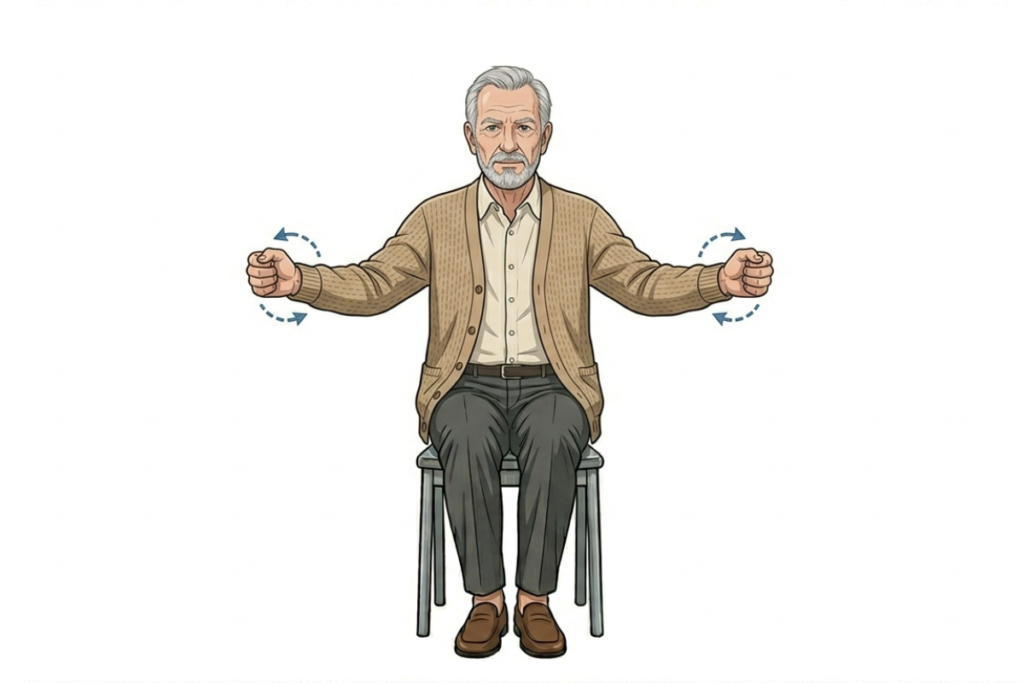
This gentle move works well as a warm-up or cool-down and helps keep your wrist joint flexible.
How to do it:
- Extend your arms slightly or rest them on your lap.
- Make loose fists with both hands.
- Slowly roll your wrists in circles: 5 clockwise, then 5 counterclockwise.
- Remember to breathe, relax your shoulders, and notice how your wrists feel as you move them.
5. Finger Spread and Squeeze
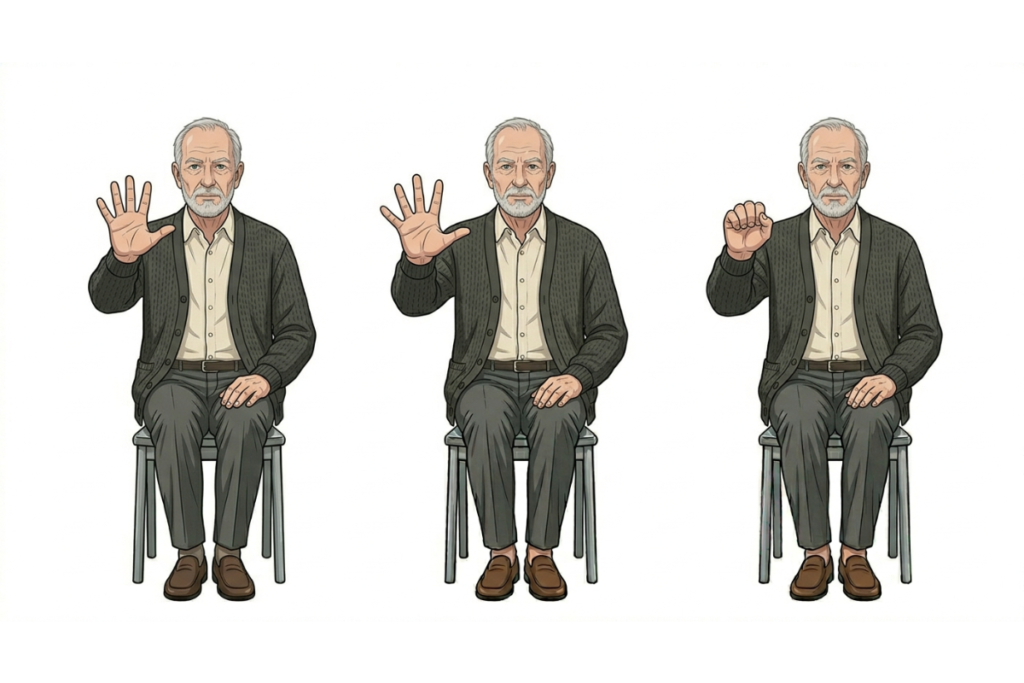
Your fingers and hand muscles are linked to your forearm. Keeping them flexible can help reduce strain on your elbow.
How to do it:
- Hold one hand out in front of you, palm facing away.
- Spread your fingers as wide as you comfortably can. Hold for 3 seconds.
- Slowly close your hand into a soft fist. Hold for 3 seconds.
- Repeat 8 to 10 times per hand.
Don’t squeeze tightly. The goal is to stretch, not to grip as if using a stress ball.
6. Towel Twist
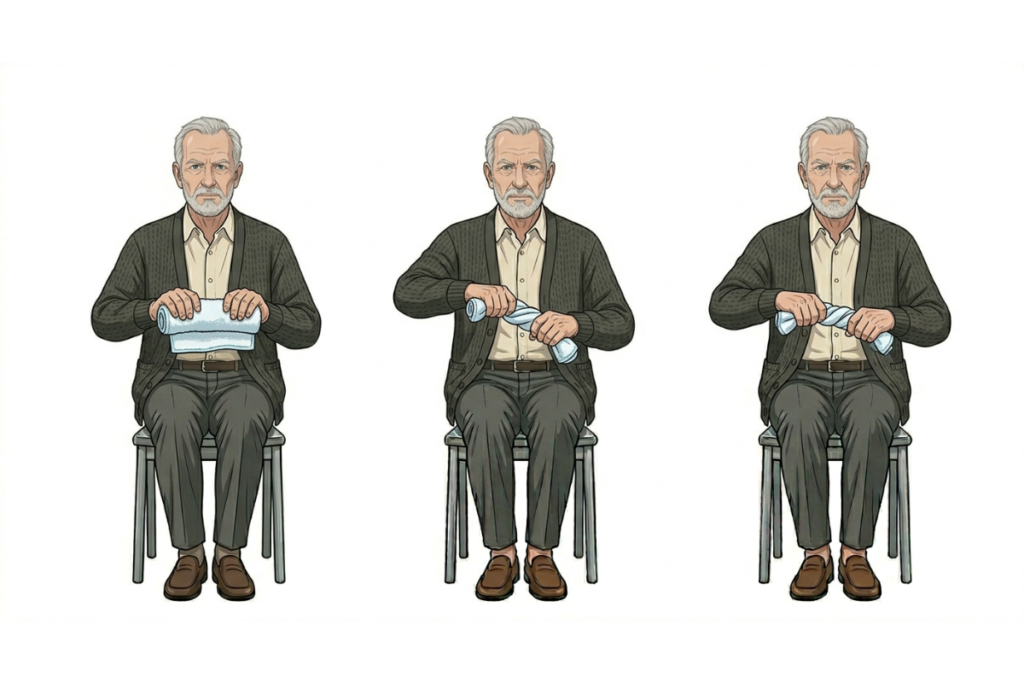
Grab a small towel or dishcloth for this one.
How to do it:
- Hold the towel with both hands as if you’re wringing it out.
- Slowly twist it one direction, then the other.
- Keep the movement gentle and controlled for about 10 repetitions.
This exercise works both the top and underside muscles of your forearm.
How Often Should You Do These Stretches?
Regularly doing these stretches for tennis elbow relief is more important than doing long sessions. Focus on consistency.
A good starting goal:
- Once or twice a day, ideally morning and evening
- 5 to 10 minutes per session
- Do these stretches every day, even when your elbow feels better.
It’s important to keep stretching even when your elbow feels better. Staying consistent helps prevent the pain from returning.
A Quick Note on What Else Helps
Stretching is a great way to start, but a few other habits can also help your recovery:
- Rest the elbow from the repetitive movement that caused it (where possible)
- Ice the area for 15 minutes after the activity to reduce inflammation.
- Try not to grip too hard during daily tasks. Use a lighter touch with tools, pens, and utensils.
- Check in with your doctor if the pain is severe, worsening, or not improving after a few weeks of consistent stretching.
Final Thoughts
Tennis elbow can be frustrating, but it’s very treatable if you give your forearm regular, gentle care. You don’t need to do everything perfectly. Just pick one stretch from this list, try it twice, and see how your arm feels. That’s a great first step.
Your elbow has been through a lot. Now it’s time to take care of it. Take five minutes, grab a chair, and you’re ready to begin. Let’s work on this together, one gentle wrist stretch at a time.
