
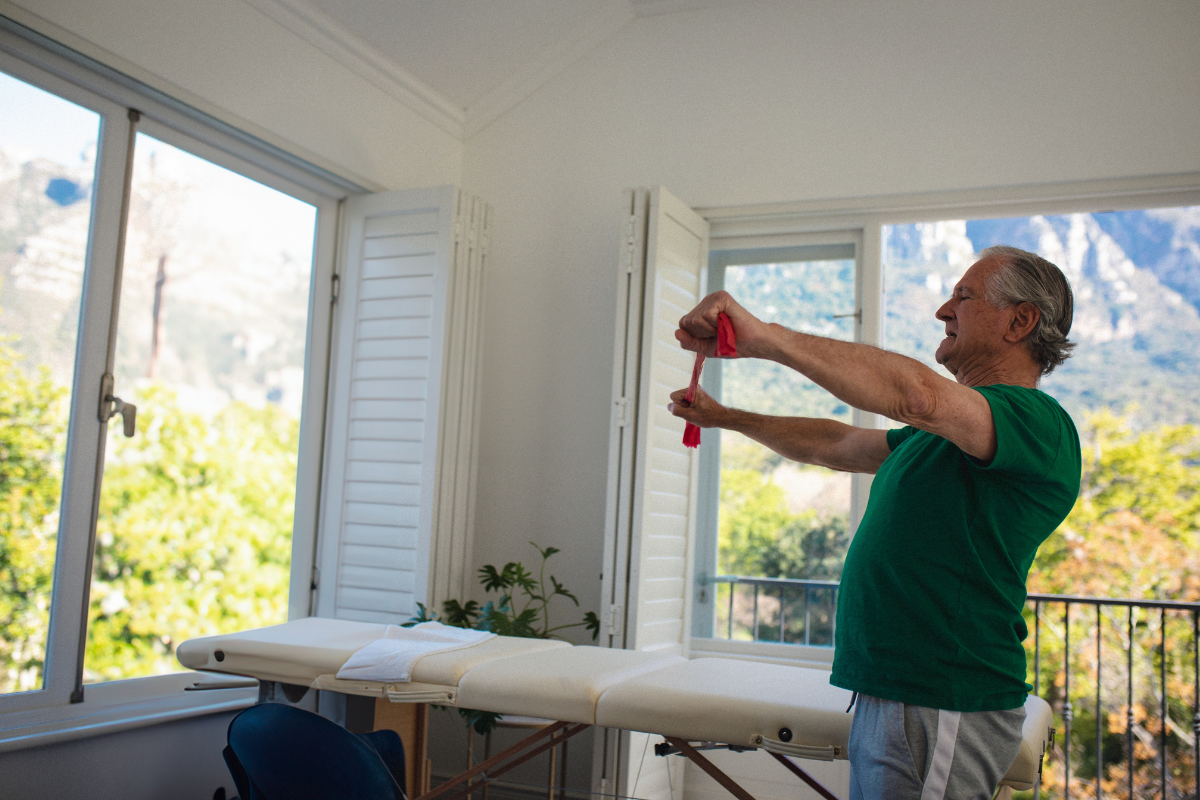
You know that tight, wrapped-up feeling in your chest after sitting for hours? If you’ve ever found yourself hunched over your phone, desk, or steering wheel, you’re not alone. The good news is you don’t need a gym membership or fancy equipment. A few simple stretching exercises for chest tightness are all it takes to start feeling better, and this 7-minute routine proves it.
This guide is perfect for older adults, beginners, desk workers, or anyone feeling stiff and tight. We’ll show you both doorway and seated chair stretches, so there’s really no reason not to try one today.
Why Does Your Chest Get So Tight Anyway?
Before we start stretching, let’s talk about why your chest gets tight.
Your chest muscles (the pectoralis major and minor, if you want to sound smart) tend to get tight when you spend a lot of time hunched forward—like when typing, scrolling, driving, or reading. Basically, it’s modern life.
When your chest tightens, it pulls your shoulders forward and can lead to:
- Upper back pain
- Poor posture (the classic “human shrimp” shape)
- Reduced breathing capacity
- Tension headaches
- General feelings of “ugh.”
The solution is simple: gently and regularly open up your chest—here’s how.
What You’ll Need
Almost nothing. Really.
- A doorway (standard door frame works great)
- A sturdy chair (no wheels, please, unless you want a surprise adventure)
- About 7 minutes
- Willingness to look slightly silly and feel much better
The 7-Minute Chest Stretching Routine
Do this routine once a day—morning is great, but any time works.
Warm-Up (1 Minute): Shoulder Rolls
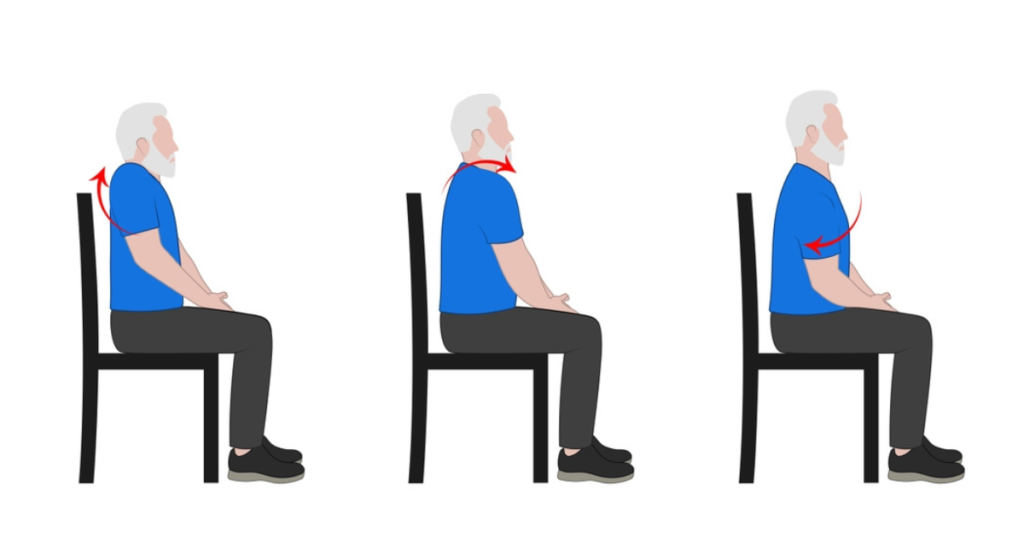
Before diving into chest stretching exercises, wake up those shoulders.
- Sit or stand tall.
- Roll both shoulders forward in big, slow circles, 5 times.
- Then roll them backward, 5 times.
- Breathe slowly throughout.
That’s it! Your chest and shoulders are now thinking, “Oh, we’re doing this today? Alright, then.”
Stretch 1: Doorway Chest Opener (2 Minutes)
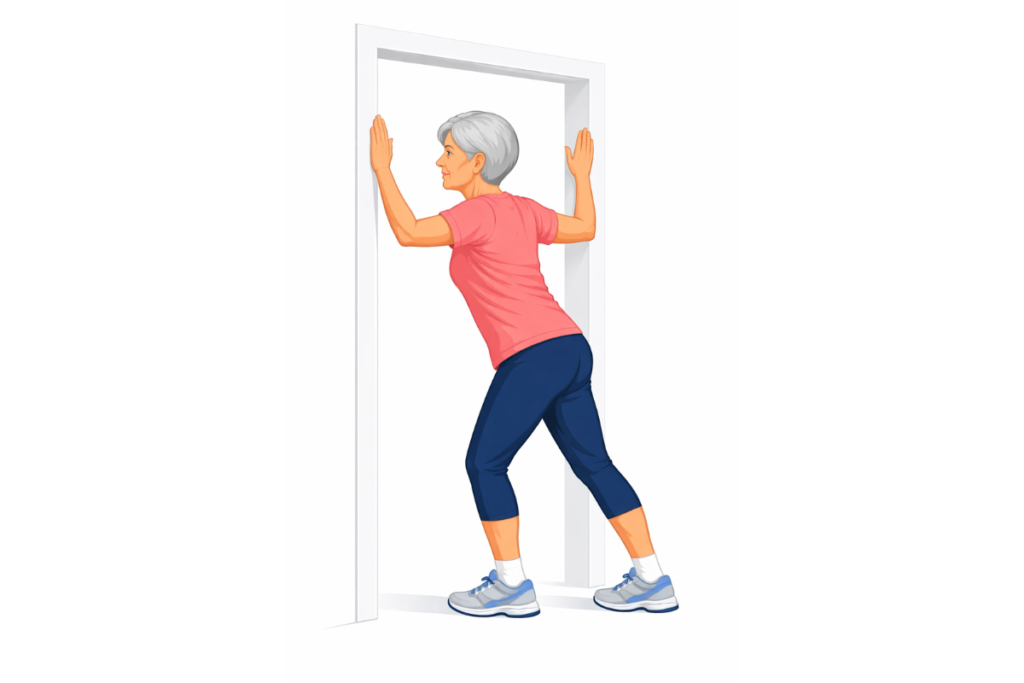
This is the classic stretch. It looks like you’re about to walk through a doorway in slow motion, so go ahead and lean into that vibe.
How to do it:
- Stand in the middle of a doorway.
- Raise both arms to shoulder height and bend your elbows to 90 degrees (like a goalpost, or a referee signaling a touchdown).
- Place your forearms on the door frame, one on each side.
- Slowly lean forward until you feel a gentle stretch across your chest. Don’t lunge or push too hard. Gentleness is key.
- Hold for 20 to 30 seconds.
- Step back, shake it out, and repeat 2 to 3 times.
Beginner tip: If the full position is intense, lower your arms to about 45 degrees for a great stretch.
You should feel a gentle pulling sensation across the front of your chest and into your shoulders. If it hurts, ease up. Stretching should feel like “ahhh,” not “OUCH.”
Stretch 2: Single-Arm Doorway Stretch (1.5 Minutes)
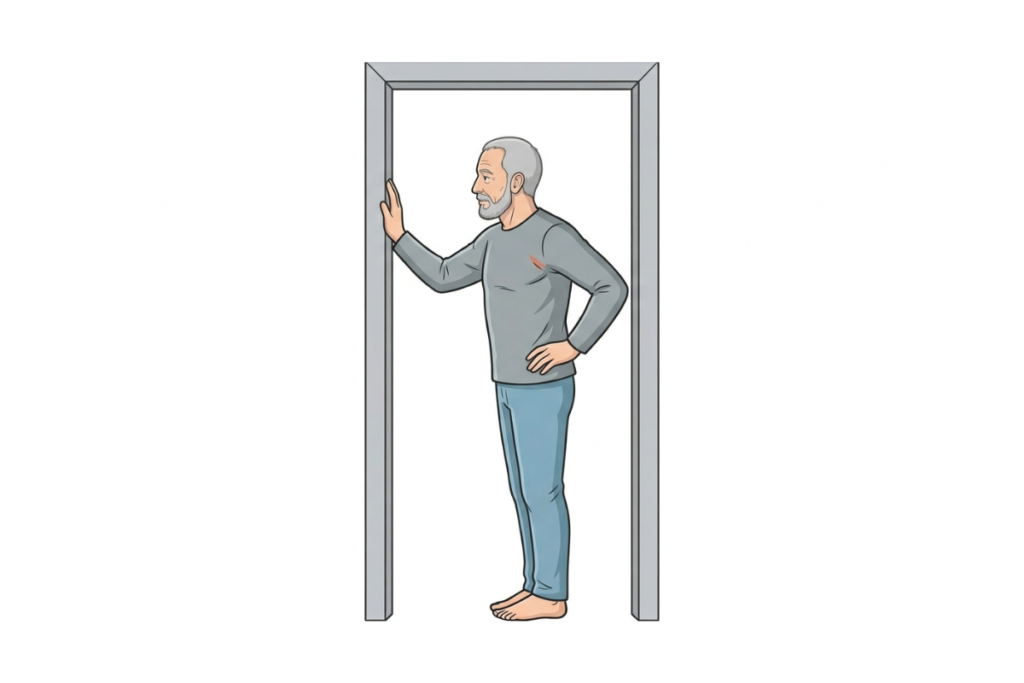
This variation targets one side at a time and is wonderful for beginners or anyone with shoulder sensitivity.
How to do it:
- Stand in a doorway and place your right hand on the door frame at shoulder height.
- Slowly turn your body to the left, away from that arm, until you feel a stretch in your chest and the front of your shoulder.
- Hold for 20 to 30 seconds.
- Switch sides.
- Repeat once on each side.
With this stretch, you control the depth—a gentle turn offers a light stretch, a bigger turn, a deeper one. You decide.
Stretch 3: Seated Chair Chest Opener (1.5 Minutes)
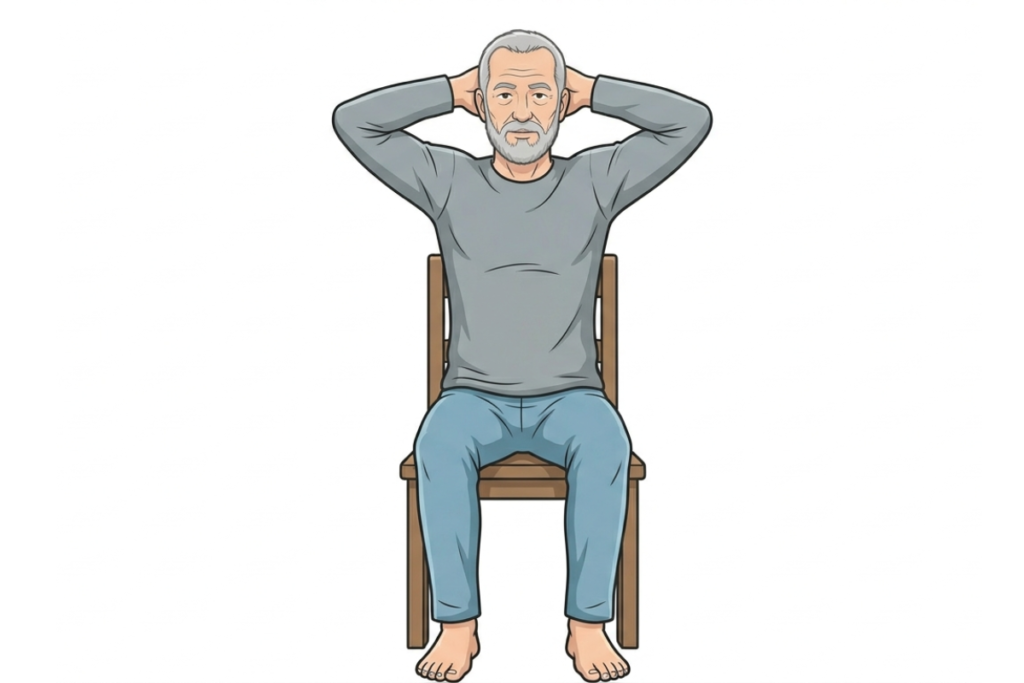
No doorway nearby? No worries. This stretch is done entirely in a chair, perfect for office breaks, TV time, or when you just don’t want to get up from the couch.
How to do it:
- Sit toward the edge of a sturdy chair with your feet flat on the floor.
- Interlace your fingers behind your head (or just place your hands gently behind your ears if that’s more comfortable).
- Open your elbows wide out to the sides.
- Gently squeeze your shoulder blades together and lift your chest toward the ceiling.
- Hold for 20 to 30 seconds while breathing slowly.
- Release and repeat 2 to 3 times.
Beginner tip: Keep the movement small and controlled. You’re not trying to do a backbend. Think “gentle pride pose,” not “circus act.”
Stretch 4: Seated Clasped-Hands Chest Stretch (1 Minute)
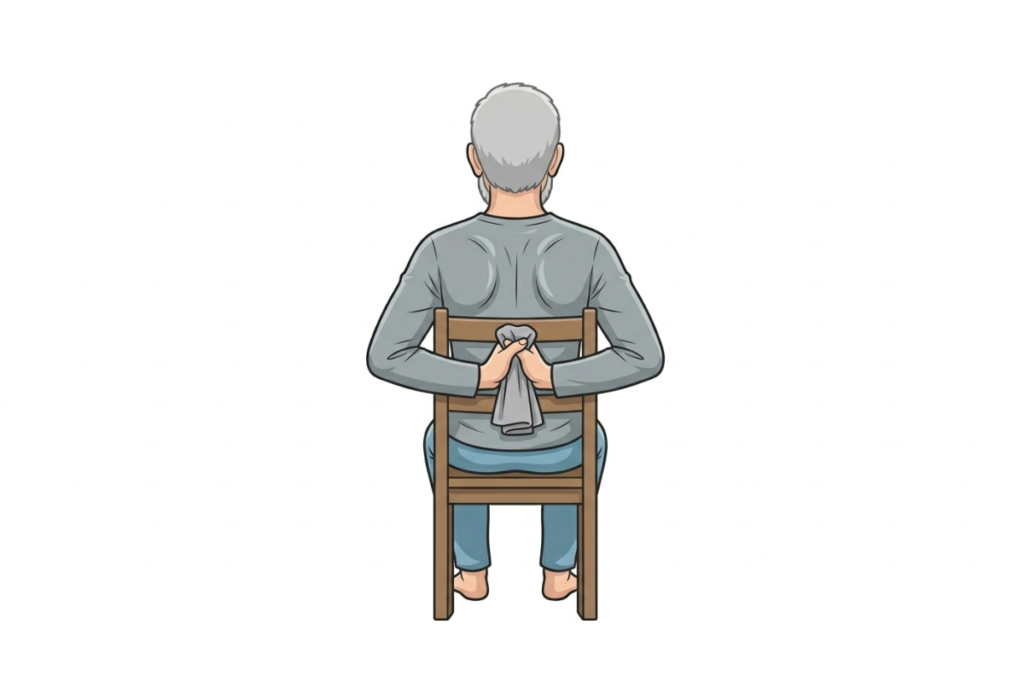
Simple, effective, and you can do it anytime, anywhere.
How to do it:
- Sit up straight in your chair.
- Clasp your hands behind your back. If that’s hard, hold a small towel between your hands instead—it works just as well.
- Straighten your arms and gently squeeze your shoulder blades together.
- Lift your clasped hands slightly upward as you open your chest.
- Hold for 20 to 30 seconds.
- Release slowly.
This stretch feels amazing after sitting for a long time. It’s like a reset button for your posture.
Tips for Getting the Most Out of These Stretches
Here’s the truth about stretching: it works best when you do it regularly, not perfectly.
- Breathe. Don’t hold your breath. Deep, slow breaths help deepen the stretch and calm your nervous system.
- Go slow. Rushing through stretches is like skimming a good book. Technically, you did it, but you missed the whole point.
- Be consistent. Even 5 minutes a day, three times a week, is better than one intense 45-minute session every two months.
- Listen to your body. Mild discomfort is normal, but sharp or shooting pain means stop.
- Modify as needed. All these stretches have easier versions, so use them without feeling guilty.
A Quick Note for Older Adults
If you’re in your 50s, 60s, or beyond, gentle stretching can be both safe and incredibly beneficial when done with care. As we age, keeping the chest open and flexible becomes even more important, as tight muscles can affect breathing and overall balance. Incorporating simple routines like these best chest stretches can make a noticeable difference in how you feel day to day.
For those just getting started, seated movements are a great place to begin. A good chair yoga book for seniors can guide you through these exercises step by step, making the process approachable and comfortable. Chair-based stretches are just as effective while being much easier on the joints and muscles.
Take your time and move at a pace that feels right for your body. There’s no prize for pushing too hard—consistency is what truly brings results.
And if you have any existing shoulder, neck, or heart concerns, it’s always wise to consult your doctor before starting a new routine. A little caution goes a long way toward staying safe and enjoying the benefits of movement.
Final Thoughts
Here’s the thing about starting a new wellness habit: the hardest part is just getting started. You’ve already done that by reading this far, so give yourself some credit.
You don’t need a perfect setup, schedule, or body. Just a doorway, a chair, and a few minutes to invest in yourself.
Pick one stretch from this list. Just one. Try it today, then try two tomorrow.
Your chest will thank you. Your posture will thank you. And honestly, your whole body will start to feel more like itself again. That’s worth seven minutes a day, every day.
Now go find that doorway. Your chest stretch is waiting for you.
