
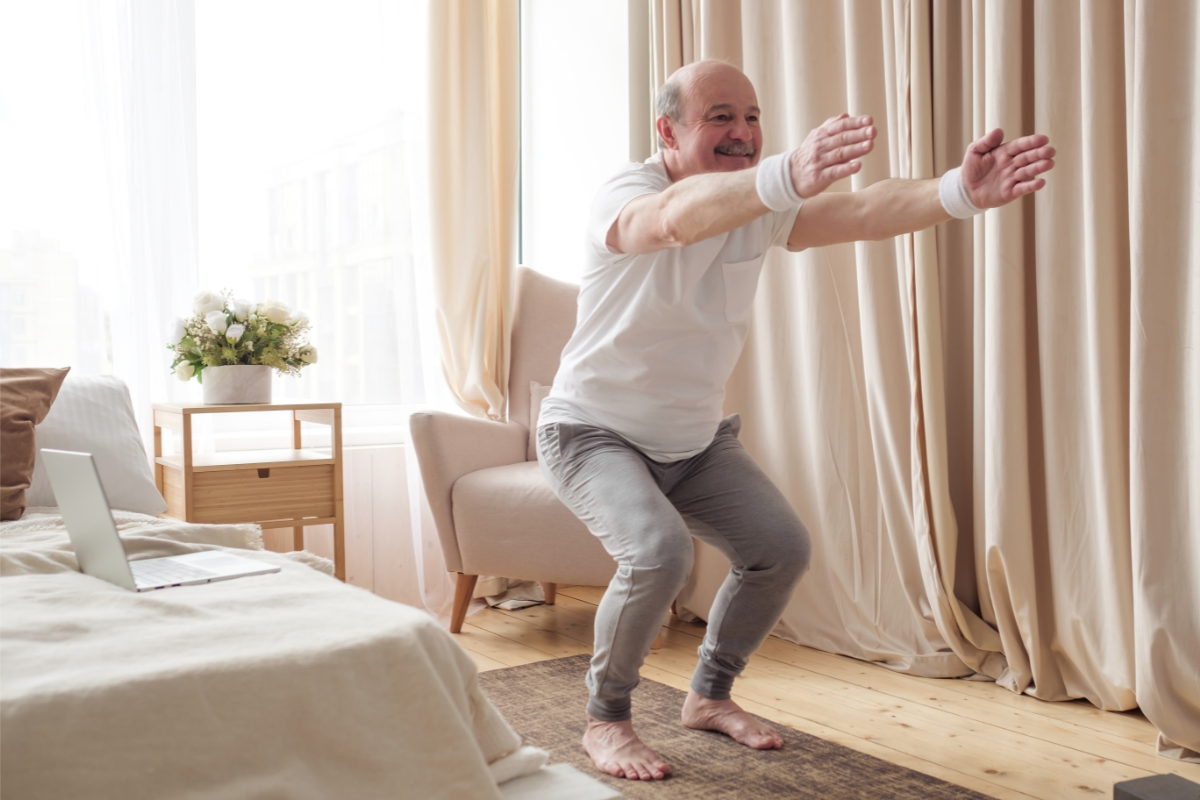
Neuropathy can make it seem like your feet and brain aren’t working together. Some days you walk just fine, but other times staying balanced is a real challenge. If you’ve had numbness, tingling, or weakness in your feet, you know what this feels like. Here’s the good news: balance exercises for neuropathy can genuinely help.
They won’t magically cure neuropathy (we’re not claiming miracles here), but they can absolutely improve your stability, reduce fall risk, and help you feel more confident on your feet. Think of these exercises as a friendly conversation starter between your feet and your brain, helping them remember they’re supposed to be working together.
Whether your foot numbness is from diabetic neuropathy, aging, or another cause, these beginner exercises are made for you. You don’t need any gymnastics experience.
Understanding Neuropathy and Balance Problems
Before we get to the exercises, let’s quickly talk about why neuropathy affects your balance.
Neuropathy damages the nerves in your feet and legs, so your brain doesn’t get clear signals about where your feet are. It’s like using a GPS that keeps losing signal. Your sense of body position, called proprioception, gets mixed up, making it harder to balance.
The result? You might feel:
- Unsteady when walking
- Like you’re walking on cotton balls or pebbles.
- Nervous about stairs or uneven surfaces
- More likely to stumble or trip
This is where balance training helps. By practicing certain movements, you can teach your body to adjust to those mixed-up signals and strengthen the muscles that keep you steady.
Safety First: Setting Yourself Up for Success
Before you begin, let’s focus on safety because preventing falls should always come first. Many seniors find it helpful to follow guidance from a chair yoga book for seniors, especially when practicing neuropathy balance exercises that require extra attention to stability and foot awareness. Taking a few simple precautions now can help you move with greater confidence and peace of mind.
Essential Setup Tips:
- Always practice near a sturdy chair, counter, or wall you can grab if needed.
- Wear comfortable, flat shoes with good grip (or go barefoot on a non-slip surface).
- Clear the area of trip hazards like rugs, cords, or pets who think they’re helping.
- Start slowly and stop if you feel pain, dizziness, or extreme discomfort.
- Consider having someone nearby when you first try these exercises.
Remember, using support is smart. Even professionals use safety equipment.
Beginner Balance Exercises for Neuropathy
1. Supported Single-Leg Stands
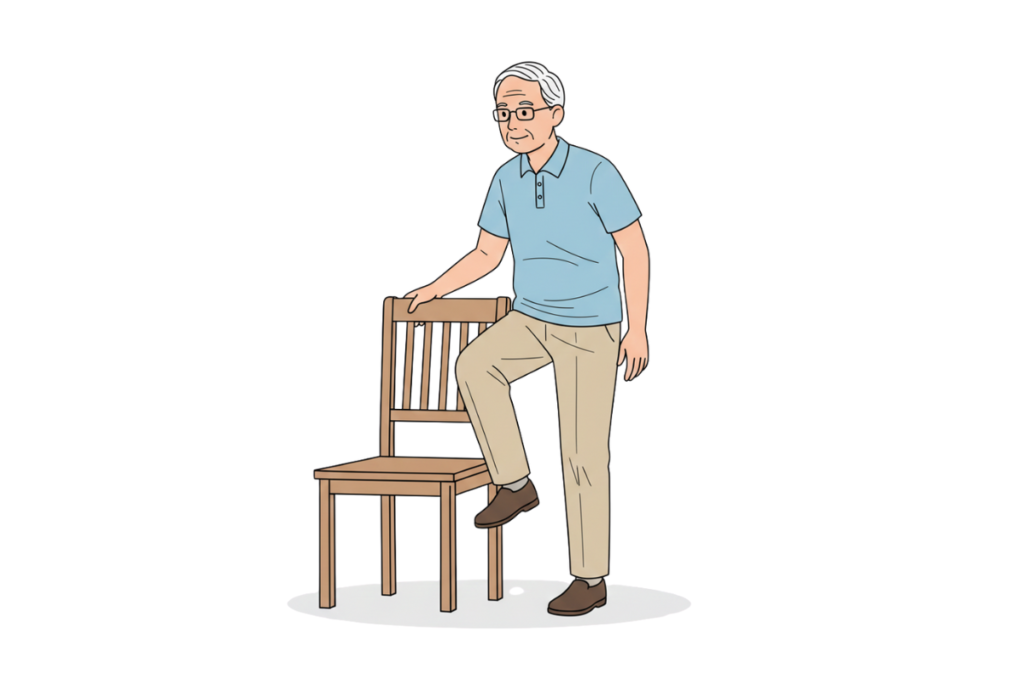
This is a simple exercise that can really help improve your balance.
How to Do It:
- Stand next to a sturdy chair or counter with your feet hip-width apart.
- Place one hand lightly on your support surface (just fingertips are fine).
- Shift your weight onto your right foot.
- Slowly lift your left foot just an inch or two off the ground.
- Hold for 10-30 seconds while breathing normally.
- Lower your foot back down with control.
- Repeat on the other side.
- Do 3-5 repetitions per leg.
Pro Tips:
- Focus on a spot on the wall to help maintain balance.
- It’s normal to wobble. That means your muscles are working.
- As you improve, use less hand support or try closing your eyes briefly.
2. Heel-to-Toe Walking
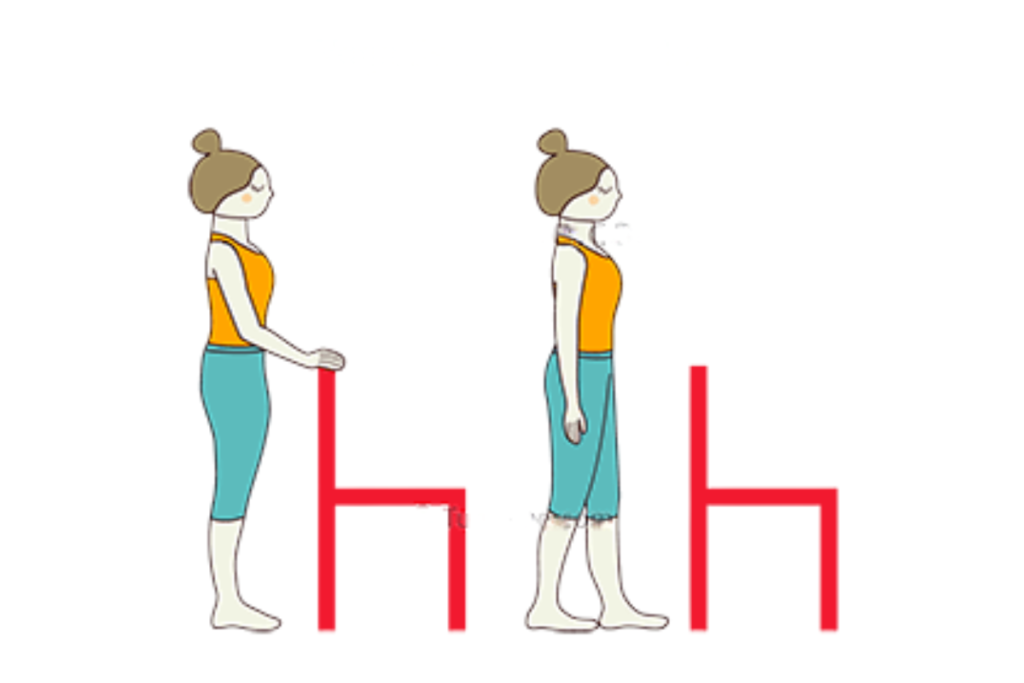
This exercise is great for improving your stability.
How to Do It:
- Stand near a wall or counter for support if needed.
- Position your right foot directly in front of your left foot so the heel of your right foot touches the toes of your left foot.
- Step forward, placing your left heel directly against your right toes.
- Continue walking heel-to-toe for 10-20 steps.
- Turn around and walk back.
- Repeat 2-3 times.
Pro Tips:
- Go slowly. There’s no need to rush.
- Keep your eyes focused ahead, not down at your feet.
- If this feels too challenging, start by walking along a straight line on the floor without worrying about heel-to-toe placement.
3. Sit-to-Stand Practice
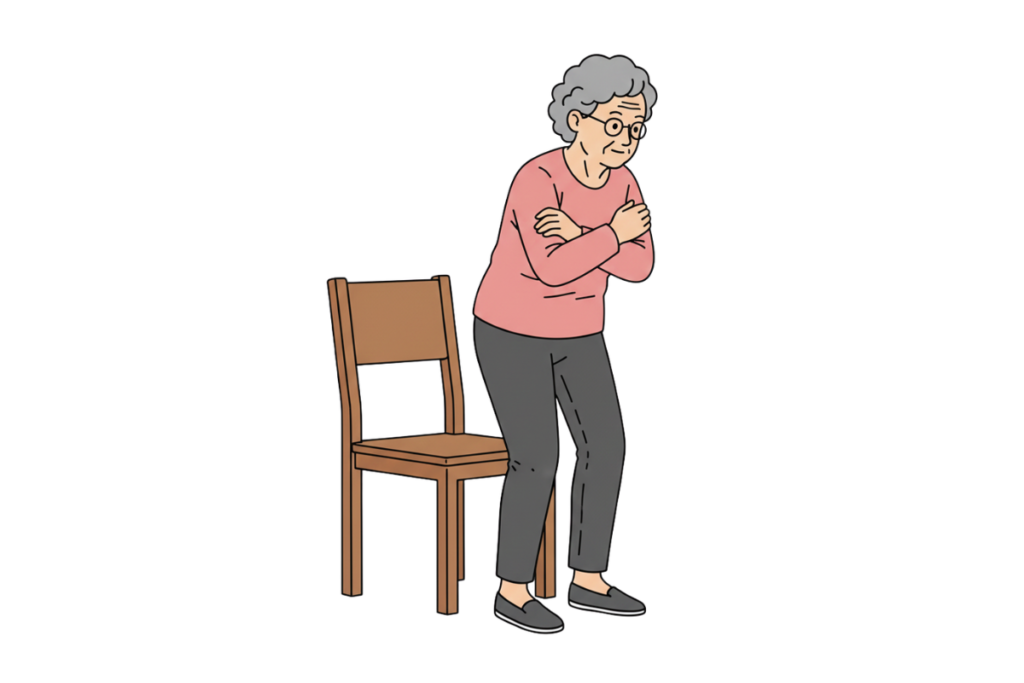
This exercise builds leg strength and helps you control your balance.
How to Do It:
- Sit in a sturdy chair with your feet flat on the floor, hip-width apart.
- Scoot forward so you’re sitting near the edge of the seat.
- Place your hands on your thighs or cross them over your chest.
- Lean forward slightly from your hips.
- Press through your heels and stand up slowly and steadily.
- Pause briefly while standing.
- Slowly lower yourself back to a sitting position.
- Repeat 8-12 times.
Pro Tips:
- Don’t use your hands to push up if possible (but keep the chair arms there for safety).
- Lower yourself with control. Try not to drop into the chair.
- If this is too hard, start with a higher seat or use your hands for assistance.
4. Standing Marches
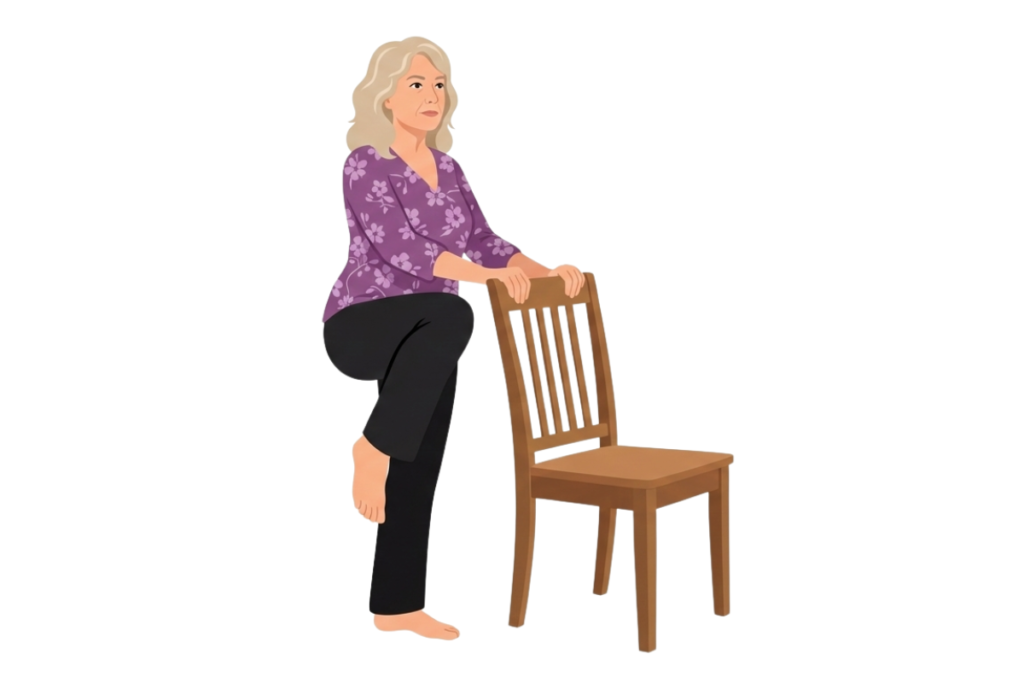
Marching in place helps you practice shifting your weight from one foot to the other, which is important for safe walking.
How to Do It:
- Stand behind a sturdy chair, holding onto the back for support.
- Stand tall with your feet hip-width apart.
- Lift your right knee to a comfortable height (aim for hip level if possible, but a lower height is fine).
- Lower your right foot back down with control.
- Lift your left knee up.
- Continue alternating legs for 20-30 marches.
- Rest and repeat for 2-3 sets.
Pro Tips:
- Keep your standing leg slightly bent, not locked.
- Engage your core muscles (gently pull your belly button toward your spine).
- As you improve, try using less support from the chair.
5. Clock Reaches
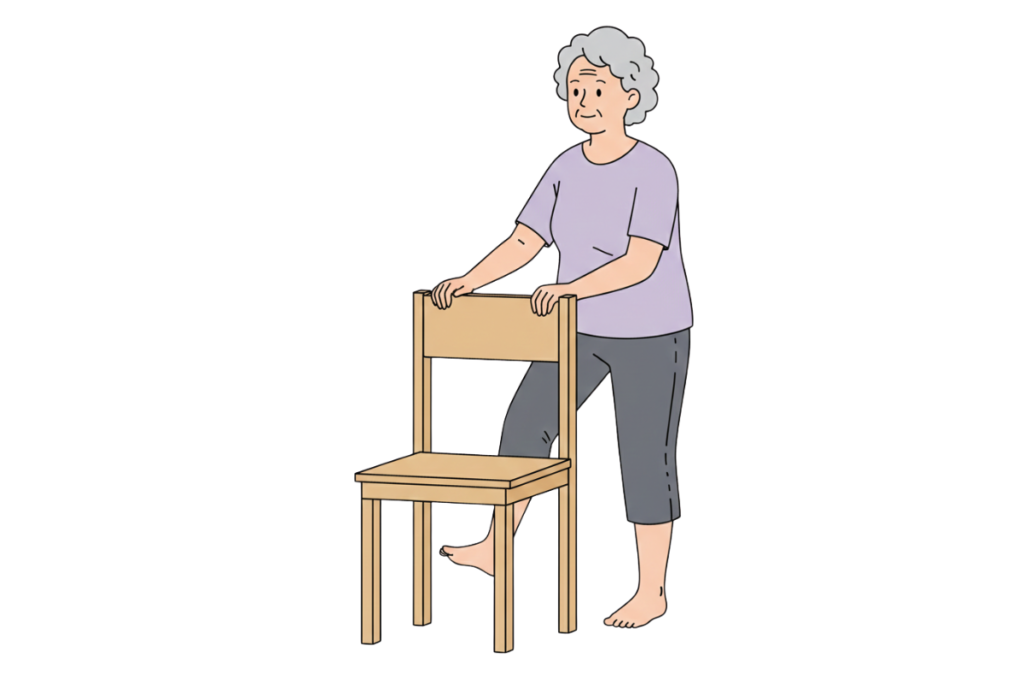
This exercise challenges your balance in different directions, which is useful for everyday movements.
How to Do It:
- Stand next to a chair for support.
- Imagine you’re standing in the center of a clock face.
- Shift your weight to your left leg.
- Extend your right leg and tap your toe at “3 o’clock” (to the right).
- Return to the center.
- Tap at “1 o’clock” (forward and right).
- Tap at “5 o’clock” (back and right).
- Repeat 5 times, then switch to the other leg.
- Complete 2-3 sets.
Pro Tips:
- The taps should be light. You’re not trying to stomp grapes.
- Keep your hips level throughout the movement.
- Start with just 3 positions (forward, side, back) if the clock concept feels overwhelming.
6. Wall Push-Ups for Ankle Strength
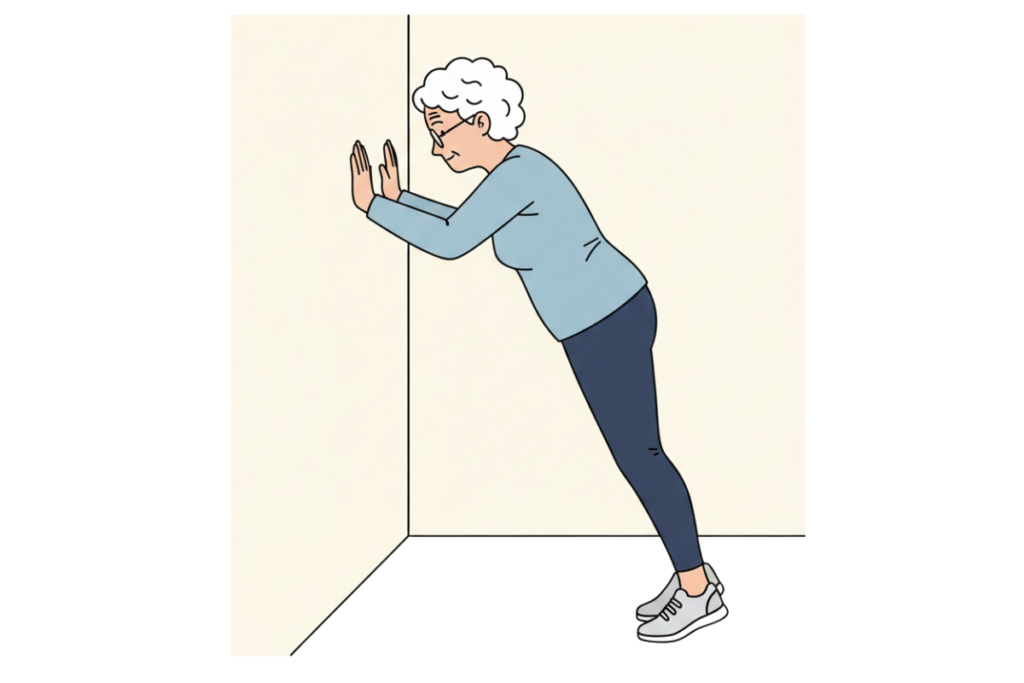
Strong ankles help improve your balance. These modified push-ups work your lower legs without needing to get on the floor.
How to Do It:
- Stand facing a wall, about arm’s length away.
- Place your palms flat on the wall at shoulder height.
- Keep your feet flat on the floor, hip-width apart.
- Bend your elbows slowly and lean toward the wall.
- Push back to the starting position.
- As you push back, rise up onto your toes.
- Hold the tiptoe position for 2-3 seconds.
- Lower your heels back down.
- Repeat 10-15 times.
Pro Tips:
- Keep your body in a straight line from head to heels.
- The tiptoe raise strengthens your calves, which are crucial for balance.
- If rising onto your toes is too difficult initially, skip that part and just do the wall push-ups.
Building Your Balance Routine
Now that you have the exercises, let’s talk about how to do them regularly. Good intentions are helpful, but practice is what makes a difference.
Start Small:
- Begin with just 5-10 minutes, 3 times per week.
- Choose 3-4 exercises to focus on initially.
- Gradually increase duration and frequency as you feel comfortable.
Track Your Progress:
- Notice how long you can hold a single-leg stand.
- Count how many sit-to-stands you can do without getting winded.
- Notice when you need less support from your chair or wall, and be proud of your progress.
Mix It Up:
- Rotate through different exercises to keep things interesting.
- Challenge yourself gradually by reducing hand support or by briefly closing your eyes.
- Some days will feel easier than others, and that’s normal.
When to Level Up
You’ll know you’re ready to progress when:
- You can complete exercises with minimal hand support.
- Your wobbling decreases noticeably.
- You feel more confident moving around your home.
- The exercises are starting to feel almost too easy.
When you’re ready, try using less support, doing more repetitions, or briefly closing your eyes during exercises. You can also try balance pads or foam cushions for a more challenging workout.
Final Thoughts
Neuropathy may have changed how your feet feel, but it doesn’t take away your ability to build better balance and stability. With consistent practice, simple balance workouts for neuropathy support, such as single-leg stands, heel-to-toe walks, and sit-to-stands, can help strengthen communication between your brain and your feet, improving coordination and confidence over time.
You don’t need to do these exercises perfectly or have special equipment. Just pick one or two exercises from this list and try them today. For example, stand on one leg while holding your kitchen counter for 10 seconds. That’s a great first step. Your future self, walking with more confidence, will thank you for starting today.
