

If you’ve noticed yourself feeling a little wobbly when reaching for something on a high shelf, or you’ve had that heart-stopping moment where you almost tripped over absolutely nothing, you’re not alone. Balance naturally declines as we age, but the good news is? You can absolutely do something about it. That’s where balance exercises for seniors with pictures come in handy. Having visual guides makes it much easier to ensure you’re doing the moves correctly and safely.
Balance training helps you stay independent. With better balance, you’ll have fewer falls, more confidence, and the freedom to keep doing what you enjoy without worrying about falling. These exercises can even be fun once you get used to them. Let’s get started!
Why Balance Exercises Are Your New Best Friend
Before starting the exercises, let’s look at why balance training is important for your daily routine.
The benefits are pretty amazing:
- Reduces your risk of falls (which is huge!)
- Strengthens your core and leg muscles
- Improves coordination and body awareness
- Boosts confidence in everyday activities
- Helps you stay independent longer
- Improve your posture
The great thing is you don’t need fancy equipment, a gym membership, or special workout clothes to get started. Many seniors like to keep a chair yoga book handy, especially one that includes balance exercises for seniors with step-by-step pictures for clear guidance. Most of these movements can be done right at home, in whatever you feel comfortable in.
Safety First: Set Yourself Up for Success
Before you begin, make sure you’re set up safely. Always have a sturdy chair, countertop, or wall nearby for support. Holding on is smart and safe.
Quick safety checklist:
- Clear the area of any tripping hazards (looking at you, area rugs)
- Wear non-slip shoes or grippy socks.
- Start near a wall or a sturdy piece of furniture.
- Listen to your body and stop if something hurts.
- Keep your phone nearby, just in case.
If you have health concerns or a history of falls, talk to your doctor before starting a new exercise routine. They may have specific advice for you.
Beginner Balance Exercises: Let’s Start Simple
1. The Standing Foot Tap
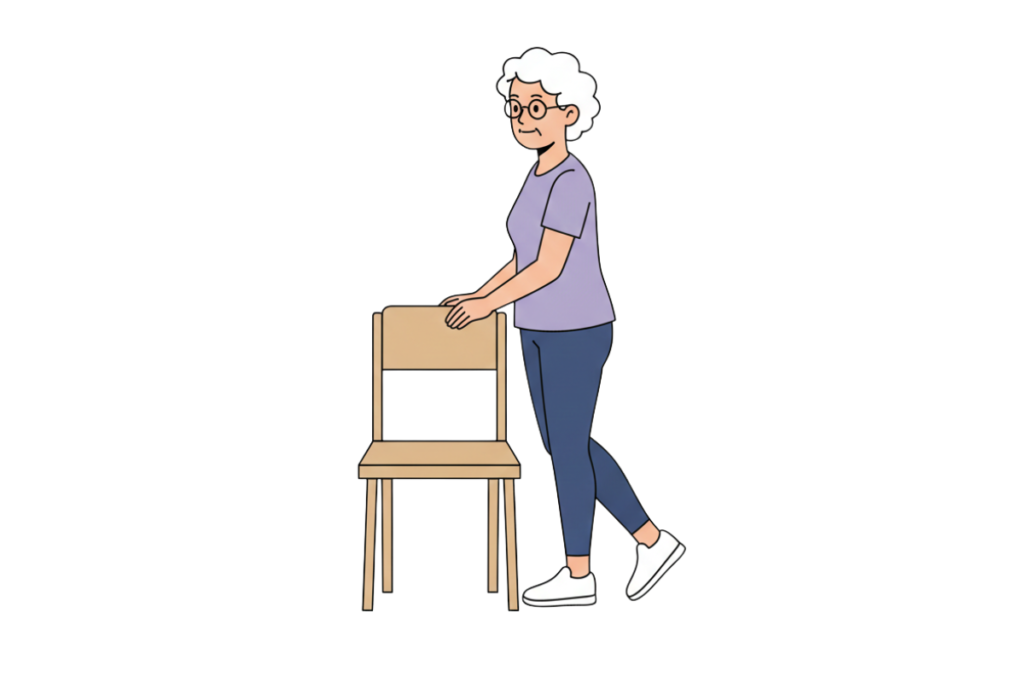
This exercise is great for beginners. It looks simple, but it helps strengthen your stabilizing muscles.
How to do it:
- Stand behind a sturdy chair and hold onto the back with both hands.
- Keep your feet hip-width apart and stand up tall.
- Lift your right foot slightly off the ground, just an inch or two.
- Tap your right toe about 12 inches in the back of you.
- Bring it back to the starting position.
- Repeat 10 times, then switch to your left foot.
As this gets easier, try holding the chair with one hand, then just your fingertips. Take your time and progress gradually.
2. The Heel-to-Toe Walk
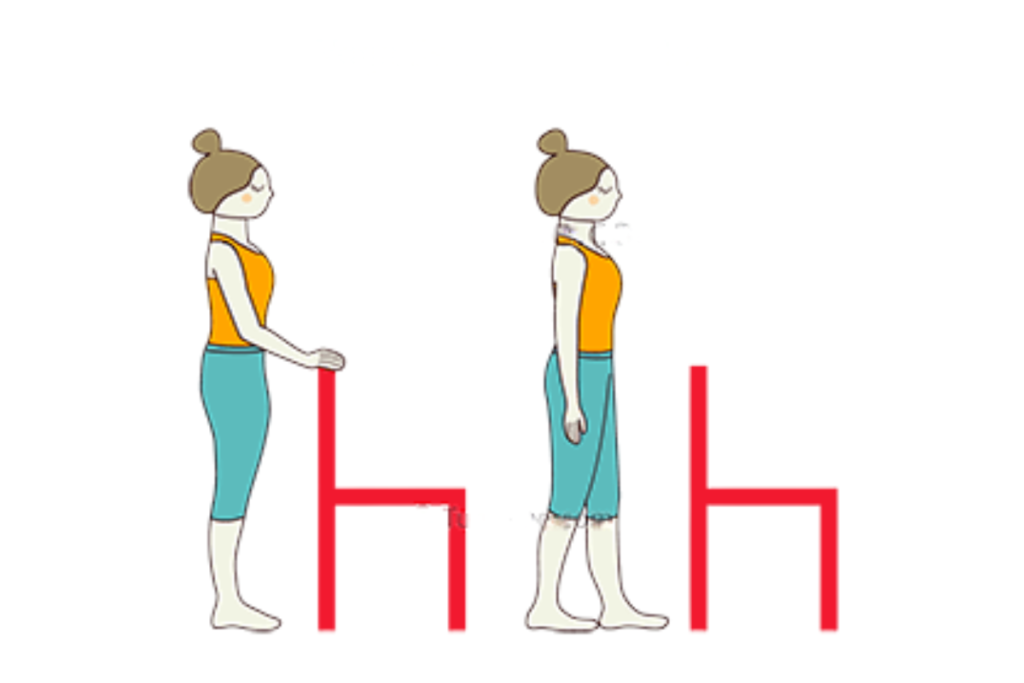
You might remember playing “walk the line” as a child. Now, this activity is good for your balance.
Step-by-step:
- Stand next to a wall or countertop for support.
- Place your right foot directly in front of your left foot, so your right heel touches your left toes.
- Move your left foot forward, heel to toes.
- Continue for 20 steps or the length of your hallway.
- Walk normally back to your starting point and repeat.
Tip: Look straight ahead, not down at your feet. Imagine you’re walking a tightrope to help you stay focused.
3. Single Leg Stand
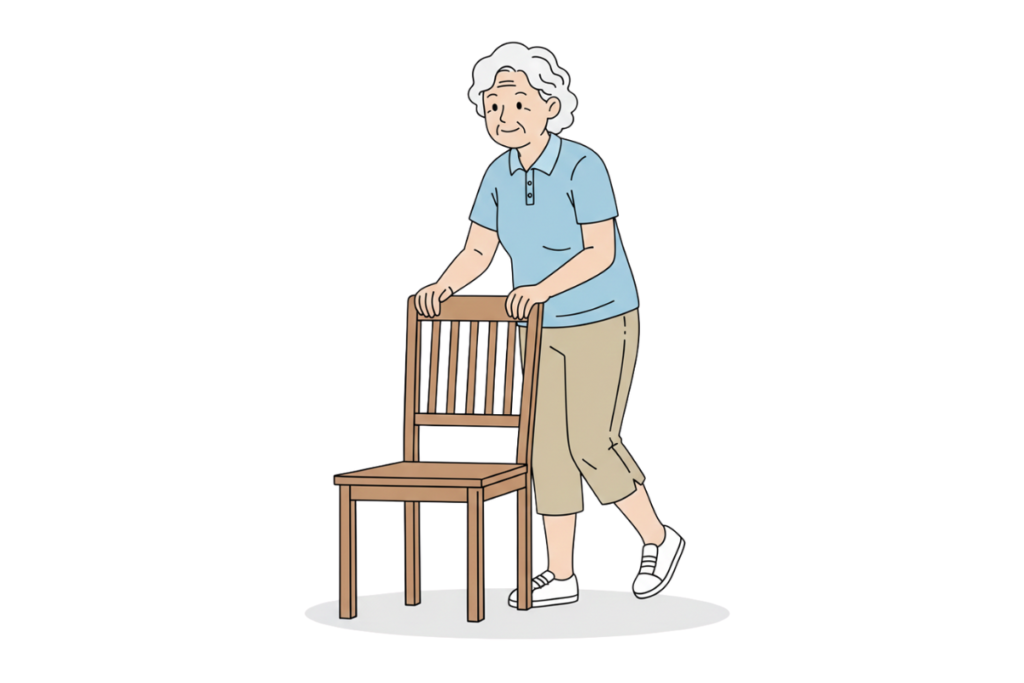
This is one of the most well-known balance exercises because it is effective.
Here’s how:
- Stand behind a chair and hold on with both hands.
- Lift your right foot off the ground, bending your knee slightly.
- Hold for 10 seconds (or as long as you can).
- Lower your foot back down.
- Switch to the left leg.
- Repeat 5 times on each side.
As you get stronger, try holding on with one hand, then just a fingertip, and eventually no hands. Take your time and don’t rush.
4. The Clock Reach
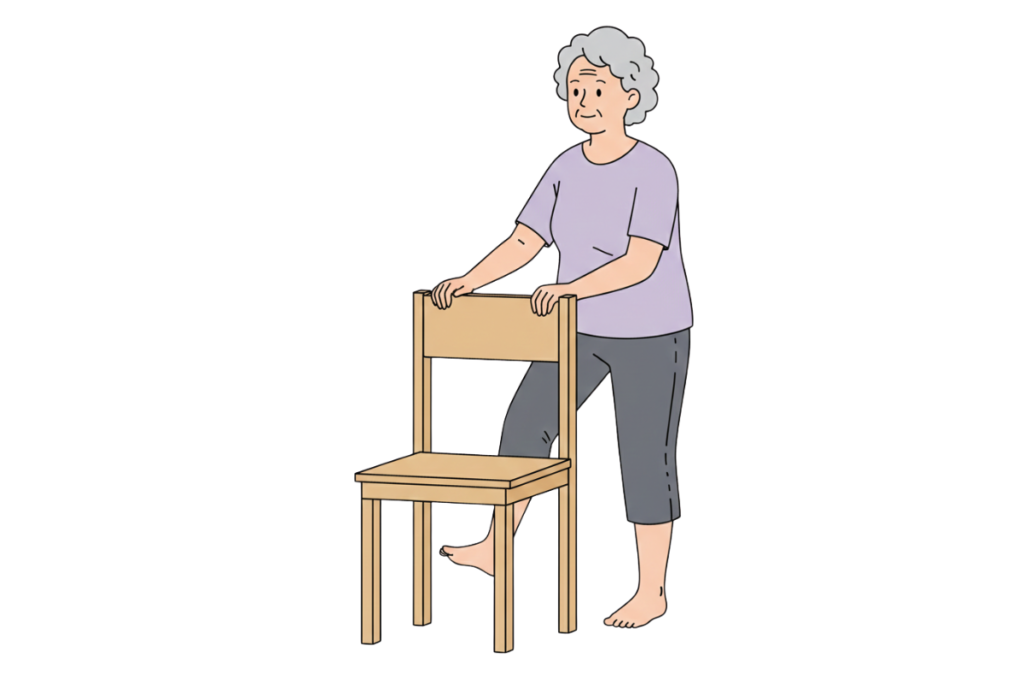
This exercise feels like a game while you work on your balance.
The moves:
- Stand on your right leg, using a chair for support with your left hand.
- Imagine you’re standing in the center of a clock.
- Point your left leg toward 12 o’clock, tap the floor lightly, then return to the center.
- Point toward 3 o’clock, tap, return to center.
- Point toward 6 o’clock (behind you), tap, return to center.
- Do this 3 times, then switch to the other leg.
This exercise challenges your balance in different directions, which helps you prepare for real-life situations.
5. Sit-to-Stand
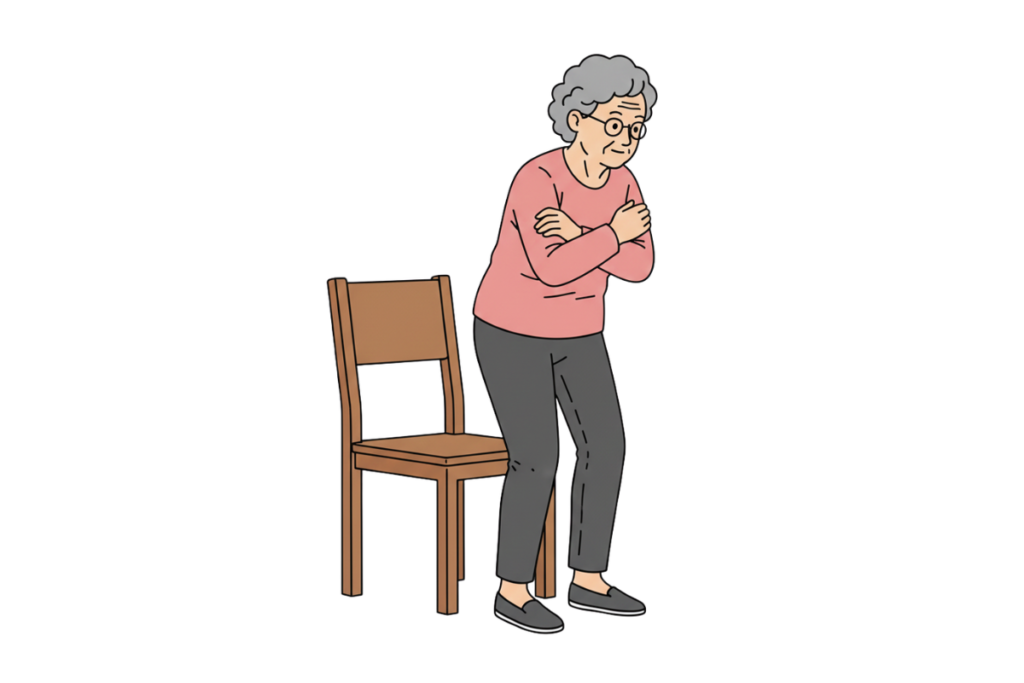
This simple exercise helps build leg strength and balance.
The process:
- Sit in a sturdy chair with your feet flat on the floor.
- Cross your arms over your chest.
- Lean forward slightly and stand up without using your hands.
- Slowly lower yourself back to a sitting position.
- Repeat 10 times.
Make it easier: Use the armrests with your hands if needed. As you get stronger, try to use them less and less.
Intermediate Moves: Ready to Challenge Yourself?
When the beginner exercises feel easy, you can try some intermediate moves to challenge yourself.
Side Leg Raise
Stand behind a chair, lift one leg out to the side while keeping your back straight, hold for a few seconds, and lower. This builds hip strength and balance. Do 10 reps on each side.
Back Leg Raise
Set up the same way, but lift your leg straight behind you. Keep your standing leg slightly bent and avoid leaning forward. This exercise is good for your glutes and balance.
Creating Your Balance Routine: Consistency is Key
To see results from visual examples of balance exercises for seniors, you need to do them regularly. The good news is you only need about 10 to 15 minutes, three times a week, to notice real improvements.
Sample weekly schedule:
- Monday: 5 minutes of beginner exercises
- Wednesday: Mix of beginner and one intermediate exercise
- Friday: Full routine of your favorite moves
The best time to do these exercises is whenever it fits your schedule. Some people prefer mornings, while others like afternoons or evenings. Choose the time that works best for you.
Final Thoughts
Here’s the beautiful truth: you don’t have to be perfect at these exercises. You just have to start. Even holding onto a chair and practicing the simplest move for two minutes is progress. Even wobbly attempts count. Every single rep you do is an investment in your future independence and confidence.
Balance exercises are not about performing tricks or impressing others. They help you reach for items on high shelves, walk on uneven sidewalks without worry, and maintain your independence for years. Set up a safe space and try one exercise today. Your future self will appreciate your effort, and you may even enjoy the process.
