

No one ever wakes up wanting to fall, but the CDC says one in four adults over 65 falls each year. The good news is you can lower your risk with the top 10 balance exercises for seniors at home that we’re about to share.
Balance is a bit like your phone battery. When you’re young, it works well, but as you age, it needs more care and regular attention. The best part is you don’t need a gym, special equipment, or expensive clothes. All you need is a sturdy chair, some space, and a sense of humor for any wobbles that might happen.
These exercises are made for beginners and can be done right in your living room. Ready to get started? Let’s begin!
Why Balance Training Is Your New Best Friend
Before we get into the movements, it’s worth understanding why balance training should be part of your everyday routine, right alongside your morning coffee and crossword puzzle. Many seniors like to keep a chair yoga book nearby for easy guidance and inspiration. Adding the top at-home balance exercises for seniors to your daily habits can make a meaningful difference in stability, confidence, and overall independence.
Good balance helps you:
- Navigate uneven sidewalks without panic.
- Reach confidently for items on high shelves.
- Play with grandkids without worry.
- Maintain independence longer.
- Reduce the fear of falling (which, ironically, can make you fall more).
Balance exercises also strengthen your core, improve your posture, and help with coordination. It’s like getting several benefits for your body at once.
Safety First: Set Yourself Up for Success
Before we begin, let’s talk setup. You’ll want:
- A sturdy chair or counter to hold onto. Avoid using a rolling office chair for safety.
- Non-slip shoes or bare feet on a non-slip surface.
- Clear space around you by moving any obstacles out of the way.
- A buddy nearby if you’re feeling uncertain.
- Your phone, in case you need assistance.
Remember, there’s no shame in holding onto something for support. It’s a smart way to stay safe.
The Top 10 Balance Exercises for Seniors at Home
1. Single Leg Stance
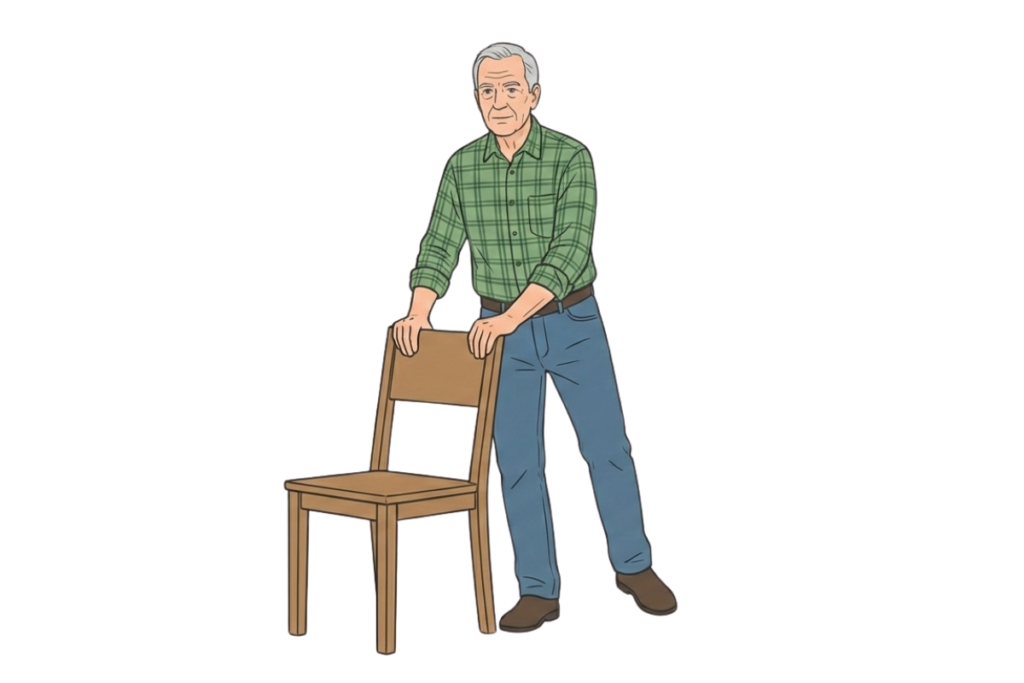
This is a great starting exercise for better balance. It may look simple, but it can be challenging.
How to do it:
- Stand behind a sturdy chair and hold onto the back with both hands.
- Shift your weight onto your right foot.
- Slowly lift your left foot a few inches off the ground.
- Hold for 10 seconds, or as long as you can while staying steady.
- Lower your foot back down.
- Repeat on the other side.
- Do this 3-5 times per leg.
Once this feels easy, try holding on with just one hand, then just your fingertips, to make it more challenging.
2. Heel-to-Toe Walk
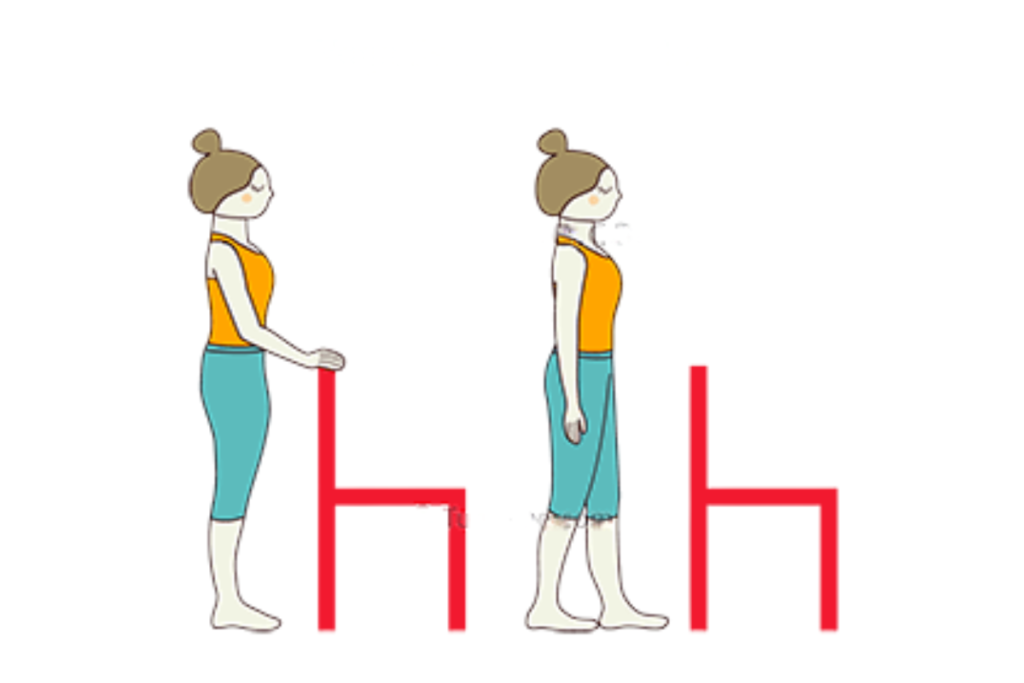
You may have seen this exercise before. It’s also very effective for improving balance.
How to do it:
- Stand near a wall for support.
- Place your right foot directly in front of your left foot, heel touching toe.
- Move your left foot forward, heel to toe, in front of your right.
- Continue for 10-20 steps.
- Turn around and come back.
For fun, you can imagine you’re walking on a tightrope.
3. Standing Knee Lifts
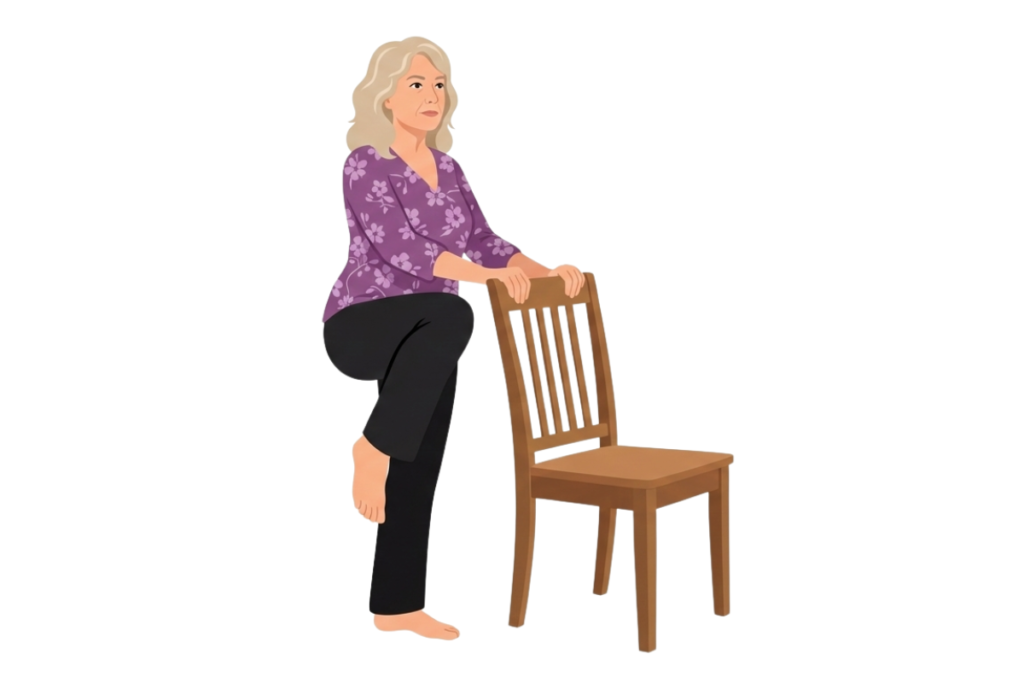
This one adds movement to your balance practice.
How to do it:
- Stand behind a chair, holding on with both hands.
- Lift your right knee up toward your chest (as high as comfortable).
- Hold for 3-5 seconds.
- Lower it back down slowly.
- Repeat with your left leg.
- Do 10 lifts on each side.
To make it harder, try letting go of the chair for a few seconds while your knee is raised.
4. Side Leg Raises
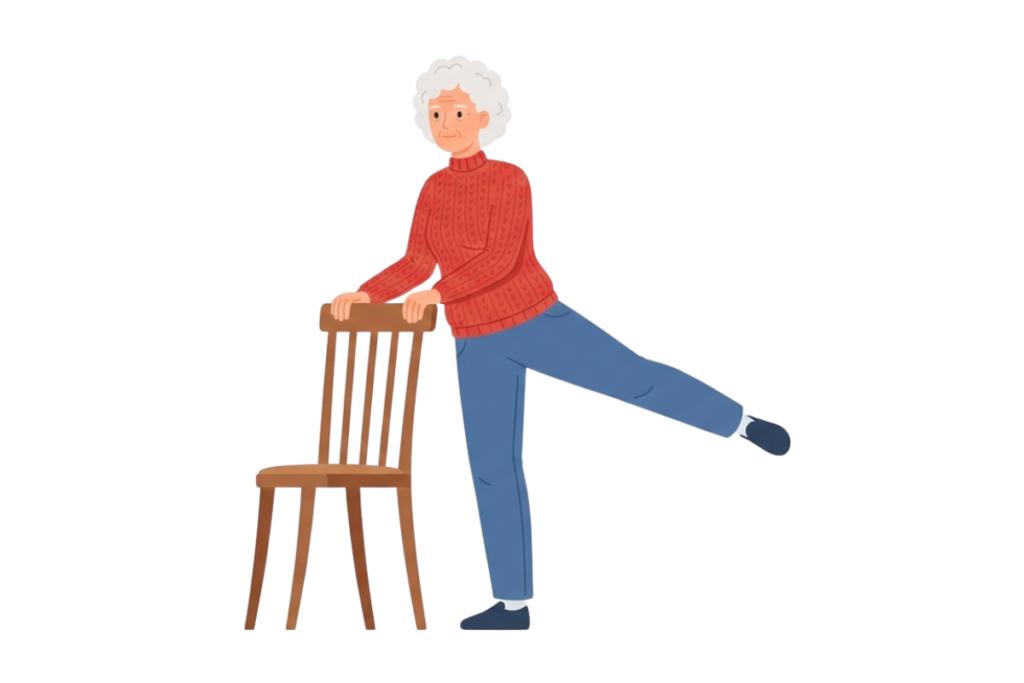
This exercise works your hip muscles, which are crucial for maintaining your balance.
How to do it:
- Stand behind a chair, holding on with both hands.
- Lift your right leg out to the side, keeping it straight.
- Keep your toes pointing forward (not up toward the ceiling).
- Hold for 3-5 seconds.
- Lower slowly.
- Do 10 repetitions on each side.
You only need to lift your leg a few inches. There’s no need to kick high.
5. Back Leg Raises
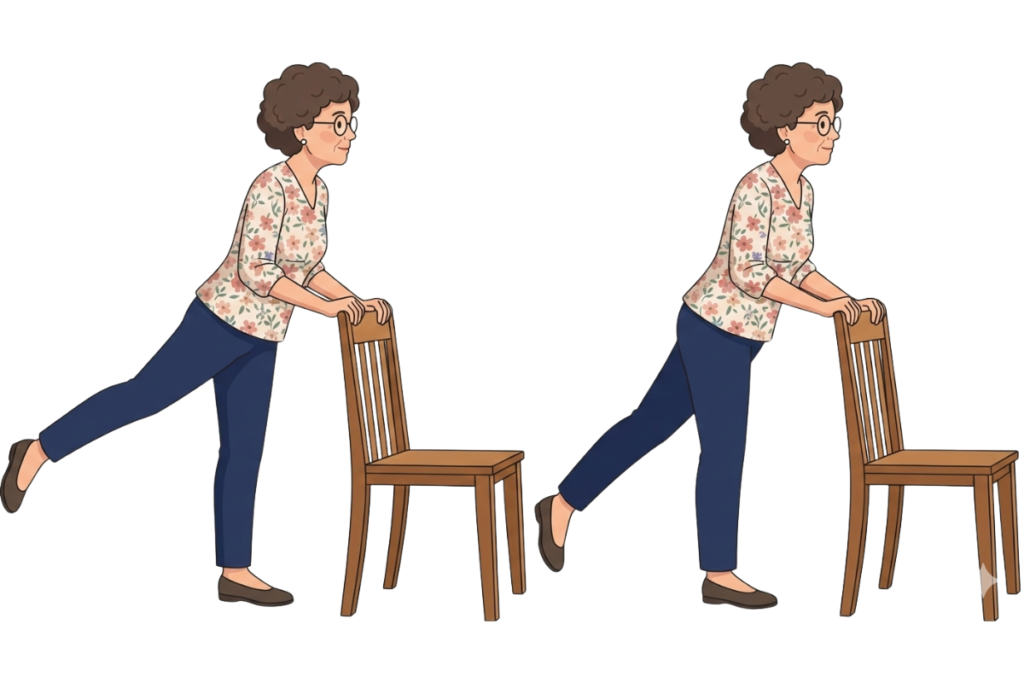
This exercise is good for your glutes and helps improve your balance.
How to do it:
- Stand behind a chair, holding on.
- Slowly lift your right leg straight back (don’t bend your knee).
- Keep your upper body straight and avoid leaning forward.
- Hold for 3-5 seconds.
- Lower slowly.
- Repeat 10 times on each leg.
6. Weight Shifts
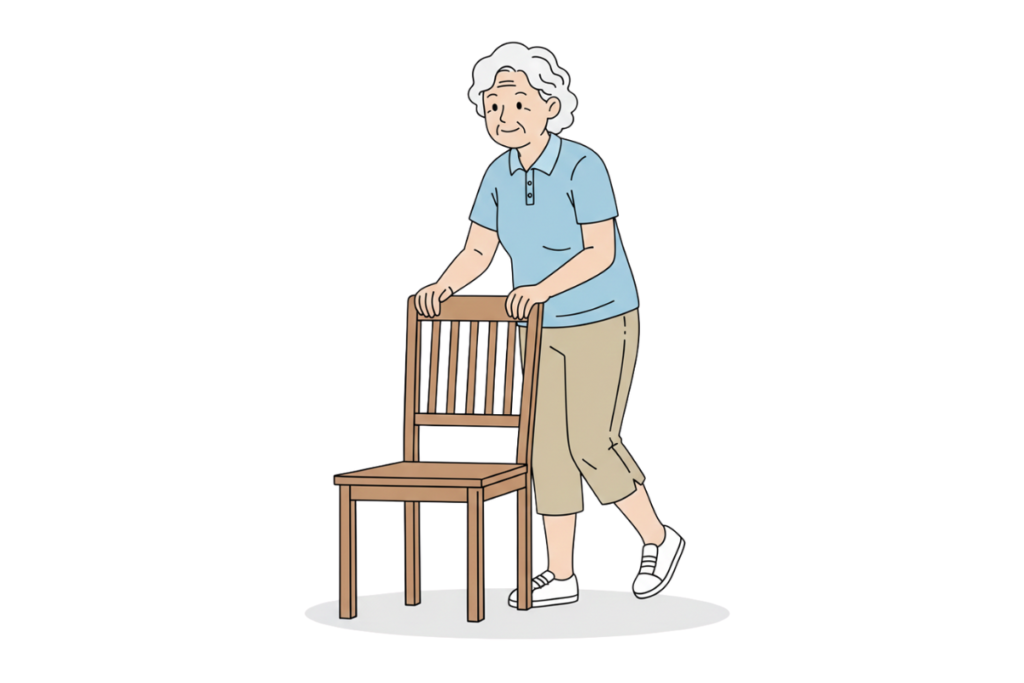
This teaches your body to adjust to changing positions.
How to do it:
- Stand with your feet hip-width apart.
- Shift your weight to your right foot.
- Lift your left foot slightly off the ground.
- Hold for 10 seconds.
- Shift to the left side.
- Repeat 5 times on each side.
Think of it as: Dancing very, very slowly.
7. Toe Stands
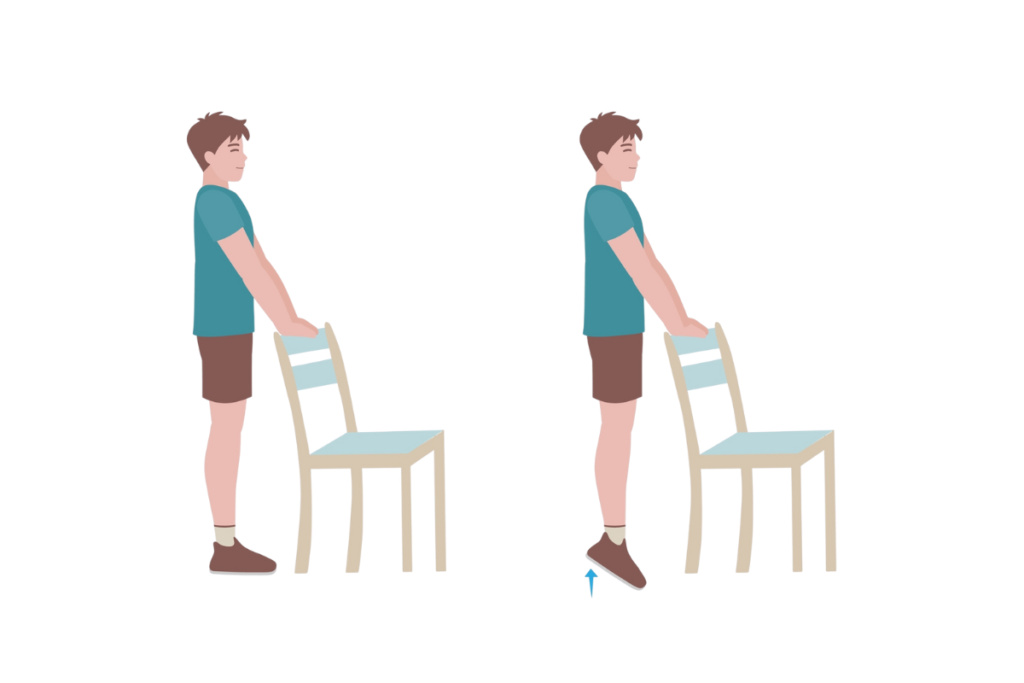
This strengthens your calves and challenges your balance at the same time.
How to do it:
- Stand behind a chair, holding on with both hands.
- Rise up onto your toes slowly.
- Hold for 5 seconds.
- Lower back down slowly, focusing on control.
- Repeat 10-15 times.
To make it more advanced, try standing on one foot while doing this exercise.
8. Heel Stands
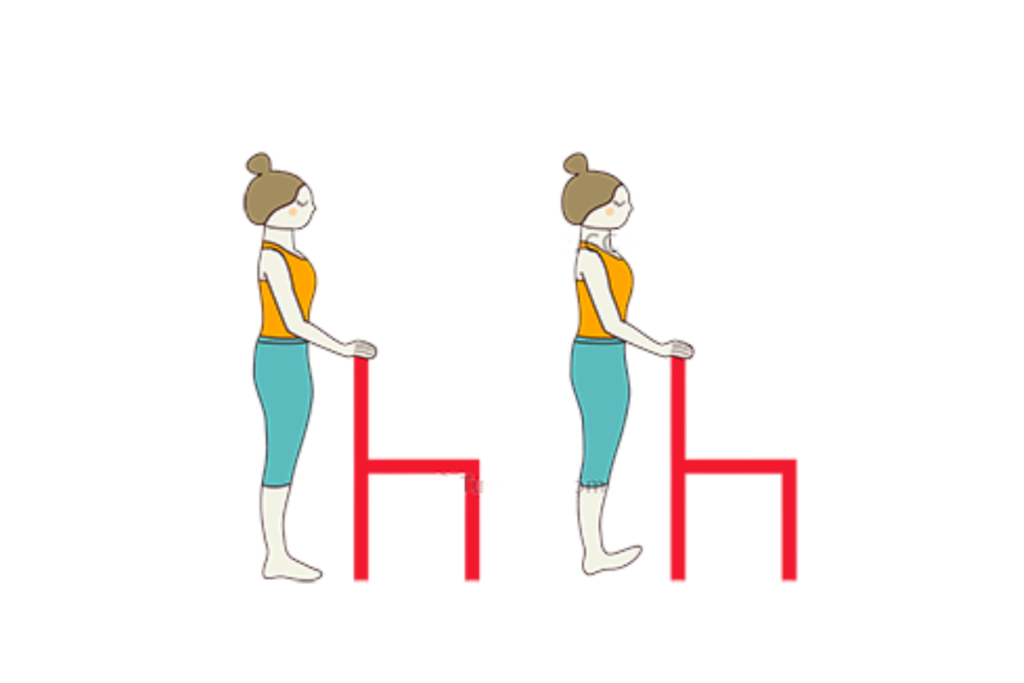
The opposite of toe stands, working different muscles.
How to do it:
- Stand behind a chair, holding on.
- Lift your toes off the ground, balancing on your heels.
- Hold for 5 seconds.
- Lower back down.
- Repeat 10 times.
You may feel a bit unsteady at first, but that’s normal.
9. Clock Reach
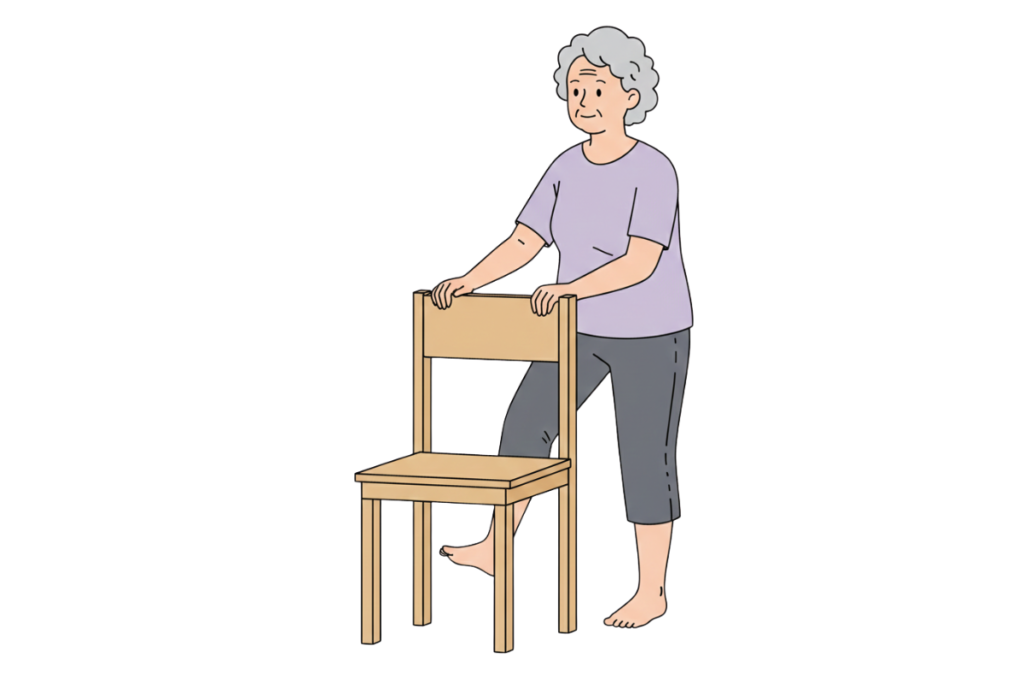
This exercise is enjoyable and challenges your balance in several directions.
How to do it:
- Stand on your right leg and hold a chair with your right hand.
- Imagine you’re standing in the center of a clock.
- Point your left arm to 12 o’clock (straight up).
- Then point to 3 o’clock (out to the side).
- Then to 6 o’clock (down toward the floor).
- Return to the center between each position.
- Repeat 5 times, then switch legs.
10. Sit-to-Stand
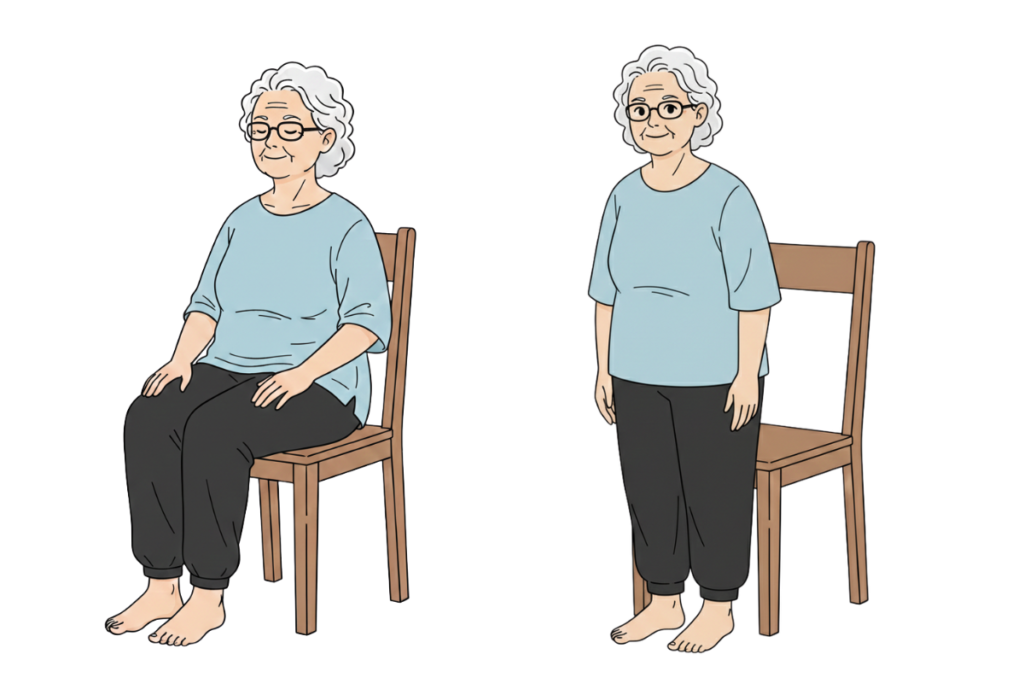
This exercise is practical and helps build both balance and strength.
How to do it:
- Sit in a sturdy chair with your feet flat on the floor.
- Scoot to the edge of the seat.
- Lean slightly forward.
- Push through your heels to stand up, using your legs as much as possible instead of your arms.
- Slowly lower back down to sitting.
- Repeat 10 times.
If you need to make it easier, use your hands on the armrests or seat to help push up.
How Often Should You Practice?
Here’s the beautiful truth: consistency beats intensity every single time. It’s better to do 10 minutes a day than to do an hour once a month and then spend three days complaining about sore muscles.
Recommended schedule:
- Practice these exercises 3-5 times per week.
- Start with 5-10 minutes per session.
- Gradually increase as you feel stronger.
- Listen to your body and adjust as needed.
Final Thoughts
Balance improves through action, not just by thinking about it or saving this article for later. Even small steps today can make a difference.
You don’t need to be perfect, and you don’t need to do all 10 exercises right away. You just need to start. Pick one or two home balance exercises for seniors that feel doable, grab that sturdy chair, and give it a go. Five minutes. That’s it.
Your future self will thank you for taking these steps. Even if you wobble today, you’re making progress. Balance is a skill, and skills improve with practice. You’ve got this!
