

Falls are a tough topic at family dinners. They’re scary, common, and can really affect your independence. In fact, one in four seniors falls each year, which is far too many. But here’s the good news (yes, there’s good news!). Most falls are preventable. You don’t need a home renovation or a PhD in balance. You just need some smart, practical changes and a little effort. That’s where learning how to prevent seniors from falling comes in. Trust me, it’s easier than programming your TV remote.
Whether you’re a senior or looking out for a parent or grandparent, these 12 fixes are simple and effective. You can start most of them today, right after you finish your coffee.
1. Light Up Your Life
Poor lighting increases the risk of falls. Dark hallways, dim stairways, and shadowy bathrooms can all be dangerous.
What to do:
- Install bright LED bulbs in every room.
- Add nightlights in hallways, bathrooms, and bedrooms.
- Keep a flashlight or lamp within reach of your bed.
- Consider motion-sensor lights for middle-of-the-night bathroom trips.
If you cannot see where you are going, it is harder to avoid tripping hazards.
2. Banish the Clutter
Items like newspapers, shoes, bags, electrical cords, and boxes can all be tripping hazards.
What to do:
- Clear walkways completely.
- Secure electrical cords along walls.
- Remove throw rugs or secure them with non-slip backing.
- Keep frequently used items at waist level (no reaching, no bending).
Having fewer items on the floor means fewer things to trip over.
3. Get Those Eyes Checked
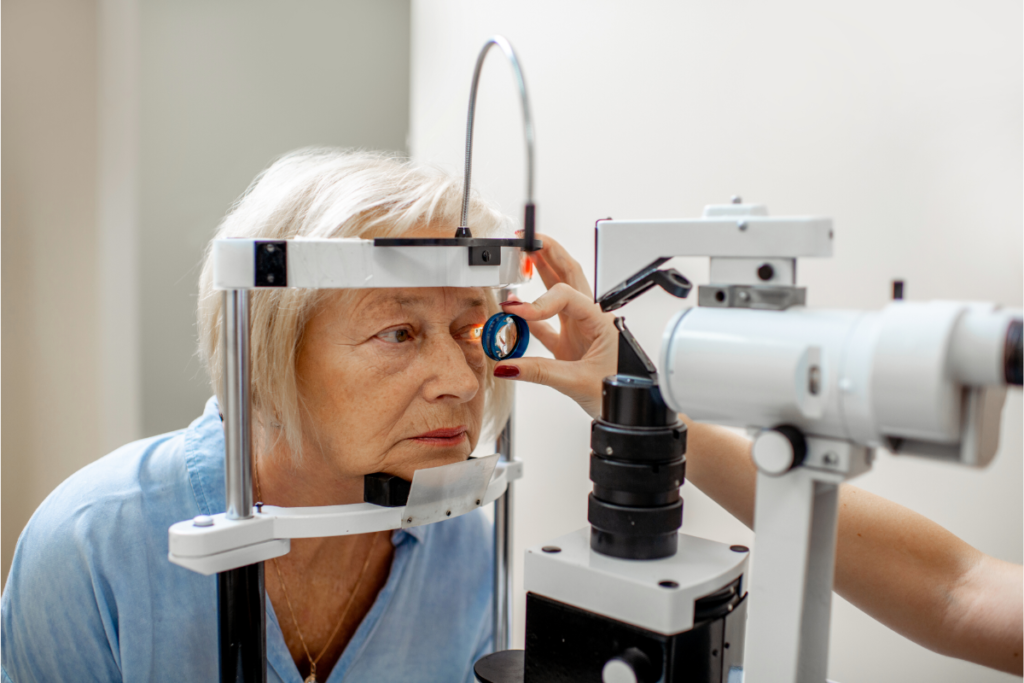
If you can’t see clearly, you can’t navigate safely. Vision problems are a huge contributor to falls.
What to do:
- Schedule an eye exam at least once a year.
- Update your prescription glasses if needed.
- Make sure your glasses are clean, as this can make a big difference.
- Consider using separate glasses for distance and reading if bifocals make navigating stairs difficult.
4. Review Your Medications with Your Doctor
Some medications can cause dizziness, drowsiness, or balance problems. Taking more medications can increase this risk.
What to do:
- Schedule a medication review with your doctor or pharmacist.
- Ask specifically about side effects related to dizziness or balance.
- Never stop or change medications without professional guidance.
- Take medications exactly as prescribed.
5. Bathroom Safety Upgrades
Bathrooms can be very slippery when wet, which increases the risk of falls.
What to do:
- Install grab bars in the shower and next to the toilet.
- Use a non-slip bath mat inside and outside the tub.
- Consider a shower chair or bench.
- Keep a nightlight in the bathroom.
- Remove any locks that could trap you inside.
6. Strengthen Your Legs at Home
Building leg strength plays a key role in improving balance and stability. Many seniors find it helpful to use a chair yoga book for seniors as a guide for safe, at-home movement. Learning how to prevent falls in seniors often starts with simple leg-strengthening exercises you can do right at home.
Simple exercises to try:
Sit-to-Stand Exercise:
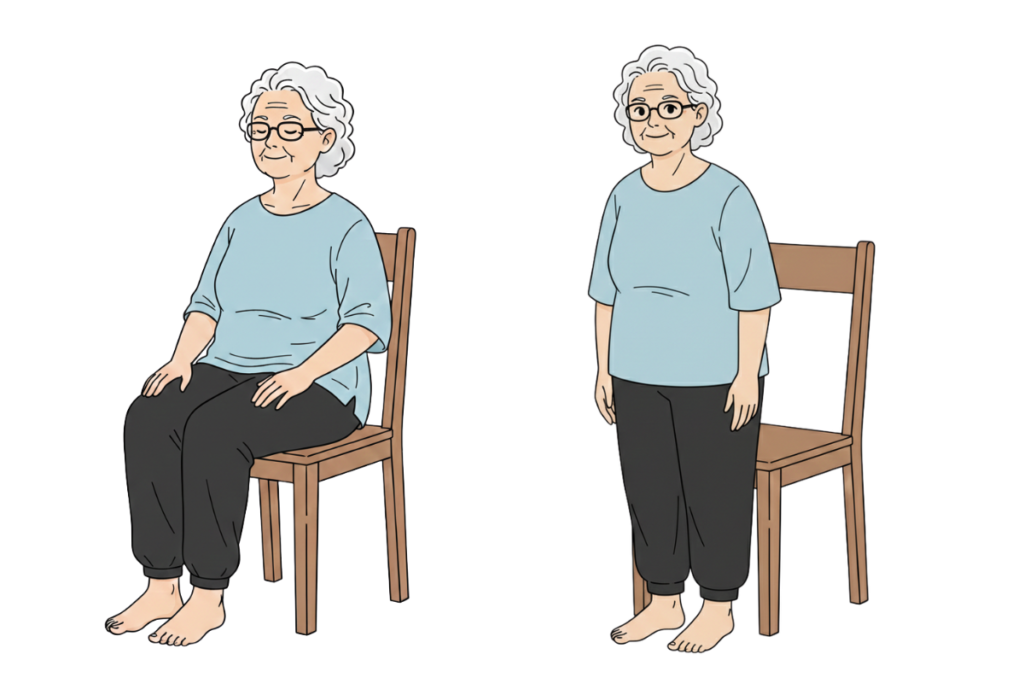
- Sit in a sturdy chair with armrests.
- Scoot to the edge of the seat.
- Lean forward slightly and stand up using your leg muscles (use armrests for support if needed).
- Slowly sit back down with control.
- Repeat 10 times, rest, then do another set.
- Do this 3 times per week.
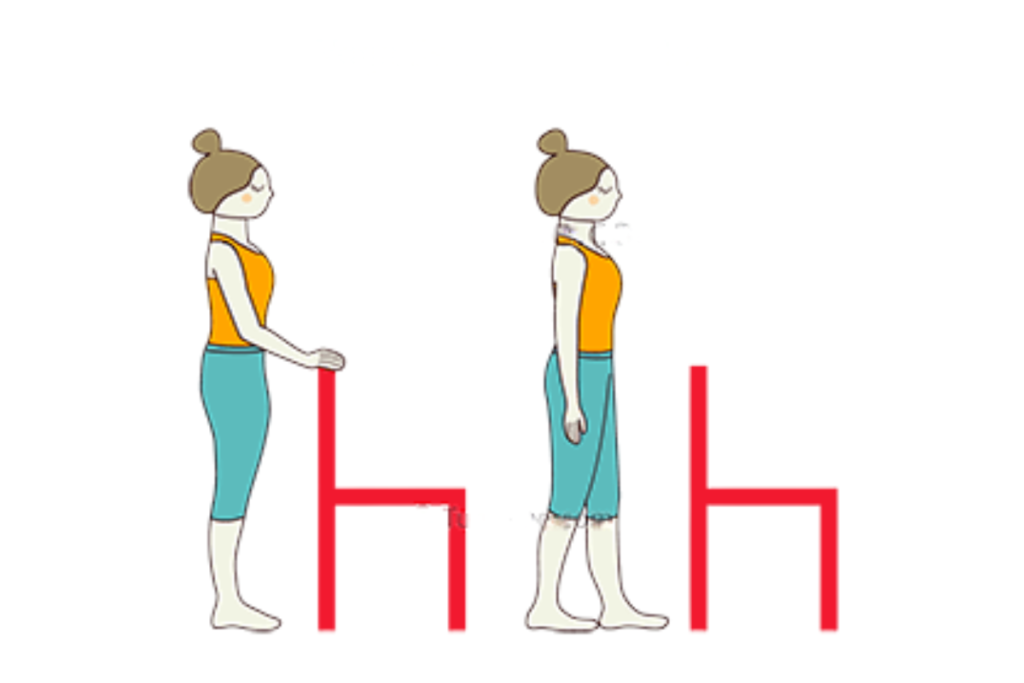
Heel Raises:
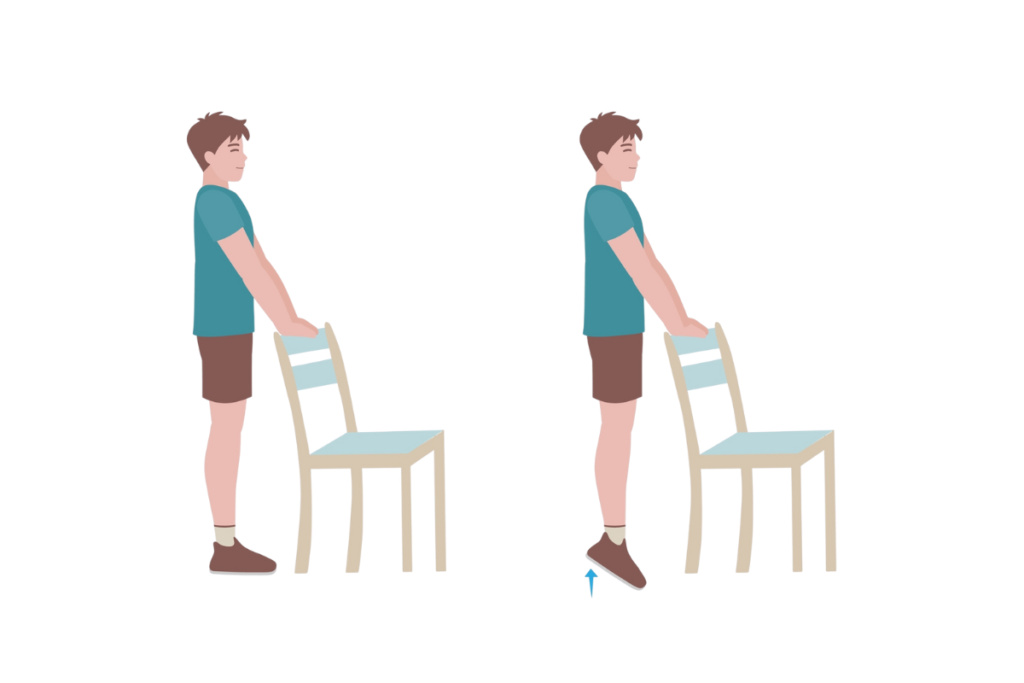
- Stand behind a sturdy chair, holding the back for support.
- Rise up on your toes as high as comfortable.
- Hold for 3 seconds.
- Lower slowly back down.
- Repeat 10-15 times.
- Do this daily.
These exercises are simple but effective. Doing them regularly is more important than doing them perfectly.
7. Practice Balance Exercises
Balance often declines with age, but it can be improved with regular practice.
Easy balance exercises:
Single Leg Stand:
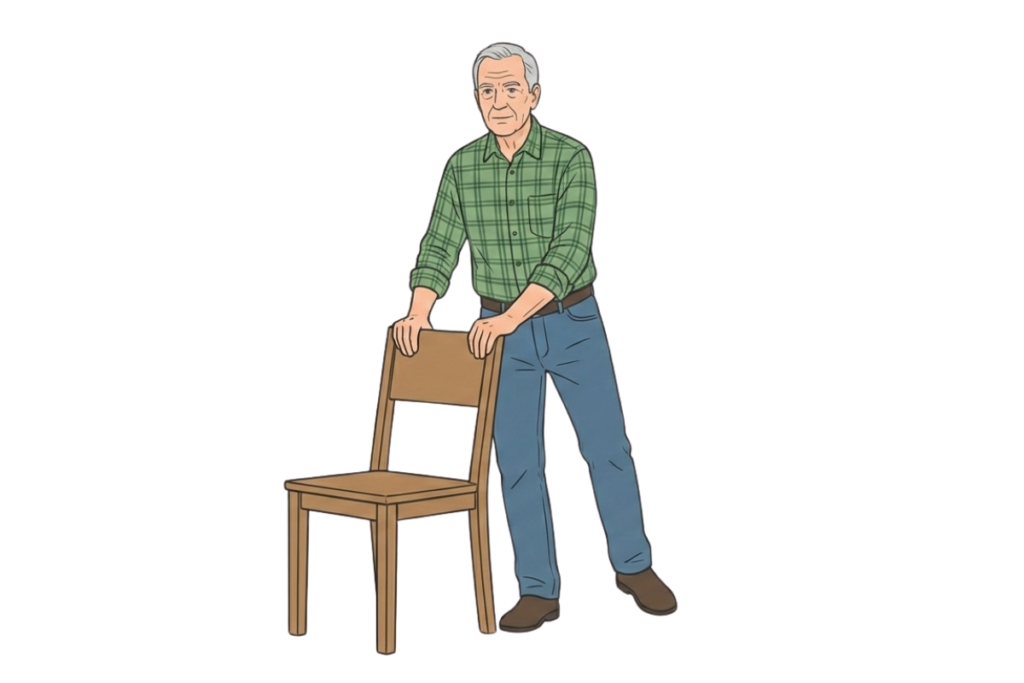
- Stand near a counter or sturdy chair.
- Hold on lightly with both hands.
- Lift one foot slightly off the ground (just an inch or two is fine).
- Hold for 10 seconds.
- Switch legs.
- Repeat 3 times on each side.
- As you improve, try using just one finger for support, then no hands at all.
Heel-to-Toe Walk:
- Find a clear hallway or room.
- Walk in a straight line, placing one foot directly in front of the other (heel touching toe).
- Look straight ahead, not down.
- Take 20 steps.
- Turn around and repeat.
- Use a wall for support if needed.
Try to do these exercises every day. Setting a regular time can help make them a habit.
8. Wear Proper Footwear
Wearing the right shoes is important.
What to do:
- Wear shoes with non-slip soles and good support.
- Avoid walking in socks, stockings, or floppy slippers.
- Make sure shoes fit properly (not too tight, not too loose).
- Skip high heels and opt for low, wide heels instead.
If your shoes are worn out, replace them with new ones for better support.
9. Install Handrails and Grab Bars
Handrails and grab bars are helpful for anyone who wants to stay safe and avoid falls.
What to do:
- Add handrails on both sides of all stairs.
- Install grab bars in the bathroom.
- Make sure handrails are secure and can support your weight.
- Consider adding a handrail in the bedroom near the bed.
10. Take Your Time
Moving too quickly increases the risk of falling.
What to do:
- Take your time getting up from sitting or lying down.
- Sit on the edge of the bed for a moment before standing.
- Don’t rush to answer the phone or door.
- Plan extra time for activities.
If you miss a call, the person can call back or send a message. Your safety comes first.
11. Use Assistive Devices for Support
Canes, walkers, and other mobility aids are there to help you stay independent.
What to do:
- Talk to your doctor about whether an assistive device might help.
- Get properly fitted for any device.
- Use it consistently, not just “when needed”.
- Keep it in good repair.
Using a cane or walker can help you stay independent and safe.
12. Stay Active Every Day
Regular physical activity improves strength, balance, flexibility, and coordination. It is one of the best ways to prevent falls.
Simple ways to stay active:
Chair Marching:
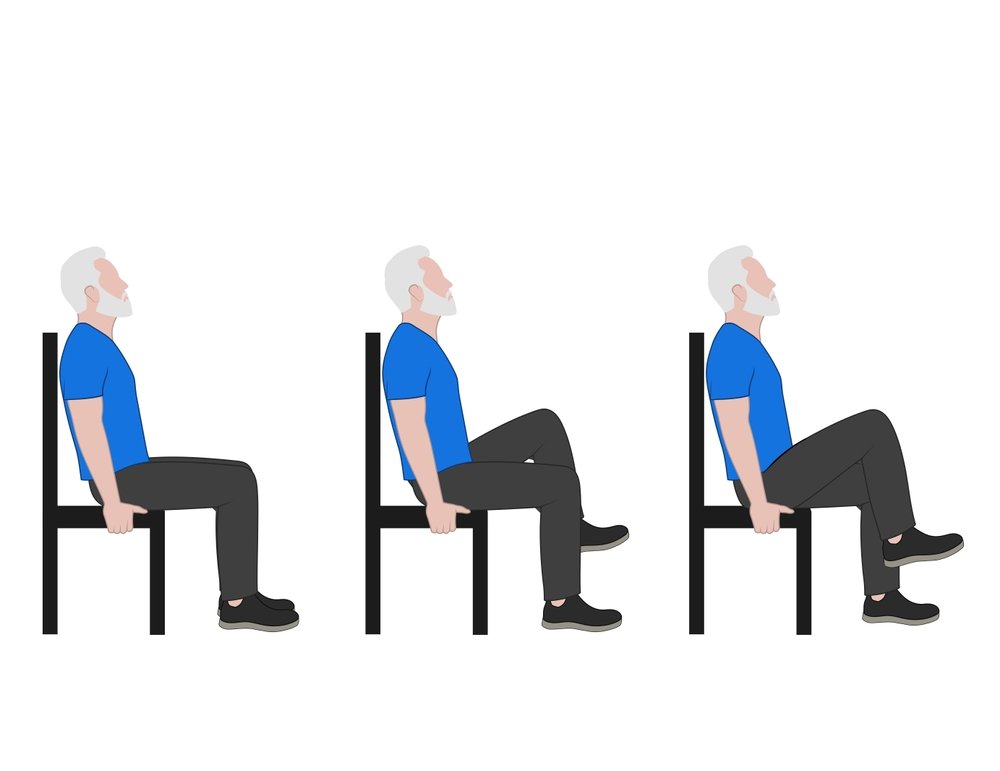
- Sit in a sturdy chair with your back straight.
- Lift one knee up toward your chest (as high as comfortable).
- Lower it back down.
- Lift the other knee.
- Alternate for 1-2 minutes.
- Repeat 2-3 times per day.
Ankle Circles:
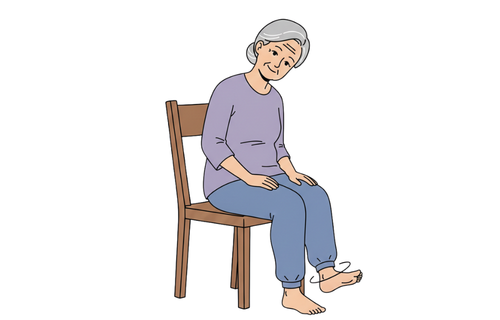
- Sit in a chair or lie down.
- Lift one foot slightly off the ground.
- Rotate your ankle clockwise 10 times.
- Rotate counterclockwise 10 times.
- Switch feet
- You can do this exercise while watching TV.
Gentle Walking:
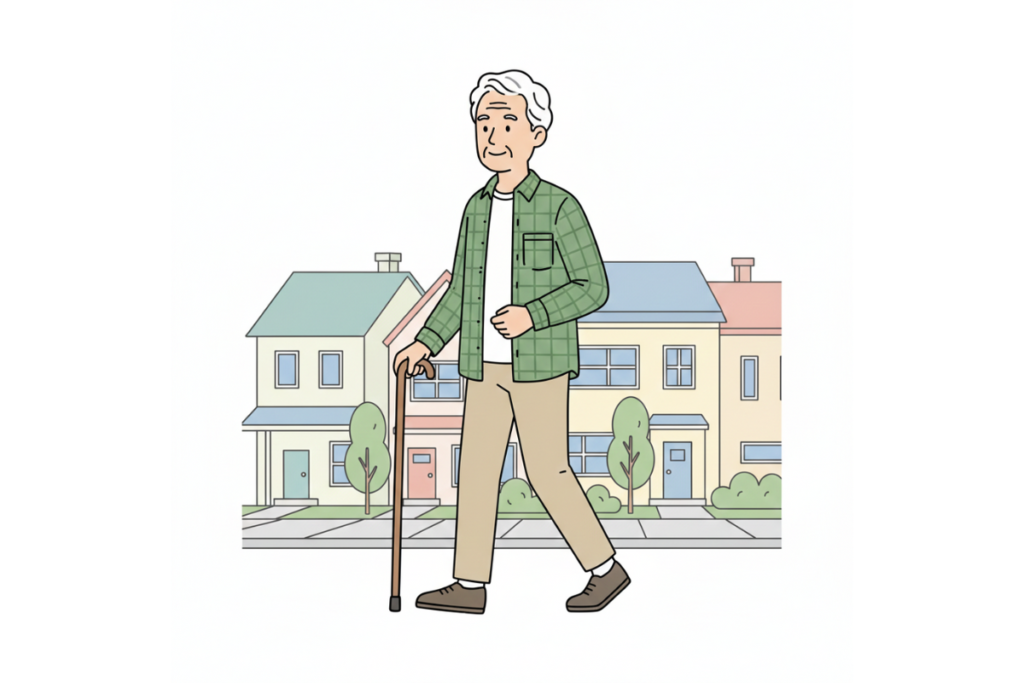
- Aim for 10-30 minutes of walking most days.
- Start small (even 5 minutes counts!).
- Walk around your home, your neighbourhood, or a mall.
- Focus on maintaining good posture.
The most important thing is to be consistent. Doing a small amount often is better than doing a lot only occasionally.
Final Thoughts
Preventing falls is not about avoiding activity. It is about making smart choices to stay active, independent, and safe.
Start with one small change today. You could add a nightlight, clear away clutter, or try the sit-to-stand exercise.
Whatever you choose, you are taking control of your safety and your future. That is empowering.
Pick one thing from this list and try it today. Your future self and your family will thank you. Stay safe and active—there are many things to enjoy.
