
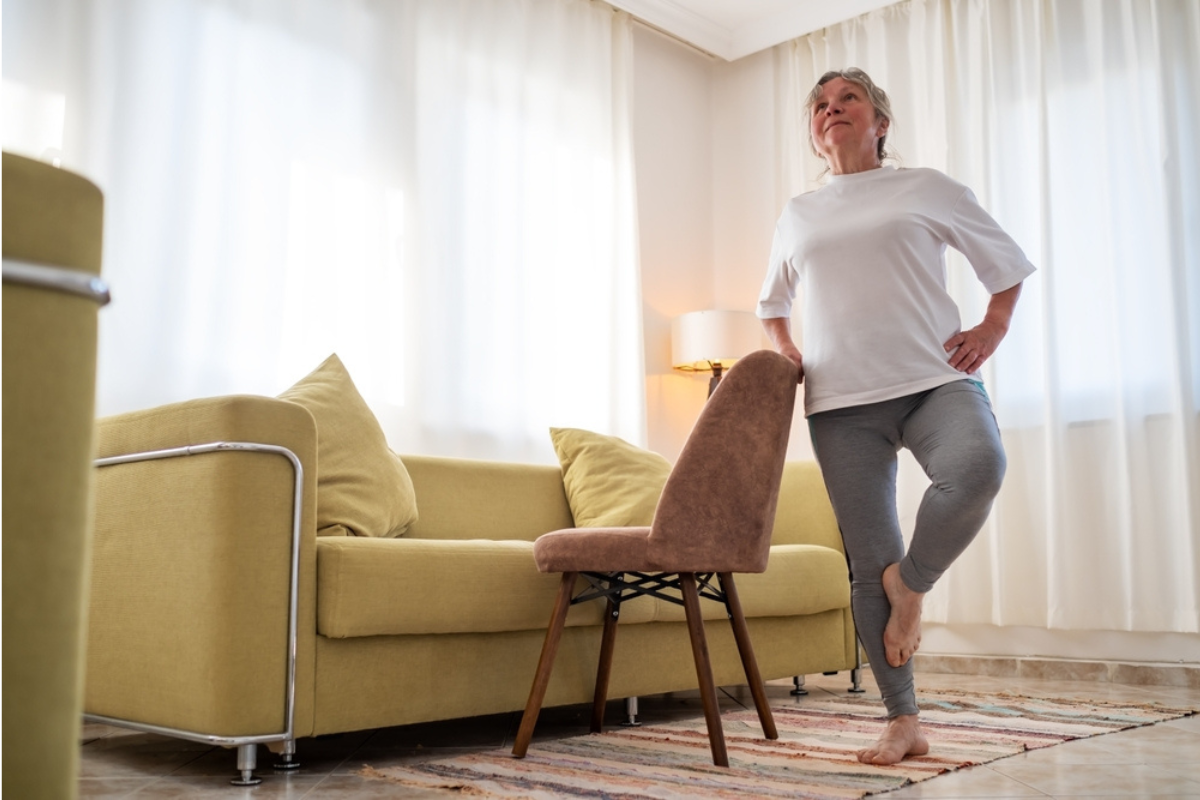
No one wakes up thinking, “You know what sounds fun? Wobbling around like a newborn giraffe!” Still, as we age, our balance can change. That steady feeling we used to have might need some attention.
The good news is that standing balance exercises for seniors can help you rebuild that confidence, strengthen your ankles, hips, and core, and seriously reduce your risk of falls. And no, you don’t need to be a yoga master or have the flexibility of a rubber band. These exercises are designed for real people, real bodies, and real life.
Balance training is like an insurance policy for your body. Spending a few minutes each day helps you stay steady, independent, and prepared for whatever comes your way.
Why Focus on Ankles, Hips, and Core?
Think of your body as a tower. If the foundation is unsteady, the whole structure feels unstable. Your ankles, hips, and core make up that foundation.
Ankles act as shock absorbers, keeping you steady on uneven surfaces. Hips provide stability and power for walking, turning, and basically everything you do on your feet. And your core (those muscles around your belly and lower back) is your body’s central control system, keeping you upright and coordinated.
- Clear your space. Move furniture, rugs, or anything you might trip over.
- Use support. Keep a sturdy chair. There’s zero shame in holding on.
- Wear proper shoes. Choose ones with non-slip soles. Avoid wearing socks on hardwood floors to prevent slipping.
- Start slow. If an exercise feels too challenging, modify it or skip it for now.
- Listen to your body. Mild discomfort is normal. Sharp pain is not. Know the difference.
If you have any medical conditions or concerns, talk to your doctor before starting a new exercise routine. They can give you the go-ahead and support your efforts to stay healthy.
Beginner Standing Balance Exercises
These exercises are gentle, effective, and perfect for beginners. Many seniors find it helpful to follow along with a chair yoga book for seniors for extra guidance. Aim to practice 3–4 times a week, focusing on consistency rather than perfection, and include senior standing balance exercises to help improve stability and confidence. Let’s dive in!
1. The Weight Shift (AKA Baby Steps to Balance)
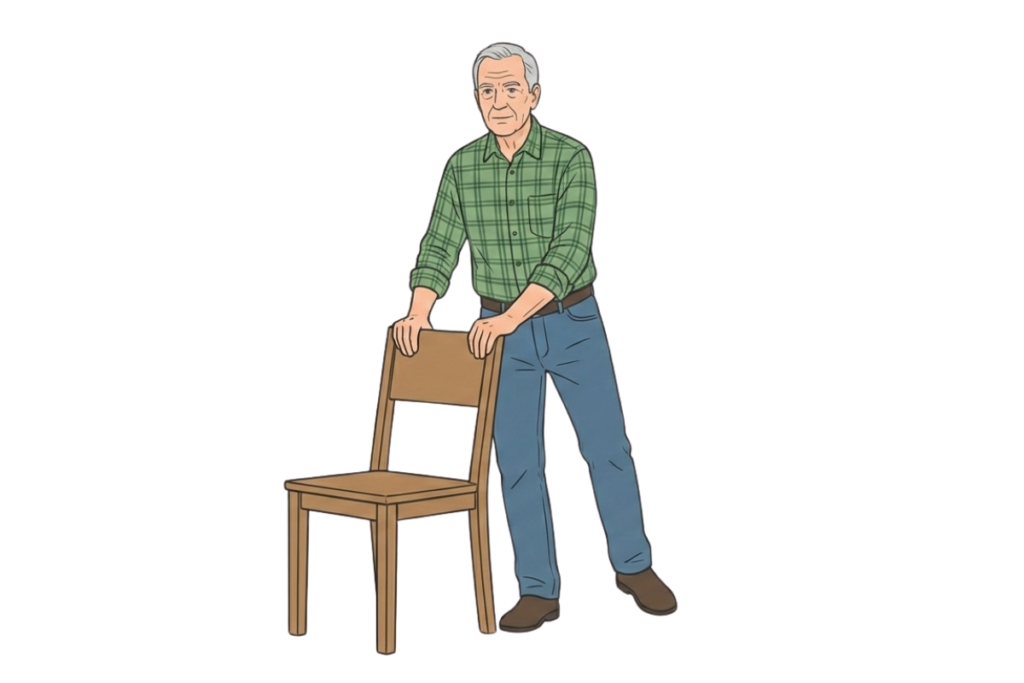
This is a great exercise for beginners. If you are new to balance training, begin with this one.
How to do it:
- Stand next to a chair with your feet hip-width apart.
- Lightly rest your hands on the support.
- Slowly shift your weight to your right foot, lifting your left heel slightly off the ground (your toes can stay down).
- Hold for 5-10 seconds.
- Shift your weight to your left foot and repeat.
- Do this 5 times on each side.
Why it works: You’re teaching your body to trust one leg at a time, which is essential for walking and staying balanced.
2. Single-Leg Stand (The Classic)
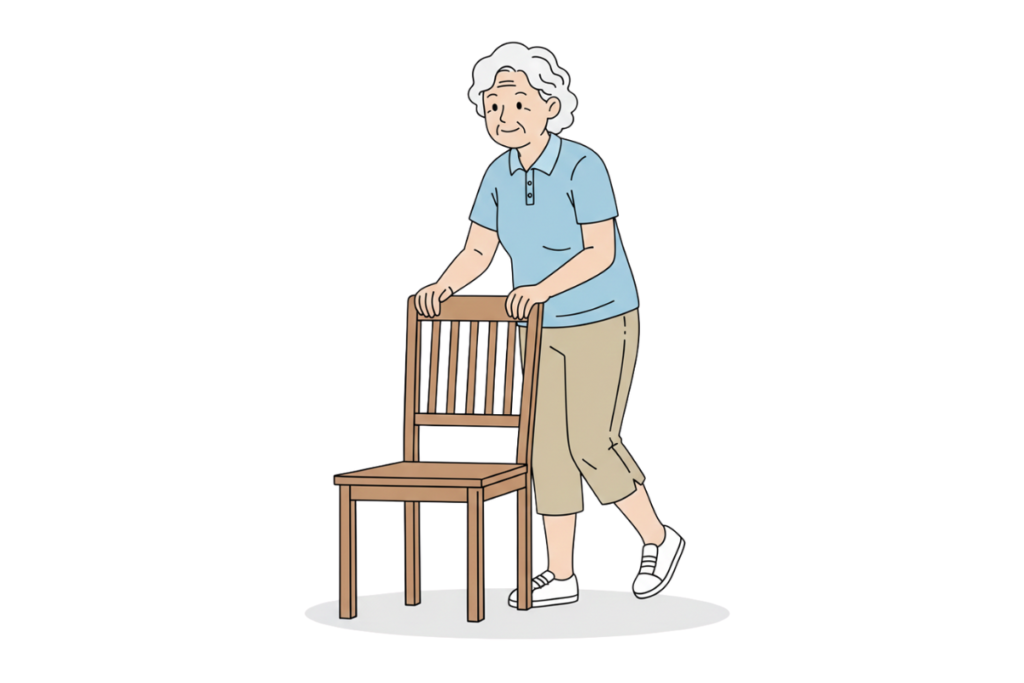
This is your bread-and-butter balance exercise. Simple but mighty.
How to do it:
- Stand behind a sturdy chair and hold onto the back with both hands.
- Lift your right foot a few inches off the ground.
- Hold for 10-15 seconds, or as long as you can while staying steady.
- Lower your foot and repeat on the left side.
- Do 3-5 reps per leg.
Progression tip: As you get stronger, try holding on with one hand, then just a finger, and eventually with no hands.
Why it works: This strengthens your ankles and hips while improving your overall stability.
3. Heel-to-Toe Walk
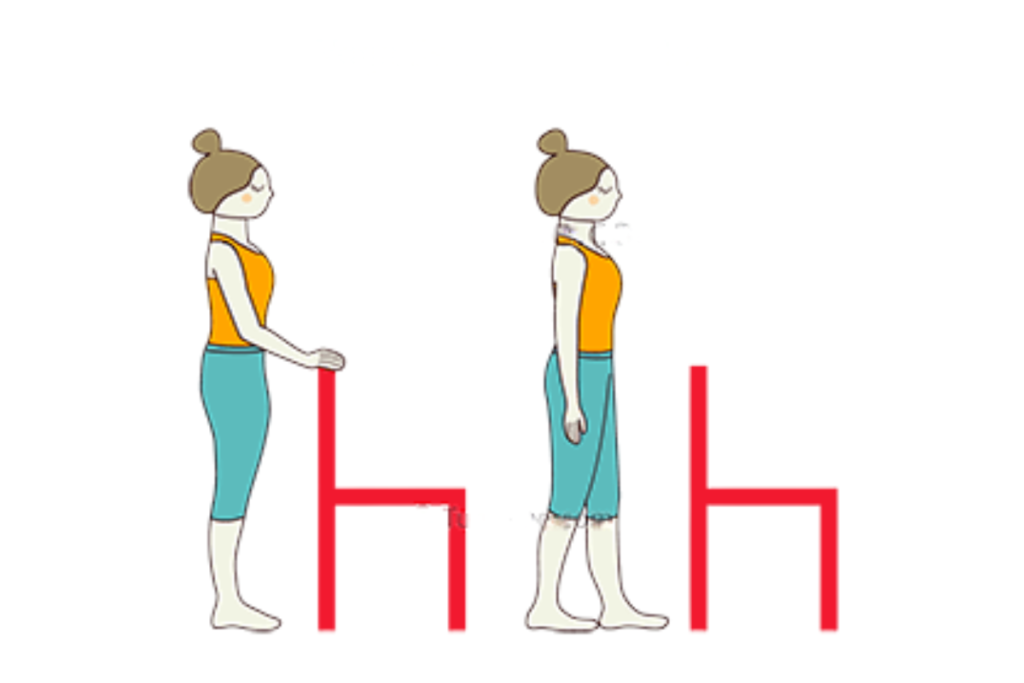
This exercise is well known and is also excellent for improving balance.
How to do it:
- Stand next to a chair for support if needed.
- Place your right foot directly in front of your left, so your right heel touches your left toes.
- Take a step, placing your left heel directly in front of your right toes.
- Continue walking in a straight line for 10-15 steps.
- Turn around and walk back.
Why it works: This exercise challenges your balance and coordination while strengthening your core and improving your gait.
4. Clock Reach
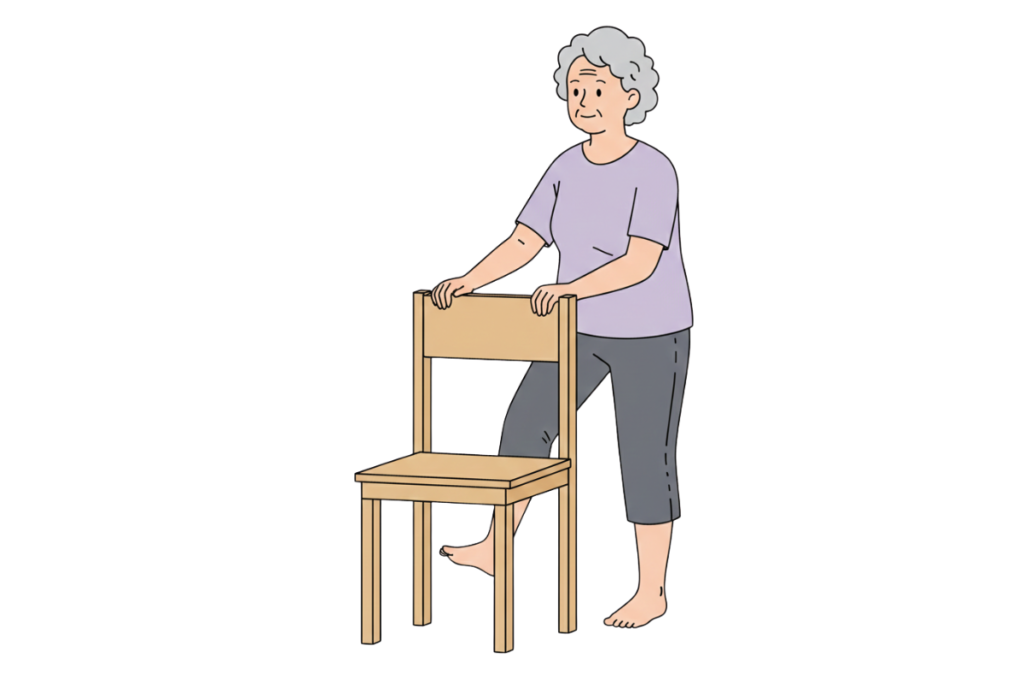
This one’s fun and functional. You’ll feel like you’re doing a little dance.
How to do it:
- Stand behind a chair, holding on with both hands.
- Imagine you’re standing in the center of a clock.
- Lift your right foot slightly off the ground.
- Slowly reach your right leg forward (12 o’clock), hold for 2 seconds.
- Bring it back to the center.
- Reach it to the side (3 o’clock), hold, then back to the center.
- Reach it back (6 o’clock), hold, then back to center.
- Repeat 3 times, then switch legs.
Why it works: This exercise strengthens your hips and core from multiple angles while improving your range of motion.
5. Calf Raises
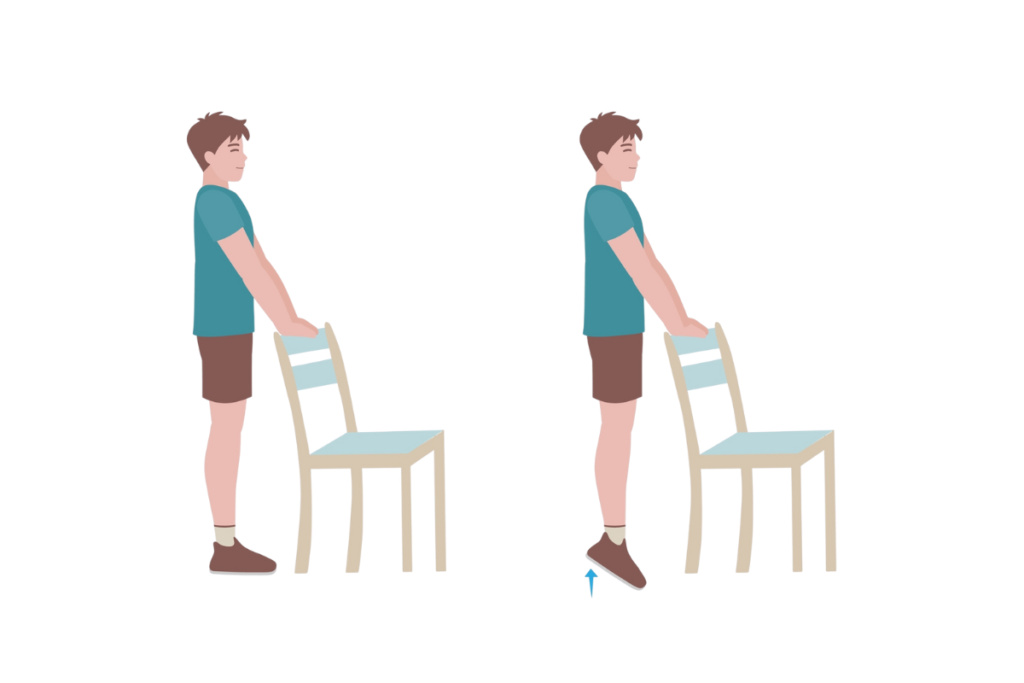
Strong calves help support strong ankles. They also prepare you for activities that require tiptoeing.
How to do it:
- Stand behind a chair, holding on with both hands.
- Rise up onto your toes, lifting your heels as high as comfortable.
- Hold for 2-3 seconds.
- Slowly lower back down.
- Repeat 10-15 times.
Why it works: This targets your calf muscles and ankle stability, which are crucial for maintaining balance.
6. Hip Marches
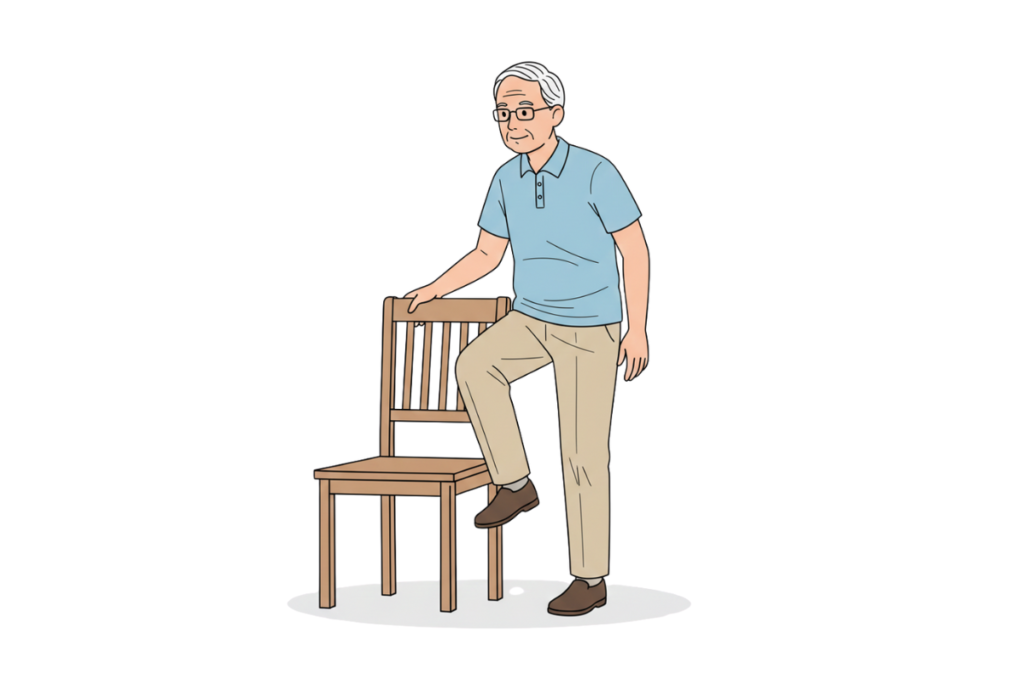
This exercise is similar to marching in place, but done slowly and with control.
How to do it:
- Stand next to a chair for support.
- Lift your right knee up toward your chest (as high as comfortable).
- Hold for 2-3 seconds.
- Lower it back down with control.
- Repeat with your left leg.
- Do 10 marches on each side.
Why it works: This strengthens your hip flexors and core while improving your balance on one leg.
Building Your Weekly Routine
Consistency is key. Here is a simple plan for beginners:
1st – 2nd Week:
- 3 days per week
- 2 sets of each exercise
- Use support as needed.
3rd – 4th Week:
- 4 days per week
- 2-3 sets of each exercise
- Try reducing support gradually.
5th+ Week:
- 4-5 days per week
- 3 sets of each exercise
- Try to use less support or hold each position for longer as you progress.
Remember, progress takes time. Some weeks you will feel strong, and other weeks you may feel less steady. This is normal. The important thing is to keep practicing.
Tips for Success
- Warm up first. A few minutes of gentle walking or ankle circles get your body ready.
- Focus on form. Quality over quantity, always.
- Breathe. Don’t hold your breath. Inhale, exhale, repeat.
- Track your progress. Pay attention to how long you can hold each position and how much support you need. Acknowledge your improvements.
- Mix it up. Variety keeps things interesting and challenges your body in new ways.
Final Thoughts
You do not have to be perfect at balance exercises to benefit from them. Every wobble, every held position, and every effort helps you become stronger and steadier.
Starting safe standing balance exercises for seniors today is an investment in your independence, confidence, and quality of life. You are not just preventing falls; you are supporting your ability to move with strength and confidence.
Take a chair, clear some space, and spend 10 minutes today on these exercises. In the future, you will appreciate the benefits, whether walking confidently or playing with your grandchildren.
You can do this. Stay consistent and keep practicing your balance exercises.
